Connector
CN → US| HS Code | Tariff Rate | Origin | Destination | Doc |
|---|---|---|---|---|
| 9001100070 | 41.7% | CN | US | Official Doc |
| 9001100085 | 41.7% | CN | US | Official Doc |
| 8544429090 | 87.6% | CN | US | Official Doc |
| 8536700000 | 35.0% | CN | US | Official Doc |
| 8536694010 | 35.0% | CN | US | Official Doc |
| 8538908160 | 38.5% | CN | US | Official Doc |
Product Images



AI Analysis
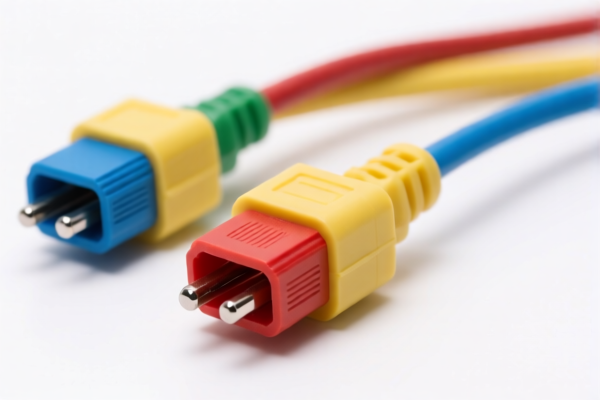
🔌 Connector (Universal Cable & Optical Connectors)
🌐 HS Code Reference & Customs Clearance Guide | 2026 Tax Regime Full Breakdown | Professional Clearance Strategy
📌 I. Product Definition & Classification: Do You Know What "Connector" Really Is?
Connectors are indispensable components in electrical and optical systems, serving as the interface between cables, devices, and power sources. In international trade, they are broadly categorized into two main types based on their primary function:
- Optical Fiber Connectors: Designed for light transmission, ensuring precise alignment between fiber optic cables.
- Electrical Cable Connectors: Designed for electricity or signal transmission, featuring metal contacts and insulation.
⚠️ Critical Distinction:
- If the item is strictly an optical interface component (no electrical insulation/conductors) → It may fall under Chapter 90 (Optical Instruments).
- If the item is an insulated electrical conductor with metal contacts → It falls under Chapter 85 (Electrical Machinery).
- If it is a non-specific part for a control panel or switchgear → It falls under Chapter 85 (Parts of Machinery).
- The classification dictates the tax rate, ranging from 35% to a staggering 87.6% depending on the specific HS Code.
📦 II. HS Code Classification Details (2026 Latest Tariff Regime)
Based on the provided data, here is the detailed breakdown of how "Connectors" are classified and taxed:
| HS Code | Product Description | Applicable Scenario | Key Classification Logic |
|---|---|---|---|
| 9001.10.00.70 | Optical Fiber Connectors (Other Categories) | Pure optical fiber accessories, not bundled with complex cable structures. | Classified under "Other" optical fiber accessories in Chapter 90. |
| 9001.10.00.85 | Optical Fiber Connectors (Fiber Bundle Components) | Fiber optic bundles or optical cables where the connector is a specific component. | Fits the "Fiber bundles and cables" attribute under Chapter 90. |
| 8544.42.90.90 | Insulated Electrical Conductors with Connectors | Cables or wires that come attached with connectors, functioning as insulated conductors. | Classified under "Insulated electric conductors" (Chapter 85) due to the attached connector. |
| 8536.70.00.00 | Optical Fiber Connectors (Matching Function) | Connectors specifically matching the form and function of optical fibers. | Classified as a "Connector" (Chapter 85) based on its electrical/optical interface nature. |
| 8536.69.40.10 | Cable Connectors (Coaxial) | Coaxial cable connectors, functionally identical to standard cable connectors. | Classified as a "Coaxial Connector" under Chapter 85. |
| 8538.90.81.60 | Parts for Switchgear & Control Panels | Connector parts used specifically in switching equipment or control disks. | Classified as a "Part of Switching/Control Gear" under Chapter 85. |
🔍 Key Reminder:
- Optical vs. Electrical: The distinction between9001(Optical) and8536/8544(Electrical) is the first major tax hurdle.
- Material Composition: Some codes (8544.42.90.90) have higher rates due to specific material surcharges (Steel/Aluminum/Copper).
- Usage Context: If the connector is part of a larger machine (like a switch panel),8538might apply, leading to a different tax bracket.
💰 III. 2026 Latest Tariff Rate Breakdown (Including Surcharges & Policy Add-ons)
✅ Applicable Country: USA (US)
✅ Country of Origin: China (CN)
✅ Effective Time: Includes current and future import regulations (2025-2026)
🎯 1. Optical Fiber Connectors (Chapters 90)
Codes: 9001.10.00.70 & 9001.10.00.85
| Item | Content |
|---|---|
| Base Tariff | 6.7% |
| Section 301 / Additional Tariff | +25.0% |
| Section 122 Tariff | +10.0% |
| Total Tax Rate | 41.7% |
| Tax Calculation | CIF Value × 41.7% |
| De Minimis Exemption | ❌ Not Applicable |
| Legal Basis | Base Tariff (6.7%) + Section 301 (25%) + Section 122 (10%) |
📌 Explanation:
- The 6.7% is the standard Most-Favored-Nation (MFN) rate for optical fiber accessories.
- The 25% is the "Section 301" tariff (Trade War surcharge).
- The 10% is the "Section 122" tariff (specific national security/trade measure).
- Result: A steep 41.7% makes optical fiber connectors costly to import.
🎯 2. Insulated Electrical Conductors with Connectors
Code: 8544.42.90.90
| Item | Content |
|---|---|
| Base Tariff | 2.6% |
| Section 301 / Additional Tariff | +25.0% |
| Section 122 Tariff | +10.0% |
| Material Surcharge (Steel/Al/Cu) | +50.0% |
| Total Tax Rate | 87.6% |
| Tax Calculation | CIF Value × 87.6% |
| De Minimis Exemption | ❌ Not Applicable |
| Legal Basis | Base Tariff (2.6%) + Section 301 (25%) + Section 122 (10%) + Material Surcharge (50%) |
📌 Explanation:
- This is the HIGHEST RISK category.
- The base rate (2.6%) is low, but the 50% "Steel, Aluminum, and Copper Products" surcharge applies if the connector contains these materials.
- Total 87.6% is a catastrophic cost for importers. Avoid this classification if possible or verify material composition rigorously.
🎯 3. Standard Electrical Connectors (Chapter 85)
Codes: 8536.70.00.00, 8536.69.40.10, 8538.90.81.60
| Item | Content |
|---|---|
| Base Tariff | 0.0% (for 8536) / 3.5% (for 8538) |
| Section 301 / Additional Tariff | +25.0% |
| Section 122 Tariff | +10.0% |
| Total Tax Rate | 35.0% (8536) / 38.5% (8538) |
| Tax Calculation | CIF Value × 35-38.5% |
| De Minimis Exemption | ❌ Not Applicable |
| Legal Basis | Base Tariff + Section 301 (25%) + Section 122 (10%) |
📌 Explanation:
- 8536 (Standard Connectors): 0% base + 35% total. This is the most favorable optical/electrical connector rate.
- 8538 (Parts for Switchgear): 3.5% base + 38.5% total. Slightly higher due to being a "Part" rather than a standalone "Connector".
- These codes do not carry the 50% material surcharge, making them the preferred classification for general cable connectors.
🛠️ IV. Customs Clearance Practical Advice (Avoiding Pitfalls)
✅ 1. Preparation Checklist (Essential for Success)
| Document | Required | Reason |
|---|---|---|
| ✅ Product Specification Sheet | ✔️ | Must clearly state material (Steel, Cu, Plastic), insulation type, and function (Optical vs. Electrical). |
| ✅ Photographs (Internal & External) | ✔️ | Crucial to prove if the connector is "attached" to a cable (8544) or standalone (8536/9001). |
| ✅ Bill of Materials (BOM) | ✔️ | To verify if the product triggers the 50% "Steel/Al/Cu" surcharge. |
| ✅ Declaration of Origin | ✔️ | Confirms origin is China (CN) to apply correct surcharges. |
| ✅ Circuit/Optical Diagram | ✔️ | To distinguish between "Optical Connector" (9001) and "Electrical Connector" (8536). |
✅ 2. Declaration Strategy (The Golden Rules)
🔥 "Material Matters: Insulation Defines Code, Function Defines Tax!"
| Scenario | Recommended HS Code | Risk / Tax Rate | Why? |
|---|---|---|---|
| Fiber Optic Connector (No metal core) | 9001.10.00.70 / 85.85 |
41.7% | Pure optical nature; avoids electrical surcharges. |
| Standard Electrical Connector (Standalone) | 8536.70.00.00 |
35.0% | Best rate for general connectors; no material surcharge. |
| Cable with Attached Connector (Cu/Steel core) | 8544.42.90.90 |
87.6% | ⚠️ DANGER ZONE. The 50% material surcharge applies. |
| Part for Switchgear/Control Panel | 8538.90.81.60 |
38.5% | If the connector is a sub-component, not the main product. |
📌 Strategy:
- If the product is a standalone connector, declare as 8536 or 9001 to avoid the 50% surcharge.
- If the product is a cable assembly, ensure the "insulated conductor" definition is accurate, but be prepared for the 87.6% rate or explore if the material composition can be reclassified.
✅ 3. Special Case Handling
| Situation | Actionable Advice |
|---|---|
| Material Composition Ambiguity | Request a detailed BOM (Bill of Materials) from the factory. If "Copper" content is high, expect 87.6%. |
| Mixed Shipment (Optical + Electrical) | Separate Declaration. Do not mix 9001 and 8544 in one line item to avoid audit flags. |
| OEM/Custom Connectors | Provide design blueprints showing the connector is a "standalone" unit, not part of a "switchgear" (8538) unless intended. |
🌍 V. Global Market Clearance Comparison (2026 Update)
| Country/Region | Recommended HS Code | Tariff (China Origin) | Key Requirements | Note |
|---|---|---|---|---|
| 🇺🇸 USA | 8536.70.00.00 |
35.0% | FCC, RoHS | 8544 hits 87.6% due to material surcharges. |
| 🇪🇺 EU | 8536.70.00.00 |
~0-5% | CE, RoHS | No Section 301/122 surcharges. |
| 🇨🇳 China | 8536.70.00.00 |
~0-2% | CCC | Low tariffs, no extra surcharges. |
| 🇦🇺 Australia | 8536.70.00.00 |
~5% | RCM | Moderate tariffs. |
📌 Conclusion:
- USA is the most expensive market for connectors due to the 301 & 122 surcharges and the potential 50% material tax.
- Optical connectors (9001) are safer than Insulated Cables with Connectors (8544) if the latter triggers the material surcharge.
📌 VI. Common Errors & Pitfall Avoidance (Lessons Learned)
❌ Error 1: Declaring a Cable Assembly (with attached connector) as a Standalone Connector.
👉 Consequence: If the declaration is challenged, the 50% material surcharge may be applied retroactively.
👉 Fix: Declare as 8544 if the connector is integral to the cable; accept the 87.6% rate or redesign.
❌ Error 2: Classifying Optical Connectors as Electrical Connectors (8536) to avoid 9001 rates.
👉 Consequence: Customs may reject the claim as the product has no electrical insulation.
👉 Fix: Use 9001 for optical fibers; use 8536 only for electrical/signal transmission.
❌ Error 3: Ignoring the Material Surcharge on 8544.42.90.90.
👉 Consequence: A surprise 87.6% tax bill can wipe out all profit margins.
👉 Fix: Check the BOM for Steel/Al/Cu content before importing.
✅ Correct Declaration:
"Optical Fiber Connector, LC Type, Plastic Housing, No Insulation, Model XYZ" (Classify: 9001)
"Electrical Connector, M12, Steel Housing, Insulated, Model ABC" (Classify: 8536 or 8544 depending on cable)
🎯 VII. Conclusion: Precise Classification, Cost Control!
🎯 Remember the Mantra:
🔹 "Optical = 9001 (41.7%), "Electrical = 8536 (35%), "Cable with Connector = 8544 (87.6% if metal)!"
🔹 "Material Surcharge is the Killer! Check your BOM!"
🔹 "HS Code is Life: A small change in code saves 50% in tax!"
📌 Pro Tip:
If your connector is made of Plastic, Ceramic, or Gold (non-Steel/Al/Cu dominant), it might avoid the 50% surcharge. Verify material composition immediately.
For high-value imports, consider Advance Ruling (Pre-classification) with US Customs to lock in the correct tax rate.
📣 Take Action Now:
📞 Consult a Customs Broker + Provide BOM + Verify Material Content
🚀 Optimize your HS Code, Avoid the 87.6% Trap, and Maximize Your Profit!
✨ Professional Clearance Starts with Accurate Classification!
💼 Your every cent of cost deserves precise calculation!
Customer Reviews
About HS Code Classification
The Harmonized System (HS) is an internationally standardized nomenclature developed by the World Customs Organization (WCO) to classify traded products. Over 200 countries use the HS system as the basis for customs tariffs, trade statistics, and import/export regulations.
Each HS code follows a hierarchical structure:
- Chapter (2 digits) — Broad category of goods (e.g., Chapter 84: Machinery and Mechanical Appliances)
- Heading (4 digits) — More specific grouping within the chapter
- Subheading (6 digits) — Internationally standardized breakdown, used by all WCO member countries
- National subdivisions (8-10 digits) — Country-specific extensions for further classification, such as US HTSUS 10-digit codes
Correct HS code classification is essential for smooth customs clearance, accurate duty payment, and compliance with trade regulations. Misclassification can lead to customs delays, overpayment of duties, or penalties.
When importing from CN to US, the applicable tariff rates may include:
- Most-Favored-Nation (MFN) rate — The standard duty rate applied to WTO members
- General rate — Applied to countries without trade agreements
- Trade remedy duties — Additional tariffs such as Section 301 (anti-dumping), Section 232 (national security), or countervailing duties
The information provided on this page is for reference purposes only. For official classification, please consult with your local customs authority or a licensed customs broker.