Construction Fir Wood
CN → US| HS Code | Tariff Rate | Origin | Destination | Doc |
|---|---|---|---|---|
| 4407120058 | 35.0% | CN | US | Official Doc |
| 4407120059 | 35.0% | CN | US | Official Doc |
Product Images
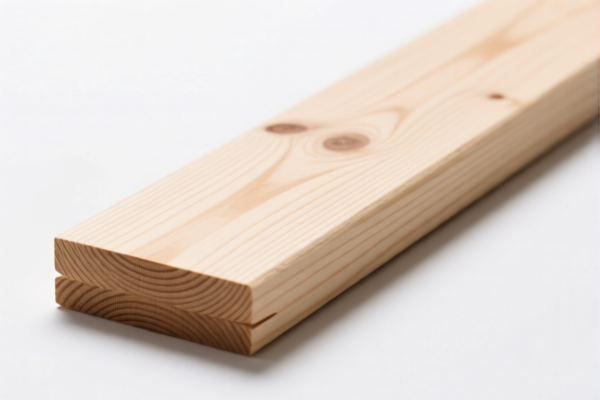
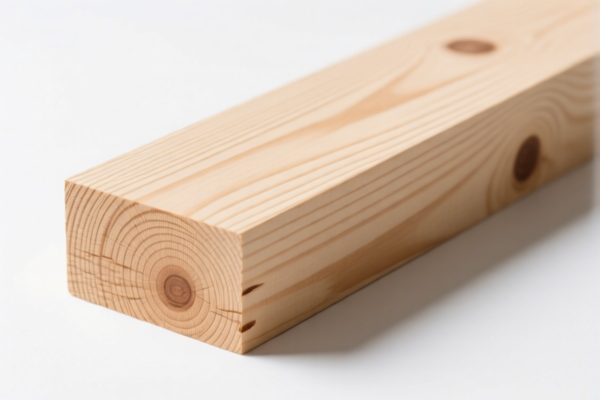
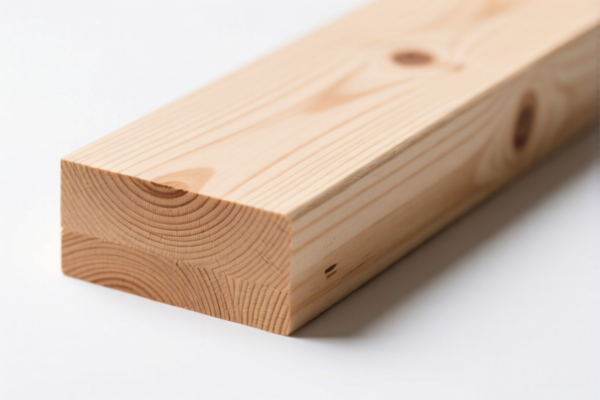
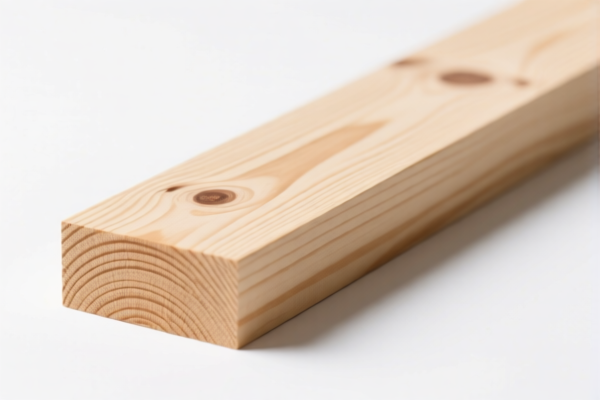
AI Analysis
🌲 Construction Fir Wood (Lumber)
🌐 HS Code Reference & Customs Clearance Guide | 2026 Latest Tariff Analysis | Professional Entry Strategy
📌 I. Product Definition: What is "Construction Fir Wood"?
Fir wood, botanically classified under the genus Abies, is a premier softwood widely used in construction, framing, and interior finishes. In international trade, it is categorized not by its final product (e.g., a wall or a table), but by its processing state.
According to the provided data, we are dealing with Sawn or Chipped Wood of a thickness exceeding 6 mm. This distinguishes it from wood chips, sawdust, or thin veneers. The key distinctions within this category depend on: 1. Species: Whether it is generic Fir (Abies spp.) or mixed with Spruce (Picea spp.). 2. Treatment: Whether it has been impregnated, coated, or otherwise chemically treated. 3. Finish: Whether it is "Rough" (sawn but unplaned/sanded) or "Other" (planed, sanded, or end-jointed).
⚠️ Critical Distinction:
- If the wood is not treated and is Rough → HS Code 4407.12.00.58
- If the wood is not treated but is Planed/Sanded/Jointed → HS Code 4407.12.00.59
- Note: The provided data specifies "Not treated" for both codes. If treated, different HS codes would apply.
📦 II. HS Code Classification Details (2026 Latest Tariff Authority)
Based strictly on the provided <DATA>, here are the two applicable HS Codes for Construction Fir Wood:
| HS Code | Product Description | Key Characteristics | Processing State |
|---|---|---|---|
4407.12.00.58 |
Fir (Abies spp.): Rough | Sawn/chipped, >6mm thickness. Not treated. Surface is rough (unplaned). | 🪚 Raw Sawn Lumber |
4407.12.00.59 |
Fir (Abies spp.): Other | Sawn/chipped, >6mm thickness. Not treated. Includes planed, sanded, or end-jointed. | ✨ Planed/Sanded/Joined |
🔍 Important Note:
- Both codes fall under 4407.12: Coniferous wood, of fir (Abies spp.) and spruce (Picea spp.).
- The difference lies in the surface finish. "Rough" implies it is ready for structural framing where aesthetics don't matter. "Other" implies it is ready for visible construction (trim, flooring, furniture) where smoothness matters.
- Both codes explicitly exclude treated wood (e.g., pressure-treated for outdoor use), which would have different HS codes.
💰 III. 2026 Latest Tariff Rate Detailed Explanation
✅ Applicable Country: United States (US)
✅ Origin: China (CN)
✅ Effective Date: Current tariff structure applies
🎯 1. 4407.12.00.58 & 4407.12.00.59 —— Construction Fir Wood (Untreated)
| Item | Content |
|---|---|
| Base Tariff Rate | 0.0% (Ad Valorem) |
| Additional Tariff (Section 301) | +25.0% |
| Total Effective Tariff | 25.0% |
| Tax Calculation | CIF Value × 25% |
| De Minimis Exemption | ❌ Not Eligible (Deny De Minimis) |
| Tax Detail Breakdown | Base Tariff: 0.0%, Additional Tariff: 25.0% |
📌 Explanation:
- Base Rate 0%: Wood products from many origins have low base duties to encourage construction material imports.
- Additional 25%: This is a Section 301 tariff, imposed specifically on goods originating from China. This is a punitive trade measure and cannot be avoided through standard tariff engineering unless a specific exclusion applies (which is rare and time-limited).
- No De Minimis: Small shipments cannot bypass this tariff via the $800 de minimis rule.⚠️ Warning:
The 25% additional tariff is the dominant cost driver. Even though the base rate is 0%, the effective duty is 25% of the declared value. This significantly impacts profit margins for importers.
🛠️ IV. Customs Clearance Practical Advice
✅ 1. Documentation Checklist (Mandatory)
| Document | Required | Purpose |
|---|---|---|
| ✅ Commercial Invoice | ✔️ | Must clearly state "Fir Wood (Abies spp.)", HS Code, and "Not Treated". |
| ✅ Packing List | ✔️ | Detail gross/net weight, number of bundles, and dimensions. |
| ✅ Phytosanitary Certificate | ✔️ | Critical! Issued by the country of origin's plant protection agency. Certifies wood is pest-free. |
| ✅ ISPM 15 Marking | ✔️ | If shipped in pallets or crates, wood must bear the IPPC stamp (heat-treated or fumigated). |
| ✅ Bill of Lading / Air Waybill | ✔️ | Proof of shipment. |
| ✅ Country of Origin Certificate | ✔️ | To prove origin is China (triggering the 25% tariff). |
✅ 2. Declaration Tips (Key Rules)
🔥 "Species Matter, Treatment Matters, Thickness Matters!"
| Scenario | Correct Declaration | Incorrect Action |
|---|---|---|
| Rough Fir Lumber (for framing) | 4407.12.00.58 + "Rough" |
Misdeclare as "Wood Planks" → Unclear |
| Planed/Sanded Fir (for trim) | 4407.12.00.59 + "Planed/Sanded" |
Misdeclare as "Furniture Parts" → Higher duty risk |
| Treated Wood (outdoor deck) | Not 4407.12 | Using 4407.12 codes → Customs Rejection/Fine |
| Thickness < 6mm | Not 4407 | Using 4407 for thin wood → Wrong Chapter |
📌 Key Point:
- Ensure the invoice explicitly states "Not Treated" if claiming these HS codes. If the wood is chemically treated (e.g., for outdoor use), it does not fit "Not treated" description and may require different HS codes and additional environmental certifications.
- "Fir" vs. "Spruce": If the wood is a mix or cannot be distinguished, it may fall under generic "Coniferous" codes, but accurate species identification is preferred to avoid delays.
✅ 3. Special Considerations
| Issue | Handling Advice |
|---|---|
| Pest Control | Ensure Phytosanitary Certificate matches the shipment exactly. Any discrepancy leads to quarantine or destruction. |
| ISPM 15 | If wooden packaging is used, it must be marked. Unmarked wooden pallets can cause entire shipment rejection. |
| Tariff Engineering | Can you claim a different origin? No, if grown/harvested in China, origin is China. Consider sourcing from non-China countries to avoid 25% tariff. |
| Valuation | Customs may verify CIF value. Ensure insurance and freight are included. Under-declaration leads to penalties. |
🌍 V. Global Market Comparison (2026 Latest)
| Country/Region | Recommended HS Code | Tariff (China Origin) | Key Requirements | Notes |
|---|---|---|---|---|
| 🇺🇸 USA | 4407.12.00.58/59 |
25% | Phytosanitary Cert, ISPM 15 | High tariff due to trade tensions. |
| 🇨🇳 China | 4407.12.00.58/59 |
0-5% (Import Duty) | Phytosanitary Cert | Low import duty for raw wood. |
| 🇪🇺 EU | 4407.12.00 |
0% (if compliant) | FLEGT/EUTR Compliance | Strict legality verification. |
| 🇨🇦 Canada | 4407.12.00 |
0% | Phytosanitary Cert | No additional duties on Canadian timber. |
📌 Conclusion:
- The 25% tariff in the USA is the primary cost factor for Chinese-origin Fir wood.
- EU and Canada offer better tariff advantages, but have strict legality and sustainability requirements.
- Diversify Supply Chain: Consider sourcing Fir from Russia, Canada, or Nordic countries to avoid the 25% Section 301 tariff when exporting to the US.
📌 VI. Common Errors & Pitfalls (Lessons Learned)
❌ Error 1: Declaring "Treated Wood" as "Not Treated"
👉 Consequence: Customs finds chemical treatment residues → Seizure & Fine.
✅ Fix: Correctly classify treated wood under different HS codes (e.g., 4407.99).
❌ Error 2: Missing Phytosanitary Certificate
👉 Consequence: Shipment held at port for fumigation or destroyed.
✅ Fix: Ensure certificate is issued by the national plant protection organization of the exporting country.
❌ Error 3: Ignoring ISPM 15 on Pallets
👉 Consequence: Rejection of entire shipment if packaging is non-compliant.
✅ Fix: Use heat-treated wooden pallets with the IPPC logo.
❌ Error 4: Misidentifying Species (Fir vs. Spruce)
👉 Consequence: Delay in customs inspection.
✅ Fix: Provide expert botanical identification if mixed species are present.
🎯 VII. Conclusion: Professional Declaration, Cost Control, Smooth Clearance
🎯 Key Takeaways:
🔹 "Rough = .58, Planed = .59, Both = 25% Duty."
🔹 "No Phytosanitary Cert = No Entry."
🔹 "Treated Wood ≠ Untreated Codes."🔹 "Consider Non-China Origins to Save 25%!"
📌 Pro Tip:
If you are importing construction materials into the US, the 25% additional tariff is a significant cost.
- Strategy 1: Source from Canada or Nordic countries (tariff-free or low tariff).
- Strategy 2: Apply for HS Code Exclusions if available (check USTR website for current lists).
- Strategy 3: Factor the 25% duty into your pricing model to maintain margins.
📣 Immediate Action:
📞 Engage a Licensed Customs Broker
📄 Secure Phytosanitary Certificate & ISPM 15 Marking
📊 Verify CIF Value to Avoid Audits
🚀 Ensure Your Timber Shipment Cleared Smoothly, Tariff-Optimized, and Compliant!
✨ Professional Customs Clearance Starts with Accurate Classification!
💼 Every Percent of Duty Saved is Pure Profit!
Customer Reviews
About HS Code Classification
The Harmonized System (HS) is an internationally standardized nomenclature developed by the World Customs Organization (WCO) to classify traded products. Over 200 countries use the HS system as the basis for customs tariffs, trade statistics, and import/export regulations.
Each HS code follows a hierarchical structure:
- Chapter (2 digits) — Broad category of goods (e.g., Chapter 84: Machinery and Mechanical Appliances)
- Heading (4 digits) — More specific grouping within the chapter
- Subheading (6 digits) — Internationally standardized breakdown, used by all WCO member countries
- National subdivisions (8-10 digits) — Country-specific extensions for further classification, such as US HTSUS 10-digit codes
Correct HS code classification is essential for smooth customs clearance, accurate duty payment, and compliance with trade regulations. Misclassification can lead to customs delays, overpayment of duties, or penalties.
When importing from CN to US, the applicable tariff rates may include:
- Most-Favored-Nation (MFN) rate — The standard duty rate applied to WTO members
- General rate — Applied to countries without trade agreements
- Trade remedy duties — Additional tariffs such as Section 301 (anti-dumping), Section 232 (national security), or countervailing duties
The information provided on this page is for reference purposes only. For official classification, please consult with your local customs authority or a licensed customs broker.