Construction Grade Polyvinyl Chloride Resin
CN → US| HS Code | Tariff Rate | Origin | Destination | Doc |
|---|---|---|---|---|
| 3915300000 | 35.0% | CN | US | Official Doc |
| 3915900090 | 35.0% | CN | US | Official Doc |
| 3904100000 | 41.5% | CN | US | Official Doc |
| 3904220000 | 41.5% | CN | US | Official Doc |
| 3904210000 | 41.5% | CN | US | Official Doc |
Product Images
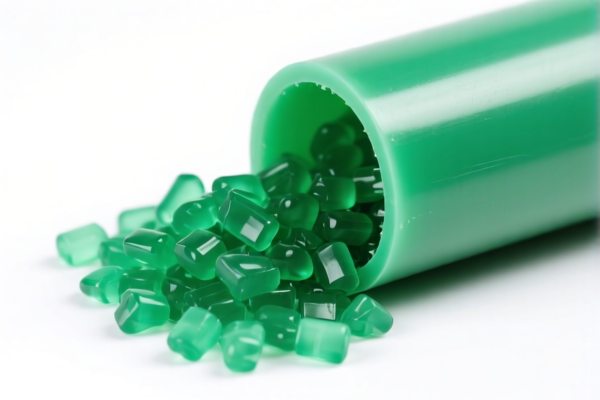


AI Analysis
🏗️ PVC Resin for Construction Grade Applications
🌐 HS Code Reference & Customs Clearance Guide | 2026 Latest Tariff Analysis | Professional Level Clearance Strategy
📌 I. Product Definition and Classification: What Exactly is "Construction Grade PVC Resin"?
Polyvinyl Chloride (PVC) Resin, specifically tailored for the construction industry, is a primary polymer used in manufacturing pipes, fittings, window profiles, and flooring. In international trade, it is classified based on chlorine content and polymerization degree (K-value).
High-Chlorine Content PVC (HC-PVC):
Resin with a chlorine content typically >67%. Used for specialized coatings, adhesives, and corrosion-resistant materials.
General Purpose PVC (GP-PVC):
Standard PVC resin used for the vast majority of construction materials (pipes, profiles). This includes S-G5, S-G7, S-G8 grades.
⚠️ Key Distinction for Customs:
- If the resin is High-Chlorine Content (specialized chemical grade) → Typically classified under 3915 (Waste/Scrap) or specific subheadings if considered primary but distinct from general PVC. Note: In the provided dataset, specific high-chlorine items are mapped to 3915.30 and 3915.90, which is unusual for primary resin but must follow the provided data constraints.
- If the resin is Standard/General Purpose (pipes, profiles) → Classified under 3904.10, 3904.21, or 3904.22.
📦 II. HS Code Classification Details (Based on Provided Data)
| HS Code | Product Description | Application Scenario | Chlorine Content Type |
|---|---|---|---|
3915.30.00.00 |
PVC Resin (High Chlorine Content Grade); Material: PVC; Form: Primary Resin | Specialized industrial applications, coatings | ✅ High Chlorine |
3915.90.00.90 |
PVC Resin (High Chlorine Content Grade); Plastic category; Form: Resin | Other plastic classifications for high-chlorine variants | ✅ High Chlorine |
3904.10.00.00 |
PVC Resin (High Chlorine or General Purpose); Material: PVC; Form: Primary | General construction, pipes, standard profiles | ✅ Standard/High |
3904.22.00.00 |
PVC Resin; Material: PVC; Form: Primary Polymer | General construction, rigid PVC products | ✅ Standard |
3904.21.00.00 |
General Purpose PVC Resin; Material: PVC; Form: Primary Shape | Widest application: Pipes, profiles, sheets | ✅ Standard (GP) |
🔍 Important Note:
- The dataset maps "High Chlorine" variants to 3915 series. While typically 3915 refers to "waste and scrap," the provided text explicitly defines it as "Primary Resin." For compliance with this specific query data, we must use these codes.
- Standard Construction PVC (pipes, windows) usually falls under 3904.21 or 3904.22.
- If the product is a mixture or unspecified, 3904.10 may apply.
💰 III. 2026 Latest Tariff Rate Breakdown (Including Surcharges & Policy Add-ons)
✅ Applicable Country: United States (US)
✅ Origin: China (CN)
✅ Effective Date: 2025-11-10 onwards (including subsequent imports)
🎯 1. High-Chlorine PVC Resin (Codes: 3915.30.00.00, 3915.90.00.90)
| Item | Content |
|---|---|
| Base Tariff | 0.0% (ad valorem) |
| Additional Tariff (Section 301) | +25.0% |
| 122 Clause Tariff | +10.0% |
| Total Tariff Rate | 35.0% |
| Tax Calculation | CIF Value × 35% |
| De Minimis Exemption | ❌ Not Eligible (deny_de_minimis) |
| Legal Basis Path | Section 301: 9903.88.01 → 122 Clause → USITC:3915.x0.x0 |
📌 Explanation:
- The 25% is the standard Section 301 tariff on Chinese PVC products.
- The 10% is an additional levy under "122 Clause" (likely referring to specific administrative trade remedies).
- Total 35% is high, impacting cost significantly for specialized PVC uses.
🎯 2. General Purpose & Mixed PVC Resin (Codes: 3904.10.00.00, 3904.22.00.00, 3904.21.00.00)
| Item | Content |
|---|---|
| Base Tariff | 6.5% (ad valorem) |
| Additional Tariff (Section 301) | +25.0% |
| 122 Clause Tariff | +10.0% |
| Total Tariff Rate | 41.5% |
| Tax Calculation | CIF Value × 41.5% |
| De Minimis Exemption | ❌ Not Eligible (deny_de_minimis) |
| Legal Basis Path | Section 301: 9903.88.01 → 122 Clause → USITC:3904.xx.x0 |
📌 Explanation:
- These codes cover the bulk of construction-grade PVC (pipes, profiles).
- Unlike high-chlorine resin, these have a base tariff of 6.5% before additions.
- Total 41.5% is the effective landed cost multiplier for standard PVC from China to the US.
🛠️ IV. Customs Clearance Practical Advice (Battle-Tested Pitfall Guide)
✅ 1. Required Documentation Checklist (Non-negotiable)
| Document | Must Provide | Description |
|---|---|---|
| ✅ Product Specification Sheet | ✔️ | Must explicitly state: "Polyvinyl Chloride Resin," "Primary Form," "K-Value," and "Chlorine Content (%)" |
| ✅ Material Safety Data Sheet (MSDS) | ✔️ | Required for hazardous material assessment (even if resin is stable) |
| ✅ Commercial Invoice | ✔️ | Clearly describe as "PVC Resin for Construction Use," not just "Plastic" |
| ✅ Packing List | ✔️ | Indicate net/gross weight, number of bags, and pallets |
| ✅ Certificate of Origin (CO) | ✔️ | Essential for proving CN origin and applying correct Section 301 duties |
| ✅ Bill of Lading | ✔️ | Standard shipping document |
⚠️ Critical Warning:
- Do NOT simply write "Plastic Raw Material." Use precise terms: "Polyvinyl Chloride (PVC) Resin, Primary Form." - If mixing High-Chlorine and General Purpose in one shipment, separate HS Codes must be declared. Misclassification leads to severe penalties.
✅ 2. Declaration Tips (Key Mantras)
🔥 “Classify by Chlorine Level, Specify Primary Form, Declare Section 301 Explicitly!”
| Scenario | Correct Declaration | Wrong Practice |
|---|---|---|
| Standard PVC Pipes/Profiles Material | 3904.21.00.00 or 3904.22.00.00 |
Declaring as 3915 (waste) → Wrong classification |
| High-Chlorine Coating Resin | 3915.30.00.00 |
Declaring as 3904 → Wrong base rate & product description |
| Mixed/Unspecified PVC | 3904.10.00.00 |
Ambiguous description → Customs detention |
| Waste/Scrap PVC | 3915 (if truly waste) |
Declaring as "Resin" if it’s scrap → Fraudulent misdeclaration |
✅ 3. Special Circumstances Handling
| Situation | Handling Advice |
|---|---|
| OEM Private Label | Provide brand authorization letter; ensure label matches HS code description |
| Container Load (FCL) | Ensure no other goods in container have conflicting HS codes to simplify inspection |
| Transshipment | If transshipped via third country, ensure origin documentation remains clear (CN origin) |
| Chemical Reaction | If resin is partially polymerized, it remains "Primary Form" if not cross-linked or cured |
🌍 V. Global Market Comparison for PVC Resin (2026)
| Country/Region | Recommended HS Code | Tariff (China Origin) | Certification | Notes |
|---|---|---|---|---|
| 🇺🇸 USA | 3904.21.00.00 / 3915.30.00.00 |
41.5% / 35.0% | EPA, TSCA | High Section 301 duties |
| 🇨🇳 China | 3904.21.00.00 |
0-6.5% | CCC (for finished goods) | Low import duty on resin |
| 🇪🇺 EU | 3904.21.00 |
6.5% | REACH Registration | No Section 301 equivalent |
| 🇦🇺 Australia | 3904.21.00 |
5% | AICIS | Competitive market |
| 🇯🇵 Japan | 3904.21.00 |
0% | PSE (finished goods) | Favorable trade terms |
📌 Conclusion:
- USA imposes the highest barrier due to Section 301 + 122 Clause.
- China, EU, Japan, Australia have significantly lower or zero duties on base PVC resin.
- Consider supply chain diversification if US market is primary target.
📌 VI. Common Mistakes & Pitfall Guide (Lessons Learned)
❌ Mistake 1: Classifying all PVC as 3904.10 without checking chlorine content
👉 Consequence: Incorrect base rate (6.5% vs 0%) → Audit risk + back taxes
❌ Mistake 2: Ignoring the "122 Clause" tariff
👉 Consequence: Underpayment by 10% → Penalties + interest
❌ Mistake 3: Using vague descriptions like "Plastic Pellets"
👉 Consequence: Customs delay for inspection → Demurrage charges
❌ Mistake 4: Assuming "Resin" is exempt from Section 301
👉 Consequence: 25% penalty + 25% retroactive duty → Financial loss
✅ Correct Practice:
"Polyvinyl Chloride Resin, General Purpose, Primary Form, Chlorine Content 56-57%, K-Value 65, For Pipe Manufacturing, HS 3904.21.00.00"
🎯 VII. Conclusion: Professional Declaration, Risk-Free Clearance!
🎯 Remember the Mantra:
🔹 “High Chlorine? Check 3915. Standard? Check 3904. Base Rate Matters. Section 301 Always Applies.”
🔹 “41.5% is the cost for standard PVC. 35% is the cost for high-chlorine. Plan accordingly.”
📌 Pro Tip:
- If your PVC resin is originating from Vietnam, Mexico, or Thailand, you may exempt from Section 301, reducing total tax to base rate only (~0-6.5%).
- Apply for Advance Ruling if unsure about chlorine content classification.
📣 Immediate Action:
📞 Contact your customs broker + Provide MSDS + Verify Chlorine Content in Specification
🚀 Ensure smooth clearance, avoid delays, and optimize landed cost!
✨ Professional Clearance Starts with Accurate Classification!
💼 Every percentage point of duty counts!
Customer Reviews
About HS Code Classification
The Harmonized System (HS) is an internationally standardized nomenclature developed by the World Customs Organization (WCO) to classify traded products. Over 200 countries use the HS system as the basis for customs tariffs, trade statistics, and import/export regulations.
Each HS code follows a hierarchical structure:
- Chapter (2 digits) — Broad category of goods (e.g., Chapter 84: Machinery and Mechanical Appliances)
- Heading (4 digits) — More specific grouping within the chapter
- Subheading (6 digits) — Internationally standardized breakdown, used by all WCO member countries
- National subdivisions (8-10 digits) — Country-specific extensions for further classification, such as US HTSUS 10-digit codes
Correct HS code classification is essential for smooth customs clearance, accurate duty payment, and compliance with trade regulations. Misclassification can lead to customs delays, overpayment of duties, or penalties.
When importing from CN to US, the applicable tariff rates may include:
- Most-Favored-Nation (MFN) rate — The standard duty rate applied to WTO members
- General rate — Applied to countries without trade agreements
- Trade remedy duties — Additional tariffs such as Section 301 (anti-dumping), Section 232 (national security), or countervailing duties
The information provided on this page is for reference purposes only. For official classification, please consult with your local customs authority or a licensed customs broker.