Construction Machinery Parts
CN → US| HS Code | Tariff Rate | Origin | Destination | Doc |
|---|---|---|---|---|
| 8431499050 | 85.0% | CN | US | Official Doc |
| 8709900010 | 35.0% | CN | US | Official Doc |
| 8436990090 | 35.0% | CN | US | Official Doc |
| 8436990035 | 35.0% | CN | US | Official Doc |
| 8433905045 | 35.0% | CN | US | Official Doc |
Product Images
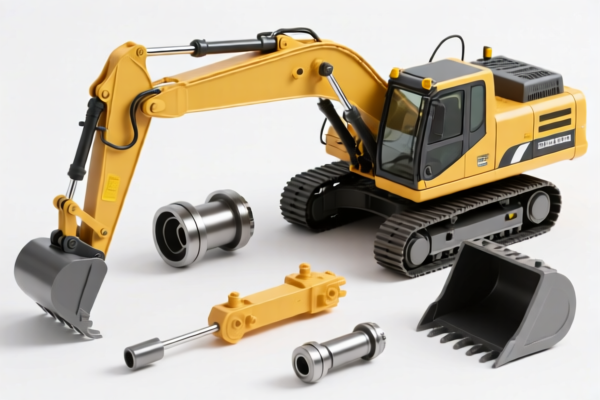
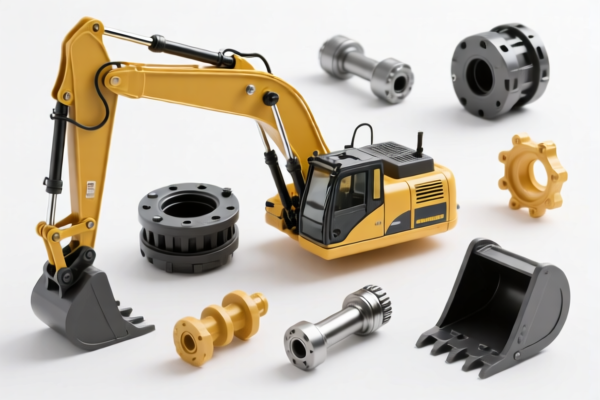
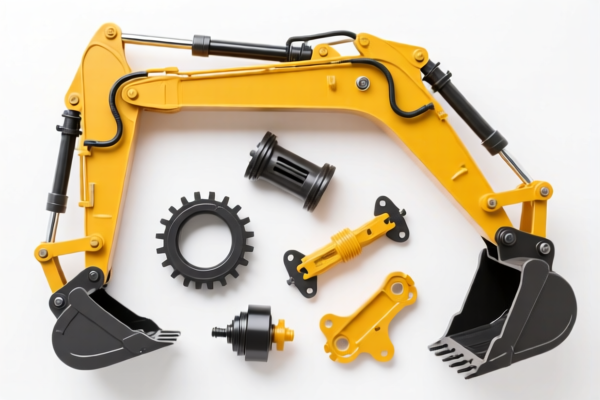
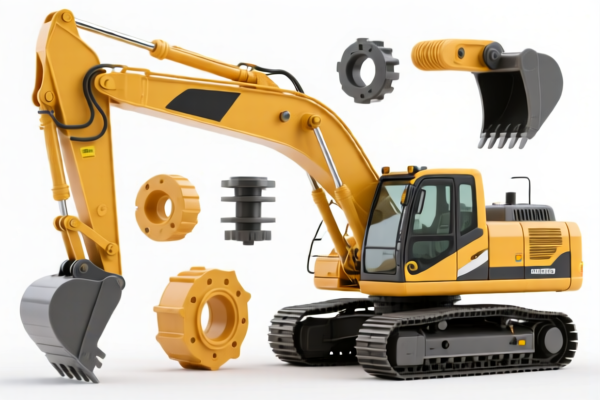
AI Analysis
🏗️ Construction Machinery Parts (Components for Heavy Equipment)
🌐 HS Code Reference & Clearance Guide | 2026 Latest Tariff Analysis | Professional Clearance Strategy
📌 I. Product Definition & Classification: What Are "Construction Machinery Parts"?
Construction machinery parts refer to components specifically designed for machines falling under Chapter 84, Headings 8426 (Cranes), 8429 (Self-propelled earth-moving machinery), and 8430 (Other earth-moving/ boring machinery). In international trade, these parts are often classified based on the "Parts Default Principle" (if a specific part isn't listed, it defaults to the main machine's category) or general machinery parts categories.
⚠️ Key Distinction Points:
- Specific Machine Parts: If clearly for cranes (8426) or self-propelled loaders (8429), they may fall under specific subheadings (e.g., 8431.49.90.50).
- General Mechanical Parts: If the part is generic (like a pump housing, gear, or bracket) without specific identification to one machine, it may fall under general mechanical parts (e.g., 8709.90.00.10 or 8436.99).
- Agricultural vs. Construction: Some earth-moving equipment is dual-purpose. If used for soil preparation in farming, it might be classified under Agricultural Machinery (8433/8436).
📦 II. HS Code Classification Details (2026 Latest Tariff Authority Comparison)
| HS Code | Product Description | Applicable Scenario | Key Classification Logic |
|---|---|---|---|
8431.49.90.50 |
Parts of machinery of headings 8426, 8429, or 8430 | Parts for cranes, graders, bulldozers, road rollers | Based on "Parts Default Principle" for specific construction equipment. |
8709.90.00.10 |
Parts of industrial vehicles not equipped with lifting or handling equipment | Generic mechanical parts, often linked to industrial truck components | Inferred from "Mechanical Parts" category; matches usage attributes of industrial vehicles. |
8436.99.00.90 |
Parts of agricultural machinery | Parts for tractors, harvesters, soil tillers | Explicitly matches "Agricultural Machinery" usage; no material conflict. |
8436.99.00.35 |
Other agricultural machinery parts (Catch-all) | Generic agricultural components | Matches parts attributes; falls under residual category for agri-machinery. |
8433.90.50.45 |
Parts of harvesters or other agricultural machinery | Specific components for harvesting equipment | Matches part morphology; logical for combine harvesters & similar agri-equipment. |
🔍 Key Reminder:
- Headings 8426/8429/8430 Parts (8431.49.90.50) are high-tariff targets due to specific US trade restrictions.
- Agricultural Parts (8436,8433) are generally lower risk but must strictly prove agricultural use.
- General Mechanical Parts (8709) are risky if misclassified; ensure they don't exclusively fit a specific prohibited category.
💰 III. 2026 Latest Tariff Rate Breakdown (Including Surtaxes & Policy Add-ons)
✅ Applicable Country: USA (US)
✅ Origin: China (CN)
✅ Effective Date: Includes imports from 2025 onwards (current active surcharges apply)
🎯 1. 8431.49.90.50 —— Parts of Headings 8426, 8429, 8430 (Construction Machinery)
| Item | Content |
|---|---|
| Base Tariff | 0.0% (ad valorem) |
| Section 301 Surtax | +25.0% (China-origin goods) |
| Section 122 Surtax (Steel/Aluminum/Copper) | +50.0% (If component is made of steel, aluminum, or copper alloys) |
| Total Tariff Rate | 75.0% (Base 0 + 301 25 + 122 50) |
| Tax Calculation | CIF Value × 75% |
| De Minimis Exemption | ❌ Not Available |
| Legal Basis Path | USITC:8431.49.90.50 → Section 301: Footnote 9903.88.01 → Section 122: Steel/Aluminum/Copper Restrictions |
📌 Explanation:
- This is the highest risk category.
- The 50% Section 122 tariff applies specifically if the part contains significant amounts of steel, aluminum, or copper (common in heavy machinery).
- Even if base tariff is 0%, the total burden is 75%.
🎯 2. 8709.90.00.10 —— Industrial Vehicle Parts (General Mechanical)
| Item | Content |
|---|---|
| Base Tariff | 0.0% |
| Section 301 Surtax | +25.0% |
| Section 122 Surtax | Not explicitly listed in snippet (Assumed not applicable or covered under 301 only) |
| Total Tariff Rate | 25.0% (Base 0 + 301 25) |
| Tax Calculation | CIF Value × 25% |
| De Minimis Exemption | ❌ Not Available |
| Legal Basis Path | USITC:8709.90.00.10 → Section 301: Footnote 9903.88.01 |
📌 Note:
- This code is inferred as "Mechanical Parts."
- If the part is not made of steel/aluminum/copper, it may avoid the 50% Section 122 tax, resulting in a 25% total rate.
- Risk: Customs may reclassify this as a construction part (8431) if usage is evident, jumping the rate to 75%.
🎯 3. 8436.99.00.90 & 8436.99.00.35 —— Agricultural Machinery Parts
| Item | Content |
|---|---|
| Base Tariff | 0.0% |
| Section 301 Surtax | +25.0% |
| Section 122 Surtax | +10% (If steel/aluminum content triggers 122, snippet shows "10%") |
| Total Tariff Rate | 35.0% (Base 0 + 301 25 + 122 10) |
| Tax Calculation | CIF Value × 35% |
| De Minimis Exemption | ❌ Not Available |
| Legal Basis Path | USITC:8436.99.00.90 → Section 301 → Section 122 |
📌 Explanation:
- Agricultural parts generally face lower surcharges than construction parts.
- The snippet indicates a 10% Section 122 component (possibly for specific alloys or non-heavy steel).
- Critical: Must prove agricultural use. If customs suspects construction use, they will reclassify to8431(75% rate).
🎯 4. 8433.90.50.45 —— Parts of Harvesters & Other Agri-Machinery
| Item | Content |
|---|---|
| Base Tariff | 0.0% |
| Section 301 Surtax | +25.0% |
| Section 122 Surtax | +10% |
| Total Tariff Rate | 35.0% |
| Tax Calculation | CIF Value × 35% |
| De Minimis Exemption | ❌ Not Available |
| Legal Basis Path | USITC:8433.90.50.45 → Section 301 → Section 122 |
📌 Note:
- Same rate as general agri-parts (8436).
- Specific to harvesters. Ensure documentation supports "Harvester" usage.
🛠️ IV. Clearance Practical Advice (Avoiding Pitfalls)
✅ 1. Preparation Checklist (Mandatory)
| Material | Required | Description |
|---|---|---|
| ✅ Product Specifications | ✔️ | Detailed dimensions, material (Steel/Aluminum/Copper?), weight, function. |
| ✅ Part Number & OEM Reference | ✔️ | Link to the specific machine model (e.g., CAT 320, John Deere 8R). |
| ✅ Material Certification | ✔️ | Crucial for Section 122. Prove if the part is steel/aluminum/copper to justify the 50% or 10% rate. |
| ✅ Usage Declaration | ✔️ | Explicitly state: "For Agricultural Use" or "For Construction Crane." |
| ✅ Commercial Invoice | ✔️ | Accurate description, value, and HS Code. |
| ✅ Packing List | ✔️ | Separate parts from main machines to avoid "Complete Machine" classification. |
✅ 2. Clearance Strategies (Key Tips)
🔥 “Material Matters, Usage Defines, Code Chooses!”
| Scenario | Correct Strategy | Risk if Incorrect |
|---|---|---|
| Steel/Aluminum Part | Declare as 8431.49.90.50 (Construction) with 50% Section 122 + 25% 301 = 75%. |
Trying to hide material → Penalty + Rejection. |
| Generic Metal Bracket | Try to classify as 8709.90.00.10 (General Parts) if it fits industrial vehicle criteria. |
If deemed "Construction," rate jumps to 75%. |
| Harvester Blade | Declare as 8433.90.50.45 (Agri Parts). Rate 35%. |
Misclassified as Construction → 75% + Audit. |
| Mixed Shipment | Split declaration: Agri parts vs. Construction parts. | Combined declaration may lead to highest rate for all items. |
✅ 3. Special Situations
| Situation | Handling Advice |
|---|---|
| Section 122 Exemption? | If the part is not steel/aluminum/copper (e.g., plastic, rubber, electronics), the 50% Section 122 tax may not apply. Verify material composition! |
| Dual-Use Equipment | If a machine is used for both construction and agriculture, provide proof of primary agricultural use (e.g., farm invoices, agricultural permits) to qualify for 35% instead of 75%. |
| OEM vs. Aftermarket | Aftermarket parts must still match the HS code of the original OEM part. Do not use a lower-rate code unless functionally different. |
🌍 V. Global Market Comparison (2026 Update)
| Country/Region | Recommended HS Code | Tariff (China Origin) | Key Requirement | Note |
|---|---|---|---|---|
| 🇺🇸 USA | 8431.49.90.50 (Construction) |
75% (Steel/Aluminum) | Material Proof + Section 301/122 | Highest risk. |
| 🇺🇸 USA | 8436.99.00.90 (Agri) |
35% (Steel/Aluminum) | Agricultural Use Proof | Lower risk, but strict documentation. |
| 🇨🇳 China | 8431.49.90.50 |
0% - 5% | CCC (if applicable) | No Section 301/122. |
| 🇪🇺 EU | 8431.49 (NTR) |
~0% - 4.5% | CE Marking, REACH | No Section 301/122. |
| 🇬🇧 UK | 8431.49 |
~0% - 4.5% | UKCA Marking | Post-Brexit rules apply. |
📌 Conclusion:
- USA is the most challenging market due to Section 301 (25%) and Section 122 (50% for metals).
- Agricultural Parts are significantly cheaper to import into the US (35% vs 75%) but require strict proof of end-use.
- Material Composition is the key driver for the Section 122 surcharge.
📌 VI. Common Errors & Pitfalls (Lessons Learned)
❌ Error 1: Classifying all metal parts as "General Mechanical" (8709) to avoid Section 122.
👉 Result: Customs reclassifies as Construction Parts → 75% Rate + Back Taxes.
❌ Error 2: Failing to declare Steel/Aluminum/Copper content for Section 122.
👉 Result: Underpayment → Seizure or Penalty.
❌ Error 3: Using "Construction Part" description for Agricultural Parts.
👉 Result: Missed opportunity for 35% rate; stuck at 75%.
✅ Correct Practice:
"Steel Bucket Tooth for Excavator (CAT 320), For Construction Use" →
8431.49.90.50(75%)
"Blade for Grain Harvester, For Agricultural Use" →8433.90.50.45(35%)
🎯 VII. Conclusion: Professional Classification, Cost Control!
🎯 Remember the Rule:
🔹 "Construction = 75% (Steel/Aluminum)"
🔹 "Agriculture = 35% (Steel/Aluminum)"
🔹 "Non-Metal = Lower Rate (Verify Material)"
🔹 "Document Usage, Declare Material!"
📌 Pro Tip:
If your parts are not made of steel, aluminum, or copper (e.g., plastic, composite, electronic control units), the 50% Section 122 tax does not apply. You may only pay the 25% Section 301.
→ Action: Always provide Material Safety Data Sheets (MSDS) or Bill of Materials (BOM) to prove material composition and potentially reduce tariffs.
📣 Immediate Action:
📞 Consult a licensed customs broker.
📄 Prepare Material Certificates and Usage Declarations.
🚀 Apply for Section 122 Exclusion (if applicable and available) to save up to 50% on tariffs.
✨ Precise Classification Saves Thousands!
💼 Don't Let Tariffs Eat Your Margin!
Customer Reviews
About HS Code Classification
The Harmonized System (HS) is an internationally standardized nomenclature developed by the World Customs Organization (WCO) to classify traded products. Over 200 countries use the HS system as the basis for customs tariffs, trade statistics, and import/export regulations.
Each HS code follows a hierarchical structure:
- Chapter (2 digits) — Broad category of goods (e.g., Chapter 84: Machinery and Mechanical Appliances)
- Heading (4 digits) — More specific grouping within the chapter
- Subheading (6 digits) — Internationally standardized breakdown, used by all WCO member countries
- National subdivisions (8-10 digits) — Country-specific extensions for further classification, such as US HTSUS 10-digit codes
Correct HS code classification is essential for smooth customs clearance, accurate duty payment, and compliance with trade regulations. Misclassification can lead to customs delays, overpayment of duties, or penalties.
When importing from CN to US, the applicable tariff rates may include:
- Most-Favored-Nation (MFN) rate — The standard duty rate applied to WTO members
- General rate — Applied to countries without trade agreements
- Trade remedy duties — Additional tariffs such as Section 301 (anti-dumping), Section 232 (national security), or countervailing duties
The information provided on this page is for reference purposes only. For official classification, please consult with your local customs authority or a licensed customs broker.