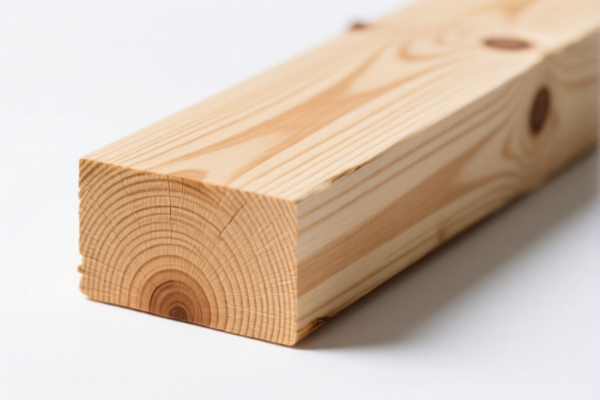
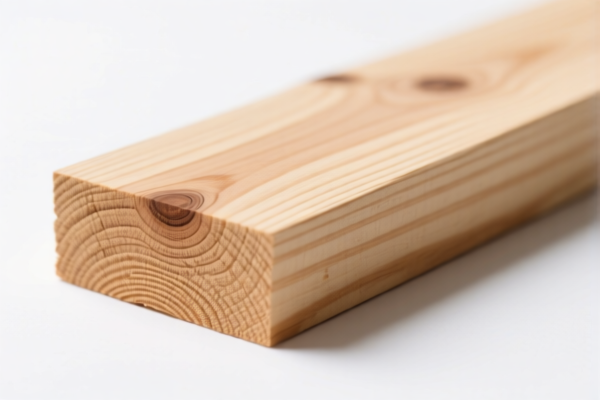
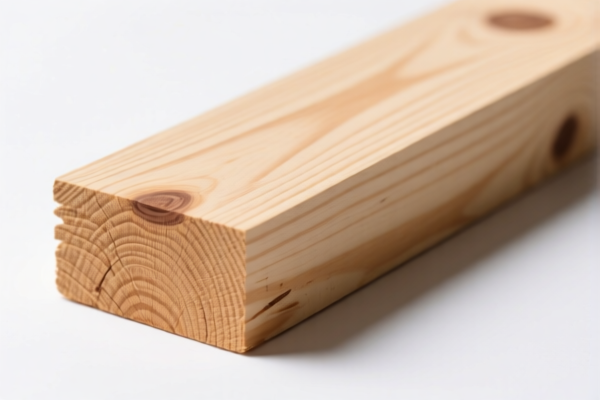
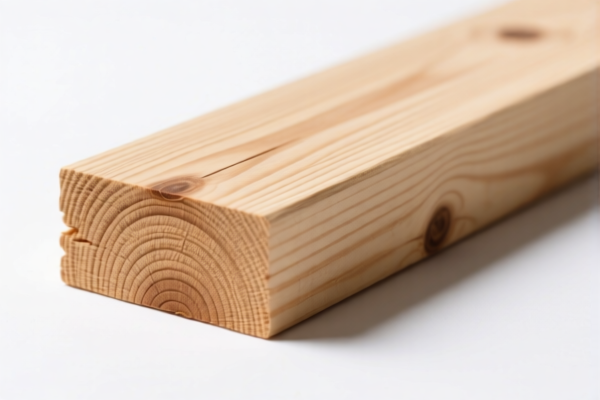
Construction Pine Rough Timber
CN → US| HS Code | Tariff Rate | Origin | Destination | Doc |
|---|---|---|---|---|
| 4407110042 | 35.0% | CN | US | Official Doc |
| 4407110044 | 35.0% | CN | US | Official Doc |
Product Images
AI Analysis
🌲 Construction Pine Rough Timber (Eastern & Red Pine)
🌐 HS Code Reference & Customs Clearance Guide | 2026 Latest Tariff Analysis | Professional Strategy
📌 I. Product Definition & Classification: What is "Construction Pine Rough Timber"?
In international trade, "Construction Pine Rough Timber" refers to wood that has been sawn, chipped, sliced, or peeled lengthwise, with a thickness exceeding 6 mm. The key descriptor here is "Rough", which means the wood has not been planed, sanded, or end-jointed. It is in its primary processed state, suitable for further construction processing.
⚠️ Critical Distinction:
The classification depends entirely on the pine species and the state of treatment. Even though both are "Pine" and "Rough," different species are assigned to different HS Codes with vastly different tax implications.
📦 II. HS Code Classification Details (2026 Latest Tariff对照)
Based on the provided data, there are two distinct HS Codes for "Construction Pine Rough Timber," differentiated by pine species:
| HS Code | Product Description | Species | Treatment Status | Key Characteristic |
|---|---|---|---|---|
4407.11.00.42 |
Wood sawn or chipped lengthwise... of a thickness exceeding 6 mm: Coniferous: Of pine (Pinus spp.)... Eastern white pine (Pinus strobus) and red pine (Pinus resinosa): Rough | Eastern White Pine (Pinus strobus) Red Pine (Pinus resinosa) |
Not Treated | High tariff impact (25% additional) |
4407.11.00.44 |
Wood sawn or chipped lengthwise... of a thickness exceeding 6 mm: Coniferous: Of pine (Pinus spp.)... Lodgepole pine (Pinus contorta): Rough | Lodgepole Pine (Pinus contorta) | Not Treated | Zero additional tariff |
🔍 Key Insight:
-4407.11.00.42is specific to Eastern White Pine and Red Pine. These are often premium construction woods in North America. -4407.11.00.44is specific to Lodgepole Pine. This is a different species entirely. - DO NOT confuse these two. Misdeclaring Lodgepole Pine as Eastern White Pine could lead to severe underpayment of duties.
💰 III. 2026 Latest Tariff Rate Breakdown
✅ Applicable Market: United States (US)
✅ Origin: China (CN) – Assumed based on typical trade context; verify origin.
✅ Effective Time: Current tariff schedule (2025/2026)
🎯 1. 4407.11.00.42 — Eastern White Pine & Red Pine (Rough)
| Item | Detail |
|---|---|
| Base Tariff | 0.0% |
| Additional Tariff | +25.0% (Section 301 Retaliatory Tariff) |
| Total Tax Rate | 25.0% |
| Calculation | CIF Value × 25% |
| De Minimis Exemption | ❌ Not Applicable for Section 301 goods |
| Legal Basis | USITC Footnote for 4407.11.00.42 includes 25% additional duty |
📌 Explanation:
- The base MFN (Most Favored Nation) rate for coniferous pine wood is 0%. - However, due to trade tensions, a 25% additional tariff is applied specifically to this HS Code (4407.11.00.42) under Section 301. - Total Cost Impact: 25% of the declared value.
🎯 2. 4407.11.00.44 — Lodgepole Pine (Rough)
| Item | Detail |
|---|---|
| Base Tariff | 0.0% |
| Additional Tariff | 0.0% |
| Total Tax Rate | 0.0% |
| Calculation | CIF Value × 0% |
| De Minimis Exemption | ✅ Applicable (if under $800) |
| Legal Basis | No Section 301 additional duty for this specific code |
📌 Explanation:
- This HS Code benefits from a 0% total tax rate. - This makes Lodgepole Pine significantly more cost-effective for import into the US compared to Eastern White or Red Pine. - Strategic Advantage: If your supply chain allows, sourcing Lodgepole Pine instead of Eastern/Red Pine can save you 25% in duties.
🛠️ IV. Customs Clearance Practical Advice (Real-World Pitfall Avoidance)
✅ 1. Essential Documentation Checklist
| Document | Required? | Purpose |
|---|---|---|
| ✅ Commercial Invoice | ✔️ | Must clearly state species: Pinus strobus, Pinus resinosa, or Pinus contorta. |
| ✅ Packing List | ✔️ | Detail dimensions, volume, and number of pieces. |
| ✅ Phytosanitary Certificate | ✔️ | Mandatory for wood products to prove freedom from pests/diseases. |
| ✅ Fumigation Certificate | ✔️ | If wood was fumigated (ISPM 15 standard). |
| ✅ Species Verification | ✔️ | If unsure, provide wood samples for botanical identification. Customs will verify! |
✅ 2. Declaration Tips (Key Mantra)
🔥 "Species Matters! Check the Latin Name, or Pay the Price!"
| Scenario | Correct Declaration | Wrong Action | Consequence |
|---|---|---|---|
| Eastern/Red Pine | 4407.11.00.42"Eastern White Pine, Rough, Unplaned" |
Declare as generic "Pine" or 4407.11.00.44 |
25% Penalty + Back Taxes |
| Lodgepole Pine | 4407.11.00.44"Lodgepole Pine, Rough, Unplaned" |
Declare as 4407.11.00.42 |
Overpayment of 25% duties |
| Mixed Species | Split shipment or Declare highest tax code | Mix in one box without separation | Customs seizure or audit |
✅ 3. Special Considerations
| Situation | Handling Advice |
|---|---|
| Mixed Shipment (E.g., 90% Lodgepole, 10% Red) | Declare each species separately if possible. If mixed, customs may apply the highest tax rate (25%) to the entire shipment. |
| Thickness ≤ 6mm | Not Covered Here! These codes are for thickness > 6mm. Thinner wood may fall under different HS codes (e.g., plywood or veneers). |
| Treated Wood | These codes specify "Not Treated". If wood is pressure-treated or chemically treated, different codes and potential chemical declarations apply. |
🌍 V. Global Market Comparison (2026)
| Country/Region | Recommended HS Code (Rough Pine) | Tariff (China Origin) | Notes |
|---|---|---|---|
| 🇺🇸 USA | 4407.11.00.42 (Eastern/Red)4407.11.00.44 (Lodgepole) |
25% vs 0% | Critical to distinguish species! |
| 🇨🇳 China | 4407.11.00.42 / 4407.11.00.44 |
Varies | China imports raw pine; check current MOFCOM tariff. |
| 🇪🇺 EU | 4407.10 (General Coniferous) |
~2.7% | EU does not use the same 8-digit sub-codes as US. |
| 🇨🇦 Canada | 4407.10.00 |
0% (USMCA) | Duty-free if originating from US/Canada under USMCA. |
📌 Conclusion:
- The US market is the most complex due to the 25% differential between species. - Lodgepole Pine (4407.11.00.44) is the clear winner for cost-sensitive imports. - Always verify the botanical species before shipping. "Pine" is not specific enough for US customs.
📌 VI. Common Mistakes & Pitfalls (Lessons Learned)
❌ Mistake 1: Declaring all pine as "Generic Pine" (4407.11.90 or similar)
👉 Result: Customs will demand exact species. Delay in clearance + potential 25% rate applied by default.
❌ Mistake 2: Confusing "Rough" with "Planed"
👉 Result: Planed wood may fall under different HS codes with different tariffs. Ensure description says "Rough" or "Unplaned".
❌ Mistake 3: Ignoring the Species Difference
👉 Result: Importing Eastern White Pine but declaring Lodgepole → 25% Back Taxes + Penalties.
✅ Correct Practice:
"Lumber, Rough, Thickness 50mm, Species: Pinus strobus (Eastern White Pine), HS Code: 4407.11.00.42"
🎯 VII. Conclusion: Precision Saves Money!
🎯 Remember the Mantra:
🔹 "Species is King! Lodgepole is Free, Eastern/Red is Taxed!"
🔹 "Check the Latin Name, avoid the 25% Surprise!"
📌 Pro Tip:
If you are importing Eastern White Pine or Red Pine, consider:
1. Cost-Benefit Analysis: Is the 25% tariff worth it? Can you substitute with Lodgepole Pine?
2. Pre-Arrival Review: File for a Binding Ruling with US Customs to confirm the HS Code before shipping.
3. Supply Chain Diversification: Explore sourcing from countries with favorable trade agreements (e.g., Canada under USMCA).
📣 Immediate Action:
📞 Consult a Customs Broker + Verify Species on Invoice + Confirm HS Code Pre-Shipment
🚀 Make Your Timber Imports Smooth, Compliant, and Cost-Effective!
✨ Professional Clearance Starts with Accurate Classification!
💼 Your Bottom Line Depends on These Details!
Customer Reviews
About HS Code Classification
The Harmonized System (HS) is an internationally standardized nomenclature developed by the World Customs Organization (WCO) to classify traded products. Over 200 countries use the HS system as the basis for customs tariffs, trade statistics, and import/export regulations.
Each HS code follows a hierarchical structure:
- Chapter (2 digits) — Broad category of goods (e.g., Chapter 84: Machinery and Mechanical Appliances)
- Heading (4 digits) — More specific grouping within the chapter
- Subheading (6 digits) — Internationally standardized breakdown, used by all WCO member countries
- National subdivisions (8-10 digits) — Country-specific extensions for further classification, such as US HTSUS 10-digit codes
Correct HS code classification is essential for smooth customs clearance, accurate duty payment, and compliance with trade regulations. Misclassification can lead to customs delays, overpayment of duties, or penalties.
When importing from CN to US, the applicable tariff rates may include:
- Most-Favored-Nation (MFN) rate — The standard duty rate applied to WTO members
- General rate — Applied to countries without trade agreements
- Trade remedy duties — Additional tariffs such as Section 301 (anti-dumping), Section 232 (national security), or countervailing duties
The information provided on this page is for reference purposes only. For official classification, please consult with your local customs authority or a licensed customs broker.