Construction Pine Rough Wood
CN → US| HS Code | Tariff Rate | Origin | Destination | Doc |
|---|---|---|---|---|
| 4418810000 | 38.2% | CN | US | Official Doc |
| 4407110043 | 35.0% | CN | US | Official Doc |
| 4407110001 | 35.0% | CN | US | Official Doc |
| 4409104090 | 35.0% | CN | US | Official Doc |
| 4409104010 | 35.0% | CN | US | Official Doc |
| 4418300100 | 38.2% | CN | US | Official Doc |
Product Images
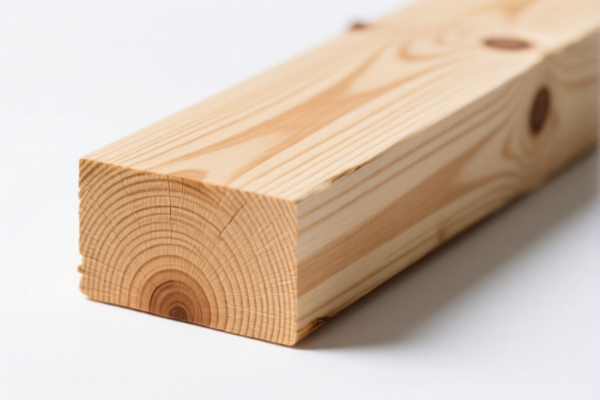
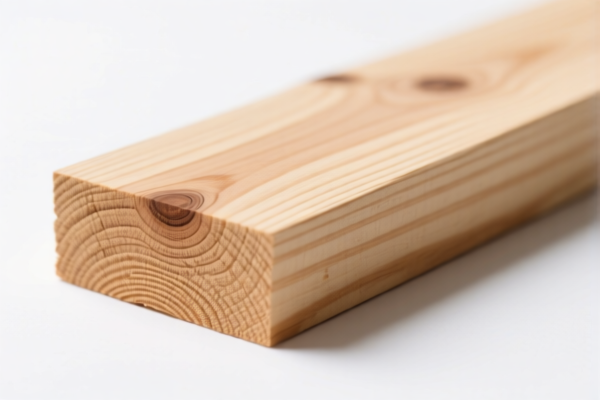
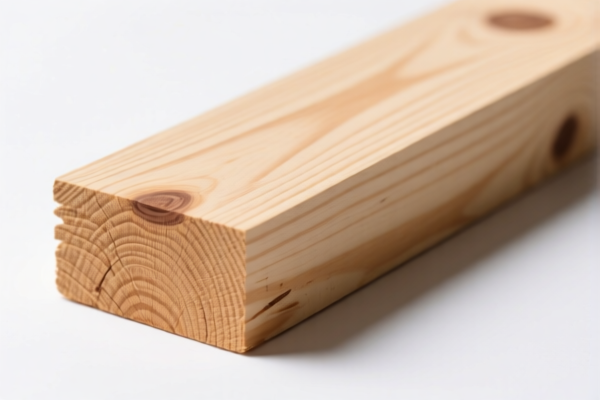
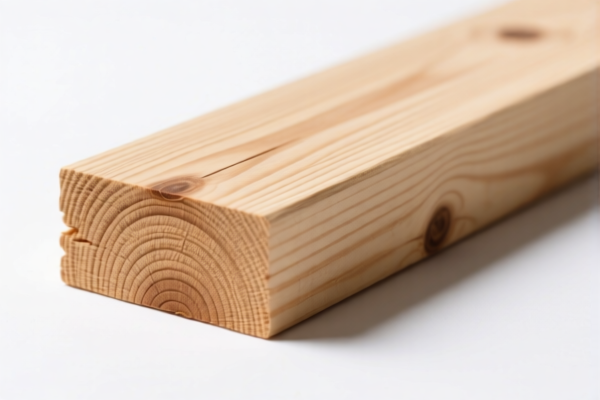
AI Analysis
🪵 Construction Pine Rough Wood (Raw Timber for Building)
🌐 HS Code Reference & Customs Clearance Guide | 2026 Latest Tariff Analysis | Professional Clearance Strategy
📌 I. Product Definition and Classification: What Exactly is "Construction Pine Rough Wood"?
"Pine Rough Wood" refers to unprocessed or minimally processed coniferous timber (specifically Pine), intended for use in construction. It is a critical raw material in the building industry, typically coming in forms such as logs, squared timber, or planks that have been sawn but not planed, joined, or assembled into final structural components.
In international trade, it is crucial to distinguish between: * Rough Timber (Logs/Sawn): The basic raw material. * Woodworking Products: Items that have been cut, shaped, drilled, or assembled (e.g., beams, joists, pre-fabricated parts).
⚠️ Key Distinction Point:
- If the wood is squared, sawn, but not joined or finished → It falls under Chapter 44, Heading 4403 or 4407.
- If the wood is shaped, drilled, or assembled (e.g., pre-cut beams, joists, or construction joinery) → It falls under Heading 4418 or 4409.
📦 II. HS Code Classification Details (2026 Latest Tariff Authority Cross-Reference)
Based on the provided data, here are the specific HS Codes applicable to "Construction Pine Rough Wood" and its variants:
| HS Code | Product Description | Application Scenario | Key Characteristics |
|---|---|---|---|
4407.11.00.43 |
Sawn coniferous pine timber | Raw construction material, base timber | ✅ Sawn, unjoined, rough form |
4407.11.00.01 |
Other pine wood processing products | General pine timber products for building | ✅ Sawn, specific to pine, raw/semi-processed |
4418.81.00.00 |
Pine construction joinery and woodworking products | Prefabricated structural parts, beams | ✅ Joined, shaped, or specifically for construction assembly |
4418.30.01.00 |
Pine construction joinery items | Columns, beams, girders, structural joints | ✅ Specific structural elements (columns/beams) |
4409.10.40.90 |
Pine wooden products (inferred) | Generic pine wood goods | ✅ Inferred category for other pine wood items |
4409.10.40.10 |
Pine wood molded parts | Molded pine components | ✅ Shaped/molded pine, no material conflict |
🔍 Critical Reminder:
- "Rough Wood" typically points to4407.11.xx.xxcodes (Sawn timber).
- If the "rough wood" is cut to specific lengths or shapes for immediate installation (like pre-cut beams), it may shift to4418.81.00.00or4418.30.01.00.
- Do not mix "raw logs" with "finished joinery" in one shipment if their HS codes differ significantly, as this can cause customs delays.
💰 III. 2026 Latest Tariff Rate Breakdown (Including Surtaxes & Policy Add-ons)
✅ Applicable Country: United States (US)
✅ Origin: China (CN)
✅ Effective Date: 2025-11-10 onwards (including subsequent imports)
🎯 1. 4407.11.00.43 & 4407.11.00.01 —— Sawn Pine Timber (Raw/Rough)
| Item | Detail |
|---|---|
| Base Tariff Rate | 0.0% (ad valorem) |
| Surtax (Section 301) | +25.0% |
| 122 Provision Tariff | +10.0% |
| Total Effective Rate | 35.0% |
| Tax Calculation | CIF Value × 35% |
| De Minimis Exemption | ❌ Not Applicable |
| Legal Authority Path | Base 0% → Surtax 25% → 122 Provision 10% |
📌 Explanation:
- These codes cover basic sawn pine wood. The base tariff is low (0%), but the 35% total rate makes it highly sensitive to cost changes.
- The 10% "122 Provision" is a specific additional tariff layer often applied to strategic or bulk raw materials under current trade policies.
🎯 2. 4418.81.00.00 & 4418.30.01.00 —— Pine Construction Joinery (Beams, Columns, Structured Parts)
| Item | Detail |
|---|---|
| Base Tariff Rate | 3.2% (ad valorem) |
| Surtax (Section 301) | +25.0% |
| 122 Provision Tariff | +10.0% |
| Total Effective Rate | 38.2% |
| Tax Calculation | CIF Value × 38.2% |
| De Minimis Exemption | ❌ Not Applicable |
| Legal Authority Path | Base 3.2% → Surtax 25% → 122 Provision 10% |
📌 Explanation:
- These codes apply if the wood has been shaped for construction (e.g., drilled for bolts, cut to specific beam dimensions).
- The 3.2% base tariff is slightly higher than raw timber, leading to a 38.2% total rate, which is 3.2 percentage points higher than raw sawn timber.
- Warning: Misclassifying a pre-cut beam as "rough wood" to get 35% instead of 38.2% is a common compliance risk.
🎯 3. 4409.10.40.90 & 4409.10.40.10 —— Other Pine Wood Products (Molded/Inferred)
| Item | Detail |
|---|---|
| Base Tariff Rate | 0.0% |
| Surtax (Section 301) | +25.0% |
| 122 Provision Tariff | +10.0% |
| Total Effective Rate | 35.0% |
| Tax Calculation | CIF Value × 35% |
| De Minimis Exemption | ❌ Not Applicable |
📌 Note:
- These are inferred categories for pine products that don't fit neatly into joinery or standard sawn timber.
- They carry the same 35% total rate as raw sawn timber, but the description must be precise to avoid "Other Category" penalties.
🛠️ IV. Customs Clearance Practical Advice (Real-World Pitfall Avoidance)
✅ 1. Preparation Checklist (Non-Negotiable)
| Document | Required | Explanation |
|---|---|---|
| ✅ Product Specification Sheet | ✔️ | Must detail: Species (Pine), Treatment (Untreated/Treated), Dimensions, Moisture Content. |
| ✅ Photographs (Clear & Labeled) | ✔️ | Show cross-section (to confirm pine rings), end grain, and any markings/labels. |
| ✅ Commercial Invoice | ✔️ | Must clearly state: "Sawn Pine Timber, Rough, Unprocessed" OR "Pine Construction Beams, Cut to Length". |
| ✅ Packing List | ✔️ | Detail number of pieces, total volume (CBM), and weight. |
| ✅ Phytosanitary Certificate | ✔️ | CRITICAL for wood products. Proves no pests/diseases. Without this, shipment will be held or destroyed. |
| ✅ ISPM 15 Marking (if applicable) | ✔️ | If packaged in pallets, they must bear the IPPC stamp. |
✅ 2. Declaration Strategy (Key Mantra)
🔥 "Be Specific: 'Rough' vs. 'Joined' Dictates 3.2% Difference!"
| Scenario | Correct Declaration | Incorrect Practice |
|---|---|---|
| Raw Sawn Planks | 4407.11.00.43 (35%) |
Declare as "Wood Lumber" (too vague) → Audit Risk |
| Pre-Cut Beams/Joists | 4418.81.00.00 (38.2%) |
Declare as "Rough Wood" → 3.2% Underpayment + Penalty |
| Molded Pine Parts | 4409.10.40.10 (35%) |
Declare as "Construction Material" (Generic) → Delays |
| Untreated vs. Treated | Specify Treatment | Omit Treatment → Rejected by USDA/Customs |
✅ 3. Special Handling Tips
| Situation | Handling Advice |
|---|---|
| Moisture Content | Ensure wood is dry enough to prevent mold during transit. Specify "Kiln Dried" or "Air Dried" in docs. |
| Pest Control | Ensure no bark if required by specific US state regulations. Bark can carry insects. |
| Mixed Shipments | Do not mix "rough timber" with "finished furniture" in one HS code. Separate lines in invoice. |
| Value Declaration | Ensure CIF value includes freight and insurance. Under-declaring value triggers audits and higher effective tax rates. |
🌍 V. Global Market Comparison (2026 Update)
| Region | Recommended HS Code | Tariff Rate (China Origin) | Notes |
|---|---|---|---|
| 🇺🇸 USA | 4407.11.00.43 / 4418.81.00.00 |
35% (Rough) / 38.2% (Joined) | High tariffs due to 301 & 122 provisions. |
| 🇨🇳 China | 4407.11.00.00 |
~20-25% (Import) | Varies by treatment. |
| 🇪🇺 EU | 4407.10.00 |
0% (if FTA compliant) | CE Marking not required for raw timber, but phytosanitary is key. |
| 🇯🇵 Japan | 4407.10.00 |
5.3% | Strict phytosanitary rules. |
| 🇦🇺 Australia | 4407.10.00 |
5% | High biosecurity standards. |
📌 Conclusion:
- The USA is the most expensive market for pine wood due to the 35-38.2% blended tariff.
- Accuracy in description is vital to avoid penalties.
- Phytosanitary compliance is as important as tariff classification.
📌 VI. Common Mistakes & Pitfall Guide (Lessons Learned)
❌ Mistake 1: Calling "Pre-cut Beams" "Rough Wood"
👉 Consequence: 3.2% underpayment + Penalties for misclassification.
👉 Fix: Use 4418.81.00.00 for shaped/joined construction parts.
❌ Mistake 2: Ignoring Phytosanitary Certificate
👉 Consequence: Shipment quarantined or destroyed by USDA/Customs.
👉 Fix: Obtain certificate from origin country's plant protection agency.
❌ Mistake 3: Vague Description ("Pine Wood")
👉 Consequence: Customs officer assigns highest default rate + Audit.
👉 Fix: Use precise terms: "Sawn Pine Timber, Rough, Unprocessed, 2x4, 8ft".
✅ Correct Practice:
"Sawn Pine Timber, Rough, Unprocessed, Length: 8ft, Thickness: 1", HS Code: 4407.11.00.43, Phytosanitary Cert: #12345"
🎯 VII. Conclusion: Precision in Wood Trade
🎯 Remember the Mantra:
🔹 "Rough is 35%, Joined is 38.2% — Don't Get Caught!"
🔹 "No Phytosanitary, No Entry — Keep Your Wood Clean!"
📌 Pro Tip:
If your pine wood is sourced from Vietnam, Thailand, or Malaysia, you may qualify for lower or zero tariffs under US trade agreements (like IEEPA exemptions or specific FTAs).
Recommendation: Apply for an Advance Ruling from US Customs if your shipment volume is high, to lock in the correct HS Code and tariff rate.
📣 Immediate Action:
📞 Contact a licensed customs broker + Provide Phytosanitary Cert + Verify HS Code Pre-Ruling
🚀 Ensure your pine wood clears US customs smoothly, on time, and at the correct tax rate!
✨ Professional Clearance Starts with Accurate Classification!
💼 Every Percent of Tariff Counts — Don't Leave Money on the Table!
Customer Reviews
About HS Code Classification
The Harmonized System (HS) is an internationally standardized nomenclature developed by the World Customs Organization (WCO) to classify traded products. Over 200 countries use the HS system as the basis for customs tariffs, trade statistics, and import/export regulations.
Each HS code follows a hierarchical structure:
- Chapter (2 digits) — Broad category of goods (e.g., Chapter 84: Machinery and Mechanical Appliances)
- Heading (4 digits) — More specific grouping within the chapter
- Subheading (6 digits) — Internationally standardized breakdown, used by all WCO member countries
- National subdivisions (8-10 digits) — Country-specific extensions for further classification, such as US HTSUS 10-digit codes
Correct HS code classification is essential for smooth customs clearance, accurate duty payment, and compliance with trade regulations. Misclassification can lead to customs delays, overpayment of duties, or penalties.
When importing from CN to US, the applicable tariff rates may include:
- Most-Favored-Nation (MFN) rate — The standard duty rate applied to WTO members
- General rate — Applied to countries without trade agreements
- Trade remedy duties — Additional tariffs such as Section 301 (anti-dumping), Section 232 (national security), or countervailing duties
The information provided on this page is for reference purposes only. For official classification, please consult with your local customs authority or a licensed customs broker.