Construction Plastic Bucket
CN → US| HS Code | Tariff Rate | Origin | Destination | Doc |
|---|---|---|---|---|
| 3923900012 | 38.0% | CN | US | Official Doc |
| 3923900014 | 38.0% | CN | US | Official Doc |
| 3926901000 | 20.9% | CN | US | Official Doc |
| 3926909989 | 22.8% | CN | US | Official Doc |
| 3917290050 | 38.1% | CN | US | Official Doc |
| 3917290090 | 38.1% | CN | US | Official Doc |
Product Images

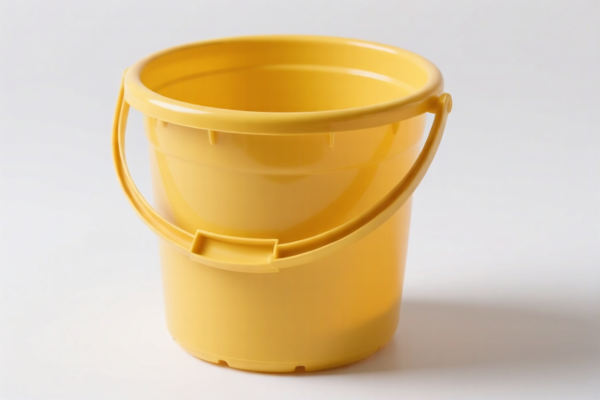

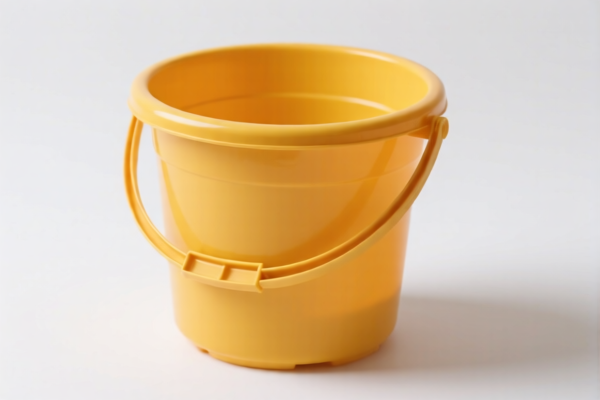
AI Analysis
🪣 Construction Plastic Bucket (Industrial/Chemical Drums)
🌐 HS Code Reference & Customs Clearance Guide | 2026 Latest Tariff Analysis | Professional Compliance Strategy
📌 I. Product Definition & Classification: What Exactly Is a "Construction Plastic Bucket"?
In international trade, "Construction Plastic Bucket" is a broad term that often refers to rigid plastic containers, drums, or tanks used for storing and transporting construction chemicals (adhesives, sealants, grouts), industrial fluids, or water/oil.
Because customs classification relies heavily on the specific material composition, shape, and primary use, these products can fall into multiple HS Code categories depending on how they are manufactured and labeled.
⚠️ Critical Distinction Point:
- If the bucket is classified as a general plastic packaging container (e.g., simple drum), it may fall under Chapter 39.23.
- If it is a specialized tank or vessel for water/oil transport, it may fall under Chapter 39.26.
- If it is considered a pipe fitting or part of a plumbing system (rare for standalone buckets but possible if part of a larger assembly), it might incorrectly be routed to Chapter 39.17.
- Note: Misclassification here leads to drastically different tariff rates (from ~21% to ~38%).
📦 II. HS Code Classification Details (2026 Authoritative Reference)
Based on the provided data, here are the possible HS Codes for Construction Plastic Buckets, categorized by their structural and functional description.
| HS Code | Product Description | Application Scenario | Key Classification Logic |
|---|---|---|---|
3923.90.00.12 |
Plastic Chemical Bucket, Plastic Material, Barrel Shape, for Chemical Packaging | General-purpose chemical drums, adhesive containers, bulk packaging | Classified as "Packaging" under Chapter 39.23. High tariff due to "Additional 25% + 122 Clause 10%". |
3923.90.00.14 |
Plastic Chemical Bucket, Plastic Material, Barrel Shape, for Chemical Packaging | Similar to .12, often a variant for different sizes or slight design differences | Also classified as "Packaging". Same high tariff structure as .12. |
3926.90.10.00 |
Plastic Chemical or Transport Bucket, Plastic Material, Tank Shape, for Water/Oil | Heavy-duty industrial tanks, water barrels, fuel drums | Classified as "Other Plastic Articles" (Tanks/Vessels). Lower tariff (Base 3.4% + Add 7.5% + 122 10%). |
3926.90.99.89 |
Plastic Chemical Bucket, Plastic Material, Container Shape, Other Plastic Articles | Generic plastic containers not specified elsewhere (e.g., complex shaped tanks) | Classified as "Other" under Chapter 39.26. Moderate tariff (Base 5.3% + Add 7.5% + 122 10%). |
3917.29.00.50 |
Plastic Chemical Bucket, Plastic Material, Pipe Fitting/Accessory Shape | Misclassification Risk: Sometimes wrongly declared as parts of plumbing systems | Classified under Pipe Fittings. Very High Tariff (Base 3.1% + Add 25% + 122 10%). |
3917.29.00.90 |
Plastic Chemical Bucket, Plastic Material, Container/Accessory, Other Category | Misclassification Risk: Another incorrect path for buckets under pipe fittings | Same high tariff as .50. High Risk of Customs Audit. |
🔍 Key Insight:
- Chapter 39.23 items are treated as packaging materials. They incur higher additional tariffs (25% USITC + 10% IEEPA).
- Chapter 39.26 items are treated as industrial products/vessels. They incur lower additional tariffs (7.5% USITC + 10% IEEPA).
- Chapter 39.17 is typically for pipes and fittings. Declaring a bucket here is a common error that triggers high tariffs and potential penalties.
💰 III. 2026 Latest Tariff Rate Breakdown (Including Surcharge & Policy Add-ons)
✅ Applicable Country: USA (US)
✅ Origin: China (CN)
✅ Effective Date: From November 10, 2025 (for subsequent imports)
🎯 1. 3923.90.00.12 & 3923.90.00.14 —— Plastic Chemical Buckets (Packaging Category)
| Item | Details |
|---|---|
| Base Tariff | 3.0% (Ad Valorem) |
| USITC Surcharge (Section 301) | +25.0% |
| 122 Clause Tariff (IEEPA) | +10.0% |
| Total Effective Rate | 38.0% |
| Tax Calculation | CIF Value × 38.0% |
| De Minimis Exemption | ❌ Not Eligible |
| Legal Basis Path | IEEPA:9903.01.25 → USITC:3923.90.00.12 → FOOTNOTE:3923.90.00.12 |
📌 Explanation:
- These codes are categorized under "Articles for the conveyance or packing of goods" (Chapter 39.23).
- The 25% additional tariff is applied because plastic packaging materials from China are heavily taxed under Section 301.
- The 10% IEEPA tariff is a baseline surcharge for many Chinese goods.
- Total 38% is a significant cost driver. Ensure your FOB/CIF prices account for this.
🎯 2. 3926.90.10.00 —— Plastic Chemical/Transport Buckets (Tank/Vessel Category)
| Item | Details |
|---|---|
| Base Tariff | 3.4% (Ad Valorem) |
| USITC Surcharge (Section 301) | +7.5% |
| 122 Clause Tariff (IEEPA) | +10.0% |
| Total Effective Rate | 20.9% |
| Tax Calculation | CIF Value × 20.9% |
| De Minimis Exemption | ❌ Not Eligible |
| Legal Basis Path | IEEPA:9903.01.24 → USITC:3926.90.10.00 → FOOTNOTE:3926.90.10.00 |
📌 Explanation:
- This code falls under "Other articles of plastics" (Chapter 39.26), specifically for tanks, casks, and drums used for transport.
- The USITC surcharge is significantly lower (7.5%) compared to packaging items (25%).
- Total 20.9% makes this a much more cost-effective classification if the product fits the description of a "transport tank" or "heavy-duty drum" rather than simple packaging.
- Strategy: If the bucket is robust, reusable, and designed for transport (not just single-use packaging), argue for this classification.
🎯 3. 3926.90.99.89 —— Other Plastic Chemical Containers
| Item | Details |
|---|---|
| Base Tariff | 5.3% (Ad Valorem) |
| USITC Surcharge (Section 301) | +7.5% |
| 122 Clause Tariff (IEEPA) | +10.0% |
| Total Effective Rate | 22.8% |
| Tax Calculation | CIF Value × 22.8% |
| De Minimis Exemption | ❌ Not Eligible |
| Legal Basis Path | IEEPA:9903.01.24 → USITC:3926.90.99.89 → FOOTNOTE:3926.90.99.89 |
📌 Explanation:
- This is a catch-all for plastic containers not specifically listed elsewhere in 39.26.
- If the bucket has unique features not covered by3926.90.10.00, this code applies.
- Total 22.8% is still far better than the 38% rate of Chapter 39.23.
🎯 4. 3917.29.00.50 & 3917.29.00.90 —— HIGH RISK MISCLASSIFICATION (Pipe Fittings)
| Item | Details |
|---|---|
| Base Tariff | 3.1% (Ad Valorem) |
| USITC Surcharge (Section 301) | +25.0% |
| 122 Clause Tariff (IEEPA) | +10.0% |
| Total Effective Rate | 38.1% |
| Tax Calculation | CIF Value × 38.1% |
| De Minimis Exemption | ❌ Not Eligible |
| Legal Basis Path | IEEPA:9903.01.25 → USITC:3917.29.00.50 → FOOTNOTE:3917.29.00.50 |
🚨 Warning:
- These codes are for pipes, tubes, hoses, and fittings.
- A standalone bucket does not fit this definition.
- However, if mistakenly declared under these codes (e.g., if the bucket is part of a larger plumbing kit), the tariff is still 38.1% (high due to 25% USITC).
- Risk: High probability of customs audit for incorrect classification. Avoid this path.
🛠️ IV. Customs Clearance Practical Advice (Real-World Pitfall Avoidance)
✅ 1. Required Documentation Checklist (Mandatory)
| Document | Must Provide | Description |
|---|---|---|
| ✅ Product Specifications Sheet | ✔️ | Details material (HDPE, PP, etc.), capacity, weight, dimensions. |
| ✅ Product Photos | ✔️ | Clear images showing the bucket's shape, lid, handles, and any labels. |
| ✅ Commercial Invoice | ✔️ | Must clearly state "Plastic Chemical Bucket" or "Plastic Transport Drum". Avoid vague terms like "Container". |
| ✅ Packing List | ✔️ | List quantity per carton/pallet. Ensure no loose parts are declared separately. |
| ✅ Material Declaration | ✔️ | Confirm if the plastic is food-grade, chemical-resistant, or recyclable. |
| ✅ HS Code Pre-Ruling (Optional but Recommended) | ✔️ | If unsure whether to use 3923 or 3926, apply for a pre-ruling to save costs. |
✅ 2. Declaration Strategy (Key Mantra)
🔥 "Packaging vs. Product: Use 3926 if it's a Tank, Use 3923 if it's a Bag/Box. Avoid 3917!"
| Scenario | Correct HS Code | Why? |
|---|---|---|
| Standard Plastic Drum for Chemicals | 3923.90.00.12/14 or 3926.90.10.00 |
If it's a standard single-use drum, 3923 is common. If it's a heavy-duty transport drum, 3926 is better. |
| Heavy-Duty Reusable Tank/Barrel | 3926.90.10.00 |
Fits "Transport" and "Tank" description. Lower tariff (20.9%). |
| Plastic Bucket with Lid & Handle | 3926.90.99.89 |
If it doesn't fit "drum" or "tank" exactly, use this catch-all under 3926 (22.8%). |
| Bucket Integrated into a Plumbing Kit | Review Carefully | If it's just a accessory, still likely 3926. Never use 3917 unless it's a pipe joint. |
✅ 3. Special Cases Handling
| Situation | Recommendation |
|---|---|
| OEM Custom Buckets | Provide client drawings and specifications. Highlight if it's a "Transport Vessel" to argue for 3926. |
| Chemical Resistant Coating | If the bucket has a special lining, emphasize this in the description to support 3926 (specialized article) rather than 3923 (general packaging). |
| Stackable/Nestable Design | If designed for efficient transport storage, this supports the "Transport Drum" argument under 3926. |
| Single-Use vs. Reusable | Reusable → Argue for 3926 (Lower Tariff). Single-Use → Often falls under 3923 (Higher Tariff). |
🌍 V. Global Customs Comparison (2026 Update)
| Country/Region | Recommended HS Code | Tariff Rate (China Origin) | Notes |
|---|---|---|---|
| 🇺🇸 USA | 3926.90.10.00 |
20.9% | Best rate for transport drums. Avoid 3923 (38%). |
| 🇺🇸 USA | 3923.90.00.12 |
38.0% | High cost. Only use if correctly classified as packaging. |
| 🇨🇳 China | 3926.90.10.00 |
5.0% | Import tax to China. No surcharge. |
| 🇪🇺 EU | 3926.90.99 |
6.5% | Standard duty. No major surcharges. |
| 🇬🇧 UK | 3926.90.99 |
6.5% | Post-Brexit standard rate. |
| 🇦🇺 Australia | 3926.90.99 |
5.0% | Low duty. No surcharges. |
📌 Conclusion:
- USA is the only market with significant surcharges (25% USITC + 10% IEEPA).
- Selecting the right HS Code (3926 vs. 3923) can save you up to 17% in tariffs.
- Always aim for 3926 if the product is a robust, transport-worthy drum/tank.
📌 VI. Common Errors & Pitfalls (Lessons Learned)
❌ Error 1: Declaring a heavy-duty plastic drum as "Plastic Packaging" (3923)
👉 Result: 38% tariff instead of 20.9%. Loss of competitiveness.
❌ Error 2: Declaring a simple bucket as a "Pipe Fitting" (3917)
👉 Result: Customs rejects the classification. Delays, fines, and still 38.1% tariff.
❌ Error 3: Using vague descriptions like "Plastic Container"
👉 Result: Customs may assign a default higher rate or request additional documentation.
❌ Error 4: Ignoring the "122 Clause" (IEEPA 10%)
👉 Result: Unexpected cost increase. Always calculate total landed cost including all surcharges.
✅ Correct Declaration Example:
"Heavy-Duty HDPE Plastic Transport Drum, Chemical Resistant, 55-Gallon Capacity, Reusable, Model XYZ, FDA Compliant"
→ Target HS Code:3926.90.10.00
🎯 VII. Conclusion: Professional Declaration, Cost Optimization
🎯 Remember the Mantra:
🔹 "Tank/Drum = 3926 (20.9%). Packaging = 3923 (38.0%). Pipe = 3917 (Don't Use!)."
🔹 "Choose 3926 for Reusable/Transport Buckets to Save 17% in Tariffs."
🔹 "HS Code Choice is Critical. A 17% difference changes your profit margin."
📌 Pro Tip:
If your plastic buckets are reusable, heavy-duty, or designed for transport, clearly document this in your commercial invoice and provide product specs. Argue for 3926.90.10.00 to benefit from the lower USITC surcharge (7.5% vs. 25%).
📣 Immediate Action:
📞 Consult with a licensed customs broker.
📄 Prepare detailed product specifications highlighting "Transport" and "Reusability".
🚀 Optimize your HS Code to reduce customs duties and maximize profit!
✨ Professional Clearance Starts with Accurate Classification!
💼 Every Percent of Tariff Saved is Pure Profit!
Customer Reviews
About HS Code Classification
The Harmonized System (HS) is an internationally standardized nomenclature developed by the World Customs Organization (WCO) to classify traded products. Over 200 countries use the HS system as the basis for customs tariffs, trade statistics, and import/export regulations.
Each HS code follows a hierarchical structure:
- Chapter (2 digits) — Broad category of goods (e.g., Chapter 84: Machinery and Mechanical Appliances)
- Heading (4 digits) — More specific grouping within the chapter
- Subheading (6 digits) — Internationally standardized breakdown, used by all WCO member countries
- National subdivisions (8-10 digits) — Country-specific extensions for further classification, such as US HTSUS 10-digit codes
Correct HS code classification is essential for smooth customs clearance, accurate duty payment, and compliance with trade regulations. Misclassification can lead to customs delays, overpayment of duties, or penalties.
When importing from CN to US, the applicable tariff rates may include:
- Most-Favored-Nation (MFN) rate — The standard duty rate applied to WTO members
- General rate — Applied to countries without trade agreements
- Trade remedy duties — Additional tariffs such as Section 301 (anti-dumping), Section 232 (national security), or countervailing duties
The information provided on this page is for reference purposes only. For official classification, please consult with your local customs authority or a licensed customs broker.