Construction Reflective Material (Roll)
CN → US| HS Code | Tariff Rate | Origin | Destination | Doc |
|---|---|---|---|---|
| 3921904010 | 39.2% | CN | US | Official Doc |
| 5903903090 | 37.7% | CN | US | Official Doc |
| 3919905010 | 40.8% | CN | US | Official Doc |
| 3921905010 | 39.8% | CN | US | Official Doc |
| 5903902000 | 35.0% | CN | US | Official Doc |
Product Images

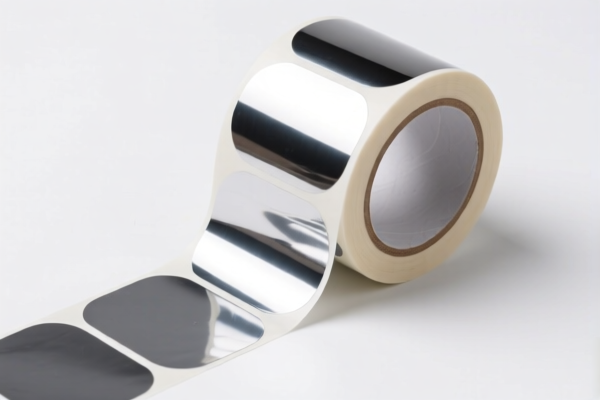
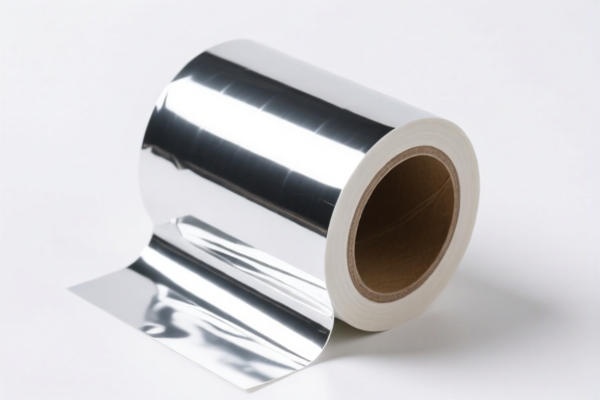

AI Analysis
🏗️ Construction Reflective Materials (Roll Form)
🌐 HS Code Reference & Customs Clearance Guide | 2026 Latest Tariff Analysis | Professional Compliance Strategy
📌 I. Product Definition & Classification: What Are "Construction Reflective Materials"?
Reflective materials in roll form are critical components for safety, visibility, and marking in construction, infrastructure, and urban planning. They are generally categorized by their base material (Plastics vs. Textiles) and their reflective technology (Glass Beads vs. Reflective Film/Sheets).
In international trade, these products are split into three main groups: 1. Plastic Self-Adhesive Reflective Sheeting: High-intensity retroreflective tape used for road markings, traffic signs, and safety barriers. 2. Plastic Reinforced/Coated Sheets: Durable sheets used for construction cladding, temporary fencing, or industrial signage. 3. Textile-Based Reflective Fabrics: Laminated or coated fabrics used for high-visibility safety gear, temporary barriers, or construction site covers.
⚠️ Key Distinction Point:
- If the product is self-adhesive tape/sheeting made of plastic → Classify under Chapter 39 (Plastics).
- If the product is fabric coated/laminated with plastic, intended for visibility → Classify under Chapter 59 (Impregnated Textiles).
- Do NOT classify reflective construction materials as "Glass" (Chapter 70) unless they are raw glass sheets, not films/sheets.
📦 II. HS Code Classification Details (2026 Latest Tariff Authority Cross-Reference)
| HS Code | Product Description | Application Scenario | Material Base |
|---|---|---|---|
3919.90.50.10 |
Self-adhesive plates, sheets, film, foil, tape... Other: Other Reflectorized sheeting | Road markings, traffic signs, safety barriers, self-adhesive tape. | Plastic (Adhesive) |
3919.90.10.00 |
Self-adhesive plates... Having a light-reflecting surface produced in whole or in part by glass grains (ballotini) | High-intensity retroreflective tapes using glass beads. | Plastic (Adhesive + Glass Beads) |
5903.90.30.90 |
Textile fabrics impregnated, coated, covered or laminated with plastics... Other: Other | Generic reflective fabrics, non-man-made fiber base, or mixed applications. | Textile (Laminated) |
5903.90.20.00 |
Textile fabrics... Of man-made fibers: Other: Over 70 percent by weight of rubber or plastics | High-strength reflective safety fabrics, construction covers, tarps. | Man-Made Fiber (Heavy Plastic Coating) |
3921.90.50.10 |
Other plates, sheets... Other: Other High pressure paper reinforced decorative laminates | Decorative reflective laminates for interior/exterior construction panels. | Plastic + Paper |
3921.90.40.10 |
Other plates, sheets... Flexible Reinforced with paper | Flexible reflective sheets reinforced with paper for construction packaging or temporary shields. | Plastic + Paper |
3920.49 |
Other articles of plastics... Reflective materials used in construction, in roll form, primarily intended for marking or safety purposes | Generic/Residual Category: Reflective plastic sheets not fitting other specific plastic headings. | Plastic (Non-Adhesive/Other) |
7019.99 |
Glass, not elsewhere specified... Reflective glass sheets or films used in construction... | Residual Category: Reflective glass films/sheets (Note: Data retrieval failed for tax). | Glass |
🔍 Important Note:
- Self-adhesive reflective sheets are almost always Chapter 39.
- Fabric-based reflective materials with >70% plastic content fall under Chapter 59.
- Non-adhesive reflective plastic sheets may fall under Chapter 39 (3920/3921) depending on structure.
💰 III. 2026 Latest Tariff Rate Breakdown (Including Surtaxes & Policy Add-ons)
✅ Applicable Country: United States (US)
✅ Country of Origin: China (CN)
✅ Effective Date: 2025 November 10 onwards (including subsequent imports)
🎯 1. 3919.90.50.10 —— Self-Adhesive Reflectorized Sheeting (Other)
| Item | Content |
|---|---|
| Base Tariff | 0% (ad valorem) |
| USITC Surtax | 0% (No additional 301 tariff applied to this specific subheading in the provided data) |
| Total Tax Rate | 0.0% |
| Tax Calculation | CIF Value × 0% = $0 |
| De Minimis Exemption | ✅ Yes (If value < $800, eligible for de minimis entry) |
| Legal Basis Path | HTSUS:3919.90.50.10 → General Rate |
📌 Explanation:
- This specific subheading for "Other Reflectorized sheeting" currently shows a 0% total tax in the provided dataset.
- Caution: Ensure the product is truly "self-adhesive." If it is not adhesive, it may move to a different heading with higher taxes.
🎯 2. 3919.90.10.00 —— Self-Adhesive with Glass Grains (Ballotini)
| Item | Content |
|---|---|
| Base Tariff | 0% (ad valorem) |
| USITC Surtax | 0% |
| Total Tax Rate | 0.0% |
| Tax Calculation | CIF Value × 0% = $0 |
| De Minimis Exemption | ✅ Yes |
| Legal Basis Path | HTSUS:3919.90.10.00 → General Rate |
📌 Explanation:
- Reflective materials using glass beads (ballotini) for retroreflection are classified here.
- Zero Tax makes this a highly competitive entry point for high-intensity safety tapes.
🎯 3. 5903.90.30.90 —— Other Textile Fabrics Laminated with Plastics
| Item | Content |
|---|---|
| Base Tariff | 0% |
| USITC Surtax | 0% |
| Total Tax Rate | 0.0% |
| Tax Calculation | CIF Value × 0% = $0 |
| De Minimis Exemption | ✅ Yes |
📌 Explanation:
- Generic reflective fabrics that do not meet the ">70% plastic weight" threshold or are not man-made fibers fall here.
- Zero Tax applies.
🎯 4. 5903.90.20.00 —— Man-Made Fiber Fabrics with >70% Rubber/Plastics
| Item | Content |
|---|---|
| Base Tariff | 0% |
| USITC Surtax | +25.0% (Section 301 Tariff) |
| Total Tax Rate | 25.0% |
| Tax Calculation | CIF Value × 25% |
| De Minimis Exemption | ❌ No (High tariff items often excluded from de minimis or subject to scrutiny) |
| Legal Basis Path | IEEPA:9903.01.25 → USITC:5903.90.20.00 → FOOTNOTE:301 Tariff |
📌 Critical Warning:
- If your reflective fabric is made of man-made fibers (e.g., polyester, nylon) and has a heavy plastic coating/lamination (>70% by weight), it triggers the 25% surtax.
- This is common for heavy-duty construction tarps or safety covers.
- Cost Impact: Significant increase in landed cost. Consider switching to natural fiber base or non-adhesive plastic sheeting if possible.
🎯 5. 3921.90.50.10 —— High Pressure Paper Reinforced Decorative Laminates
| Item | Content |
|---|---|
| Base Tariff | 4.8% |
| USITC Surtax | +25.0% (Section 301 Tariff) |
| Total Tax Rate | 29.8% |
| Tax Calculation | CIF Value × 29.8% |
| De Minimis Exemption | ❌ No (High tariff) |
| Legal Basis Path | USITC:3921.90.50.10 → FOOTNOTE:301 Tariff |
📌 Explanation:
- "Paper-reinforced decorative laminates" are used for interior/exterior construction cladding or signage boards.
- High Tax (29.8%): This category is subject to both base duty and the Section 301 surtax.
- Optimization Strategy: If the product is not strictly "decorative laminate" but rather a "flexible sheet," consider reclassifying to3921.90.40.10or other subheadings.
🎯 6. 3921.90.40.10 —— Flexible Reinforced with Paper
| Item | Content |
|---|---|
| Base Tariff | 4.2% |
| USITC Surtax | +25.0% (Section 301 Tariff) |
| Total Tax Rate | 29.2% |
| Tax Calculation | CIF Value × 29.2% |
| De Minimis Exemption | ❌ No |
📌 Explanation:
- Similar to above, but for "flexible sheets reinforced with paper."
- High Tax (29.2%): Also subject to Section 301.
- Note: If the paper reinforcement is minimal, argue for classification under non-paper-reinforced headings to reduce tax.
🎯 7. 3920.49 & 7019.99 —— Error/Error Retrieval Cases
| HS Code | Status |
|---|---|
3920.49 |
Tax Info Failed to Retrieve |
7019.99 |
Tax Info Failed to Retrieve |
📌 Action Required:
- Do NOT assume 0% or 25% for these codes.
- Contact a licensed customs broker to obtain the current HTSUS rate for3920.49(Other plastics) and7019.99(Other glass fibers).
- These may be subject to standard MFN rates or Section 301 tariffs depending on specific product form.
🛠️ IV. Customs Clearance Practical Advice (Real-World Pitfall Guide)
✅ 1. Documentation Checklist (Non-Negotiable)
| Document | Required? | Description |
|---|---|---|
| ✅ Product Specification Sheet | ✔️ | Must clearly state: Base material (Plastic/Fabric), Adhesive type, Reflective layer (Glass beads/Prismatic), Roll width/thickness. |
| ✅ Composition Breakdown | ✔️ | Critical for Chapter 59 vs 39. Specify % of fabric vs. % of plastic coating. If >70% plastic by weight, it triggers 25% surtax. |
| ✅ Product Photos | ✔️ | Show cross-section, adhesive side, reflective side, and roll end. |
| ✅ Commercial Invoice | ✔️ | Use precise English description: e.g., "Self-Adhesive Reflective Polyester Sheeting, Glass Bead Type." Avoid vague terms like "Safety Material." |
| ✅ Certificate of Origin (CO) | ✔️ | Essential for proving origin to apply potential exemptions or determine surtax eligibility. |
✅ 2. Declaration Tips (Key Mnemonics)
🔥 “Adhesive is 39, Fabric is 59, Paper Reinforcement is Tax Heavy!”
| Scenario | Correct HS Code | Incorrect Practice | Consequence |
|---|---|---|---|
| Self-Adhesive Tape/Sheet | 3919.90.xxxx |
Misdeclare as 3920 (Non-adhesive) |
Under-declaration Risk + Penalties |
| Reflective Fabric (>70% Plastic) | 5903.90.20.00 |
Declare as 5903.90.30.90 |
25% Surtax Evasion → Audit/Fine |
| Paper-Reinforced Laminate | 3921.90.50.10 |
Declare as 3921.90.40.10 |
Minor Rate Difference, but still 29.2% |
| Generic Reflective Plastic Sheet | 3920.49 |
Use 3919 |
Misclassification → Delayed Clearance |
✅ 3. Special Handling Cases
| Case | Handling Advice |
|---|---|
| OEM Custom Sizes | Provide cut-to-size specs. If rolls are cut, ensure they are still "rolls" for HS purposes. |
| Reflective Safety Vests vs. Sheeting | Vests are apparel (Chapter 61/62); Sheets/Rolls are materials (Chapter 39/59). Do not confuse. |
| Glass Bead vs. Prismatic | Both fall under 3919 if self-adhesive. Prismatic may have higher value but same HS if structure matches. |
| Mixed Container | If container has both 3919 (0% tax) and 5903.90.20.00 (25% tax), separate invoices and declarations are mandatory to avoid tax leakage on the whole shipment. |
🌍 V. Global Market Customs Comparison (2026 Latest)
| Country/Region | Recommended HS Code | Tariff Rate (China Origin) | Certification Requirements | Notes |
|---|---|---|---|---|
| 🇺🇸 USA | 3919.90.50.10 / 5903.90.20.00 |
0% (Plastic Adhesive) 25% (Fabric Heavy Plastic) |
FDA (if food contact), CPSIA (if children's), Prop 65 | Section 301 applies to Chapter 59 high-plastic content. |
| 🇪🇺 EU | 3919.90 / 5903.90 |
0-6.5% (Varies by subheading) | CE Marking, REACH Compliance | No surtax, but strict chemical compliance. |
| 🇨🇳 China | 3919.90 / 5903.90 |
0-10% | CCC (if applicable) | Low base rates, no surtax. |
| 🇯🇵 Japan | 3919.90 / 5903.90 |
0-3.8% | PSE (if electrical components involved) | No surtax. |
📌 Conclusion:
- USA is the only market with significant surtax risks for reflective materials, specifically those falling under Chapter 59 with >70% plastic weight.
- Plastic Self-Adhesive Sheeting (3919) is currently 0% taxed in the US, making it the most cost-effective category.
- Fabric-based reflective materials require careful composition analysis to avoid the 25% surtax.
📌 VI. Common Errors & Pitfall Guide (Lessons Learned)
❌ Mistake 1: Declaring Heavy Plastic-Coated Reflective Fabric as "Textile Fabric" without specifying plastic weight.
👉 Consequence: Classified under 5903.90.20.00 → 25% Surtax applied retroactively + penalties.
✅ Fix: Clearly state "% Plastic Coating" on invoice and provide lab test reports.
❌ Mistake 2: Using Generic "Reflective Tape" as description without specifying "Self-Adhesive."
👉 Consequence: Customs may reject 3919 and force classification under 3920 or 3921 → Higher Taxes or Delay.
✅ Fix: Use precise terms: "Self-Adhesive Reflective Sheeting, Plastic Base."
❌ Mistake 3: Ignoring Paper Reinforcement.
👉 Consequence: Paper-reinforced products (3921.90.xxxx) are subject to 29%+ taxes. If paper is not essential, argue for non-paper classification.
✅ Fix: Provide material breakdown showing paper is minimal or non-structural.
🎯 VII. Conclusion: Professional Declaration, Cost Efficiency, Risk Mitigation!
🎯 Remember the Mnemonic:
🔹 “Adhesive is 39, Zero Tax is Easy; Fabric Heavy is 59, 25% Tax is High! Paper Reinforced is 3921, 29% Tax is Pain!”
🔹 “HS Code Determines Life or Death, 25% Surcharge Makes or Breaks the Deal!”
📌 Pro Tip:
If your reflective materials are originating from Vietnam, Mexico, Thailand, or Malaysia, you may apply for IEEPA Exemptions or Free Trade Agreement (FTA) Benefits, reducing tariffs to 0-5%.
Recommendation: Apply for an Advance Ruling (Pre-classification) with CBP before shipping high-volume or high-risk consignments.
📣 Immediate Action Required:
📞 Contact a Licensed Customs Broker + Provide Product Composition Report + Apply for HS Code Pre-Ruling
🚀 Ensure your reflective materials clear customs smoothly, minimize tax burden, and maximize profit margins!
✨ Professional Clearance Starts with Precise Classification!
💼 Every Cent of Your Cost Deserves to Be Calculated Precisely!
Customer Reviews
About HS Code Classification
The Harmonized System (HS) is an internationally standardized nomenclature developed by the World Customs Organization (WCO) to classify traded products. Over 200 countries use the HS system as the basis for customs tariffs, trade statistics, and import/export regulations.
Each HS code follows a hierarchical structure:
- Chapter (2 digits) — Broad category of goods (e.g., Chapter 84: Machinery and Mechanical Appliances)
- Heading (4 digits) — More specific grouping within the chapter
- Subheading (6 digits) — Internationally standardized breakdown, used by all WCO member countries
- National subdivisions (8-10 digits) — Country-specific extensions for further classification, such as US HTSUS 10-digit codes
Correct HS code classification is essential for smooth customs clearance, accurate duty payment, and compliance with trade regulations. Misclassification can lead to customs delays, overpayment of duties, or penalties.
When importing from CN to US, the applicable tariff rates may include:
- Most-Favored-Nation (MFN) rate — The standard duty rate applied to WTO members
- General rate — Applied to countries without trade agreements
- Trade remedy duties — Additional tariffs such as Section 301 (anti-dumping), Section 232 (national security), or countervailing duties
The information provided on this page is for reference purposes only. For official classification, please consult with your local customs authority or a licensed customs broker.