Construction Reflective Material Roll
CN → US| HS Code | Tariff Rate | Origin | Destination | Doc |
|---|---|---|---|---|
| 3915900090 | 35.0% | CN | US | Official Doc |
| 3915900010 | 35.0% | CN | US | Official Doc |
| 3921905010 | 39.8% | CN | US | Official Doc |
| 3921904010 | 39.2% | CN | US | Official Doc |
| 7607201000 | 13.7% | CN | US | Official Doc |
| 7607205000 | 17.5% | CN | US | Official Doc |
Product Images

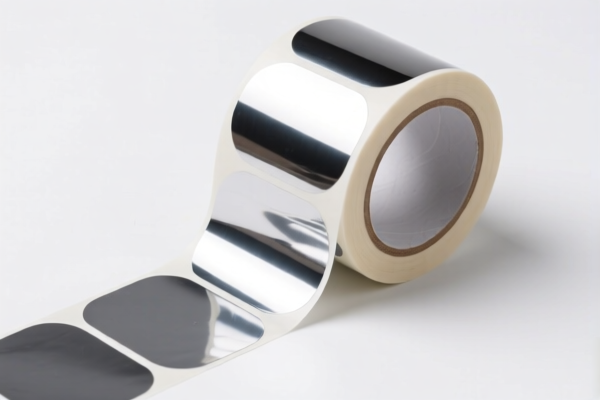
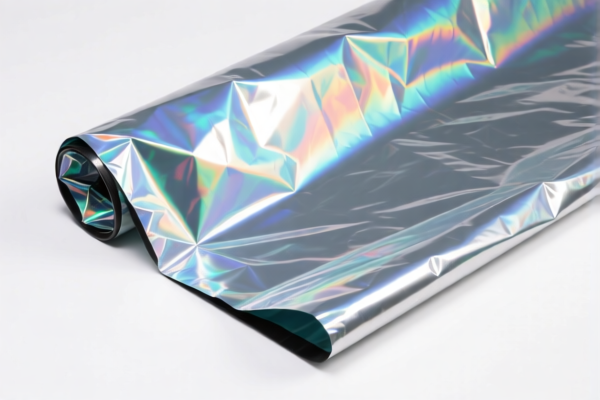
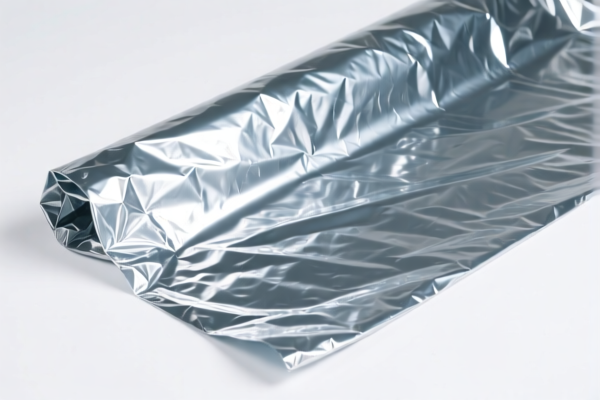
AI Analysis
🚧 Construction Reflective Material Rolls (High-Visibility Safety & Traffic Control)
🌐 HS Code Reference & Customs Clearance Guide | 2026 Latest Tariff Analysis | Professional Entry Strategy
📌 I. Product Definition & Classification: Do You Really Understand "Reflective Rolls"?
"Construction reflective material rolls" are not a single HS Code but a functional category that splits into distinct physical forms in international trade. Misclassification here leads to massive tax disparities (from 0% to 29.8%).
In customs declarations, you must distinguish between:
- Aluminum Foil with Reflective/Decorative Backing: If the product is essentially a thin metal foil (≤0.2mm) used for insulation, wrapping, or decorative purposes, where the "reflective" aspect is achieved via printing or backing layers, it falls under Chapter 76 (Aluminum).
- Plastic Sheets/Films with Reinforcement: If the product is a polymer-based sheet/film, often reinforced with paper, plastic, or fiberglass for durability in construction/traffic use, it falls under Chapter 39 (Plastics).
⚠️ Key Distinction Point:
- If the core material is Aluminum and thickness ≤ 0.2mm → Chapter 76
- If the core material is Plastic (with or without paper reinforcement) → Chapter 39
- "Reflective" is a functional description, not a classification basis. You must identify the base material.
📦 II. HS Code Classification Details (Based on Provided Data | 2026 Latest Tariff Authority)
Since the input data is restricted to specific aluminum and plastic items, we map "Construction Reflective Material Rolls" to the following eligible codes.
| HS Code | Product Description (Official) | Application Scenario | Base Material |
|---|---|---|---|
7607.20.10.00 |
Aluminum foil (≤0.2mm): Backed: Covered or decorated with a character, design, fancy effect or pattern | Reflective insulation rolls, decorative facade wraps, branded safety tapes where foil is the primary structural element | ✅ Aluminum |
7607.20.50.00 |
Aluminum foil (≤0.2mm): Backed: Other | Standard reflective insulation, simple reflective wraps, non-printed foil rolls with paper/plastic backing | ✅ Aluminum |
3921.90.50.10 |
Plates, sheets, film, foil, strip of plastics: Other High pressure paper reinforced decorative laminates | Heavy-duty construction laminates, decorative wall panels with reflective finish, paper-reinforced plastic sheets | ✅ Plastic |
3921.90.40.10 |
Plates, sheets, film, foil, strip of plastics: Other: Flexible Reinforced with paper | Flexible reflective construction wraps, paper-reinforced plastic safety sheets, lightweight barrier films | ✅ Plastic |
3915.90.00.90 |
Waste, parings and scrap, of plastics: Of other plastics Other | Note: Included in data but generally NOT for new construction materials. Only for plastic waste/scrap. | ❌ Scrap |
3915.90.00.10 |
Waste, parings and scrap, of plastics: Of other plastics Of polyethylene terephthalate (PET) plastics | Note: Included in data but generally NOT for new construction materials. Only for PET scrap. | ❌ Scrap |
🔍 Important Note:
- For new construction reflective rolls,3915(Waste/Scrap) codes are incorrect unless you are exporting defective/off-cut materials.
- The choice between7607and3921depends entirely on whether the core layer is aluminum or plastic.
💰 III. 2026 Latest Tariff Rate Breakdown (Including Surtax & Policy Surcharges)
✅ Applicable Country: United States (US)
✅ Country of Origin: China (CN)
✅ Effective Date: From November 10, 2025 (and subsequent imports)
🎯 1. 7607.20.10.00 —— Aluminum Foil (Backed/Decorated)
| Item | Content |
|---|---|
| Base Tariff | 0.0% |
| Surtax (Section 301/USITC) | 0.0% |
| Total Tariff | 0.0% |
| Tax Calculation | CIF Value × 0% = $0 |
| De Minimis Eligibility | ✅ Yes (Generally) |
| Legal Basis | Standard HTSUS 7607.20.10.00 |
📌 Explanation:
- This is a zero-duty item for Chinese origin under the current data.
- Ideal for high-volume, low-margin reflective foil products.
- Ensure the product strictly meets "≤0.2mm thickness" and "decorated/printed" criteria.
🎯 2. 7607.20.50.00 —— Aluminum Foil (Backed, Other)
| Item | Content |
|---|---|
| Base Tariff | 0.0% |
| Surtax (Section 301/USITC) | +7.5% |
| Total Tariff | 7.5% |
| Tax Calculation | CIF Value × 7.5% |
| De Minimis Eligibility | ❌ No (Subject to surtax) |
| Legal Basis | Standard HTSUS 7607.20.50.00 + Surtax Footnote |
📌 Explanation:
- "Other" backing means it lacks specific "character/design/pattern" decoration defined in 10.00.
- Even though base duty is 0%, the 7.5% surtax applies.
- Common for simple reflective insulation rolls.
🎯 3. 3921.90.50.10 —— High Pressure Paper Reinforced Decorative Laminates
| Item | Content |
|---|---|
| Base Tariff | 4.8% |
| Surtax (Section 301/USITC) | +25.0% |
| Total Tariff | 29.8% |
| Tax Calculation | CIF Value × 29.8% |
| De Minimis Eligibility | ❌ No |
| Legal Basis | Standard HTSUS 3921.90.50.10 + Footnote 9903.88.01 |
📌 Explanation:
- This is a high-cost category.
- Applies only if the product is a rigid/laminate sheet, not a flexible roll, OR if specifically classified as such.
- Avoid this code for flexible rolls unless legally required; the tax impact is severe.
🎯 4. 3921.90.40.10 —— Flexible Reinforced with Paper
| Item | Content |
|---|---|
| Base Tariff | 4.2% |
| Surtax (Section 301/USITC) | +25.0% |
| Total Tariff | 29.2% |
| Tax Calculation | CIF Value × 29.2% |
| De Minimis Eligibility | ❌ No |
| Legal Basis | Standard HTSUS 3921.90.40.10 + Footnote 9903.88.01 |
📌 Explanation:
- This is the likely code for paper-backed plastic reflective films.
- Base duty 4.2% + 25% surtax = 29.2%.
- Significant cost increase compared to aluminum foil options.
🛠️ IV. Customs Clearance Practical Advice (Real-World Pitfall Guide)
✅ 1. Preparation Checklist (Non-negotiable)
| Document | Required? | Explanation |
|---|---|---|
| ✅ Product Specification Sheet | ✔️ | Must specify: Thickness (if aluminum), Core Material (Al vs. Plastic), Width, Length, Weight. |
| ✅ Material Composition Statement | ✔️ | Explicitly state: "Core: Aluminum Alloy 1235, Thickness: 0.15mm, Backing: Kraft Paper." |
| ✅ High-Resolution Photos | ✔️ | Show cross-section to prove thickness and layering. |
| ✅ Commercial Invoice | ✔️ | Must match HS Code description exactly (e.g., do NOT just write "Reflective Tape"). |
| ✅ Certificate of Origin (CO) | ✔️ | Required for surtax verification. |
| ✅ Packing List | ✔️ | Detail net/gross weight to verify volume/density if challenged. |
✅ 2. Declaration Strategy (Key Mnemonics)
🔥 "Foil ≤0.2mm, Check Decoration! Plastic? Reinforced with Paper?"
| Scenario | Correct HS Code | Risk if Wrong |
|---|---|---|
| Aluminum foil, printed/decorated, ≤0.2mm | 7607.20.10.00 |
0% Tax |
| Aluminum foil, plain backing, ≤0.2mm | 7607.20.50.00 |
7.5% Tax |
| Plastic sheet, paper-reinforced, flexible | 3921.90.40.10 |
29.2% Tax |
| Plastic laminate, rigid/decorative | 3921.90.50.10 |
29.8% Tax |
| Plastic waste/scrap | 3915.90.xx |
Illegal for new goods |
⚠️ Critical Alert:
- Do not declare a plastic-backed roll as7607just because it looks shiny.
- Do not declare an aluminum roll as3921.
- Customs will inspect the cross-section. If the core is metal, it’s Chapter 76. If it’s polymer, it’s Chapter 39.
✅ 3. Special Handling Cases
| Situation | Recommendation |
|---|---|
| Composite Material (Al + Plastic Layers) | Determine the essential character. If aluminum core provides strength/barrier, use 7607. |
| Reflective Coating on Plastic | If the base is plastic and coating is thin, use 3921. |
| "Reflective Tape" vs. "Roll" | Tapes often fall under 3919 or 3920. Rolls fall under 3921 or 7607. Ensure you declare the form (Roll) correctly. |
| Origin Tracing | If the aluminum foil is imported from Japan but rolled/packaged in China, origin rules may apply. Ensure CO is accurate. |
🌍 V. Global Market Clearance Comparison (2026 Latest)
| Market | Recommended HS Code | Tariff (China Origin) | Key Requirement |
|---|---|---|---|
| 🇺🇸 USA | 7607.20.10.00 |
0.0% | Accurate thickness <0.2mm proof |
| 🇺🇸 USA | 3921.90.40.10 |
29.2% | Paper reinforcement proof |
| 🇨🇳 China (Import) | 7607.20.10.00 |
0% + 2-5% | Standard import tariff |
| 🇪🇺 EU | 7607.20.10.00 |
0% - 3% | REACH compliance for adhesives/backing |
| 🇬🇧 UK | 7607.20.10.00 |
0% - 3% | UKCA marking if applicable |
📌 Conclusion:
- USA is the most critical market for surtax awareness.
- Aluminum foil (≤0.2mm) is the most tax-efficient option (0% or 7.5%).
- Plastic rolls face a flat 25% surtax on top of base duties.
- Strategy: If possible, design products using aluminum core foil (≤0.2mm) to leverage the 0% or 7.5% rates. Avoid plastic laminates for export to the US unless value-added justifies the ~30% tax.
📌 VI. Common Errors & Pitfalls (Blood Lessons)
❌ Error 1: Declaring a plastic roll as "Aluminum Foil" to get 0% tax.
👉 Consequence: Customs inspection reveals plastic core → Heavy fine, seizure, blacklisting.
❌ Error 2: Ignoring the 0.2mm thickness limit for Chapter 76.
👉 Consequence: If thickness >0.2mm, it may fall under 7606 (higher duty or different surtax rules) → Back taxes + Penalties.
❌ Error 3: Using "Reflective Tape" generic description.
👉 Consequence: Customs assigns highest possible duty or rejects declaration → Clearance delay.
❌ Error 4: Not declaring paper reinforcement for plastic goods.
👉 Consequence: Misclassification from 3921.90.40 to general 3921.90.90 → Incorrect tax calculation.
✅ Correct Practice:
"Aluminum Foil Roll, Decorated, Thickness 0.15mm, Width 1000mm, Backed with Kraft Paper, for Construction Insulation"
🎯 VII. Conclusion: Professional Declaration, Cost Optimization!
🎯 Remember the Mantra:
🔹 "Aluminum ≤0.2mm: 0% or 7.5%."
🔹 "Plastic Reinforced: 29%+ Tax Alert!"
🔹 "Check the Core, Check the Thickness, Save the Duty."
📌 Pro Tip:
For construction materials, aluminum foil rolls are significantly more tax-efficient for US export than plastic-reinforced rolls. If your product design allows, opt for aluminum-based reflective solutions to save ~22-29% in duties.
📢 Immediate Action:
📞 Verify Thickness & Core Material before declaring.
📄 Request Pre-Ruling if unsure about composite layers.
🚀 Optimize Product Design for tax efficiency!
✨ Professional Customs Clearance Starts with Precise Classification!
💼 Every Percent of Duty Saved is Pure Profit!
Customer Reviews
About HS Code Classification
The Harmonized System (HS) is an internationally standardized nomenclature developed by the World Customs Organization (WCO) to classify traded products. Over 200 countries use the HS system as the basis for customs tariffs, trade statistics, and import/export regulations.
Each HS code follows a hierarchical structure:
- Chapter (2 digits) — Broad category of goods (e.g., Chapter 84: Machinery and Mechanical Appliances)
- Heading (4 digits) — More specific grouping within the chapter
- Subheading (6 digits) — Internationally standardized breakdown, used by all WCO member countries
- National subdivisions (8-10 digits) — Country-specific extensions for further classification, such as US HTSUS 10-digit codes
Correct HS code classification is essential for smooth customs clearance, accurate duty payment, and compliance with trade regulations. Misclassification can lead to customs delays, overpayment of duties, or penalties.
When importing from CN to US, the applicable tariff rates may include:
- Most-Favored-Nation (MFN) rate — The standard duty rate applied to WTO members
- General rate — Applied to countries without trade agreements
- Trade remedy duties — Additional tariffs such as Section 301 (anti-dumping), Section 232 (national security), or countervailing duties
The information provided on this page is for reference purposes only. For official classification, please consult with your local customs authority or a licensed customs broker.