Construction Safety Reflective Plastic
CN → US| HS Code | Tariff Rate | Origin | Destination | Doc |
|---|---|---|---|---|
| 3919101050 | 41.5% | CN | US | Official Doc |
| 3926909925 | 22.8% | CN | US | Official Doc |
| 3919905010 | 40.8% | CN | US | Official Doc |
| 3926909989 | 22.8% | CN | US | Official Doc |
Product Images

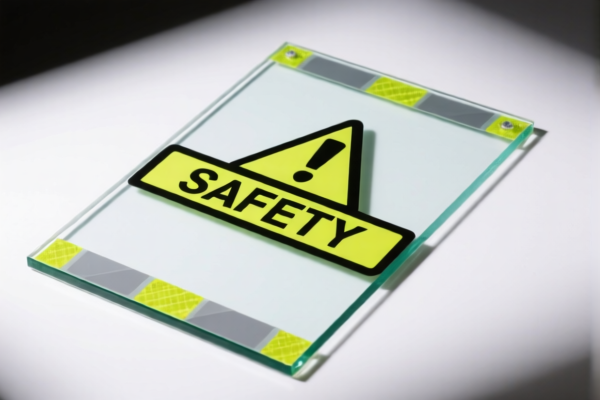

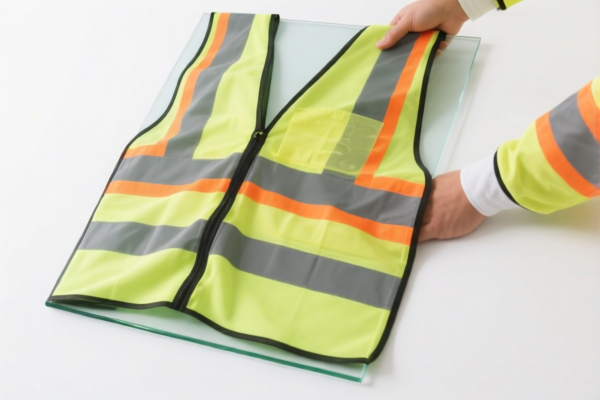
AI Analysis
🦺 Construction Safety Reflective Plastic (Reflective Safety Labels/Tapes)
🌐 HS Code Reference & Customs Clearance Guide | 2026 Latest Tariff Analysis | Professional-Level Clearance Strategy
📌 1. Product Definition & Classification: Do You Really Understand "Reflective Plastic"?
"Construction Safety Reflective Plastic" is a broad term used in the construction and safety industry to describe plastic-based materials embedded with glass beads or prismatic structures to reflect light. In international trade, this category is often ambiguous because it can fall into different sections depending on its shape, application, and specific composition.
The core conflict lies in distinguishing between: * Reflective Sheets/Films (Self-Adhesive or Non-Adhesive): These are flat, flexible materials used for signage, garments, or vehicle marking. They often fall under Heading 3919 (Self-adhesive plates, sheets, film, foil, tape, strip and other flat shapes, of plastics). * Other Plastic Articles: If the product is rigid, shaped specifically for a safety fixture, or doesn't fit the "flat sheet" definition perfectly, it may fall under Heading 3926 (Other articles of plastics).
⚠️ Key Distinction Point:
- If the product is a flat sheet, film, or tape (even if it has a reflective coating), it leans heavily towards 3919.
- If the product is a rigid plate, a complex shaped safety accessory, or a "catch-all" plastic item not defined elsewhere, it may be classified under 3926.90.99.
📦 2. HS Code Classification Details (2026 Latest Tariff Authority Cross-Reference)
Based on the provided data, here are the four potential HS Codes, their matching logic, and the associated tax implications.
| HS Code | Product Description | Matching Logic (Summary) | Total Tax Rate |
|--------|--------------------------|--------------------------------|
| 3919.10.10.50 | Self-adhesive Reflective Sheets/Films | ✅ Match: "Reflective" matches the material characteristic of "glass beads creating a reflective surface"; "Plastic" confirms material; "Label" implies flat/belt-like application. | 41.5% |
| 3926.90.99.25 | Other Plastic Articles (Safety/Reflective) | ✅ Match: Material is "Plastic"; Use is "Reflective Safety"; aligns with "Plastic Articles" and "Road Reflective" functional attributes. | 22.8% |
| 3919.90.50.10 | Other Self-Adhesive Plastic Sheets/Tapes | ✅ Match: "Reflective" corresponds to use; "Plastic" to material; "Label" fits the morphology of flat sheets/films/tapes. | 40.8% |
| 3926.90.99.89 | Other Plastic Articles (General/Fallback) | ✅ Match: Material is "Plastic"; "Label" is a specific application form of plastic products, fitting the "Other Plastic Articles" catch-all category with no material conflict. | 22.8% |
🔍 Critical Insight:
- Codes starting with 3919 (Self-adhesive sheets/tapes) generally carry higher total taxes (40.8% - 41.5%) due to specific USITC and IEEPA additions. - Codes starting with 3926 (Other plastic articles) generally carry lower total taxes (22.8%). - Strategic Goal: Determine if your product can legally be classified as an "Other Plastic Article" (3926) rather than a "Self-Adhesive Sheet" (3919) to save ~18% in duties.
💰 3. 2026 Latest Tariff Rate Breakdown (Including Surtaxes & Policy Additions)
✅ Applicable Country: United States (US)
✅ Origin: China (CN)
✅ Effective Date: From November 10, 2025 (including subsequent imports)
🎯 1. High-Tax Category: 3919.10.10.50 & 3919.90.50.10
These codes are classified under self-adhesive plastic sheets/films. They are subject to aggressive punitive tariffs.
| Item | Content |
|---|---|
| Base Duty Rate | 6.5% (for .10) / 5.8% (for .90) |
| Section 301 Surtax | +25.0% |
| IEEPA Surtax (122 Clause) | +10.0% |
| Total Tax Rate | 41.5% (.10) / 40.8% (.90) |
| Tax Calculation | CIF Value × 41.5% (or 40.8%) |
| De Minimis Exemption | ❌ Denied (Section 321 relief is NOT available for these codes) |
| Legal Authority Path | Section 301: 301.03.08 → IEEPA: 9903.01.25 → USITC: 3919.10.10.50 |
📌 Explanation:
- The 25% is the standard Section 301 duty on Chinese imports.
- The 10% is the additional IEEPA (International Emergency Economic Powers Act) surcharge targeting specific Chinese goods (often labeled as "122 Clause" in customs software).
- Result: Even a small shipment of reflective tape labeled as a "sheet" will incur over 40% tax.
🎯 2. Low-Tax Category: 3926.90.99.25 & 3926.90.99.89
These codes fall under "Other Articles of Plastic." They benefit from significantly lower additional duties.
| Item | Content |
|---|---|
| Base Duty Rate | 5.3% |
| Section 301 Surtax | +7.5% (Reduced rate for certain plastic articles) |
| IEEPA Surtax (122 Clause) | +10.0% |
| Total Tax Rate | 22.8% |
| Tax Calculation | CIF Value × 22.8% |
| De Minimis Exemption | ❌ Denied (Still subject to IEEPA/Section 301, but at lower rates) |
| Legal Authority Path | Section 301: 301.03.08 → IEEPA: 9903.01.24 → USITC: 3926.90.99.25 |
📌 Explanation:
- The 7.5% Section 301 rate is lower than the 25% rate applied to sheets/films.
- The 10% IEEPA surcharge still applies to most Chinese plastic goods.
- Result: Total tax is 22.8%, saving you nearly half the cost compared to the 3919 codes.
🛠️ 4. Customs Clearance Operational Advice (Practical Pitfall Avoidance)
✅ 1. Documentation Checklist (Mandatory)
| Document | Must Provide | Explanation |
|---|---|---|
| ✅ Product Specification Sheet | ✔️ | Must detail material (e.g., PET, PVC), thickness, and reflective mechanism (glass beads vs. prism). |
| ✅ Product Photos | ✔️ | Clear images showing if it is a roll/sheet (favors 3919) or a cut piece/fixture (favors 3926). |
| ✅ Commercial Invoice | ✔️ | Description must be precise. Avoid vague terms like "Plastic Part." Use "Reflective Plastic Label, Non-Adhesive" if applicable. |
| ✅ Packing List | ✔️ | Show dimensions and weight. Rolls/films suggest 3919; rigid cut-outs suggest 3926. |
| ✅ Origin Certificate | ✔️ | Essential for verifying China origin and applying correct surtaxes. |
✅ 2. Declaration Strategy (Key Mnemonic)
🔥 "Flat & Roll = 3919 (High Tax); Shaped & Rigid = 3926 (Low Tax)"
| Scenario | Recommended HS Code | Reasoning |
|---|---|---|
| Reflective Tape on a Roll | 3919.10.10.50 |
Clearly a "self-adhesive strip/film." Hard to argue otherwise. Expect 41.5% tax. |
| Reflective Vest Material (Sheet) | 3919.90.50.10 |
Flat sheet material. Expect 40.8% tax. |
| Pre-Cut Reflective Labels | 3926.90.99.89 |
If pre-cut into specific shapes and not sold as a continuous film, argue for "Other Plastic Article." Target 22.8% tax. |
| Reflective Safety Buckle/Hardware | 3926.90.99.25 |
If it's a functional plastic component with reflective properties, not just a surface film. Target 22.8% tax. |
📌 Critical Tip:
If you are shipping pre-cut labels that are no longer in roll form, explicitly declare them as "Plastic Labels, Pre-Cut" rather than "Reflective Tape." This shifts the classification from Heading 3919 (sheets/films) to 3926 (other articles), potentially saving ~18% in duties.
✅ 3. Special Circumstances Handling
| Situation | Handling Advice |
|---|---|
| Mixed Shipment | If you ship both rolls (3919) and cut pieces (3926), separate the entries. Do not lump them together, or CBP may assess the entire shipment at the highest rate (3919). |
| OEM/Custom Designs | Provide design drawings. If the shape is unique and not a standard "sheet," use this to support a 3926 classification. |
| Glass Bead vs. Prismatic | Both are covered under these codes, but be honest about the technology. Misrepresentation can lead to fines. |
🌍 5. Global Market Comparison (2026 Latest)
| Country/Region | Recommended HS Code | Estimated Duty (China Origin) | Notes |
|---|---|---|---|
| 🇺🇸 USA | 3926.90.99.25 |
22.8% | Best option if product shape allows. |
| 🇺🇸 USA | 3919.10.10.50 |
41.5% | Standard for rolls/tapes. High cost. |
| 🇨🇳 China | 3919.10.10.50 |
~6.5% | Low base duty, no US surtaxes. |
| 🇪🇺 EU | 3919.90.90 |
~6.5% | Generally lower duties; check for REACH compliance. |
📌 Conclusion:
The US market is high-risk for reflective plastics due to Section 301 and IEEPA tariffs.
Minimize cost by optimizing product form: Sell pre-cut labels or shaped components instead of rolls to utilize the 3926 code path.
📌 6. Common Errors & Pitfall Guide (Lessons Learned)
❌ Mistake 1: Declaring "Reflective Tape" when it is actually "Pre-Cut Labels"
👉 Consequence: CBP may reclassify as 3919, charging 41.5% instead of 22.8%. You will face a back-tax bill + penalties.
❌ Mistake 2: Using "Label" as a generic term for rolls of tape
👉 Consequence: Misdeclaration. If the product is on a roll, "Label" is misleading. CBP may flag for inspection.
❌ Mistake 3: Ignoring the IEEPA 10% Surcharge
👉 Consequence: Underestimating landed cost. Always calculate Base + Section 301 + IEEPA.
❌ Mistake 4: Assuming "Plastic" always means low duty
👉 Consequence: Specific shapes (sheets/films) trigger high duties. Shape matters more than material.
✅ Correct Approach:
"Plastic Reflective Labels, Pre-Cut, Non-Adhesive, Model XYZ"
(Use this description if the product is NOT on a roll)
🎯 7. Conclusion: Professional Declaration, Time-Saving, Cost-Reduction!
🎯 Remember the Mnemonic:
🔹 "Rolls & Sheets = 3919 (High Tax 41%)"; "Cut & Shape = 3926 (Low Tax 23%)"
🔹 "HS Code determines destiny, a 18% difference means huge profit margins!"
📌 Tips:
- If you can engineer your product to be pre-cut or rigidly shaped, pursue the 3926 classification.
- If your product is inherently a tape or film, accept the 3919 rate and factor it into your pricing.
- Recommendation: Apply for an Advance Ruling with US CBP if you have large volume shipments, to secure a binding classification before shipping.
📣 Immediate Action:
📞 Contact your customs broker with product photos and physical samples.
🚀 Optimize your product form (cut vs. roll) to minimize duty costs.
✨ Professional clearance starts with precise classification!
💼 Every penny of cost deserves accurate calculation!
Customer Reviews
About HS Code Classification
The Harmonized System (HS) is an internationally standardized nomenclature developed by the World Customs Organization (WCO) to classify traded products. Over 200 countries use the HS system as the basis for customs tariffs, trade statistics, and import/export regulations.
Each HS code follows a hierarchical structure:
- Chapter (2 digits) — Broad category of goods (e.g., Chapter 84: Machinery and Mechanical Appliances)
- Heading (4 digits) — More specific grouping within the chapter
- Subheading (6 digits) — Internationally standardized breakdown, used by all WCO member countries
- National subdivisions (8-10 digits) — Country-specific extensions for further classification, such as US HTSUS 10-digit codes
Correct HS code classification is essential for smooth customs clearance, accurate duty payment, and compliance with trade regulations. Misclassification can lead to customs delays, overpayment of duties, or penalties.
When importing from CN to US, the applicable tariff rates may include:
- Most-Favored-Nation (MFN) rate — The standard duty rate applied to WTO members
- General rate — Applied to countries without trade agreements
- Trade remedy duties — Additional tariffs such as Section 301 (anti-dumping), Section 232 (national security), or countervailing duties
The information provided on this page is for reference purposes only. For official classification, please consult with your local customs authority or a licensed customs broker.