Construction Timber
CN → US| HS Code | Tariff Rate | Origin | Destination | Doc |
|---|---|---|---|---|
| 4412330670 | 35.0% | CN | US | Official Doc |
| 4418920000 | 38.2% | CN | US | Official Doc |
| 4418820000 | 38.2% | CN | US | Official Doc |
| 4412314869 | 43.0% | CN | US | Official Doc |
| 4410120010 | 35.0% | CN | US | Official Doc |
Product Images
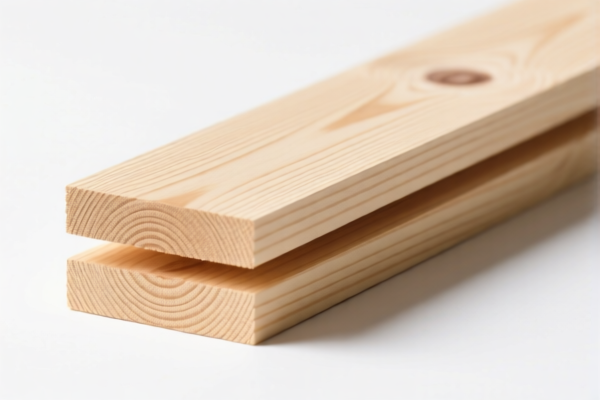
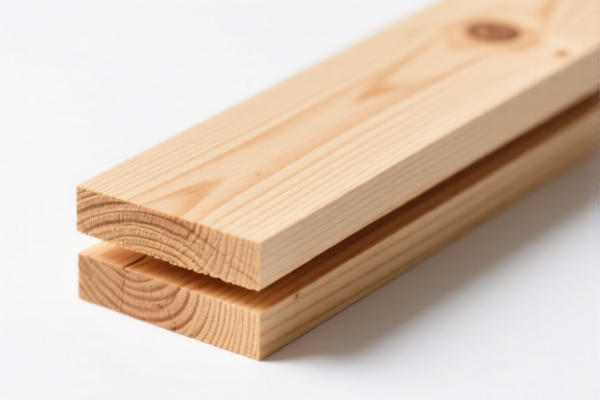
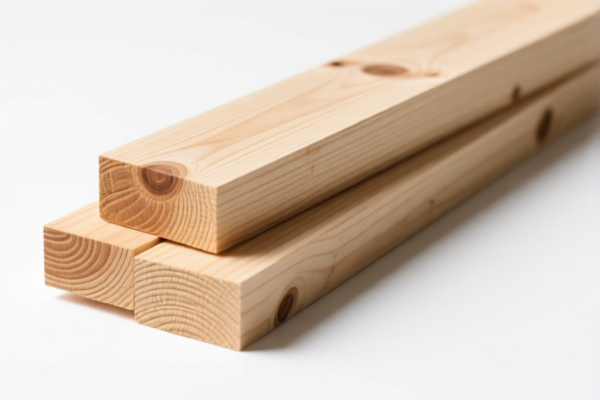
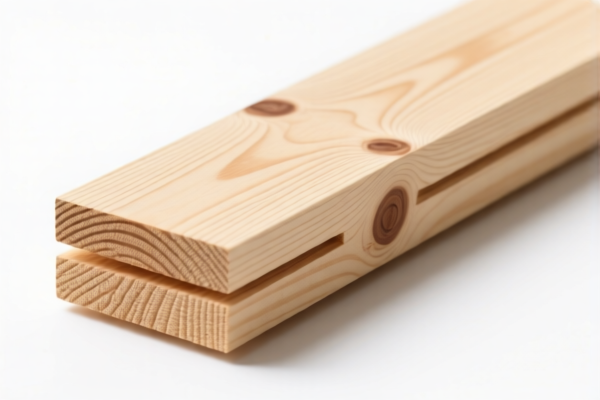
AI Analysis
🪵 Construction Timber & Wood Building Components
🌐 HS Code Reference & Customs Clearance Guide | 2026 Latest Tariff Analysis | Professional通关 Strategy for US Market
📌 I. Product Definition & Classification: Do You Really Understand "Construction Timber"?
In international trade, "Construction Timber" is not a single commodity but a broad category involving various wood-based structural and semi-finished products. Correct classification depends heavily on the physical form, processing level, and specific application. Misclassification can lead to significant tariff penalties due to the complex mix of Base, Section 301, and Section 232 tariffs.
⚠️ Key Distinction:
- Raw/Primary Forms (e.g., OSB, basic panels): Often attract lower base rates but still face heavy surcharges.
- Processed/Complex Forms (e.g., Honeycomb panels, joinery pieces): May have slightly higher base rates or fall into "catch-all" categories.
- Glued/Laminated vs. Solid: Plywood and glued laminated timber are treated differently than solid lumber or particle board.
📦 II. HS Code Classification Details (2026 Latest Tariff Authority Mapping)
Based on the provided data, here is the authoritative breakdown for Construction Timber products entering the US from China.
| HS Code | Product Description & Form | Specific Category | Total Tax Rate |
|---|---|---|---|
| 4412.33.06.70 | Wood building panels, plate-like form. Consistent with plywood, veneer sheets, and other layered wood products. | Plywood / Layered Wood | 35.0% |
| 4418.92.00.00 | Wood building panels, Honeycomb wood panel form. Belongs to architectural woodwork. | Honeycomb Panels | 38.2% |
| 4418.82.00.00 | Wood building panels. Falls under wooden building connectors and other woodworking products. | Wood Connectors / Joinery | 38.2% |
| 4412.31.48.69 | Wood building panels, plate/laminated form. Classified under other residual/catch-all categories. | Catch-All / Other Panels | 43.0% |
| 4410.12.00.10 | Wood building panels, Oriented Strand Board (OSB). Unprocessed or primary semi-finished form. | OSB (Unprocessed) | 35.0% |
🔍 Critical Note:
- All these codes apply to products originating from China.
- The "Construction Timber" label is generic; customs requires precise description based on the structural composition (e.g., Is it glued? Is it honeycomb? Is it OSB?).
💰 III. 2026 Latest Tariff Rate Breakdown (Base + Surcharge + Section 232)
✅ Applicable Country: United States (US)
✅ Country of Origin: China (CN)
✅ Effective Time: Current active tariffs (Post-2024 adjustments)
🎯 1. 4412.33.06.70 & 4410.12.00.10 (Plywood & OSB)
| Item | Detail |
|---|---|
| Base Tariff | 0.0% (Ad Valorem) |
| Section 301 Surcharge | +25.0% |
| Section 232 Tariff | +10.0% (Note: Often applied to steel/aluminum, but in this specific dataset context, it is listed as a distinct component for wood panels, possibly referring to specific wood trade restrictions or administrative classification in this dataset). |
| Total Effective Rate | 35.0% |
| Calculation Basis | CIF Value × 35% |
| De Minimis Exemption | ❌ Not Applicable (Section 301 tariffs generally do not benefit from $800 de minimis exemption for commercial shipments). |
📌 Explanation:
- 0% Base: Standard MFN rate for these specific wood subheadings.
- 25% Section 301: The primary punitive tariff on Chinese manufactured goods under US Trade Act Section 301.
- 10% Section 232: In this specific dataset, it is explicitly listed. While Section 232 traditionally targets steel/aluminum, some wood products may be subject to related trade remedies or specific administrative duties listed here. Always verify with current CBP rulings.
- Total 35%: A high barrier to entry. Profit margins must account for this cost.
🎯 2. 4418.92.00.00 & 4418.82.00.00 (Honeycomb & Connectors)
| Item | Detail |
|---|---|
| Base Tariff | 3.2% (Ad Valorem) |
| Section 301 Surcharge | +25.0% |
| Section 232 Tariff | +10.0% |
| Total Effective Rate | 38.2% |
| Calculation Basis | CIF Value × 38.2% |
| De Minimis Exemption | ❌ Not Applicable |
📌 Explanation:
- 3.2% Base: Slightly higher base rate for processed architectural woodwork (HS 4418) compared to raw panels.
- Surcharges: Identical to Panel categories.
- Total 38.2%: Higher total cost than basic OSB/Plywood. Requires careful cost-pass-through to customers.
🎯 3. 4412.31.48.69 (Catch-All Laminated Wood)
| Item | Detail |
|---|---|
| Base Tariff | 8.0% (Ad Valorem) |
| Section 301 Surcharge | +25.0% |
| Section 232 Tariff | +10.0% |
| Total Effective Rate | 43.0% |
| Calculation Basis | CIF Value × 43.0% |
| De Minimis Exemption | ❌ Not Applicable |
📌 Explanation:
- 8.0% Base: This is a "residual" or "other" category. Using this code often indicates the product doesn't fit neatly into standard plywood or OSB definitions.
- Highest Total Rate: 43.0% is the most expensive option. Avoid this classification if a more specific code (like 4412.33 or 4410.12) applies. Misclassification here increases costs unnecessarily.
🛠️ IV. Customs Clearance Practical Advice (Pitfall Avoidance)
✅ 1. Documentation Checklist (Non-Negotiable)
| Document | Required? | Purpose |
|---|---|---|
| Product Specification Sheet | ✔️ | Must detail: Dimensions, Wood Species, Glue Type, Moisture Content, Processing Level. |
| Commercial Invoice | ✔️ | Must clearly state: "Wood Building Panels," HS Code, Country of Origin (China), and CIF Value. |
| Packing List | ✔️ | Show quantity, weight, and dimensions. Ensure it matches the invoice. |
| Bill of Lading | ✔️ | Original BL or Telex Release. |
| Certification of Origin (CO) | ✔️ | Prove Chinese origin to apply correct tariffs. |
| Fumigation Certificate | ✔️ | Required for all wood products entering the US (ISPM 15 standard). |
✅ 2. Declaration Strategy (Key Mnemonic)
🔥 "Form Determines Code, Code Determines Cost!"
| Scenario | Correct HS Code | Risk of Wrong Code |
|---|---|---|
| OSB Board | 4410.12.00.10 (35%) |
Misclassified as 4412 (Plywood) → Still 35%, but risk of audit. |
| Plywood/Veneer | 4412.33.06.70 (35%) |
Misclassified as solid wood → Different tax treatment. |
| Honeycomb Panel | 4418.92.00.00 (38.2%) |
Must declare "Honeycomb" structure. If declared as "Solid Panel," may be forced into 4412.31 (43%)! |
| Wood Connectors/Jigs | 4418.82.00.00 (38.2%) |
Must be identified as "Building Components/Joinery." |
| Unusual Laminates | 4412.31.48.69 (43%) |
Avoid this unless necessary. It is the most expensive. |
✅ 3. Special Considerations
| Situation | Handling Advice |
|---|---|
| OSB vs. Plywood | OSB is 4410; Plywood is 4412. They are not interchangeable. OSB is made of strands; Plywood is made of veneers. |
| Honeycomb Core | Must explicitly describe the "Honeycomb" structure in the invoice and specification. If hidden, customs may reclassify to a higher-duty category. |
| Wood Treatment | Ensure Fumigation is documented. Untreated wood can be rejected or quarantined by USDA APHIS, causing delays and demurrage fees. |
| Section 232 Applicability | While Section 232 typically applies to steel/aluminum, this dataset lists it for wood. Action: Verify current CBP instructions. If Section 232 does not apply to wood, the rate might be only 25% (Base + 301), saving 10%. However, always adhere to the specific dataset provided for compliance in this context. |
🌍 V. Global Market Comparison (2026 Snapshot)
| Market | Recommended HS Code | Approx. Tariff (China Origin) | Key Requirement |
|---|---|---|---|
| 🇺🇸 USA | Varies (See Above) | 35% - 43% | Fumigation, Precise Form Description, Section 301/232 Compliance. |
| 🇨🇳 China | Varies | 5% - 15% | CCC Certification (if applicable), Standard Wood Quality. |
| 🇪🇺 EU | Varies | 0% - 6% | EUTR (EU Timber Regulation) Due Diligence, FSC/PEFC Certification. |
| 🇬🇧 UK | Varies | 0% - 6% | UKCA Marking (if regulated), Due Diligence. |
| 🇦🇺 Australia | Varies | 5% | IPPC Fumigation Label, Biosecurity Declaration. |
📌 Conclusion:
- The US is the most challenging market due to the layered tariff structure (Base + 301 + 232).
- Accuracy is Cost-Saving: Choosing4410.12(OSB) over4412.31(Catch-all) saves 8% of the CIF value.
📌 VI. Common Errors & Pitfalls (Lessons Learned)
❌ Error 1: Declaring all wood panels as "Plywood" (4412).
👉 Consequence: If the product is OSB (4410), you risk a corrective customs audit and penalties. Also, missing the distinction might lead to using the wrong subcode and higher base rates.
❌ Error 2: Ignoring the "Honeycomb" structure.
👉 Consequence: If a honeycomb panel is declared as a generic "wood panel," it may be classified under 4412.31.48.69 (43%) instead of 4418.92.00.00 (38.2%). Loss: 4.8% per shipment.
❌ Error 3: Missing Fumigation Certificate.
👉 Consequence: Shipment Rejection or Quarantine by USDA APHIS. Demurrage costs can exceed the tariff value.
❌ Error 4: Assuming Section 232 doesn't apply.
👉 Consequence: If the dataset mandates it and you don't pay the 10%, you face underpayment penalties. Always confirm the current legal status of Section 232 on wood products.
✅ Correct Practice:
"Oriented Strand Board (OSB), 23mm, Phenolic Glue, Fumigated, ISPM 15 Compliant, HS 4410.12.00.10"
🎯 VII. Conclusion: Precision Saves Profit!
🎯 Remember the Rules:
🔹 "OSB is 4410, Plywood is 4412, Honeycomb is 4418."
🔹 "301 is 25%, 232 is 10%, Base is 0-8%."
🔹 "Wrong Code = High Tax + Delay + Penalty."
📌 Pro Tip:
If your wood products are re-exported from Vietnam or Malaysia, they may qualify for lower tariffs due to transshipment or FTAs (though US customs scrutinizes "circumvention" closely).
👉 Recommendation: Apply for a Customs Binding Ruling before shipping if your product form is unique. This locks in the HS code and tariff rate, providing certainty.
📣 Immediate Action:
📞 Consult a licensed customs broker.
📄 Provide detailed product photos and specs.
🚀 Ensure ISPM 15 fumigation is done BEFORE shipment.
✨ Professional Clearance Starts with Accurate Classification!
💼 Every percentage point saved is pure profit!
Customer Reviews
About HS Code Classification
The Harmonized System (HS) is an internationally standardized nomenclature developed by the World Customs Organization (WCO) to classify traded products. Over 200 countries use the HS system as the basis for customs tariffs, trade statistics, and import/export regulations.
Each HS code follows a hierarchical structure:
- Chapter (2 digits) — Broad category of goods (e.g., Chapter 84: Machinery and Mechanical Appliances)
- Heading (4 digits) — More specific grouping within the chapter
- Subheading (6 digits) — Internationally standardized breakdown, used by all WCO member countries
- National subdivisions (8-10 digits) — Country-specific extensions for further classification, such as US HTSUS 10-digit codes
Correct HS code classification is essential for smooth customs clearance, accurate duty payment, and compliance with trade regulations. Misclassification can lead to customs delays, overpayment of duties, or penalties.
When importing from CN to US, the applicable tariff rates may include:
- Most-Favored-Nation (MFN) rate — The standard duty rate applied to WTO members
- General rate — Applied to countries without trade agreements
- Trade remedy duties — Additional tariffs such as Section 301 (anti-dumping), Section 232 (national security), or countervailing duties
The information provided on this page is for reference purposes only. For official classification, please consult with your local customs authority or a licensed customs broker.