Construction Vulcanized Rubber Tubes with Fittings
CN → US| HS Code | Tariff Rate | Origin | Destination | Doc |
|---|---|---|---|---|
| 4009120020 | 20.0% | CN | US | Official Doc |
| 4009120050 | 20.0% | CN | US | Official Doc |
| 4009420050 | 20.0% | CN | US | Official Doc |
| 4009220050 | 37.5% | CN | US | Official Doc |
Product Images
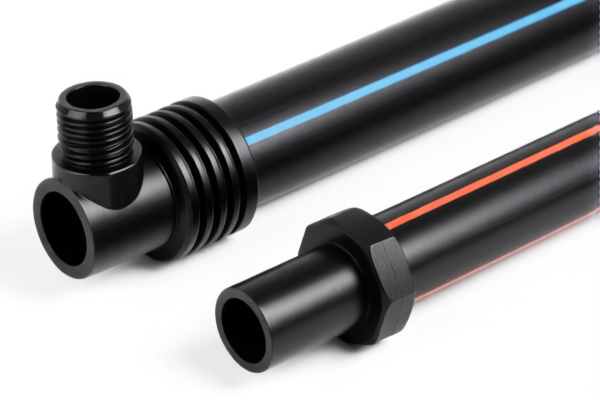
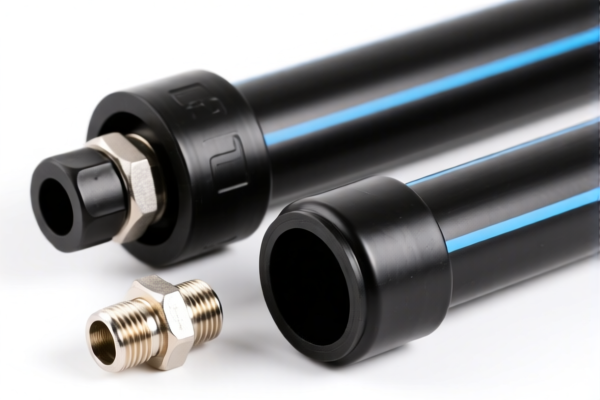
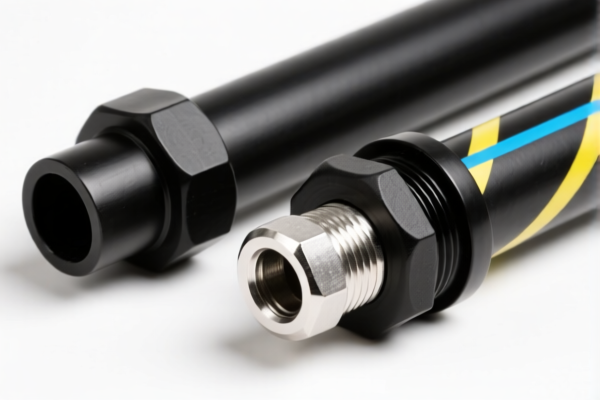

AI Analysis
🏗️ Construction Vulcanized Rubber Tubes with Fittings
🌐 HS Code Reference & Clearance Guide | 2026 Latest Tariff Analysis | Professional Customs Strategy
📌 1. Product Definition & Classification: What are "Construction Vulcanized Rubber Tubes with Fittings"?
In international trade, vulcanized rubber tubes with fittings are essential components for fluid transfer in construction, industrial, and civil engineering projects. These products are classified under Chapter 40 (Rubber and articles thereof). The critical distinction lies in the reinforcement structure and the presence of fittings.
⚠️ Key Classification Criteria:
- Material: Must be vulcanized rubber (hard rubber excluded).
- Reinforcement: Is the tube reinforced with metal or other materials? Or is it unreinforced?
- Fittings: Are the fittings integral (vulcanized) or separate (attached)?
- End Use: "Construction" implies high pressure/durability, often requiring reinforcement.
📦 2. HS Code Classification Details (2026 Tariff Authority Match)
Based on the provided , here are the four possible HS codes, their specific criteria, and why they apply.
| HS Code | Product Description | Key Features & Matching Logic | Reinforcement Status |
|---|---|---|---|
4009.12.00.20 |
Vulcanized Rubber Hoses with Fittings (Non-Reinforced) | Summary: Rubber hose fittings, material is rubber, form is fittings with attachments. Logic: Fits "accessories rule." Suitable for non-reinforced rubber hoses with attached fittings. |
❌ No Reinforcement |
4009.12.00.50 |
Vulcanized Rubber Hoses with Fittings (Non-Reinforced) | Summary: Form matches hose accessories/fittings; material matches rubber; no conflict with vulcanized rubber category. Logic: Another valid code for non-reinforced rubber hoses with fittings. Often used for similar products as 4009.12.00.20 depending on specific tariff country nuances. |
❌ No Reinforcement |
4009.42.00.50 |
Reinforced Rubber Hoses with Fittings | Summary: Reinforced rubber hose with fittings; material is rubber; form is reinforced (combined with other materials); use fits "with fittings" characteristic. Logic: Explicitly mentions reinforced (combined with other materials like fabric/steel). Ideal for construction-grade tubes requiring high pressure resistance. |
✅ Reinforced |
4009.22.00.50 |
Reinforced Rubber Hoses with Fittings (High Penalty) | Summary: Rubber hose with fittings; material is vulcanized rubber; form is hose; "with fittings" fits accessory characteristic; "reinforced" implies metal/fiber layer. Logic: Also for reinforced hoses but subject to higher punitive tariffs (Section 301). |
✅ Reinforced |
🔍 Critical Distinction:
- Non-Reinforced (Codes .12...): Low pressure, water transfer, ventilation, non-industrial light construction use.
- Reinforced (Codes .42... / .22...): High pressure, hydraulic, concrete pumping, heavy-duty construction.
- Fittings: If fittings are integral (vulcanized to the hose), the entire assembly is classified as the hose. If fittings are separate, they may be classified separately as parts/accessories.
💰 3. 2026 Latest Tariff Rate Breakdown (Including Surcharges & Policy Add-ons)
✅ Applicable Country: United States (US)
✅ Origin: China (CN)
✅ Effective Date: Post-2025 (Includes all subsequent imports)
🎯 1. Non-Reinforced Rubber Hoses with Fittings
HS Codes: 4009.12.00.20 & 4009.12.00.50
| Item | Detail |
|---|---|
| Base Duty Rate | 2.5% (Standard MFN) |
| Section 301 Surcharge | +7.5% (Additional 7.5% tariff on Chinese goods under HTS 4009.12) |
| Section 122 Tariff | +10% (Specific 122-list tariff for certain rubber articles) |
| Total Duty Rate | 20.0% |
| Tax Calculation | CIF Value × 20% |
| De Minimis Exemption | ❌ Not Eligible (Deemed too high value/category) |
| Legal Basis | HTSUS:4009.12 → Section 301 List 4 → Section 122 |
📌 Explanation:
- Base (2.5%): Standard import duty for rubber hoses.
- Section 301 (7.5%): Trump-era/Biden-maintained tariff on Chinese rubber products.
- Section 122 (10%): Specific additional tariff for certain rubber articles (often linked to trade remedies).
- Total: 20% is moderate but significant for low-margin goods.
🎯 2. Reinforced Rubber Hoses with Fittings (High Penalty Category)
HS Codes: 4009.42.00.50 & 4009.22.00.50
| Item | Detail |
|---|---|
| Base Duty Rate | 2.5% |
| Section 301 Surcharge | +25.0% (Higher punitive rate for reinforced rubber/steel-belted hoses) |
| Section 122 Tariff | +10% |
| Total Duty Rate | 37.5% |
| Tax Calculation | CIF Value × 37.5% |
| De Minimis Exemption | ❌ Not Eligible |
| Legal Basis | HTSUS:4009.42 / 4009.22 → Section 301 List 4C → Section 122 |
📌 Explanation:
- Base (2.5%): Same base duty.
- Section 301 (25%): Critical Difference! Reinforced rubber hoses (especially with steel/metal reinforcement) attract the full 25% punitive tariff under Section 301, unlike the 7.5% for non-reinforced ones.
- Section 122 (10%): Still applies.
- Total: 37.5% is very high. This drastically affects profitability for construction-grade reinforced tubes.
🛠️ 4. Clearance Operational Advice (Practical Pitfall Avoidance)
✅ 1. Preparation Checklist (Mandatory)
| Document | Required | Reason |
|---|---|---|
| ✅ Product Specifications | ✔️ | Must state: Inner diameter, outer diameter, wall thickness, reinforcement type (none, fabric, steel), pressure rating. |
| ✅ Material Declaration | ✔️ | Confirm vulcanized rubber content. Non-vulcanized rubber is classified differently (Chapter 40, heading 4008/4010). |
| ✅ Fitting Details | ✔️ | Are fittings integral (vulcanized) or threaded/Clamp-on? Integral = classify as hose. Separate = may classify fittings as parts (8481.90). |
| ✅ Reinforcement Proof | ✔️ | Cross-section photo or mill test report showing reinforcement layers (steel cord, nylon, etc.) to justify HS Code .42 or .22 vs .12. |
| ✅ Commercial Invoice | ✔️ | Must clearly describe: "Vulcanized Rubber Hose with Fittings, Reinforced, for Construction Use." |
| ✅ Packing List | ✔️ | Show hose length and number of fittings. |
✅ 2. Classification Strategy (Key Tips)
🔥 "Reinforced = 37.5% | Non-Reinforced = 20% | Fake Reinforcement = Penalty"
| Scenario | Recommended HS Code | Risk |
|---|---|---|
| Light-duty water hose (no steel/fabric) | 4009.12.00.20 or .50 |
✅ Safe. Use if product truly lacks reinforcement. |
| Heavy-duty construction hose (steel cord/fabric) | 4009.42.00.50 |
✅ Accurate. Expect 37.5% tariff. |
| Hose with separate fittings (fittings not vulcanized) | Split Classification: Hose under 4009.xx + Fittings under 8481.90 | ⚠️ Complex. Fittings may have lower duty, but hose remains high. Ensure proper documentation. |
| Misdeclare Reinforced as Non-Reinforced | 4009.12.00.xx |
❌ HIGH RISK. Customs will inspect, find reinforcement, reclassify, and charge 37.5% + penalties. |
✅ 3. Special Cases & Mitigation
| Situation | Recommendation |
|---|---|
| Hose Fittings are Steel | If fittings are separate and made of metal, classify hose as 4009.xx and fittings as 8481.90.xx. Check if fittings have lower duty. |
| Origin Non-China | If manufactured in Vietnam, Thailand, or Mexico, Section 301 tariffs (7.5% or 25%) do not apply. Total duty may drop to 2.5% (base) + 122 (10%) = 12.5%. Major cost saving! |
| Pre-Import Ruling | Apply for an ISD (International Trade Administration) Ruling or CBP Pre-Decision to confirm if your specific construction tube is "reinforced." |
| 122 Tariff Exemption | Check if the specific rubber article is exempt from Section 122. Most construction hoses are not exempt. |
🌍 5. Global Market Comparison (2026)
| Country/Region | Recommended HS Code | Tariff (China Origin) | Certification | Notes |
|---|---|---|---|---|
| 🇺🇸 USA | 4009.42.00.50 (Reinforced) |
37.5% | No specific | High punitive tariff. Consider non-China origin. |
| 🇺🇸 USA | 4009.12.00.20 (Non-Reinf) |
20.0% | No specific | Lower rate if product qualifies. |
| 🇨🇳 China | 4009.42.00.00 |
~8-10% | No | Export market favorable. |
| 🇪🇺 EU | 4009.42.00 |
0% (if preferential) or 3-5% | REACH, RoHS | No Section 301 equivalent. Lower duty. |
| 🇦🇺 Australia | 4009.42.00 |
5% | No | Standard MFN rate. |
📌 Conclusion:
- The US market is the most expensive due to Section 301 and 122 tariffs.
- Reinforcement status is the tariff determinant: Non-reinforced (20%) vs. Reinforced (37.5%).
- Supply Chain Strategy: If exporting to the US, consider sourcing from ASEAN countries (Vietnam, Thailand) to avoid the 25% Section 301 surcharge, reducing total duty to ~12.5%.
📌 6. Common Mistakes & Pitfalls (Blood & Tears Lessons)
❌ Mistake 1: Declaring a steel-reinforced construction hose as non-reinforced (4009.12.xx) to save 17.5% duty.
👉 Result: Customs inspection reveals reinforcement → Reclassified to 37.5% + Penalty + Delays.
❌ Mistake 2: Separating integral fittings as separate parts.
👉 Result: If fittings are vulcanized/integral, they cannot be classified separately. Must classify as hose. Misclassification leads to valuation disputes.
❌ Mistake 3: Ignoring Section 122.
👉 Result: Even if Section 301 is avoided (e.g., via origin change), Section 122 (10%) may still apply. Always check the 122 list for rubber articles.
❌ Mistake 4: Confusing Vulcanized vs. Non-Vulcanized.
👉 Result: Non-vulcanized rubber hoses are classified under different headings (e.g., 4008 or 4010). Incorrect material declaration leads to 6-digit or 8-digit misclassification.
✅ Correct Practice:
"Vulcanized Rubber Hose, 2-inch ID, Steel Cord Reinforced, with Integral Brass Fittings, Construction Grade, Model XYZ, Origin Vietnam"
🎯 7. Conclusion: Professional Clearance, Cost Optimization
🎯 Remember the Key Rules:
🔹 "Reinforced = 37.5% | Non-Reinforced = 20% | Non-China Origin = ~12.5%"
🔹 "Integral Fittings = Classify as Hose | Separate Fittings = Classify Separately"
🔹 "Check Section 122 Always!"
📌 Pro Tip:
For construction-grade rubber tubes, the reinforcement level dictates the tariff.
- If your product is not truly reinforced (e.g., fabric only, no steel), argue for 4009.12.xx (20%).
- If it is reinforced, plan for 37.5%.
- Best Strategy: Shift supply chain to Vietnam, Thailand, or Malaysia to avoid Section 301 tariffs, reducing total duty to ~12.5% (Base 2.5% + Section 122 10%).
📣 Immediate Action:
📞 Contact a US Customs Broker + Provide Cross-Section Photos + Request Pre-Ruling
🚀 Optimize your supply chain to avoid 25% Section 301, and boost profits by 17.5%!
✨ Precision Classification Starts Here!
💼 Every 1% of duty saved is pure profit!
Customer Reviews
About HS Code Classification
The Harmonized System (HS) is an internationally standardized nomenclature developed by the World Customs Organization (WCO) to classify traded products. Over 200 countries use the HS system as the basis for customs tariffs, trade statistics, and import/export regulations.
Each HS code follows a hierarchical structure:
- Chapter (2 digits) — Broad category of goods (e.g., Chapter 84: Machinery and Mechanical Appliances)
- Heading (4 digits) — More specific grouping within the chapter
- Subheading (6 digits) — Internationally standardized breakdown, used by all WCO member countries
- National subdivisions (8-10 digits) — Country-specific extensions for further classification, such as US HTSUS 10-digit codes
Correct HS code classification is essential for smooth customs clearance, accurate duty payment, and compliance with trade regulations. Misclassification can lead to customs delays, overpayment of duties, or penalties.
When importing from CN to US, the applicable tariff rates may include:
- Most-Favored-Nation (MFN) rate — The standard duty rate applied to WTO members
- General rate — Applied to countries without trade agreements
- Trade remedy duties — Additional tariffs such as Section 301 (anti-dumping), Section 232 (national security), or countervailing duties
The information provided on this page is for reference purposes only. For official classification, please consult with your local customs authority or a licensed customs broker.