Construction Wood
CN → US| HS Code | Tariff Rate | Origin | Destination | Doc |
|---|---|---|---|---|
| 4418820000 | 38.2% | CN | US | Official Doc |
| 4418920000 | 38.2% | CN | US | Official Doc |
| 4412314869 | 43.0% | CN | US | Official Doc |
| 4412330670 | 35.0% | CN | US | Official Doc |
| 4410120010 | 35.0% | CN | US | Official Doc |
Product Images
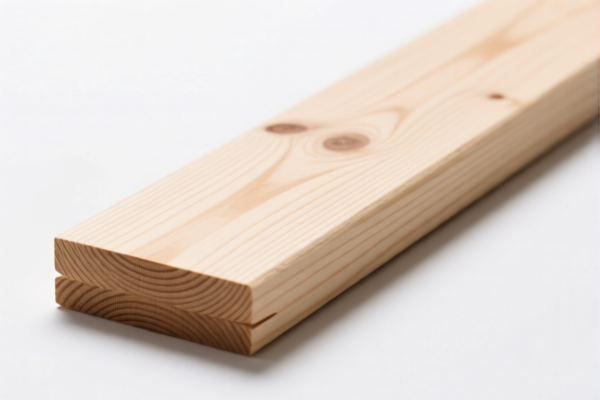
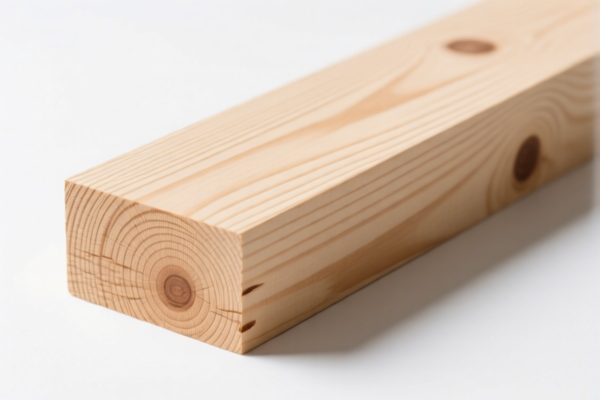
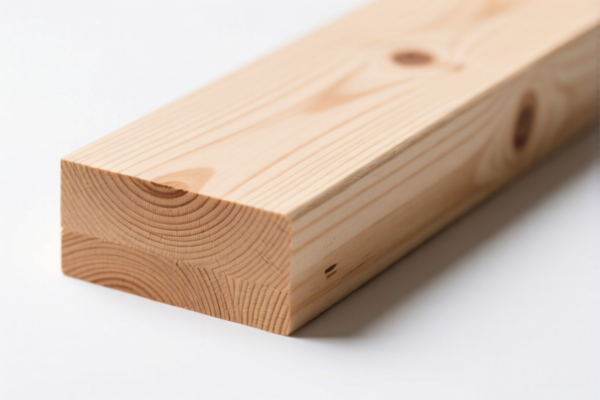
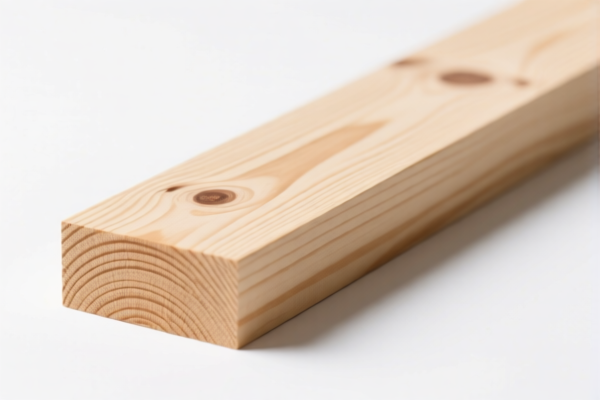
AI Analysis
🏗️ Construction Wood (Building Timber & Wood Products)
🌐 HS Code Reference & Customs Clearance Guide | 2026 Latest Tariff Analysis | Professional Clearance Strategy
📌 I. Product Definition & Classification: Do You Really Understand "Construction Wood"?
Construction wood is not a single commodity but a broad category encompassing various processed wood products used in building and civil engineering. In international trade, precise classification depends on material structure, processing depth, and form.
Solid Wood Planks/Sheets: Raw or semi-processed solid timber boards. Engineered Wood Products (Layered/Laminated): Plywood, OSB, honeycomb boards, or composite wood structures.
⚠️ Key Distinction Point:
- If it is a solid wood board or simple woodworking part → Classify under 4418.
- If it is a honeycomb wood board → Classify under 4418.92.
- If it is plywood, laminated wood, or OSB (Oriented Strand Board) → Classify under 4410 or 4412.
📦 II. HS Code Classification Details (2026 Latest Tariff Authority Comparison)
Based on the provided data, here are the specific classifications for "Construction Wood":
| HS Code | Product Description | Applicable Scenario | Form/Structure |
|---|---|---|---|
4418.82.00.00 |
Wood building parts, material: wood, form: boards | Fits the definition of wooden boards for building connections and woodworking products | ✅ Solid Wood Boards |
4418.92.00.00 |
Wood building parts, form: honeycomb wood boards | Belongs to the category of architectural woodwork | ✅ Honeycomb Structure |
4412.31.48.69 |
Wood building boards, form: boards/laminated products | Other catch-all category for laminated wood | ✅ Laminated/Composite |
4412.33.06.70 |
Wood building boards, form: board-type, consistent with plywood/solid sheets | Plywood, single-layer boards, and other layered wood products | ✅ Plywood/Layered |
4410.12.00.10 |
Wood building boards, form: Oriented Strand Board (OSB) | Primary or semi-finished state, particle-based structure | ✅ OSB/Strand Board |
🔍 Key Reminder:
- Solid wood boards (4418.82) and Honeycomb boards (4418.92) are classified under Chapter 4418 (Building Carpentry).
- Plywood, Laminated, and OSB (4412.31, 4412.33, 4410.12) are classified under Chapter 4410/4412 (Wood Panels & OSB).
- The tax rate varies significantly based on whether the product is considered "solid/semi-solid" (4418) or "engineered/layered" (4410/4412).
💰 III. 2026 Latest Tariff Rate Details (Including Surcharges & Policy Add-ons)
✅ Applicable Country: United States (US)
✅ Origin: China (CN)
✅ Effective Time: Current Tariff Regime (Includes Section 301 & 122 Clauses)
🎯 1. 4418.82.00.00 & 4418.92.00.00 —— Solid Wood & Honeycomb Building Boards
| Item | Content |
|---|---|
| Base Tariff | 3.2% (Ad Valorem) |
| Section 301 Surcharge | +25.0% (Trade Act of 1974, Section 301) |
| Section 122 Surcharge | +10.0% (Executive Order 13953 / Trade Promotion Authority) |
| Total Tariff Rate | 38.2% |
| Tax Calculation | CIF Value × 38.2% |
| De Minimis Exemption | ❌ Not Applicable (High tariff goods are excluded) |
| Legal Basis Path | USITC:4418.82.00.00 → Footnote 1 (Sec 301) → Footnote 2 (Sec 122) |
📌 Explanation:
- "Base Tariff 3.2%": The standard Most Favored Nation (MFN) rate for these specific wood products.
- "Section 301 Surcharge 25%": Applied to Chinese-origin wood products to address unfair trade practices.
- "Section 122 Surcharge 10%": A specific trade policy surcharge applied to certain imports from China.
- Combined Rate: 38.2%. This is a high-cost category; accurate classification is critical to avoid overpayment or penalties.
🎯 2. 4412.31.48.69 —— Laminated/Catch-All Wood Boards
| Item | Content |
|---|---|
| Base Tariff | 8.0% (Ad Valorem) |
| Section 301 Surcharge | +25.0% |
| Section 122 Surcharge | +10.0% |
| Total Tariff Rate | 43.0% |
| Tax Calculation | CIF Value × 43.0% |
| De Minimis Exemption | ❌ Not Applicable |
| Legal Basis Path | USITC:4412.31.48.69 → Footnote 1 → Footnote 2 |
📌 Warning:
- This code has the highest base tariff (8.0%) among the options.
- Total Rate: 43.0%.
- Use this only if the product is a complex laminated board that does not fit specific plywood (4412.33) or OSB (4410.12) definitions.
🎯 3. 4412.33.06.70 & 4410.12.00.10 —— Plywood & OSB (Lower Base Tariff)
| Item | Content |
|---|---|
| Base Tariff | 0.0% (Ad Valorem) |
| Section 301 Surcharge | +25.0% |
| Section 122 Surcharge | +10.0% |
| Total Tariff Rate | 35.0% |
| Tax Calculation | CIF Value × 35.0% |
| De Minimis Exemption | ❌ Not Applicable |
| Legal Basis Path | USITC:4412.33.06.70 / USITC:4410.12.00.10 → Footnote 1 → Footnote 2 |
📌 Strategic Note:
- Plywood (4412.33) and OSB (4410.12) benefit from a 0% base tariff.
- Total Rate: 35.0%.
- This is 3.2% cheaper than solid wood/honeycomb boards (38.2%) and 8.0% cheaper than laminated catch-all boards (43.0%).
- Recommendation: If your product is structurally plywood or OSB, ensure it is classified under these codes to maximize savings.
🛠️ IV. Customs Clearance Practical Advice (Battle-Tested Pitfall Avoidance)
✅ 1. Required Documentation Checklist (All or Nothing)
| Document | Required | Description |
|---|---|---|
| ✅ Product Specification Sheet | ✔️ | Must specify: Wood type, dimensions, moisture content, processing method (e.g., OSB vs. Plywood). |
| ✅ Structure Diagram/Photo | ✔️ | Crucial to distinguish between Solid Wood (4418) and Laminated/OSB (4410/4412). |
| ✅ Commercial Invoice | ✔️ | Must clearly state "Construction Wood," "Plywood," "OSB," or "Honeycomb Board." Avoid vague terms like "Timber." |
| ✅ Packing List | ✔️ | Details net/gross weight, number of packages, and pallet details. |
| ✅ Certificate of Origin (CO) | ✔️ | To prove origin (China) and apply correct Section 301/122 surcharges. |
| ✅ Third-Party Test Report | ✔️ | FSC certification (if eco-friendly claim), formaldehyde emission tests (CARB/EPA compliance for wood products). |
✅ 2. Declaration Tips (Key Mantra)
🔥 “Structure Defines Code, OSB/Plywood Saves 3%, Don’t Mix Types!”
| Scenario | Correct Declaration | Wrong Practice |
|---|---|---|
| Solid Wood Planks | 4418.82.00.00 (38.2%) |
Mislabeling as Plywood → Risk of Penalty & Back Taxes |
| Honeycomb Wood Board | 4418.92.00.00 (38.2%) |
Lumping with solid wood without specifying structure |
| OSB (Oriented Strand Board) | 4410.12.00.10 (35.0%) |
Labeling as "Wood Board" (General) → May be bumped to 43.0% |
| Plywood (Multi-layer) | 4412.33.06.70 (35.0%) |
Labeling as "Laminated Wood" → Higher base tax (8%) |
| Complex Laminated Wood | 4412.31.48.69 (43.0%) |
N/A (Only use if no other specific code fits) |
✅ 3. Special Case Handling
| Situation | Handling Advice |
|---|---|
| Mixed Container (Solid + Plywood) | Must split declaration. Each HS Code has a different tariff (38.2% vs 35.0%). Mixing them causes customs delays. |
| Treated Wood (Chemical Preservative) | Declare treatment type. May require additional phytosanitary certificates. |
| FSC Certified Wood | Provide FSC Chain of Custody certificate. Does not affect tariff but required for green building standards (LEED). |
| OSB vs. Particle Board | OSB (4410.12) is stratified. Particle Board is different. Misclassification leads to code errors. |
🌍 V. Global Main Market Clearance Comparison (2026 Latest)
| Country/Region | Recommended HS Code | Tariff (China Origin) | Certification | Notes |
|---|---|---|---|---|
| 🇺🇸 USA | 4410.12.00.10 / 4418.82.00.00 |
35.0% – 43.0% | CARB/EPA Formaldehyde, FSC | High Surcharges Apply |
| 🇨🇳 China | 4418.82.00.00 / 4412.33.06.70 |
0% – 8% | CCC (if electrical), GB Standards | No Section 301/122 |
| 🇪🇺 EU | 4412 / 4418 |
0% – 5% | CE Marking, EUDR (Deforestation Regulation) | EUDR Compliance Critical from 2024/2025 |
| 🇬🇧 UK | 4412 / 4418 |
0% – 5% | UKCA Marking | Post-Brexit rules apply |
| 🇯🇵 Japan | 4412 / 4418 |
5% – 8% | JAS (Japanese Agricultural Standard) | Strict formaldehyde limits |
📌 Conclusion:
- USA is the most expensive market due to Section 301 (25%) and Section 122 (10%) surcharges.
- EU has high compliance costs due to EUDR (European Union Deforestation Regulation), requiring proof of sustainable sourcing.
- Tariff Savings: Choosing Plywood (35.0%) over Solid Wood (38.2%) saves 3.2% on CIF value.
📌 VI. Common Errors & Pitfall Avoidance (Lessons Learned)
❌ Error 1: Labeling all wood products as "Wood Boards" without specifying OSB or Plywood
👉 Consequence: Customs may assign the highest base tariff (8.0%) → Total 43.0% instead of 35.0%.
❌ Error 2: Ignoring the difference between Solid Wood (4418) and Engineered Wood (4410/4412)
👉 Consequence: Code misclassification → Delays, Inspections, or Penalties.
❌ Error 3: Forgetting Section 122 Surcharge
👉 Consequence: Under-declaration → Back Taxes + Interest.
❌ Error 4: Vague Description "Construction Material"
👉 Consequence: Customs refuses to clear → Demurrage Charges.
✅ Correct Practice:
"Oriented Strand Board (OSB), 18mm, 4x8ft, for Construction Use, FSC Certified, Model XYZ" OR "Solid Pine Wood Board, Planed, for Building Frames, 2x4 inches"
🎯 VII. Conclusion: Precise Classification Saves Money!
🎯 Remember the Mantra:
🔹 "OSB/Plywood is 35%, Solid/Honeycomb is 38%, Laminated is 43%."
🔹 "Base Tax + 25% (Sec 301) + 10% (Sec 122) = Final Rate."
🔹 "Specify Structure, Avoid Ambiguity, Clear Faster, Pay Less."
📌 Pro Tip:
- If you are exporting OSB or Plywood, ensure your manufacturer provides structural performance certificates.
- For Solid Wood, ensure Phytosanitary Certificates are valid to meet USDA APHIS requirements.
- Consider Advance Rulings from US Customs if your product is a unique hybrid.
📣 Immediate Action:
📞 Consult your freight forwarder + Provide Product Photos + Verify HS Code
🚀 Ensure your construction wood clears US customs smoothly and cost-effectively!
✨ Professional Clearance Starts with Accurate Classification!
💼 Every Percent of Tariff Saved is Pure Profit!
Customer Reviews
About HS Code Classification
The Harmonized System (HS) is an internationally standardized nomenclature developed by the World Customs Organization (WCO) to classify traded products. Over 200 countries use the HS system as the basis for customs tariffs, trade statistics, and import/export regulations.
Each HS code follows a hierarchical structure:
- Chapter (2 digits) — Broad category of goods (e.g., Chapter 84: Machinery and Mechanical Appliances)
- Heading (4 digits) — More specific grouping within the chapter
- Subheading (6 digits) — Internationally standardized breakdown, used by all WCO member countries
- National subdivisions (8-10 digits) — Country-specific extensions for further classification, such as US HTSUS 10-digit codes
Correct HS code classification is essential for smooth customs clearance, accurate duty payment, and compliance with trade regulations. Misclassification can lead to customs delays, overpayment of duties, or penalties.
When importing from CN to US, the applicable tariff rates may include:
- Most-Favored-Nation (MFN) rate — The standard duty rate applied to WTO members
- General rate — Applied to countries without trade agreements
- Trade remedy duties — Additional tariffs such as Section 301 (anti-dumping), Section 232 (national security), or countervailing duties
The information provided on this page is for reference purposes only. For official classification, please consult with your local customs authority or a licensed customs broker.