Construction grade unvulcanized compounded rubber sheets
CN → US| HS Code | Tariff Rate | Origin | Destination | Doc |
|---|---|---|---|---|
| 4005910000 | 35.0% | CN | US | Official Doc |
| 4005200000 | 35.0% | CN | US | Official Doc |
Product Images


AI Analysis
🛠️ Construction-Grade Unvulcanized Compounded Rubber Sheets
🌐 HS Code Reference & Customs Clearance Guide | 2026 Latest Tariff Analysis | Professional-Level Strategy for Rubber Imports
📌 I. Product Definition & Classification: Do You Really Know "Unvulcanized Rubber Sheets"?
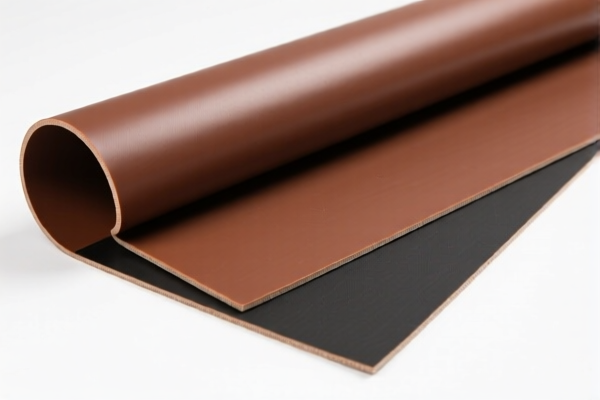
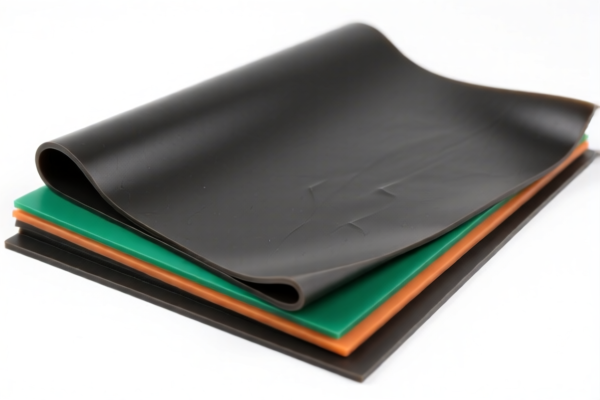
Unvulcanized compounded rubber sheets are raw rubber materials mixed with additives (such as accelerators, activators, or stabilizers) but not yet cross-linked (vulcanized). In international trade, these materials are primarily used as intermediate goods for manufacturing rubber products (e.g., seals, gaskets, hoses, or waterproofing membranes in construction).
Key Distinction:
- Unvulcanized (Raw/Mix): Soft, sticky, requires heat to set shape/permanence →归入 Chapter 4005.
- Vulcanized (Finished/Half-Finished): Hardened, elastic, ready for use → Often归入 Chapter 4016 (Other articles of vulcanized rubber).
⚠️ Critical Classification Point:
- If the rubber is unvulcanized and supplied in plates, sheets, or strip → It belongs to 4005.91.00.00.
- If the rubber is unvulcanized but supplied as a solution or dispersion (liquid/paste) → It belongs to 4005.20.00.00.
- ❌ Do NOT confuse with "vulcanized rubber sheets" (e.g., EPDM roofing membranes), which fall under different HS codes (e.g., 4016.93) and have different tariff structures.
📦 II. HS Code Classification Details (2026 Latest Tariff Authority对照)
| HS Code | Product Description | Application Scenario | Physical Form |
|---|---|---|---|
4005.91.00.00 |
Plates, sheets, and strip of unvulcanized compounded rubber | Construction waterproofing membranes (pre-vulcanization), gasket blanks, industrial raw material stock | Solid sheets/strips |
4005.20.00.00 |
Solutions; dispersions of unvulcanized rubber | Adhesives, sealants, rubber pastes, liquid coatings | Liquid/Paste |
🔍 Key Reminder:
- "Construction grade" does not change the HS code; it refers to the application, not the material state.
- Physical form is king: If it’s a solid sheet, use4005.91.00.00. If it’s a liquid adhesive/dispersion, use4005.20.00.00.
- Unvulcanized means it has not undergone the final curing process. If vulcanized, it is no longer "unvulcanized compounded rubber."
💰 III. 2026 Latest Tariff Rate Detail (Including Surtaxes & Policy Add-ons)
✅ Applicable Country: United States (US)
✅ Origin: China (CN)
✅ Effective Date: 2025 November 10 onwards (including subsequent imports)
🎯 1. 4005.91.00.00 — Unvulcanized Compounded Rubber in Plates, Sheets, or Strip
| Item | Content |
|---|---|
| Base Tariff Rate | 0.0% (ad valorem) |
| USITC Surtax (Section 301) | +25.0% |
| IEEPA Surtax | Not explicitly listed in provided data (Note: Some rubber products may face additional tariffs depending on specific chemical composition, but based on provided data, we stick to the 25% surtax) |
| Total Tariff Rate | 25.0% |
| Tax Calculation | CIF Value × 25% |
| De Minimis Exemption Eligible? | ❌ No (Not eligible for $800 de minimis exemption for China-origin goods under current enforcement) |
| Legal Basis Path | USITC:4005.91.00.00 → FOOTNOTE:301 (Section 301 Surtax) |
📌 Explanation:
- Base Rate: 0% reflects standard MFN treatment for raw rubber materials.
- 25% Surtax: This is the Section 301 tariff imposed on Chinese goods under the US Trade Act of 1974. It applies broadly to many rubber products from China.
- No Additional IEEPA: Based on the provided data, there is no separate IEEPA surtax for this specific HS code in the dataset, but the 25% Section 301 rate is significant.
- Total Effective Rate: 25%. This is a high tariff for a raw material, impacting cost competitiveness.
🎯 2. 4005.20.00.00 — Solutions & Dispersions of Unvulcanized Rubber
| Item | Content |
|---|---|
| Base Tariff Rate | 0.0% (ad valorem) |
| USITC Surtax (Section 301) | +25.0% |
| IEEPA Surtax | Not explicitly listed in provided data |
| Total Tariff Rate | 25.0% |
| Tax Calculation | CIF Value × 25% |
| De Minimis Exemption Eligible? | ❌ No |
| Legal Basis Path | USITC:4005.20.00.00 → FOOTNOTE:301 (Section 301 Surtax) |
📌 Note:
- Liquid rubber products (adhesives, sealants) face the same 25% surtax as solid sheets.
- These are often used in construction sealing or waterproofing. Ensure proper classification as "dispersion" vs. "finished sealant" (which may be 4016.93 or 3906.90).
🛠️ IV. Customs Clearance Practical Advice (Real-World Pitfall Avoidance Guide)
✅ 1. Required Documentation Checklist (Missing Items Cause Delays)
| Document | Must Provide | Description |
|---|---|---|
| ✅ Product Specification Sheet | ✔️ | Must clearly state: Unvulcanized, Compounded Ingredients (e.g., SBR, Natural Rubber + additives), Form (Sheet/Liquid) |
| ✅ MSDS (Material Safety Data Sheet) | ✔️ | Critical for chemical products (rubber compounds may contain volatile solvents or hazardous additives) |
| ✅ Certificate of Origin (CO) | ✔️ | To prove China origin; apply for any potential exclusions if available |
| ✅ Commercial Invoice | ✔️ | Clearly describe as: "Unvulcanized Compounded Rubber Sheets/Dispersion for Industrial Use" — Do NOT say "Finished Rubber Mat" |
| ✅ Bill of Lading/Air Waybill | ✔️ | Standard shipping documents |
| ✅ Vulcanization Statement | ✔️ | If applicable, provide a letter stating the rubber is NOT vulcanized and requires further processing |
⚠️ Critical Warning:
- If the rubber is vulcanized (e.g., ready-to-use waterproof membrane), declaring it as "unvulcanized" is fraud. Customs may seize goods and impose penalties.
- Chemical Composition: If the rubber compound contains significant amounts of non-rubber substances (e.g., >10% carbon black or other fillers), it still falls under 4005, but ensure accurate ingredient listing for safety compliance.
✅ 2. Declaration Tips (Key Mnemonics)
🔥 "Unvulcanized is Key, Form Dictates Code, 25% Surtax Applies!"
| Scenario | Correct Declaration | Incorrect Declaration |
|---|---|---|
| Solid rubber sheets for cutting | 4005.91.00.00 - "Unvulcanized Compounded Rubber Sheets" | "Rubber Mat" or "Flooring" → Risk of misclassification |
| Liquid rubber adhesive | 4005.20.00.00 - "Rubber Dispersion" | "Glue" or "Sealant" → May be classified under Chapter 35 or 39, leading to incorrect duties |
| Pre-cut waterproof membrane (vulcanized) | 4016.93.00.00 (Vulcanized) | Misdeclaring as 4005.91 → Severe Penalty |
✅ 3. Special Case Handling
| Case | Handling Advice |
|---|---|
| OEM Rubber Compounds | Provide customer order + formula sheet. Ensure no proprietary chemical secrets are fully disclosed if not required by customs. |
| Mix of Sheets & Dispersions in One Shipment | Separate Declaration Required! Do not combine. Each HS code has its own tariff and regulatory requirements. |
| Rubber with High Carbon Black Content | Still falls under 4005, but ensure MSDS highlights any hazardous components for DOT/OSHA compliance. |
| Re-export from Third Country | If re-exported from Vietnam/Malaysia, origin may change. However, if substantially transformed, new CO may apply. Consult customs for "Substantial Transformation" rules. |
🌍 V. Global Market Comparison (2026 Latest)
| Country/Region | Recommended HS Code | Tariff (China Origin) | Certification Requirements | Notes |
|---|---|---|---|---|
| 🇺🇸 USA | 4005.91.00.00 or 4005.20.00.00 |
25% (Section 301) | MSDS, Prop 65 (if sold in CA) | High tariff burden |
| 🇨🇳 China | 4005.91.00.00 |
~5-10% | CCC (if finished goods) | Import tariff varies |
| 🇪🇺 EU | 4005.91.00 |
0% | REACH, SDS | No surtax, but REACH compliance is strict |
| 🇬🇧 UK | 4005.91.00 |
0% | UK REACH | Post-Brexit rules apply |
| 🇯🇵 Japan | 4005.91.00 |
5.3% | PSE (if electrical) | Standard MFN rate |
📌 Conclusion:
- USA imposes a 25% surtax on Chinese unvulcanized rubber sheets/dispersions.
- EU/UK/Japan do not apply Section 301-style surtaxes, making them more cost-effective for Chinese rubber imports.
- Compliance: REACH (EU) and MSDS (US) are critical for chemical safety clearance.
📌 VI. Common Errors & Pitfall Avoidance (Lessons Learned)
❌ Error 1: Declaring "Vulcanized Rubber Membrane" as "Unvulcanized Sheets"
👉 Consequence: Customs seizure, fines, and potential fraud charges.
✅ Fix: Ensure physical inspection proves lack of cross-linking (e.g., tacky surface, no elastic memory).
❌ Error 2: Ignoring MSDS Requirements
👉 Consequence: Delayed clearance, rejection by DOT/OSHA, or fines for hazardous material misdeclaration.
✅ Fix: Always include MSDS with clear hazard classification.
❌ Error 3: Combining Sheets and Dispersions in One HS Code Line
👉 Consequence: Audit failure, retroactive tax adjustment.
✅ Fix: Declare separately with distinct HS codes and line items.
❌ Error 4: Using Generic Descriptions like "Rubber Material"
👉 Consequence: Customs may assign the highest duty rate or require further inspection.
✅ Fix: Use precise language: "Unvulcanized Compounded SBR Rubber Sheets, 2mm thick, for waterproofing."
🎯 VII. Conclusion: Professional Declaration, Cost Control, Compliance!
🎯 Remember Mnemonics:
🔹 "Unvulcanized is King, Sheet vs. Liquid Dictates Code!"
🔹 "25% Surtax Awaits China-Origin Rubber, No De Minimis!"
🔹 "MSDS is Mandatory, Fraud is Fatal!"
📌 Pro Tip:
If your unvulcanized rubber is intermediate material for further manufacturing in the US, consider applying for Manufacturing Deduction or Foreign Trade Zone (FTZ) benefits to defer or reduce duties.
Advance Ruling from US CBP is highly recommended for complex rubber compounds to ensure correct classification and avoid penalties.
📣 Immediate Action:
📞 Contact Customs Broker + Provide MSDS + Specify Physical Form (Sheet/Dispersion) + Apply for Advance Ruling
🚀 Ensure Smooth Clearance, Avoid 25% Surcharge Surprises, Optimize Supply Chain!
✨ Professional Clearance Starts with Accurate Classification!
💼 Every Percent of Tariff Counts in Rubber Trade!
Customer Reviews
About HS Code Classification
The Harmonized System (HS) is an internationally standardized nomenclature developed by the World Customs Organization (WCO) to classify traded products. Over 200 countries use the HS system as the basis for customs tariffs, trade statistics, and import/export regulations.
Each HS code follows a hierarchical structure:
- Chapter (2 digits) — Broad category of goods (e.g., Chapter 84: Machinery and Mechanical Appliances)
- Heading (4 digits) — More specific grouping within the chapter
- Subheading (6 digits) — Internationally standardized breakdown, used by all WCO member countries
- National subdivisions (8-10 digits) — Country-specific extensions for further classification, such as US HTSUS 10-digit codes
Correct HS code classification is essential for smooth customs clearance, accurate duty payment, and compliance with trade regulations. Misclassification can lead to customs delays, overpayment of duties, or penalties.
When importing from CN to US, the applicable tariff rates may include:
- Most-Favored-Nation (MFN) rate — The standard duty rate applied to WTO members
- General rate — Applied to countries without trade agreements
- Trade remedy duties — Additional tariffs such as Section 301 (anti-dumping), Section 232 (national security), or countervailing duties
The information provided on this page is for reference purposes only. For official classification, please consult with your local customs authority or a licensed customs broker.