Construction other plastic monofilament
CN → US| HS Code | Tariff Rate | Origin | Destination | Doc |
|---|---|---|---|---|
| 3916903000 | 41.5% | CN | US | Official Doc |
| 3916905000 | 40.8% | CN | US | Official Doc |
Product Images
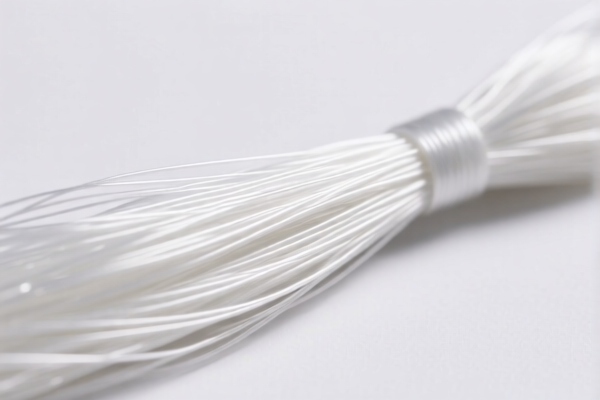
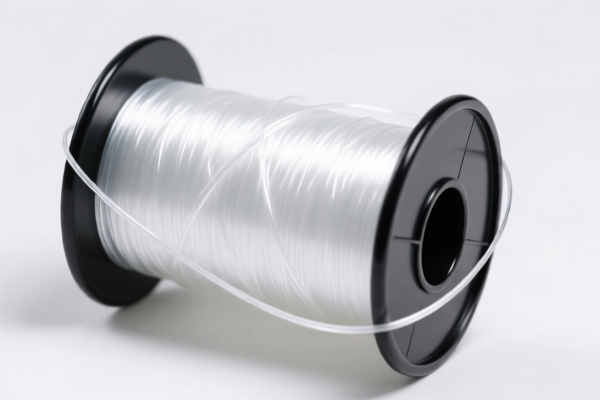

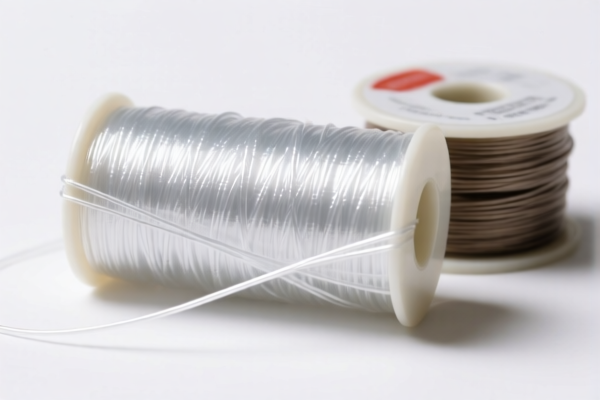
AI Analysis
🏗️ Construction Plastic Monofilament (High-Density Monofilament >1mm)
🌐 HS Code Reference & Customs Clearance Guide | 2026 Latest Tariff Analysis | Professional Customs Strategy
📌 I. Product Definition & Classification: What is "Construction Plastic Monofilament"?
In the international trade of building materials and plastics, "Plastic Monofilament" refers to plastic threads or fibers where any single cross-sectional dimension exceeds 1 mm. When used in construction, these are typically high-strength, rigid rods, sticks, or profile shapes used for:
- Reinforcement: Geogrids, fiber-reinforced concrete additives.
- Structural Supports: Temporary shoring, scaffolding components, or industrial brushes.
- Profile Shapes: Extruded plastic bars used for sealing, edging, or structural framing.
⚠️ Key Distinction Point:
- If the cross-sectional dimension is ≤ 1 mm, it is classified as "Textile Yarn" (Chapter 54/55).
- If the cross-sectional dimension is > 1 mm, it is classified as "Plastics Articles" (Chapter 39), specifically under HS 3916.
📦 II. HS Code Classification Details (2026 Latest Tariff Authority)
Based on the provided data, construction plastic monofilaments fall under Chapter 39 (Plastics and Articles Thereof), specifically Heading 3916 (Monofilament, Rods, Sticks, and Profile Shapes).
| HS Code | Product Description | Application Scenario | Cross-Section | Tax Status |
|---|---|---|---|---|
3916.90.30.00 |
Monofilament of Other Plastics | High-strength construction fibers, industrial brushes, stiff reinforcement rods | Any dimension > 1 mm | ⚠️ High Tax |
3916.90.50.00 |
Other Plastic Products | Non-monofilament plastic rods, sticks, profile shapes (not strictly "monofilament") | Any shape, but not fitting "monofilament" definition | ✅ Low Tax |
🔍 Critical Note for Customs:
- HS 3916.90.30.00 applies specifically to monofilament (single continuous thread/fiber) where any cross-sectional dimension exceeds 1 mm. This includes circular fibers with diameter >1mm or irregular profiles where the largest dimension is >1mm. - HS 3916.90.50.00 is a "catch-all" for other plastic rods/sticks/profiles that are not considered monofilament (e.g., solid plastic bars, non-fibrous profiles).
💰 III. 2026 Latest Tariff Rate Breakdown (Including Surtaxes & Policy Add-ons)
✅ Applicable Country: United States (US)
✅ Origin: China (CN)
✅ Effective Date: Ongoing (subject to 301 Clause & IEEPA regulations)
🎯 1. 3916.90.30.00 —— Construction Plastic Monofilament (>1mm)
| Item | Content |
|---|---|
| Base Tariff Rate | 6.5% (ad valorem) |
| Section 301 Surtax | +25.0% (Under US Trade Act Section 301) |
| Total Tariff Rate | 31.5% |
| Tax Calculation | CIF Value × 31.5% |
| De Minimis Exemption? | ❌ No (Deny_de_minimis for Chinese-origin goods under 301) |
| Legal Basis Path | HTSUS:3916.90.30.00 → USITC Footnote 9903.88.01 → Section 301 Surtax |
📌 Explanation:
- The 6.5% base rate is the standard Most Favored Nation (MFN) tariff for plastic monofilaments of other plastics. - The 25.0% surtax is the key cost driver. It is imposed under Section 301 of the Trade Act of 1974, targeting specific Chinese industrial inputs. - Total Effective Rate: 31.5%. This is a significant cost factor for construction material imports from China.
🎯 2. 3916.90.50.00 —— Other Plastic Rods/Sticks/Profiles
| Item | Content |
|---|---|
| Base Tariff Rate | 0.0% (ad valorem) |
| Surtax | 0.0% |
| Total Tariff Rate | 0.0% |
| Tax Calculation | CIF Value × 0% |
| De Minimis Exemption? | ✅ Yes (If value < $800, though rarely applies to bulk construction goods) |
| Legal Basis Path | HTSUS:3916.90.50.00 (No Section 301 listing) |
📌 Explanation:
- This code is tariff-free for Chinese-origin goods. - Strategic Advantage: If the product can be technically classified as a "rod/stick/profile" rather than a "monofilament", the tariff drops from 31.5% to 0%. - Risk: Misclassification is heavily audited. The product must genuinely not meet the definition of "monofilament" (i.e., it must not be a single continuous fiber/thread structure).
🛠️ IV. Customs Clearance Practical Advice (Avoid Pitfalls)
✅ 1. Critical Documentation Checklist
| Document | Required | Purpose |
|---|---|---|
| ✅ Product Specification Sheet | ✔️ | Must clearly state cross-sectional dimensions (diameter/thickness). If >1mm, it risks 3916.90.30.00. |
| ✅ Photographs (Cross-Section View) | ✔️ | Visual proof of shape. Is it a round fiber (>1mm) or a solid plastic bar? |
| ✅ Material Composition Certificate | ✔️ | Confirms it is plastic (not textile). |
| ✅ Commercial Invoice | ✔️ | Description must be precise: e.g., "Plastic Monofilament, Diameter 2mm, PP Material" vs. "Plastic Rod". |
| ✅ Origin Certificate | ✔️ | To prove Chinese origin and apply correct surtax rules. |
✅ 2. Declaration Strategy (Key Mnemonic)
🔥 "Shape Determines Code, Size Dictates Tax, Precision Saves 31%!"
| Scenario | Correct HS Code | Tariff | Error Risk |
|---|---|---|---|
| Round Fiber, Diameter 2mm | 3916.90.30.00 |
31.5% | None (It is monofilament) |
| Irregular Profile, Width 3mm | 3916.90.30.00 |
31.5% | If largest dimension >1mm, it’s still monofilament |
| Solid Plastic Bar, 10mm x 10mm | 3916.90.50.00 |
0% | Must be a solid profile, not a fiber/thread |
| Fiber, Diameter 0.5mm | NOT in DATA | N/A | Would be Chapter 54/55 (Textiles), not Chapter 39 |
✅ 3. Special Considerations for Construction Use
| Situation | Handling Advice |
|---|---|
| Reinforcement Fibers in Concrete | If sold as "plastic fibers for concrete", ensure description emphasizes monofilament structure. If it’s chopped strands, it may still be classified under 3916.90.30.00 if >1mm. |
| Brush Bristles | Plastic bristles >1mm are often classified as monofilament. Use 3916.90.30.00. |
| Packaging | If packed in large bales or spools, it reinforces the "monofilament" classification. Solid rods are usually packed in bundles or boxes. |
🌍 V. Global Market Comparison (2026 Latest)
| Country/Region | Recommended HS Code | Tariff (China Origin) | Notes |
|---|---|---|---|
| 🇺🇸 United States | 3916.90.30.00 |
31.5% | High surtax due to Section 301. Consider 3916.90.50.00 if technically possible. |
| 🇨🇳 China | 3916.90.30.00 |
6.5% | No surtax for domestic imports (if applicable). |
| 🇪🇺 European Union | 3916.90.90 |
~6.5% | Generally lower administrative burden, but no Section 301 equivalent. |
| 🇦🇺 Australia | 3916.90.90 |
5.0% | Free Trade Agreement (ChAFTA) may apply if originating in China. |
| 🇯🇵 Japan | 3916.90.90 |
~6.5% | No specific surtax on plastics. |
📌 Conclusion:
- The US is the only major market imposing the 25% surtax on these goods. - Cost Optimization Strategy: If the product is a solid plastic profile (not a continuous fiber/thread), advocate for3916.90.50.00to achieve 0% tariff. However, this must be technically defensible.
📌 VI. Common Errors & Pitfalls (Blood & Tears Lessons)
❌ Error 1: Declaring a 2mm diameter plastic rope as "Plastic Rod" (3916.90.50.00)
👉 Consequence: Customs will reclassify as Monofilament (3916.90.30.00) and assess 31.5% tariff + penalties.
👉 Lesson: If it’s a continuous fiber/thread >1mm, it’s monofilament.
❌ Error 2: Ignoring the 1mm threshold
👉 Consequence: Declaring a 0.8mm fiber as plastic monofilament (3916.90.30.00). It should be Textile Yarn (Chapter 54).
👉 Lesson: Check cross-section carefully. ≤1mm = Textiles; >1mm = Plastics.
❌ Error 3: Vague Description "Plastic Fiber"
👉 Consequence: Customs delay for clarification, potential misclassification.
👉 Lesson: Be specific: "Polypropylene Monofilament, Diameter 1.5mm, White, for Geogrid Reinforcement."
✅ Correct Practice:
"Plastic Monofilament, Polyethylene, Diameter 1.2mm, for Construction Reinforcement, Unworked, Circular Cross-Section"
→ HS Code:3916.90.30.00
→ Tax: 31.5%
🎯 VII. Conclusion: Precision in Classification Saves Money!
🎯 Remember the Mantra:
🔹 ">1mm is Monofilament, <1mm is Textile."
🔹 "Monofilament pays 31.5%, Profiles pay 0% (if solid)."
🔹 "In the US, Shape and Size Dictate Your Tax Bill!"
📌 Pro Tip:
If your product is a solid plastic bar (not a fiber/thread), provide engineering drawings showing the cross-section to justify 3916.90.50.00.
If it is fibrous, accept the 31.5% cost and factor it into your pricing. Consider pre-ruling with US Customs (CBP) if the classification is borderline.
📣 Immediate Action:
📞 Consult a licensed customs broker with product samples and cross-section photos.
🚀 Do not guess! Misclassification of monofilament can lead to severe retroactive duties.
✨ Professional Customs Clearance Starts with Accurate Classification!
💼 Your Bottom Line Depends on These Two Digits: .30 vs .50
Customer Reviews
About HS Code Classification
The Harmonized System (HS) is an internationally standardized nomenclature developed by the World Customs Organization (WCO) to classify traded products. Over 200 countries use the HS system as the basis for customs tariffs, trade statistics, and import/export regulations.
Each HS code follows a hierarchical structure:
- Chapter (2 digits) — Broad category of goods (e.g., Chapter 84: Machinery and Mechanical Appliances)
- Heading (4 digits) — More specific grouping within the chapter
- Subheading (6 digits) — Internationally standardized breakdown, used by all WCO member countries
- National subdivisions (8-10 digits) — Country-specific extensions for further classification, such as US HTSUS 10-digit codes
Correct HS code classification is essential for smooth customs clearance, accurate duty payment, and compliance with trade regulations. Misclassification can lead to customs delays, overpayment of duties, or penalties.
When importing from CN to US, the applicable tariff rates may include:
- Most-Favored-Nation (MFN) rate — The standard duty rate applied to WTO members
- General rate — Applied to countries without trade agreements
- Trade remedy duties — Additional tariffs such as Section 301 (anti-dumping), Section 232 (national security), or countervailing duties
The information provided on this page is for reference purposes only. For official classification, please consult with your local customs authority or a licensed customs broker.