Control Module
CN → US| HS Code | Tariff Rate | Origin | Destination | Doc |
|---|---|---|---|---|
| 9032896075 | 36.7% | CN | US | Official Doc |
| 8471804000 | 35.0% | CN | US | Official Doc |
| 8471801000 | 35.0% | CN | US | Official Doc |
| 8537109130 | 37.7% | CN | US | Official Doc |
| 9032896030 | 36.7% | CN | US | Official Doc |
| 8537109160 | 37.7% | CN | US | Official Doc |
Product Images
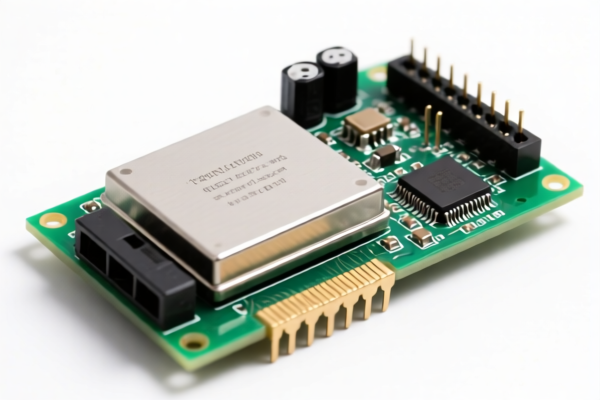
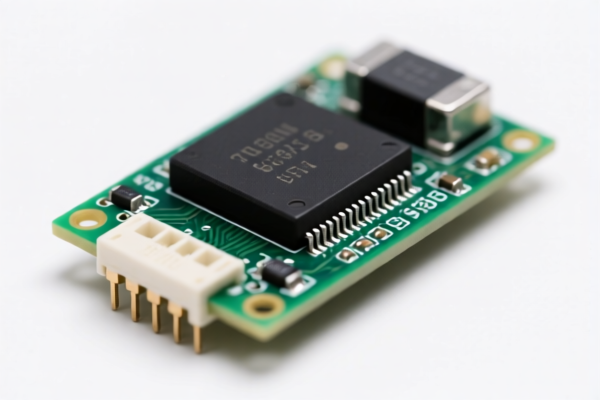
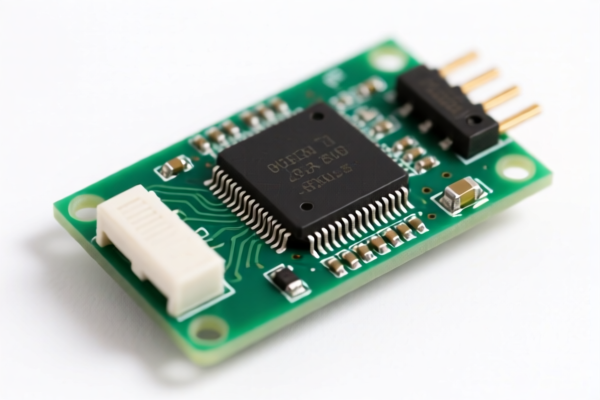

AI Analysis
🎛️ Control Module (Process & Data Processing Control Units)
🌐 HS Code Reference & Customs Clearance Guide | 2026 Latest Tariff Analysis | Professional Strategy for High-Tariff Goods
📌 I. Product Definition: What is a "Control Module"?
A Control Module is a generic term that can refer to different types of electronic control devices depending on its functional application and physical integration. In international trade, misclassification is common because these modules often sit at the intersection of several HS chapters (Chapter 84 for Machinery, Chapter 85 for Electrical Machinery, and Chapter 90 for Instruments).
Two Primary Categories:
- Automatic Data Processing (ADP) Control Units: Modules designed to function as part of an automatic data processing machine (e.g., server control boards, IT infrastructure controllers).
- Process/Industrial Control Units: Modules designed to regulate industrial processes, fluid flow, temperature, or mechanical systems (e.g., PLC interfaces, sensor controllers).
⚠️ Key Distinction Point:
- If the module is embedded or specifically designed for IT/Data Processing infrastructure → Look at HS 8471.
- If the module is for Industrial Process Control or General Electrical Control → Look at HS 9032 or HS 8537.
- Note: All categories below are subject to significant US import tariffs due to Section 301 and IEEPA provisions.
📦 II. HS Code Classification Details (2026 Latest Tariff Authority Comparison)
Based on the provided data, here are the 6 possible classifications for "Control Module," ranked by tax efficiency and technical fit.
| HS Code | Product Description | Fit Summary | Total Tax Rate (China Origin to US) |
|---|---|---|---|
8471.80.10.00 |
Units for Automatic Data Processing Machines | Control purpose matches ADP units; module form fits. No material conflict. | 35.0% |
8471.80.40.00 |
Other Units for Automatic Data Processing Machines | Inferred as ADP unit; suitable for physical embedding. No material/shape conflict. | 35.0% |
9032.89.60.30 |
Process Control Instruments & Apparatus | Part of a process control system; shape matches core unit. No material conflict. | 36.7% |
9032.89.60.75 |
Other Measuring/Checking Instruments (Process Control) | Part of process control apparatus; matches usage. No material conflict. | 36.7% |
8537.10.91.30 |
Boards/Panels for Electrical Control | Electrical control device component; function matches control devices. Default match. | 37.7% |
8537.10.91.60 |
Programmable Logic Controllers (PLCs) | Highly matches programmable control function; electronic control component. | 37.7% |
🔍 Key Insight:
- Lowest Tax Category (35.0%):8471.80.10.00and8471.80.40.00. These are preferred if your module can be technically justified as part of an Automatic Data Processing (ADP) system (e.g., server management, IT network control).
- Highest Tax Category (37.7%):8537.10.91.xx. These are for general electrical control or PLCs. While functionally accurate for many industrial modules, they carry a 2.7% base tariff vs 0% base for ADP codes, plus the same surcharges.
💰 III. 2026 Latest Tariff Rate Breakdown (Including Surcharges)
✅ Applicable Country: United States (US)
✅ Country of Origin: China (CN)
✅ Effective Date: November 10, 2025 (including subsequent imports)
🎯 1. The "ADP Advantage": HS Codes 8471.80.10.00 & 8471.80.40.00
| Item | Content |
|---|---|
| Base Tariff | 0.0% (Ad Valorem) |
| Section 301 (USITC) Surcharge | +25.0% |
| IEEPA Surcharge | +10.0% (122 Clause) |
| Total Tax Rate | 35.0% |
| Tax Calculation | CIF Value × 35.0% |
| De Minimis Eligibility | ❌ NO (Denied) |
| Legal Basis Path | IEEPA:9903.01.24 → USITC:8471.80.10.00 / 8471.80.40.00 |
📌 Explanation:
- The 0% base tariff makes this the most cost-effective classification.
- The 25% Section 301 tariff is standard for many Chinese electronics.
- The 10% IEEPA tariff is the additional penalty for specific strategic goods/categories from China.
- Total: 35%. This is the lowest possible rate in the provided dataset.
🎯 2. The "Process Control" Category: HS Codes 9032.89.60.30 & 9032.89.60.75
| Item | Content |
|---|---|
| Base Tariff | 1.7% (Ad Valorem) |
| Section 301 (USITC) Surcharge | +25.0% |
| IEEPA Surcharge | +10.0% (122 Clause) |
| Total Tax Rate | 36.7% |
| Tax Calculation | CIF Value × 36.7% |
| De Minimis Eligibility | ❌ NO (Denied) |
| Legal Basis Path | IEEPA:9903.01.24 → USITC:9032.89.60.30 / 9032.89.60.75 |
📌 Explanation:
- These codes apply if the module is strictly for industrial process control (e.g., regulating temperature, pressure, flow).
- The 1.7% base tariff adds to the total, making it 1.7% more expensive than the ADP classification.
🎯 3. The "General Electrical/PLC" Category: HS Codes 8537.10.91.30 & 8537.10.91.60
| Item | Content |
|---|---|
| Base Tariff | 2.7% (Ad Valorem) |
| Section 301 (USITC) Surcharge | +25.0% |
| IEEPA Surcharge | +10.0% (122 Clause) |
| Total Tax Rate | 37.7% |
| Tax Calculation | CIF Value × 37.7% |
| De Minimis Eligibility | ❌ NO (Denied) |
| Legal Basis Path | IEEPA:9903.01.24 → USITC:8537.10.91.30 / 8537.10.91.60 |
📌 Explanation:
- These codes are for electrical control boards/panels and Programmable Logic Controllers (PLCs).
- This is the highest tax category in the list (37.7%).
- Use only if the module cannot be technically justified as ADP or Process Control instrumentation.
🛠️ IV. Customs Clearance Practical Advice (Avoid Pitfalls)
✅ 1. Documentation Checklist (Mandatory)
| Document | Required? | Purpose |
|---|---|---|
| ✅ Product Specification Sheet | ✔️ | Must clearly define the primary function (Data Processing vs. Process Control). |
| ✅ Circuit/Architecture Diagram | ✔️ | Proves if the module is embedded in or controls an ADP machine. |
| ✅ Product Photos (Label/Monitor) | ✔️ | Shows model, brand, input/output ports. |
| ✅ Commercial Invoice | ✔️ | Must describe item as "Control Module for [Specific Machine/System]." Avoid vague "Electronic Part." |
| ✅ Certificate of Origin | ✔️ | To confirm China origin (triggering surcharges). |
✅ 2. Declaration Strategy (Key Mantra)
🔥 "ADP First, Process Second, PLC Last!"
| Scenario | Correct HS Code | Risk of Wrong Classification |
|---|---|---|
| Module controls servers, PCs, or IT infrastructure | 8471.80.10.00 or 8471.80.40.00 |
✅ Lowest Tax (35%) |
| Module regulates industrial processes (temp, pressure) | 9032.89.60.30 or 9032.89.60.75 |
⚠️ Moderate Tax (36.7%) |
| Generic PLC or electrical control board | 8537.10.91.30 or 8537.10.91.60 |
❌ Highest Tax (37.7%) |
📌 Critical Advice:
- If your module can be technically argued as part of an Automatic Data Processing (ADP) system, always choose8471.80.xx.xx. The 2.7% base tariff saving on PLC/Process codes is significant over large volumes.
- Do not split shipments to avoid tariffs; de minimis exemption is denied for all these codes.
✅ 3. Special Case Handling
| Situation | Recommendation |
|---|---|
| Dual-Purpose Module | If the module controls both IT systems and industrial processes, declare as ADP (8471) if primary use is IT. Provide evidence of IT integration. |
| OEM Custom Module | Provide design blueprints to Customs to prove its specific function. Vague descriptions lead to higher classification guesses. |
| Kit vs. Single Unit | If sold as a kit with other parts, ensure the "Control Module" is the principal component. |
🌍 V. Global Market Comparison (2026)
| Market | Recommended HS Code | Base Tariff | Surcharges | Total Rate (China) | Notes |
|---|---|---|---|---|---|
| 🇺🇸 USA | 8471.80.10.00 (Best) |
0% | +25% (301) +10% (IEEPA) | 35.0% | Highest efficiency choice. |
| 🇨🇳 China | Varies | 0-3% | None | 0-3% | Low tax, but focus on domestic market. |
| 🇪🇺 EU | 8471.80.90 |
0-1.7% | None | ~0-2% | No Section 301 tariffs. |
| 🇬🇧 UK | 8471.80.90 |
0-3% | None | ~0-3% | Post-Brexit rules apply. |
📌 Conclusion:
- The USA is the only market imposing high surcharges.
- For US imports, classifying under HS 8471 (ADP) saves you 2.7% to 2.7% compared to other options. Over $1M in goods, this is a $27,000 saving.
📌 VI. Common Errors & Pitfalls (Lessons Learned)
❌ Error 1: Declaring a Process Control Module as a generic "Electronic Part"
👉 Consequence: Customs may assign a default high-rate code or delay inspection.
❌ Error 2: Using 8537 (PLC) when 8471 (ADP) is applicable
👉 Consequence: Paying an extra 2.7% base tariff unnecessarily.
❌ Error 3: Assuming "Control Module" qualifies for De Minimis (Under $800)
👉 Consequence: Denied. All listed codes are subject to IEEPA/301 surcharges and do not qualify for tax-free entry.
✅ Correct Practice:
"Control Module for Server Infrastructure, Model XYZ, Embedded in Data Processing System, FCC Certified"
Use this description to support HS Code8471.80.10.00.
🎯 VII. Conclusion: Precision Classification Saves Money
🎯 Remember the Strategy:
🔹 "ADP is King: 0% Base, 35% Total."
🔹 "Process Control: 1.7% Base, 36.7% Total."
🔹 "PLC/Electrical: 2.7% Base, 37.7% Total."
📌 Final Tip:
If your control module has any link to data processing, servers, or IT networks, aggressively pursue the 8471 classification. Provide technical documents proving its role in data handling. For pure industrial process control, accept the 9032 rate. Avoid 8537 unless necessary.
✨ Professional Clearance Starts with Accurate Classification!
💼 Every percentage point matters in 2026 tariffs.
Customer Reviews
About HS Code Classification
The Harmonized System (HS) is an internationally standardized nomenclature developed by the World Customs Organization (WCO) to classify traded products. Over 200 countries use the HS system as the basis for customs tariffs, trade statistics, and import/export regulations.
Each HS code follows a hierarchical structure:
- Chapter (2 digits) — Broad category of goods (e.g., Chapter 84: Machinery and Mechanical Appliances)
- Heading (4 digits) — More specific grouping within the chapter
- Subheading (6 digits) — Internationally standardized breakdown, used by all WCO member countries
- National subdivisions (8-10 digits) — Country-specific extensions for further classification, such as US HTSUS 10-digit codes
Correct HS code classification is essential for smooth customs clearance, accurate duty payment, and compliance with trade regulations. Misclassification can lead to customs delays, overpayment of duties, or penalties.
When importing from CN to US, the applicable tariff rates may include:
- Most-Favored-Nation (MFN) rate — The standard duty rate applied to WTO members
- General rate — Applied to countries without trade agreements
- Trade remedy duties — Additional tariffs such as Section 301 (anti-dumping), Section 232 (national security), or countervailing duties
The information provided on this page is for reference purposes only. For official classification, please consult with your local customs authority or a licensed customs broker.