Converter Connector
CN → US| HS Code | Tariff Rate | Origin | Destination | Doc |
|---|---|---|---|---|
| 8544429010 | 87.6% | CN | US | Official Doc |
| 8544429090 | 87.6% | CN | US | Official Doc |
| 8536694020 | 35.0% | CN | US | Official Doc |
| 8536694030 | 35.0% | CN | US | Official Doc |
Product Images
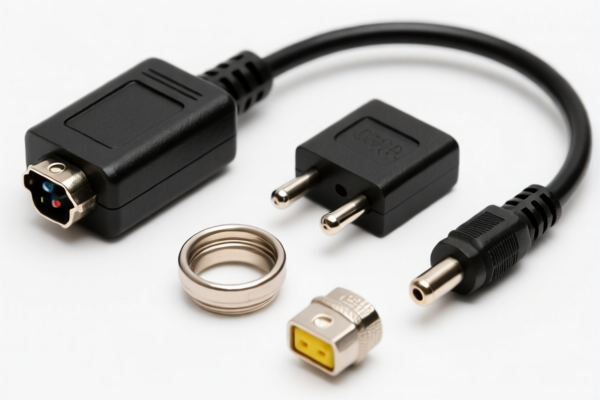
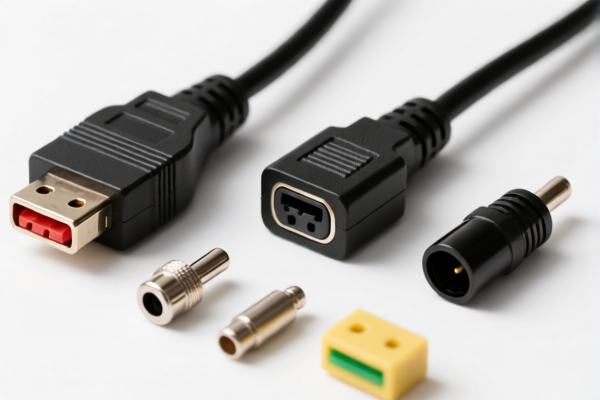
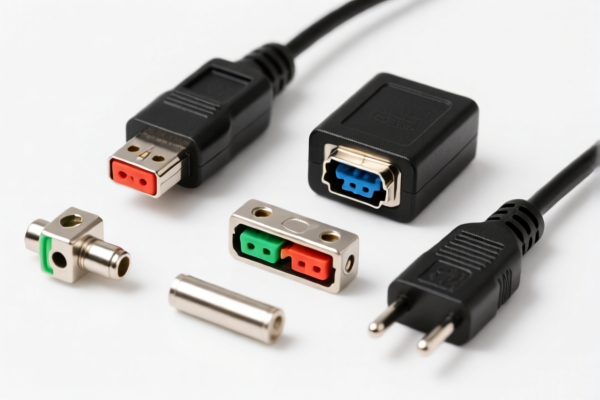
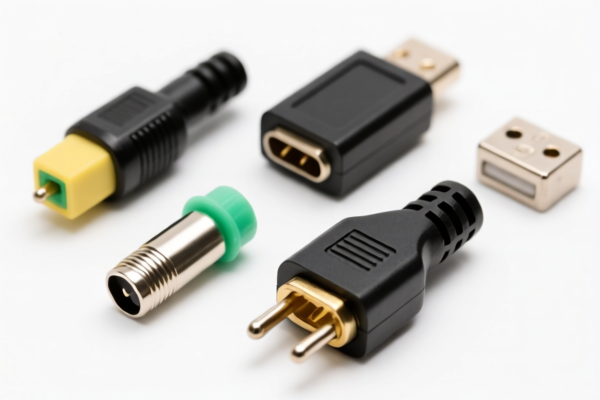
AI Analysis
🔌 Converter Connector (Adapters & Interconnects)
🌐 HS Code Reference & Customs Clearance Guide | 2026 Latest Tariff Analysis | Professional Clearance Strategy
📌 I. Product Definition & Classification: Do You Really Understand “Converter Connectors”?
In international trade, the term "Converter Connector" is often ambiguous. It typically refers to devices that adapt physical interfaces (e.g., HDMI to USB-C, Type-C to HDMI) or convert signal types (e.g., Analog to Digital, RS485 to Ethernet).
However, for HS Code classification, the key distinction lies in functionality and voltage: 1. Passive Adapter Cables: Simple physical conversion without internal active components (chips, circuits). These are treated as insulated electric conductors. 2. Active Signal Converters: Devices with internal circuitry, chips, or processors that actively transform signals. These are often treated as parts of machines (e.g., monitors, PCs) or electronic assemblies, not simple cables.
⚠️ Critical Distinction Point: - If the device is only a cable/wire assembly with connectors on both ends (even if pinouts are different) → It falls under Chapter 8544 (Insulated Wire/Cable). - If the device contains active circuitry/chips to convert signals → It generally does NOT fall under Chapter 8544. It may fall under Chapter 8517 (Telecom/Computer parts) or Chapter 8543 (Other electrical machines), depending on specific functionality.
📦 II. HS Code Classification Details (2026 Latest Tariff Authority Comparison)
Based on the provided data, we are strictly analyzing insulated electric conductors fitted with connectors. This category covers passive adapters and extension cords.
| HS Code | Product Description | Application Scenario | Active Components? |
|---|---|---|---|
8544.42.90.10 |
Extension Cords as defined in statistical note 6 to this chapter | Standard extension cords, power strips with cables, passive cable extensions | ❌ No |
8544.42.90.90 |
Other electric conductors for a voltage not exceeding 1,000 V, fitted with connectors | HDMI adapters, USB-C cables, Ethernet cables, audio/video cables, custom wire harnesses | ❌ No |
🔍 Key Reminder: - Passive Adapters: If your "converter connector" is essentially a wired adapter (e.g., a male-to-female HDMI pass-through cable) with no chips, it falls under 8544.42.90.90. - Active Converters: If it has a chip to convert DisplayPort to HDMI, it is NOT 8544.42.90.90. It is likely classified elsewhere (e.g., 8517.62 or 8543.70). Note: The provided data only covers the cable/conductor aspect.
💰 III. 2026 Latest Tariff Rate Breakdown (Including Surtaxes, Policy Add-ons)
✅ Applicable Country: United States (US)
✅ Country of Origin: China (CN)
✅ Effective Date: From Nov 10, 2025 (including subsequent imports)
🎯 1. 8544.42.90.10 —— Extension Cords (Statistical Note 6)
| Item | Detail |
|---|---|
| Base Tariff | 0.0% (ad valorem) |
| Section 301 / IEEPA Surtax | 50.0% (Steel, Aluminum, Copper Products Surcharge) |
| Total Tax Rate | 50.0% |
| Tax Calculation | CIF Value × 50% |
| De Minimis Eligibility | ❌ Not Eligible (Deny de minimis) |
| Legal Basis Path | 8544.42.90.10 → Steel/Aluminum/Copper Surtax: 50% |
📌 Explanation:
- Extension cords often contain copper wiring. The 50% surcharge applies specifically to products containing steel, aluminum, or copper components that fall under this specific statutory definition. - This is a high-cost entry barrier.
🎯 2. 8544.42.90.90 —— Other Insulated Conductors with Connectors (≤1,000V)
| Item | Detail |
|---|---|
| Base Tariff | 0.0% (ad valorem) |
| Section 301 / IEEPA Surtax | 50.0% (Steel, Aluminum, Copper Products Surcharge) |
| Total Tax Rate | 50.0% |
| Tax Calculation | CIF Value × 50% |
| De Minimis Eligibility | ❌ Not Eligible (Deny de minimis) |
| Legal Basis Path | 8544.42.90.90 → Steel/Aluminum/Copper Surtax: 50% |
📌 Note:
- This covers the majority of passive converter adapters (e.g., HDMI to VGA passive adapters, USB extension cables, Ethernet cables). - Even if it's just a cable, if it contains copper conductors, the 50% surcharge applies. - No "De Minimis" Exemption: For low-value shipments (under $800), this surcharge still applies. Do not rely on de minimis for cost avoidance.
🛠️ IV. Customs Clearance Practical Advice (Battle-Tested Pitfall Guide)
✅ 1. Preparation Checklist (Missing Items = Delays)
| Document | Required | Explanation |
|---|---|---|
| ✅ Product Specs | ✔️ | Must specify voltage (≤1,000V), current rating, cable material (copper/Al), and length. |
| ✅ Circuit Diagram | ✔️ | Crucial: Must prove no active components (chips/ICs). If it has a chip, it's not 8544. |
| ✅ Product Photos | ✔️ | Clear shots of both ends (connectors) and interior (if possible) to show passive nature. |
| ✅ Material Composition | ✔️ | Declare % of Copper/Steel/Aluminum content accurately. |
| ✅ Commercial Invoice | ✔️ | Description must be precise: "Passive HDMI Adapter Cable, No Electronics" |
| ✅ Packing List | ✔️ | Show item count and weight. |
✅ 2. Declaration Tactics (Key Mantra)
🔥 "Passive is Key, Chips are Death, Name it Right, Rates are Light!"
| Scenario | Correct Declaration | Wrong Approach |
|---|---|---|
| Passive HDMI Adapter | 8544.42.90.90 (Insulated Cable) |
Claiming it as "Electronic Converter" → Misclassification Risk |
| Active DP-to-HDMI Converter | NOT 8544 (Likely 8517.62/8543.70) | Trying to fit into 8544 → Seizure/Fine |
| Extension Cord | 8544.42.90.10 |
Declaring as "Other Cable" → Audit Risk |
| Optical Fiber Converter | NOT 8544 (Likely 9001/8517) | Declaring as Copper Cable → 50% Surtax Trap |
✅ 3. Special Case Handling
| Situation | Handling Advice |
|---|---|
| Active Signal Converter | If your product has a chip (e.g., DisplayLink, Texas Instruments), do NOT use 8544. It will be rejected. Use correct HS for electronic assemblies. |
| Mixed Packaging | If shipping active converters and passive cables together, separate them. Combining them complicates valuation and classification. |
| Copper Content | Since the 50% surcharge targets steel/aluminum/copper, ensure your material declaration matches physical reality. Under-declaring copper content leads to penalties. |
| "Adapter" vs "Cable" | Customs prefers "Cable" or "Wire Assembly" for 8544. Use "Adapter" cautiously unless it's clearly a passive pass-through. |
🌍 V. Global Market Comparison (2026 Latest)
| Country/Region | Recommended HS Code | Tariff (China Origin) | Certification | Notes |
|---|---|---|---|---|
| 🇺🇸 USA | 8544.42.90.90 |
50% (Surtax) | None usually | High Surtax applies to copper components. |
| 🇨🇳 China | 8544.42.90.90 |
5% (Import VAT + Tariff) | CCC | Standard import duties. |
| 🇪🇺 EU | 8544.42.90.90 |
4% (Standard MFN) | CE + RoHS | No surtax. |
| 🇬🇧 UK | 8544.42.90.90 |
4% (Standard MFN) | UKCA + RoHS | Post-Brexit rules apply. |
| 🇯🇵 Japan | 8544.42.90.90 |
3% (Standard MFN) | PSE | Low duty. |
📌 Conclusion:
- USA is the only major market with the 50% surcharge for these copper-based conductors. - Cost Impact: A $100 passive adapter shipped to the US now costs $150 in duties alone. Margins are severely compressed. - EU/Asia/Canada: Much more favorable, with standard 3-5% duties.
📌 VI. Common Errors & Pitfall Guide (Blood & Tears Lessons)
❌ Mistake 1: Classifying an Active Signal Converter (with chip) as 8544.42.90.90
👉 Consequence: Customs will reject the entry, impose penalties, or seize goods. The HS code is for wires, not electronics.
❌ Mistake 2: Ignoring the 50% Surtax for Extension Cords (8544.42.90.10)
👉 Consequence: Underpayment of duties. The 50% is not optional; it’s mandatory for steel/aluminum/copper products in this category.
❌ Mistake 3: Using "Converter" as the sole product name without describing material
👉 Consequence: Ambiguity leads to classification disputes. Always specify "Passive Adapter Cable" or "Extension Cord".
❌ Mistake 4: Assuming De Minimis ($800 exemption) applies
👉 Consequence: It does not. The surcharge applies to all shipments from China, regardless of value.
✅ Correct Practice:
"Passive HDMI Type-A to HDMI Type-C Adapter Cable, Copper Conductors, 1m Length, No Integrated Circuits, HS 8544.42.90.90"
🎯 VII. Conclusion: Professional Declaration Saves Costs!
🎯 Remember the Mantra:
🔹 "Passive Cable? 50% Tax. Active Chip? Wrong HS. Name it 'Cable', Avoid the Trap!"
🔹 "Copper = 50%. No Chip = Safe. De Minimis = Dead for Surtax."
📌 Pro Tip:
If your product is active (has a chip), DO NOT use HS 8544. It is fundamentally misclassified. Consult a customs broker to find the correct HS for "Signal Converters" (often 8517 or 8543).
For passive products, budget for the 50% surtax from Day 1. There is no legal workaround for this surcharge on copper-containing wires from China.
📣 Immediate Action:
📞 Engage a licensed US Customs Broker.
📤 Submit product photos and circuit diagrams for pre-classification verification.
🚀 Plan your pricing model to include the 50% tariff buffer for US-bound passive adapters.
✨ Precision Classification Starts Here!
💼 Every Percent Saved in Tariffs is Pure Profit!
Customer Reviews
About HS Code Classification
The Harmonized System (HS) is an internationally standardized nomenclature developed by the World Customs Organization (WCO) to classify traded products. Over 200 countries use the HS system as the basis for customs tariffs, trade statistics, and import/export regulations.
Each HS code follows a hierarchical structure:
- Chapter (2 digits) — Broad category of goods (e.g., Chapter 84: Machinery and Mechanical Appliances)
- Heading (4 digits) — More specific grouping within the chapter
- Subheading (6 digits) — Internationally standardized breakdown, used by all WCO member countries
- National subdivisions (8-10 digits) — Country-specific extensions for further classification, such as US HTSUS 10-digit codes
Correct HS code classification is essential for smooth customs clearance, accurate duty payment, and compliance with trade regulations. Misclassification can lead to customs delays, overpayment of duties, or penalties.
When importing from CN to US, the applicable tariff rates may include:
- Most-Favored-Nation (MFN) rate — The standard duty rate applied to WTO members
- General rate — Applied to countries without trade agreements
- Trade remedy duties — Additional tariffs such as Section 301 (anti-dumping), Section 232 (national security), or countervailing duties
The information provided on this page is for reference purposes only. For official classification, please consult with your local customs authority or a licensed customs broker.