Conveyor Belt
CN → US| HS Code | Tariff Rate | Origin | Destination | Doc |
|---|---|---|---|---|
| 5910001070 | 39.0% | CN | US | Official Doc |
| 5910009000 | 37.6% | CN | US | Official Doc |
| 3926905900 | 37.4% | CN | US | Official Doc |
| 4010199100 | 38.3% | CN | US | Official Doc |
| 4010129000 | 36.9% | CN | US | Official Doc |
Product Images
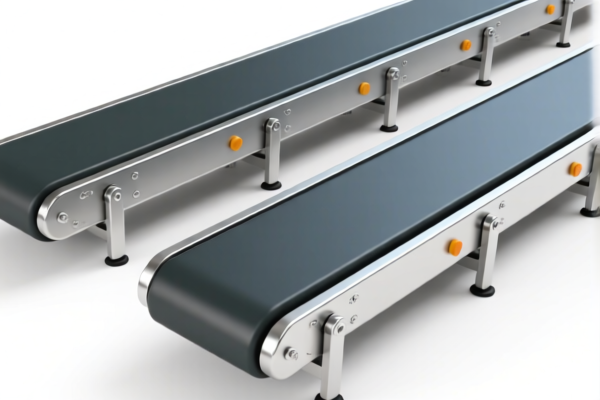
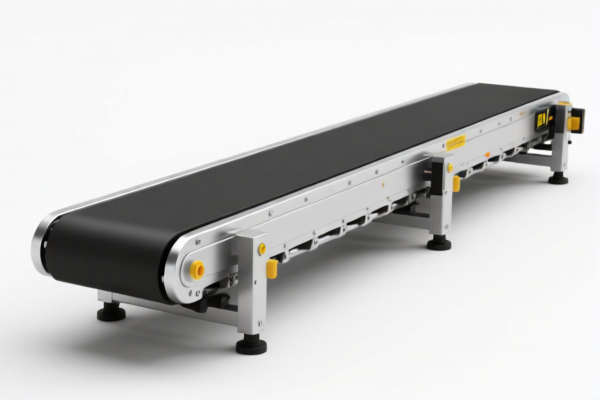


AI Analysis
🛠️ Conveyor Belts: Global HS Code Classification & Tax Strategy (2026 Edition)
🌐 HS Code Reference & Clearance Guide | Comprehensive Tax Breakdown | Professional Customs Strategy
📌 I. Product Definition & Classification: What Exactly Is a "Conveyor Belt"?
A conveyor belt is a continuous loop of material used to transport objects across a distance. In international trade, the classification hinges entirely on the material composition (Textile, Rubber, Plastic, or Synthetic Fiber) and the structure (reinforced, unmodified, etc.).
The 4 Critical Material Categories:
- Textile/Artificial Fiber Belts: Used for light to medium duty, often reinforced with synthetic fibers.
- Rubber Belts: The heavy-duty standard for mining, quarrying, and heavy manufacturing.
- Plastic/Composite Belts: Used for food processing, packaging, or specific chemical resistance.
- Power Transmission Belts: Technically distinct but sometimes confused; these transmit motion rather than just conveying.
⚠️ Key Classification Point:
- If made of Artificial Fibers (Textile) →5910.00.10.70(High Tax: 39.0%)
- If made of Rubber →4010.19.91.00or4010.12.90.00(Moderate Tax: 36.9% ~ 38.3%)
- If made of Plastic →3926.90.59.00(Moderate Tax: 37.4%)
- If general Textile Material (non-synthetic specific) →5910.00.90.00(High Tax: 37.6%)
📦 II. HS Code Classification Details (2026 Tax Reference)
| HS Code | Material Composition | Application Scenario | Estimated Total Tax* |
|---|---|---|---|
5910.00.10.70 |
Artificial Fibers (Synthetic) | Heavy-duty textile belts, reinforced conveyor belts | 39.0% |
5910.00.90.00 |
Textile Materials (General) | Standard textile conveyor belts | 37.6% |
3926.90.59.00 |
Plastic / Fiber Composite | Plastic conveyor belts, modular plastic belts | 37.4% |
4010.19.91.00 |
Rubber (Specific Type) | Rubber conveyor belts, industrial rubber belting | 38.3% |
4010.12.90.00 |
Rubber (General) | General rubber conveyor belts, flat belts | 36.9% |
*Note: All rates include Base Tariff + Section 301 (25%) + Section 122 (10%).
💰 III. 2026 Tariff Rate Breakdown & Policy Analysis
✅ Applicable Context: Imports from China (CN) to the US.
✅ Effective Date: 2025-2026 Period (Current Trade Policy).
⚠️ The "3-Tier Tax" Structure:
Every entry above includes three distinct layers of taxation: 1. Base Tariff: The standard Most-Favored-Nation (MFN) rate. 2. Section 301 Tariff: A flat +25.0% penalty on Chinese goods. 3. Section 122 Tariff: A specific +10% penalty targeting specific Chinese imports.
🎯 Scenario A: 5910.00.10.70 (Artificial Fiber Belts)
| Item | Value |
|---|---|
| Base Tariff | 4.0% |
| Section 301 (China) | +25.0% |
| Section 122 (Targeted) | +10.0% |
| TOTAL TAX RATE | 39.0% |
| Calculation | CIF Value × 39.0% |
| De Minimis Exemption | ❌ NO |
📌 Explanation: This is the highest tax bracket among the options. Artificial fiber belts are heavily scrutinized under "Section 122" due to high volume and strategic nature.
🎯 Scenario B: 4010.19.91.00 (Rubber Belts - Specific)
| Item | Value |
|---|---|
| Base Tariff | 3.3% |
| Section 301 (China) | +25.0% |
| Section 122 (Targeted) | +10.0% |
| TOTAL TAX RATE | 38.3% |
| Calculation | CIF Value × 38.3% |
| De Minimis Exemption | ❌ NO |
📌 Explanation: Rubber belts carry a slightly lower base rate but still face the full brunt of Section 301 and 122 penalties.
🎯 Scenario C: 4010.12.90.00 (Rubber Belts - General)
| Item | Value |
|---|---|
| Base Tariff | 1.9% |
| Section 301 (China) | +25.0% |
| Section 122 (Targeted) | +10.0% |
| TOTAL TAX RATE | 36.9% |
| Calculation | CIF Value × 36.9% |
| De Minimis Exemption | ❌ NO |
📌 Explanation: The most tax-efficient option for rubber belts. If your product fits this description, choose this code to save 1.4% compared to the specific rubber code.
🎯 Scenario D: 3926.90.59.00 (Plastic/Composite)
| Item | Value |
|---|---|
| Base Tariff | 2.4% |
| Section 301 (China) | +25.0% |
| Section 122 (Targeted) | +10.0% |
| TOTAL TAX RATE | 37.4% |
| Calculation | CIF Value × 37.4% |
| De Minimis Exemption | ❌ NO |
📌 Explanation: Plastic belts are classified as "Other articles of plastic." The base rate is low, but the combined penalty rate is still very high.
🛠️ IV. Customs Clearance Practical Advice (Avoiding Pitfalls)
✅ 1. Documentation Checklist (Mandatory)
| Document | Requirement | Why It Matters |
|---|---|---|
| Product Spec Sheet | ✔️ Must Include | Must explicitly state Material Composition (e.g., "100% Natural Rubber" vs. "Nylon Fiber Reinforced"). |
| Material Certificates | ✔️ Critical | Third-party lab reports proving the % of Rubber vs. Textile vs. Plastic. |
| Photographs (Cross-Section) | ✔️ Critical | Must show the internal layers to prove if it is "Rubber" or "Fiber". |
| Bill of Materials (BOM) | ✔️ Strongly Recommended | Breakdown of cover rubber, fabric ply, or plastic core. |
| Commercial Invoice | ✔️ Precise | Description: "Conveyor Belt, [Material], [Width] x [Length]" (DO NOT just write "Belt"). |
✅ 2. Declaration Strategy (The "Material Matters" Rule)
🔥 Golden Rule: "The Material Defines the Tax."
- Don't write generic "Conveyor Belt."
- Do write: "Rubber Conveyor Belt, Reinforced with Steel Cord, Model X."
- Do write: "Artificial Fiber Conveyor Belt, Polyester Core."
| Scenario | Correct HS Code | Risk of Wrong Code |
|---|---|---|
| Pure Rubber Belt | 4010.12.90.00 (Lowest Tax) |
If misdeclared as Plastic → 37.4% (Minor difference) |
| Textile/Fiber Belt | 5910.00.10.70 (Highest Tax) |
If misdeclared as Rubber → Severe Penalty + Audit |
| Plastic Modular Belt | 3926.90.59.00 |
If misdeclared as Rubber → Misclassification Risk |
✅ 3. Special Scenarios
| Scenario | Actionable Advice |
|---|---|
| Hybrid Belts (Rubber + Fabric) | Usually classified under Rubber (4010) if the rubber content is dominant for the function. If fabric is dominant, it goes to 5910. |
| Power Transmission vs. Conveyor | If the belt transmits power (rotational force to a shaft) rather than moving goods, it may be a "Power Transmission Belt" (5910). However, if it carries goods, it is a "Conveyor Belt". |
| Small Orders (De Minimis) | ❌ No Exemption. All these codes are excluded from the $800 de minimis exemption. You must pay duties on small orders. |
🌍 V. Global Market Comparison (2026 Outlook)
| Market | Recommended HS Code | Est. Tariff (China) | Key Requirement |
|---|---|---|---|
| 🇺🇸 USA | 4010.12.90.00 (Best) |
36.9% ~ 39.0% | Strict Material Verification |
| 🇪🇺 EU | 4010 or 5910 |
~5% ~ 12% | CE Certification |
| 🇨🇦 Canada | 4010 |
~6% ~ 10% | No Section 301/122 |
| 🇲🇽 Mexico | 4010 |
~0% ~ 5% | USMCA Eligibility |
📌 Insight: The USA is the only market in this data set applying the brutal Section 122 (10%) + Section 301 (25%) combo. Imports to EU or Canada will be significantly cheaper.
📌 VI. Common Mistakes & "Red Flags"
❌ Mistake 1: Vague Description
❌ "Conveyor Belt"
✅ Consequence: Customs will default to the highest duty code or hold the shipment for inspection.
❌ Mistake 2: Misidentifying Material
❌ Calling a "Nylon Reinforced Rubber Belt" purely "Plastic".
✅ Consequence: If caught, it's Smuggling Fraud. The tax difference is small, but the reputation damage is huge.
❌ Mistake 3: Ignoring "Section 122"
❌ Assuming the 25% Section 301 is the only tax.
✅ Consequence: Underpaying by 10%. This leads to fines and audit. Total Tax = Base + 25% + 10%.
🎯 VII. Conclusion: Smart Sourcing & Declaration
🎯 The Bottom Line:
- Rubber Belts (
4010.12.90.00) are your best bet for the lowest total tax (36.9%).- Artificial Fiber Belts (
5910.00.10.70) carry the heaviest burden (39.0%).- Material Proof is King: You cannot escape this tax structure with "good descriptions." You need physical evidence (certs, photos).
🚀 Action Plan:
1. Identify the Primary Material of your conveyor belt immediately.
2. Select the Code that matches that material.
3. Prepare Material Certs before shipping.
4. Calculate 37%–39% Duty into your product cost before quoting to the client.
💡 Pro Tip: If you can source Rubber Conveyor Belts instead of Fiber ones, you save 2.1% in duties. If you can source from Vietnam/Mexico, you might bypass the Section 301/122 entirely (check current rules).
✨ Precision Classification = Profit Protection
💼 Don't let a 1% material error cost you 39% of your profit!
Customer Reviews
About HS Code Classification
The Harmonized System (HS) is an internationally standardized nomenclature developed by the World Customs Organization (WCO) to classify traded products. Over 200 countries use the HS system as the basis for customs tariffs, trade statistics, and import/export regulations.
Each HS code follows a hierarchical structure:
- Chapter (2 digits) — Broad category of goods (e.g., Chapter 84: Machinery and Mechanical Appliances)
- Heading (4 digits) — More specific grouping within the chapter
- Subheading (6 digits) — Internationally standardized breakdown, used by all WCO member countries
- National subdivisions (8-10 digits) — Country-specific extensions for further classification, such as US HTSUS 10-digit codes
Correct HS code classification is essential for smooth customs clearance, accurate duty payment, and compliance with trade regulations. Misclassification can lead to customs delays, overpayment of duties, or penalties.
When importing from CN to US, the applicable tariff rates may include:
- Most-Favored-Nation (MFN) rate — The standard duty rate applied to WTO members
- General rate — Applied to countries without trade agreements
- Trade remedy duties — Additional tariffs such as Section 301 (anti-dumping), Section 232 (national security), or countervailing duties
The information provided on this page is for reference purposes only. For official classification, please consult with your local customs authority or a licensed customs broker.