Conveyor Roller Chain
CN → US| HS Code | Tariff Rate | Origin | Destination | Doc |
|---|---|---|---|---|
| 7315110060 | 85.0% | CN | US | Official Doc |
| 7315110045 | 85.0% | CN | US | Official Doc |
| 8431390010 | 35.0% | CN | US | Official Doc |
| 8431390080 | 35.0% | CN | US | Official Doc |
| 8483901050 | 37.8% | CN | US | Official Doc |
Product Images
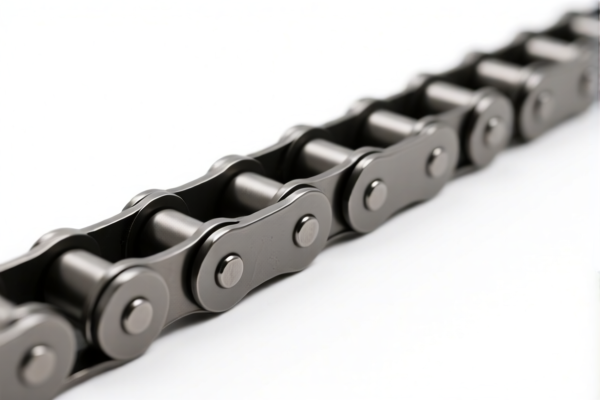
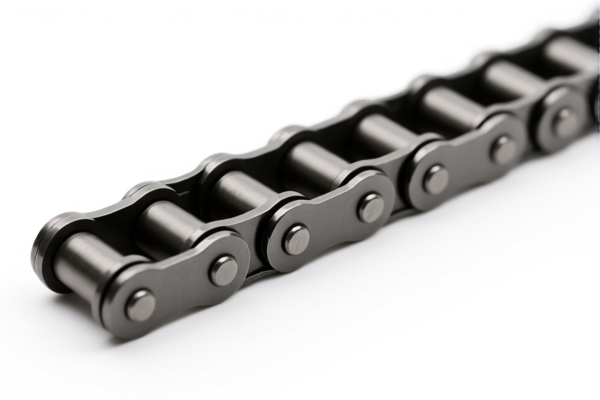
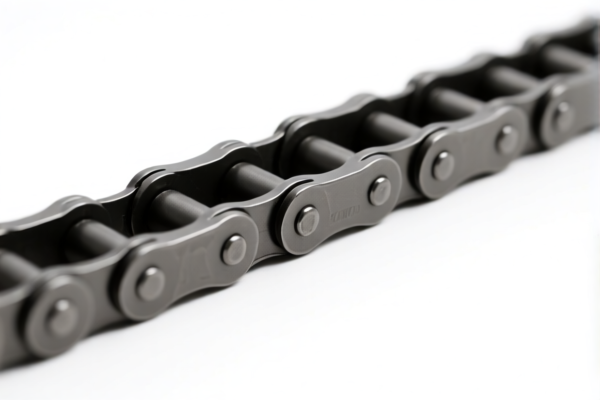
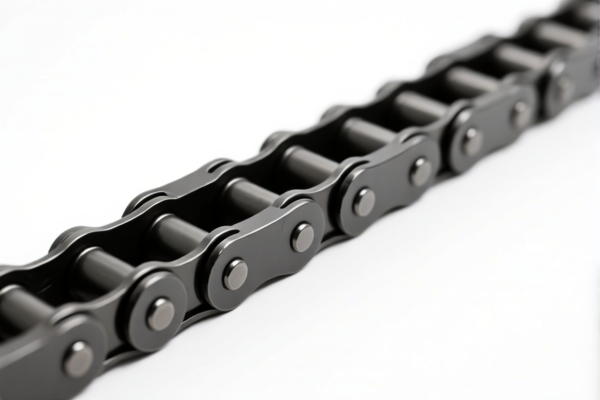
AI Analysis
⛓️ Conveyor Roller Chain (输送机用滚子链)
🌐 HS Code Reference & Customs Clearance Guide | 2026 Latest Tariff Analysis | Professional Strategy
📌 I. Product Definition & Classification: What Exactly Is a "Conveyor Roller Chain"?
A Conveyor Roller Chain is a mechanical power transmission device used to convey materials or transmit power in industrial machinery. It consists of pin, bushing, roller, and plate links. In international trade, its classification depends heavily on its specific application (conveyance vs. power transmission) and component nature (general chain vs. specific machine part).
⚠️ Key Classification Distinction: - Chapter 73 (Articles of Iron or Steel): If classified as a general-purpose steel chain for conveying. - Chapter 84 (Machinery): If classified as a specific part for lifts, conveyors, or transmission mechanisms. - Material Inference: The data implies metallic construction (Steel/Iron), which is standard for heavy-duty industrial chains.
📦 II. HS Code Classification Details (2026 Latest Tariff Authority Comparison)
Based on the provided <DATA>, there are four distinct HS Codes applicable, reflecting different interpretative angles of US Customs & Border Protection (CBP).
| HS Code | Product Description | Application/Context | Material/Type |
|---|---|---|---|
7315.11.00.60 |
Conveyor Roller Chain | Specifically identified as "Conveyor use" and "Roller chain form" | Metal (Steel) |
7315.11.00.45 |
Conveyor Roller Chain | Metal chain for conveyors; explicitly NOT excluded from this category | Metal (Steel) |
8431.39.00.10 |
Parts of Lifts & Conveyors | Classified as a "part" for lifts/conveyors; mechanical transmission component | Mechanical Part |
8431.39.00.80 |
Other Mechanical Parts | Classified under "Other" mechanical parts; meets manufacturing needs | Mechanical Part |
8483.90.10.50 |
Transmission Elements | Classified as a "Transmission element"; shape matches chain attributes | Metal/Transmission |
🔍 Critical Note: - 7315.11.xx falls under Chapter 73 (Articles of Iron or Steel), focusing on the material and form. - 8431.39.xx falls under Chapter 84 (Machinery Parts), focusing on the function (part of a lift/conveyor). - 8483.90.xx falls under Chapter 84 (Parts of Machinery), focusing on power transmission. - The tax burden varies significantly (35% - 85%) depending on which code is selected. Selection must be justified by the product's primary use and design.
💰 III. 2026 Latest Tariff Rate Breakdown (Including Surcharges)
✅ Applicable Country: United States (US)
✅ Origin: China (CN)
✅ Effective Time: Current 2026 Tariff Structure (Includes Section 301 & IEEPA)
🎯 1. 7315.11.00.60 & 7315.11.00.45 —— General Steel Conveyor Chains
These codes treat the item as a general steel article. They attract the highest combined tariffs.
| Item | Content |
|---|---|
| Base Tariff | 0.0% |
| Section 301 Surcharge | +25.0% |
| IEEPA Surcharge (Section 122/Steel & Aluminum) | +50.0% (Note: Data specifies "122 Clause 10% Steel, Aluminum, Copper Products Surcharge: 50%". This indicates a specific aggressive tariff track for steel products.) |
| Total Tax Rate | 85.0% |
| Tax Calculation | CIF Value × 85% |
| De Minimis Exemption | ❌ No (High value, subject to strict scrutiny) |
| Legal Basis Path | Base: 0% → Sec 301: +25% → IEEPA/Sec 122: +50% |
📌 Explanation: - The 50% surcharge is the critical differentiator here. It appears to be linked to specific steel/aluminum import restrictions (potentially referencing Section 232 or specific IEEPA orders targeting steel). - Total 85% is extremely high. Importers must verify if their chain is truly "steel" and if the "122 clause" applies to their specific subheading. Misclassification here leads to massive cost penalties.
🎯 2. 8431.39.00.10 & 8431.39.00.80 —— Parts of Lifts and Conveyors
These codes classify the chain as a machine part rather than a general steel article, resulting in a lower but still significant tariff.
| Item | Content |
|---|---|
| Base Tariff | 0.0% |
| Section 301 Surcharge | +25.0% |
| IEEPA Surcharge (General) | +10.0% (Standard IEEPA surcharge for Chinese goods, not the 50% steel-specific one) |
| Total Tax Rate | 35.0% |
| Tax Calculation | CIF Value × 35% |
| De Minimis Exemption | ❌ No |
| Legal Basis Path | Base: 0% → Sec 301: +25% → IEEPA: +10% |
📌 Explanation: - This is the most cost-effective classification among the options, reducing the total tax from 85% to 35%. - Justification Required: You must prove the chain is specifically designed for or used in lifts (elevator) or conveyors (Chapter 84 heading 8431). General-purpose chains used in diverse applications may be forced into Chapter 73.
🎯 3. 8483.90.10.50 —— Transmission Elements
This code treats the chain as a general transmission component.
| Item | Content |
|---|---|
| Base Tariff | 2.8% |
| Section 301 Surcharge | +25.0% |
| IEEPA Surcharge (General) | +10.0% |
| Total Tax Rate | 37.8% |
| Tax Calculation | CIF Value × 37.8% |
| De Minimis Exemption | ❌ No |
| Legal Basis Path | Base: 2.8% → Sec 301: +25% → IEEPA: +10% |
📌 Explanation: - Slightly higher than the 8431 codes (37.8% vs 35.0%) due to the 2.8% base tariff. - Applicable if the chain is primarily used for power transmission in machinery rather than material conveying.
🛠️ IV. Customs Clearance Practical Advice (Pitfall Avoidance Guide)
✅ 1. Preparation Checklist (Essential Documents)
| Document | Mandatory? | Purpose |
|---|---|---|
| ✅ Product Specification Sheet | ✔️ | Must detail: Chain pitch, roller diameter, material (Steel/Alloy), tensile strength. |
| ✅ Application Statement | ✔️ | Crucial: Explicitly state if the chain is used in Conveyors (8431) or is a General Steel Article (7315). |
| ✅ Technical Drawings | ✔️ | Shows if it is a specialized part for a specific machine. |
| ✅ Commercial Invoice | ✔️ | Accurately describe as "Roller Chain for Conveyor System" vs "Steel Chain". |
| ✅ Bill of Lading | ✔️ | Standard shipping document. |
| ✅ Certificate of Origin | ✔️ | Confirms Chinese origin (triggering Section 301/IEEPA). |
✅ 2. Classification Strategy & Tips
🔥 “Function Dictates Code: Conveyors = 35%, General Steel = 85%!”
| Scenario | Recommended HS Code | Why? | Risk if Wrong |
|---|---|---|---|
| Chain is only used in conveyor systems | 8431.39.00.10 or .80 |
Fits "Parts of Lifts/Conveyors". Lowest tax. | If forced to 7315, tax jumps to 85% (+50% steel surcharge). |
| Chain is multi-purpose (general industry) | 7315.11.00.60 or .45 |
Generic steel chain definition. | High risk of audit due to 85% rate. |
| Chain is used for power transmission (not conveying) | 8483.90.10.50 |
Fits "Transmission elements". | Medium tax (37.8%). |
✅ 3. Special Considerations
| Situation | Advice |
|---|---|
| Steel Surcharge (50%) | The 50% surcharge in the 7315 codes is likely tied to specific steel import restrictions. If your chain is made of stainless steel or non-ferrous alloy, verify if it still qualifies for this surcharge. Sometimes different subheadings apply. |
| Pre-Ruling (Advance Ruling) | Given the huge difference between 35% and 85%, it is highly recommended to request a CBP Advance Ruling if you are importing large volumes. This locks in the 35% rate if you can prove conveyor-specific use. |
| De Minimis (Section 321) | ❌ Do NOT use De Minimis for these items. The values are likely high, and the tariff rates are punitive. Small shipments will also be subject to the full tariff burden. |
🌍 V. Global Market Comparison (2026)
| Country/Region | Recommended HS Code | Est. Tariff (China Origin) | Remarks |
|---|---|---|---|
| 🇺🇸 USA | 8431.39.00.10 |
35.0% | Best option for conveyor-specific chains. |
| 🇺🇸 USA | 7315.11.00.60 |
85.0% | Highest cost; avoid unless misclassification risk is low. |
| 🇨🇳 China | 7315.11.00.00 |
~5-10% | Lower import duty, but focus is on US export. |
| 🇪🇺 EU | 7315.80.90 |
~0-2.7% | No Section 301/IEEPA equivalents. Much lower cost. |
| 🇬🇧 UK | 7315.80.90 |
~0-2.7% | Post-Brexit tariffs are competitive for general steel chains. |
📌 Conclusion: - The US market is hostile to Chinese steel chains due to layered tariffs (Base + 301 + IEEPA/Steel). - Classification is the key to survival. Proving "Conveyor Part" status saves 50% in taxes.
📌 VI. Common Mistakes & Pitfalls (Blood & Tears Lessons)
❌ Mistake 1: Declaring as "Steel Chain" generically → 7315.11.00.60
👉 Result: You pay 85% tax. If the CBP officer accepts that it’s for a conveyor, you could have paid only 35%.
✅ Fix: Specify "Conveyor System Part" in description.
❌ Mistake 2: Ignoring the 50% Steel Surcharge 👉 Result: Unexpected $5,000 tax bill on a $5,000 shipment. ✅ Fix: Always check the "Tax Detail" for "Steel/Aluminum Surcharge" in the 7315 headings.
❌ Mistake 3: Using De Minimis for Bulk Shipments 👉 Result: Seizure of goods for valuation fraud or lack of proper entry. ✅ Fix: Use formal entry (Type 01, 03, or 04) for all shipments of mechanical parts.
🎯 VII. Conclusion: Strategic Pricing & Sourcing
🎯 Key Takeaway:
🔹 "Conveyor Part = 35% | General Steel = 85%"
🔹 "Save 50% by justifying Function, not just Material!"
📌 Action Items:
1. Verify Use Case: Can you prove this chain is exclusively for conveyors?
2. Request Advance Ruling: If volume is high, get a CBP ruling for 8431.39.00.10.
3. Supplier Communication: Ensure the supplier’s documentation supports the "Conveyor Part" claim (e.g., drawings showing integration with conveyor frames).
📣 Immediate Action Required:
📞 Contact Customs Broker: Provide technical specs and confirm conveyor application. 📄 Review Invoice Description: Change from "Steel Chain" to "Roller Chain for Conveyor System, Part No. XYZ". 🚀 Optimize Cost: Potential savings of 50% on duties through accurate classification.
✨ Precision in Classification, Profit in Clearance!
💼 Don't let an HS Code mistake cost you 50% of your margin!
Customer Reviews
About HS Code Classification
The Harmonized System (HS) is an internationally standardized nomenclature developed by the World Customs Organization (WCO) to classify traded products. Over 200 countries use the HS system as the basis for customs tariffs, trade statistics, and import/export regulations.
Each HS code follows a hierarchical structure:
- Chapter (2 digits) — Broad category of goods (e.g., Chapter 84: Machinery and Mechanical Appliances)
- Heading (4 digits) — More specific grouping within the chapter
- Subheading (6 digits) — Internationally standardized breakdown, used by all WCO member countries
- National subdivisions (8-10 digits) — Country-specific extensions for further classification, such as US HTSUS 10-digit codes
Correct HS code classification is essential for smooth customs clearance, accurate duty payment, and compliance with trade regulations. Misclassification can lead to customs delays, overpayment of duties, or penalties.
When importing from CN to US, the applicable tariff rates may include:
- Most-Favored-Nation (MFN) rate — The standard duty rate applied to WTO members
- General rate — Applied to countries without trade agreements
- Trade remedy duties — Additional tariffs such as Section 301 (anti-dumping), Section 232 (national security), or countervailing duties
The information provided on this page is for reference purposes only. For official classification, please consult with your local customs authority or a licensed customs broker.