Conveyor Synchronous Belt
CN → US| HS Code | Tariff Rate | Origin | Destination | Doc |
|---|---|---|---|---|
| 8483901050 | 37.8% | CN | US | Official Doc |
| 8483908080 | 37.8% | CN | US | Official Doc |
| 4010359000 | 38.3% | CN | US | Official Doc |
| 4010369000 | 38.3% | CN | US | Official Doc |
| 5910001020 | 39.0% | CN | US | Official Doc |
Product Images
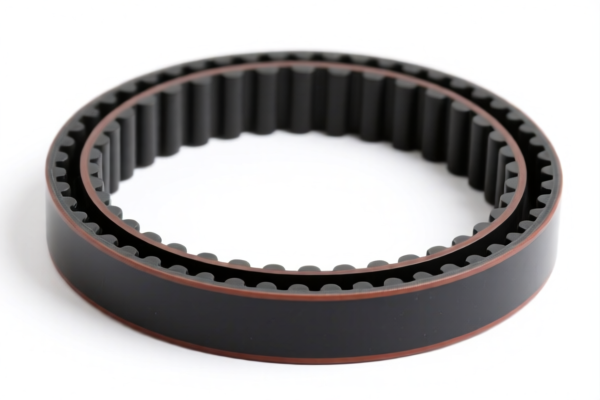
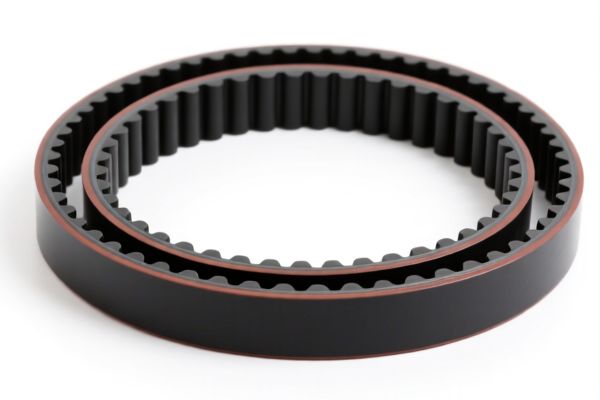
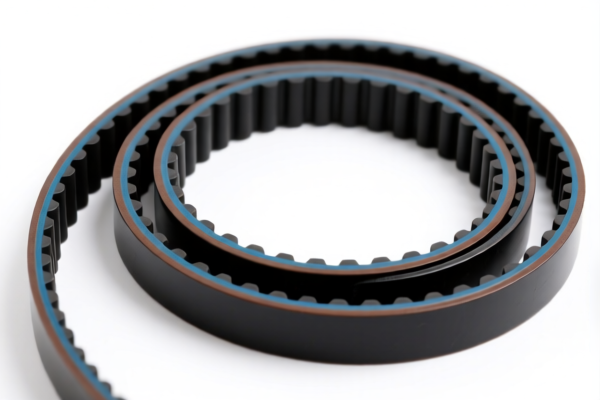
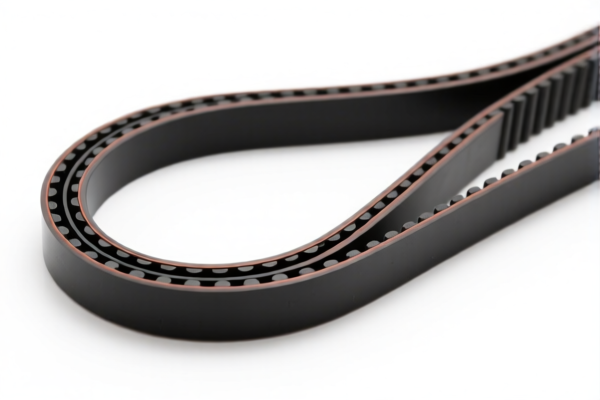
AI Analysis
🏭 Conveyor Synchronous Belt (Timed Belts)
🌐 HS Code Reference & Customs Clearance Guide | 2026 Latest Tariff Analysis | Professional Clearance Strategy
📌 I. Product Definition & Classification: Do You Truly Understand "Synchronous Belts"?
The Synchronous Belt (also known as a Timing Belt) is a critical transmission element used in industrial machinery, automotive engines, and automated conveyor systems. Its defining feature is the teeth on the inner surface, which mesh with grooves on pulleys to ensure synchronous movement without slip.
In international trade, it is rarely categorized by a single HS Code because its classification depends heavily on its material composition and functional role.
⚠️ Key Distinction:
- Is it primarily a mechanical transmission component (metal/steel reinforced)? → Look at Chapter 84.
- Is it primarily a rubber/plastic flexible drive (polyurethane/rubber)? → Look at Chapter 40.
- Is it made of textile/fabric reinforced with rubber? → Look at Chapter 59.
📦 II. HS Code Classification Details (2026 Latest Tariff Authority Comparison)
Based on the provided data, the Synchronous Belt can be classified into five distinct HS Codes, leading to varying tax liabilities.
| HS Code | Product Description & Summary | Material/Function Inference | Total Tax Rate |
|---|---|---|---|
8483.90.10.50 |
Transmission Components: Classified as other transmission components. | General Mechanical Drive | 37.8% |
8483.90.80.80 |
Transmission Components: Classified under transmission apparatus and pulley-related components. | General Mechanical Drive | 37.8% |
4010.35.90.00 |
Rubber Products: Morphology and usage match; inferred as Rubber Material. | Polyurethane or Rubber with Fabric/Steel Cord | 38.3% |
4010.36.90.00 |
Rubber Products: Consistent morphology; inferred as Rubber, classified under "Other". | Other Rubber/Polyurethane Belts | 38.3% |
5910.00.10.20 |
Textile/Rubber Composite: Usage matches perfectly; inferred as Textile Material or Artificial Fiber. | Fabric-Reinforced Rubber Belts | 39.0% |
🔍 Key Insight:
- Chapter 84 (8483...) treats the belt as a machine part. - Chapter 40 (4010...) treats the belt as a rubber/polyurethane product. - Chapter 59 (5910...) treats the belt as a textile-reinforced rubber product. - The lowest tax rate is found in Chapter 84 (37.8%), while the highest is in Chapter 59 (39.0%).
💰 III. 2026 Latest Tariff Rate Breakdown (Detailed Tax Clauses)
✅ Applicable Country: United States (US)
✅ Origin: China (CN)
✅ Effective Date: From November 10, 2025 (for subsequent imports)
All classified Synchronous Belts face a compound tariff structure consisting of Base Tariff + Section 301 Tariff + Section 122 Tariff.
🎯 1. 8483.90.10.50 & 8483.90.80.80 —— Transmission Components (Lowest Tax Band)
| Item | Detail |
|---|---|
| Base Tariff | 2.8% |
| Section 301 Tariff | +25.0% (China-specific) |
| Section 122 Tariff | +10.0% (China-specific) |
| Total Tax Rate | 37.8% |
| Tax Calculation | CIF Value × 37.8% |
| De Minimis Exemption | ❌ Not Eligible (Denied due to Section 301/122) |
| Legal Basis Path | USITC:8483.90.10.50 → SECTION301:25% → SECTION122:10% |
📌 Explanation:
- These codes classify the belt as a functional part of a machine.
- While the base rate is low (2.8%), the additive tariffs push the total to 37.8%.
- This is the most cost-effective classification among the options provided.
🎯 2. 4010.35.90.00 & 4010.36.90.00 —— Rubber/Polyurethane Belts
| Item | Detail |
|---|---|
| Base Tariff | 3.3% |
| Section 301 Tariff | +25.0% (China-specific) |
| Section 122 Tariff | +10.0% (China-specific) |
| Total Tax Rate | 38.3% |
| Tax Calculation | CIF Value × 38.3% |
| De Minimis Exemption | ❌ Not Eligible |
| Legal Basis Path | USITC:4010.3x.x0 → SECTION301:25% → SECTION122:10% |
📌 Explanation:
- If the belt is made of Polyurethane (PU) or pure Rubber without heavy textile reinforcement, it falls here.
- The base tariff is slightly higher (3.3% vs 2.8%), resulting in a total rate of 38.3%.
🎯 3. 5910.00.10.20 —— Textile/Fabric-Reinforced Belts (Highest Tax Band)
| Item | Detail |
|---|---|
| Base Tariff | 4.0% |
| Section 301 Tariff | +25.0% (China-specific) |
| Section 122 Tariff | +10.0% (China-specific) |
| Total Tax Rate | 39.0% |
| Tax Calculation | CIF Value × 39.0% |
| De Minimis Exemption | ❌ Not Eligible |
| Legal Basis Path | USITC:5910.00.10.20 → SECTION301:25% → SECTION122:10% |
📌 Explanation:
- If the belt’s core strength comes from nylon, polyester, or other artificial fibers embedded in rubber, it may be classified here.
- This carries the highest base tariff (4.0%), leading to the highest total rate of 39.0%.
🛠️ IV. Customs Clearance Practical Advice (Real-World Pitfall Avoidance)
✅ 1. Documentation Checklist (Non-negotiable)
| Document | Must Provide? | Explanation |
|---|---|---|
| ✅ Product Specification Sheet | ✔️ | Must specify: Material (Rubber/PU/Fabric), Tooth Profile (e.g., HTD, T5, XL), Width, Length. |
| ✅ Material Composition Statement | ✔️ | Critical for distinguishing between 4010 (Rubber) and 5910 (Textile). |
| ✅ Product Photos | ✔️ | Clear view of teeth, inner surface, and any reinforcing cords if visible. |
| ✅ Commercial Invoice | ✔️ | Must clearly state "Synchronous Belt for Industrial Machinery". Avoid vague terms like "Rubber Strip". |
| ✅ Packing List | ✔️ | Include net/gross weight, dimensions. |
| ✅ Country of Origin Certificate | ✔️ | Proof of Chinese origin triggers the 25%+10% tariffs. |
✅ 2. Classification Strategy (Critical Decision Matrix)
🔥 "Material Defines Code, Code Defines Cost"
| Scenario | Recommended HS Code | Reasoning |
|---|---|---|
| Standard Industrial Belt (Polyurethane/Rubber with minimal fabric) | 8483.90.10.50 or 8483.90.80.80 |
Treated as a machine part; Lowest Tax (37.8%). |
| Pure Rubber/PU Belt (No significant textile reinforcement) | 4010.35.90.00 |
Treated as a rubber article. Tax: 38.3%. |
| Heavy-Duty Fabric-Reinforced Belt (Nylon/Polyester core) | 5910.00.10.20 |
Treated as textile-rubber composite. Tax: 39.0%. |
⚠️ Warning:
- Do NOT misclassify a fabric-reinforced belt as a simple rubber part (4010) to save time. Customs may audit the material composition and impose penalties.
- Do NOT use the same HS Code for different material types if the tax implications are significant.
✅ 3. Special Cases & Mitigation
| Situation | Handling Advice |
|---|---|
| OEM Custom Belts | Provide customer drawings specifying the exact material layer structure. |
| Belt + Pulley Set | If imported together, the belt is usually considered an accessory/part of the transmission system. Classify the belt separately under 8483 if possible, or as a kit if declared together. |
| Sample Shipments | Remember: De Minimis exemption ($800) DOES NOT apply to Section 301/122 goods. Even small samples incur full tariffs. |
🌍 V. Global Market Comparison (2026 Overview)
| Country/Region | Recommended HS Code | Approx. Base Tariff | Additional Duties (China) | Total Estimated Rate |
|---|---|---|---|---|
| 🇺🇸 USA | 8483.90.10.50 |
2.8% | +35% (301+122) | 37.8% |
| 🇺🇸 USA | 5910.00.10.20 |
4.0% | +35% (301+122) | 39.0% |
| 🇪🇺 EU | 4010.35/36 |
~3-5% | None (Generally) | ~3-5% |
| 🇨🇳 China | 4010.35/36 |
~5-10% | None (Import Tariff) | ~5-10% |
| 🇯🇵 Japan | 4010.35/36 |
~0-5% | None (Generally) | ~0-5% |
📌 Conclusion:
- The USA imposes the highest effective cost on Chinese-made synchronous belts due to the 35% surcharge (25% Section 301 + 10% Section 122).
- Diversifying supply chains to Southeast Asia (Vietnam, Thailand) may offer tariff avoidance opportunities, but rules of origin must be strictly met.
📌 VI. Common Errors & Pitfalls (Lessons Learned)
❌ Error 1: Using a generic "Rubber Belt" HS Code for a Fabric-Reinforced belt.
👉 Consequence: Customs may reclassify to 5910.00.10.20, increasing the base rate from 2.8%/3.3% to 4.0%.
❌ Error 2: Assuming small shipments are tax-free.
👉 Consequence: Section 301 and 122 tariffs apply to all imports from China, regardless of value. No de minimis exemption.
❌ Error 3: Confusing "Timing Belt" with "V-Belt".
👉 Consequence: V-Belts (flat/curved profile) may have different classifications. Ensure the description matches the toothed nature of the product.
✅ Correct Practice:
"Synchronous Timing Belt, Polyurethane, HTD Profile, 12mm Width, Reinforced with Steel Cord, For CNC Machine Transmission"
🎯 VII. Conclusion: Precision Classification for Cost Optimization
🎯 Key Takeaways:
🔹 Choose
8483.90.10.50whenever possible for the lowest total tax rate (37.8%).
🔹 Material Declaration is King: Clearly state if the belt is Rubber, Polyurethane, or Fabric-Reinforced.
🔹 Budget for 35%+ Surcharge: The 25% (Section 301) + 10% (Section 122) tariffs are fixed. Do not try to hide them.
🔹 Plan Ahead: If volume is high, consider Advance Rulings from US Customs to lock in the classification and avoid post-clearance audits.
📣 Immediate Action:
📞 Contact a Licensed Customs Broker to verify the exact material composition of your belts.
📄 Request a Pre-Ruling from CBP if the classification is borderline between8483,4010, and5910.
🚀 Optimize Your Supply Chain: If margins are tight, explore sourcing from non-China countries to mitigate the 35% punitive tariff burden.
✨ Professional Clearance, Accurate Classification, Maximized Profit!
💼 Every percentage point of tax matters in the global supply chain!
Customer Reviews
About HS Code Classification
The Harmonized System (HS) is an internationally standardized nomenclature developed by the World Customs Organization (WCO) to classify traded products. Over 200 countries use the HS system as the basis for customs tariffs, trade statistics, and import/export regulations.
Each HS code follows a hierarchical structure:
- Chapter (2 digits) — Broad category of goods (e.g., Chapter 84: Machinery and Mechanical Appliances)
- Heading (4 digits) — More specific grouping within the chapter
- Subheading (6 digits) — Internationally standardized breakdown, used by all WCO member countries
- National subdivisions (8-10 digits) — Country-specific extensions for further classification, such as US HTSUS 10-digit codes
Correct HS code classification is essential for smooth customs clearance, accurate duty payment, and compliance with trade regulations. Misclassification can lead to customs delays, overpayment of duties, or penalties.
When importing from CN to US, the applicable tariff rates may include:
- Most-Favored-Nation (MFN) rate — The standard duty rate applied to WTO members
- General rate — Applied to countries without trade agreements
- Trade remedy duties — Additional tariffs such as Section 301 (anti-dumping), Section 232 (national security), or countervailing duties
The information provided on this page is for reference purposes only. For official classification, please consult with your local customs authority or a licensed customs broker.