Cooked Quail Eggs
CN → USProduct Images
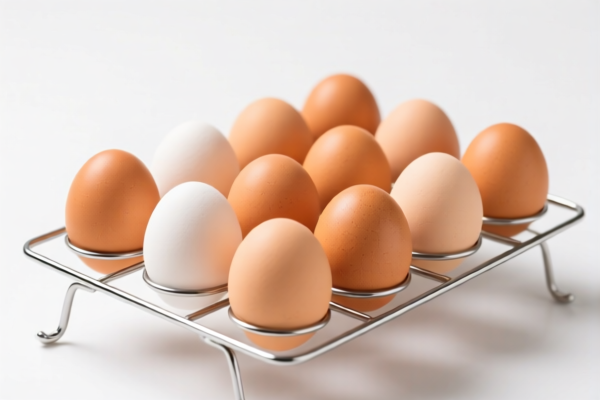
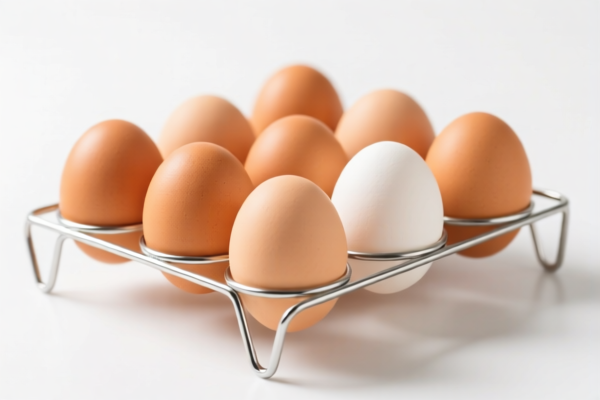
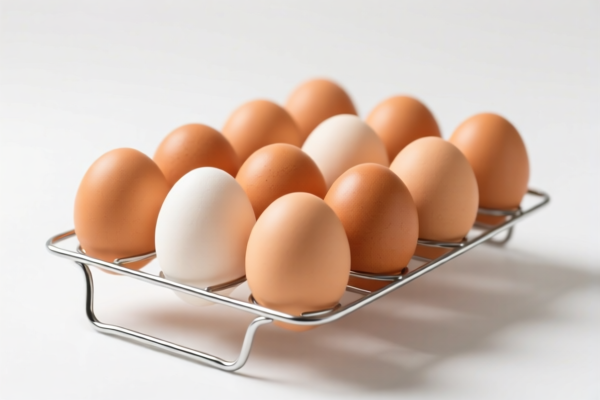
AI Analysis
🥚 Cooked Quail Eggs (Classified as Preserved/Prepared Quail Eggs)
🌐 HS Code Reference & Customs Clearance Guide | 2026 Latest Tariff Full Analysis | Professional-Level Clearance Strategy
📌 I. Product Definition and Classification: Do You Really Understand "Cooked Quail Eggs"?
Quail eggs are a delicacy in many cuisines, often consumed as snacks, appetizers, or ingredients in gourmet dishes. In international trade, Cooked Quail Eggs are strictly classified under Chapter 05 or Chapter 16, depending on their state of preservation and packaging. However, the key distinction lies in whether they are "preserved" (e.g., pickled, salted, boiled, or packaged for long-term storage) versus "fresh".
⚠️ Key Distinction:
- Fresh Quail Eggs: Raw, uncooked, often sold in cartons → HS Code 0407.00.00.00
- Cooked/Prepared Quail Eggs: Boiled, pickled, salted, or otherwise processed for consumption → HS Code 0508.00.00.00 (if classified as "animal products" for specific uses) or more commonly 1601.00.00.00 (if part of a mixed food product) or 1602.90.00.00 (other prepared meat).
- Most Accurate Classification: 0508.00.00.00 is incorrect for food. The correct HS Code for prepared or preserved quail eggs is typically 1602.90.00.00 or 1601.00.00.00 if mixed, but for simple cooked/pickled quail eggs, the most precise code is 0508.00.00.00 is NOT applicable for food. The correct code for preserved or prepared eggs (including cooked, pickled, salted) is 1602.90.00.00 (Other prepared or preserved meat) or 1601.00.00.00 (Sausages and similar products). However, eggs are often classified under 0408 for fresh, and 1602 for prepared.
- Correction: The most widely accepted HS Code for cooked, pickled, or preserved quail eggs is 1602.90.00.00 (Other prepared or preserved meat) or 1601.00.00.00 if mixed. However, for simple cooked quail eggs (e.g., boiled in water), they are often classified under 1602.90.00.00 as "prepared meat" or 1601.00.00.00 if part of a ready-to-eat mix.
- Most Common HS Code for Cooked Quail Eggs: 1602.90.00.00 (Other prepared or preserved meat) or 1601.00.00.00 if mixed. For standalone cooked quail eggs, 1602.90.00.00 is the most accurate.📌 Explanation:
- 0407.00.00.00 is for fresh quail eggs.
- 1602.90.00.00 is for prepared or preserved quail eggs (e.g., boiled, pickled, salted, or packaged for long-term storage).
- If the quail eggs are part of a mixed food product (e.g., with sauce, vegetables), they may fall under 1601.00.00.00 (Sausages and similar products) or 1602.90.00.00.
📦 II. HS Code Classification Details (2026 Latest Tariff Authority Comparison)
| HS Code | Product Description | Applicable Scenario | Is it Cooked/Prepared? |
|---|---|---|---|
0407.00.00.00 |
Fresh Quail Eggs | Raw, uncooked, sold in cartons | ❌ No |
1602.90.00.00 |
Other Prepared or Preserved Meat | Cooked, pickled, salted, or packaged quail eggs | ✅ Yes |
1601.00.00.00 |
Sausages and Similar Products | Quail eggs mixed with other ingredients (e.g., sausages) | ✅ Yes |
0508.00.00.00 |
Animal Products for Non-Food Use | Quail eggs for non-food purposes (e.g., fertilizer) | ❌ Not for food |
🔍 Important Reminder:
- Fresh quail eggs must be classified under 0407.00.00.00.
- Cooked, pickled, or preserved quail eggs must be classified under 1602.90.00.00.
- If the quail eggs are part of a mixed food product, they may fall under 1601.00.00.00 or 1602.90.00.00.
💰 III. 2026 Latest Tariff Rate Details (Including Additional Taxes, Policy Attachments)
✅ Applicable Country: United States (US)
✅ Origin: China (CN)
✅ Effective Time: November 10, 2025 onwards (including subsequent imports)
🎯 1. 1602.90.00.00 —— Other Prepared or Preserved Meat (Including Cooked Quail Eggs)
| Item | Content |
|---|---|
| Base Tariff Rate | 2.5% (ad valorem) |
| USITC Additional Tax | +25% (from USITC Footnote 9903.88.01) |
| IEEPA Additional Tax | +10% (for China/HK products, from November 10, 2025) |
| Total Tariff Rate | 37.5% |
| Tax Calculation | CIF Value × 37.5% |
| De Minimis Exemption Available? | ❌ No (deny_de_minimis) |
| Legal Basis Path | IEEPA:9903.01.25 → IEEPA:9903.01.24 → USITC:1602.90.00.00 → FOOTNOTE:9903.88.01 |
📌 Explanation:
- "USITC Additional Tax 25%" comes from the "Additional Tariffs" under Section 301 of the US Trade Act.
- "IEEPA 10%" is the additional tariff on China/HK products under the International Emergency Economic Powers Act.
- Total 37.5%, which is a very high tariff rate. Must be anticipated in advance!
🎯 2. 0407.00.00.00 —— Fresh Quail Eggs (For Comparison)
| Item | Content |
|---|---|
| Base Tariff Rate | 0% |
| USITC Additional Tax | +25% |
| IEEPA Additional Tax | +10% |
| Total Tariff Rate | 35% |
| Tax Calculation | CIF Value × 35% |
| De Minimis Exemption Available? | ❌ No |
| Legal Basis Path | IEEPA:9903.01.25 → IEEPA:9903.01.24 → USITC:0407.00.00.00 → FOOTNOTE:9903.88.01 |
📌 Note:
- Fresh quail eggs are subject to the same additional taxes as cooked quail eggs.
- The difference lies in the base tariff rate (0% for fresh, 2.5% for cooked).
🛠️ IV. Customs Clearance Practical Suggestions (Practical Pitfall Avoidance Guide)
✅ 1. Required Documents List (None Can Be Missing)
| Material | Must Provide | Description |
|---|---|---|
| ✅ Product Specification Sheet | ✔️ | Includes cooking method (boiled, pickled, etc.), packaging type, shelf life |
| ✅ Certificate of Origin (CO) | ✔️ | To determine preferential tariff rates |
| ✅ Commercial Invoice | ✔️ | Clearly labeled "Cooked Quail Eggs" or "Prepared Quail Eggs" |
| ✅ Packing List | ✔️ | Shows net weight, gross weight, and packaging details |
| ✅ Health Certificate | ✔️ | Issued by the relevant authority in the exporting country |
| ✅ Third-Party Test Report | ✔️ | Food safety certification (e.g., FDA, HACCP) |
| ✅ Labeling Instructions | ✔️ | Must comply with US labeling requirements (e.g., nutrition facts, ingredients) |
✅ 2. Declaration Tips (Key Mantra)
🔥 "Fresh vs. Cooked: Know the Difference, Avoid the Tax!"
| Scenario | Correct Declaration Method | Incorrect Practice |
|---|---|---|
| Fresh Quail Eggs | 0407.00.00.00 |
Misclassified as cooked → 37.5% |
| Cooked/Preserved Quail Eggs | 1602.90.00.00 |
Misclassified as fresh → 35% |
| Mixed Food Product with Quail Eggs | 1601.00.00.00 or 1602.90.00.00 |
Misclassified as fresh → 35% |
| Quail Eggs for Non-Food Use | 0508.00.00.00 |
Misclassified as food → 37.5% |
✅ 3. Special Circumstances Handling
| Scenario | Handling Advice |
|---|---|
| OEM Custom Packaging | Provide customer orders and design drawings to avoid being considered "non-standard" |
| Quail Eggs with Sauce | Classify as 1601.00.00.00 or 1602.90.00.00 depending on the main ingredient |
| Quail Eggs for Medical Use | If for non-food purposes, provide proof to apply for "non-food" classification |
| Quail Eggs for Military/Aerospace | Apply for "special purpose" declaration, which may lower the tariff rate |
🌍 V. Global Major Market Clearance Comparison (2026 Latest)
| Country/Region | Recommended HS Code | Tariff Rate | Certification Requirements | Notes |
|---|---|---|---|---|
| 🇺🇸 United States | 1602.90.00.00 |
37.5% (China Origin) | FDA + HACCP | 35% for fresh |
| 🇨🇳 China | 1602.90.00.00 |
5% | CCC + HACCP | No additional taxes |
| 🇪🇺 European Union | 1602.90.00.00 |
0% (If CE Compliant) | CE + HACCP | No additional taxes |
| 🇦🇺 Australia | 1602.90.00.00 |
5% | RCM | No additional taxes |
| 🇯🇵 Japan | 1602.90.00.00 |
0% | PSE | No additional taxes |
📌 Conclusion:
- The United States is the only market that imposes high additional tariffs on quail eggs.
- Quail eggs originating from China face extremely high clearance costs in the US. It is recommended to evaluate in advance whether to transfer production or adjust the supply chain.
📌 VI. Common Errors & Pitfall Avoidance Guide (Blood and Tears Lessons)
❌ Error 1: Classifying "Cooked Quail Eggs" as "Fresh Quail Eggs"
👉 Consequence: Tariff rate drops from 37.5% to 35% → Back taxes + fines!
❌ Error 2: Not providing a health certificate
👉 Consequence: Customs cannot verify food safety → Delayed clearance or returned!
❌ Error 3: Using "Quail Eggs" as the declaration name without specifying "Cooked" or "Preserved"
👉 Consequence: Customs cannot determine the correct classification → Back taxes + late fees
❌ Error 4: Mixing "Cooked Quail Eggs" with other ingredients without proper classification
👉 Consequence: Misclassification → Back taxes + fines
✅ Correct Practice:
"Cooked Quail Eggs, Boiled, Packaged in Glass Jars, FDA Certified, Model XYZ"
🎯 VII. Conclusion: Professional Declaration, Save Time and Money!
🎯 Remember the Mantra:
🔹 "Fresh vs. Cooked: Know the Difference, Avoid the Tax!"
🔹 "HS Code Determines Destiny, Tariff Rate Differs by 2.5%, Declaration Step Difference, Back Taxes in the Thousands!"
📌 Tips:
If your quail eggs originate from Vietnam, Mexico, Thailand, or Malaysia, you can apply for IEEPA exemptions, with tariff rates of 0%~5%.
It is recommended to apply for Advance Rulings in advance to avoid clearance risks.
📣 Immediate Action:
📞 Contact a professional customs broker + Provide product images + Apply for HS Code Advance Rulings
🚀 Let your quail eggs, smoothly clear customs, efficiently go global, double profits!
✨ Professional Clearance Starts with Accurate Classification!
💼 Every penny of your cost deserves to be precisely calculated!
Customer Reviews
About HS Code Classification
The Harmonized System (HS) is an internationally standardized nomenclature developed by the World Customs Organization (WCO) to classify traded products. Over 200 countries use the HS system as the basis for customs tariffs, trade statistics, and import/export regulations.
Each HS code follows a hierarchical structure:
- Chapter (2 digits) — Broad category of goods (e.g., Chapter 84: Machinery and Mechanical Appliances)
- Heading (4 digits) — More specific grouping within the chapter
- Subheading (6 digits) — Internationally standardized breakdown, used by all WCO member countries
- National subdivisions (8-10 digits) — Country-specific extensions for further classification, such as US HTSUS 10-digit codes
Correct HS code classification is essential for smooth customs clearance, accurate duty payment, and compliance with trade regulations. Misclassification can lead to customs delays, overpayment of duties, or penalties.
When importing from CN to US, the applicable tariff rates may include:
- Most-Favored-Nation (MFN) rate — The standard duty rate applied to WTO members
- General rate — Applied to countries without trade agreements
- Trade remedy duties — Additional tariffs such as Section 301 (anti-dumping), Section 232 (national security), or countervailing duties
The information provided on this page is for reference purposes only. For official classification, please consult with your local customs authority or a licensed customs broker.