Cookie Cutter
CN → US| HS Code | Tariff Rate | Origin | Destination | Doc |
|---|---|---|---|---|
| 3924104000 | 13.4% | CN | US | Official Doc |
| 3924905650 | 20.9% | CN | US | Official Doc |
| 8215995000 | 15.3% | CN | US | Official Doc |
| 8215994060 | 15.0% | CN | US | Official Doc |
| 4419909100 | 20.7% | CN | US | Official Doc |
| 4419199000 | 13.2% | CN | US | Official Doc |
Product Images
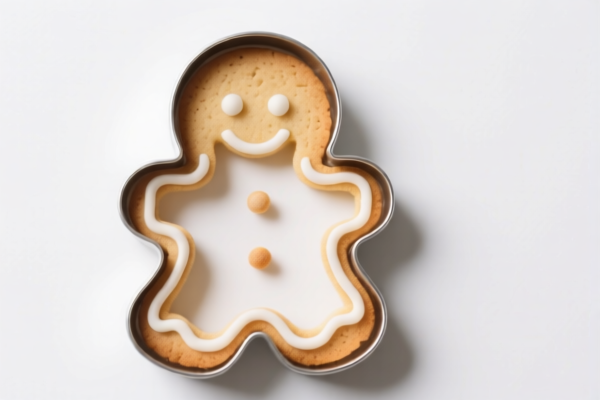
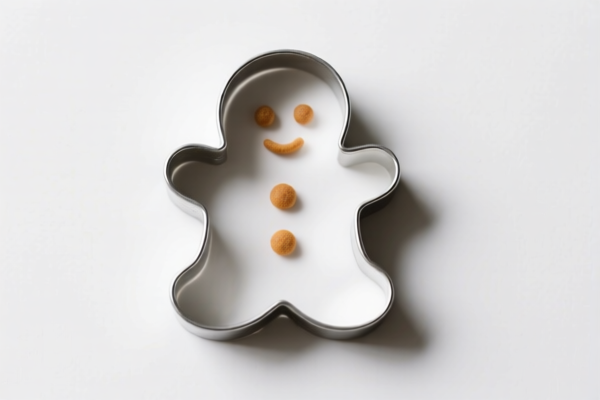


AI Analysis
Based on the data provided in your <DATA> input, here is the breakdown for Cookie Cutters (classified under kitchenware/tableware). Since the data does not contain a specific entry for "Cookie Cutters" by name, we must classify them based on their material (Wood, Bamboo, Plastic, or Metal) as Cookie Cutters are functionally considered "kitchenware" or "similar tableware."
Below is the Wiki-style guide tailored to your specific dataset.
🍪 Cookie Cutters: Global HS Code Classification & Taxation Guide (2026)
🌐 HS Code Reference & Customs Clearance Strategy | Material-Based Tax Analysis
Cookie Cutters (shaping tools for dough) are generally classified under the broader categories of Tableware, Kitchenware, or Household Articles, depending on the material of manufacture.
⚠️ Critical Classification Logic:
You cannot import cookie cutters as a single generic code. You must declare the exact material. Misclassifying metal cutters as plastic (or vice versa) can lead to severe penalties or seizure.
📦 I. HS Code Classification Matrix (Based on Provided Data)
| Material | Corresponding HS Code | Product Description in Dataset | Tax Status |
|---|---|---|---|
| 🌲 Wood | 4419.90.91.00 |
Tableware and kitchenware, of wood: Other: Other | 10.7% (High) |
| 🎋 Bamboo | 4419.19.90.00 |
Tableware and kitchenware, of wood: Of bamboo: Other: Other | 3.2% (Low) |
| 🥡 Plastic | 3924.10.40.00 |
Tableware, kitchenware... of plastics: Tableware and kitchenware: Other | 3.4% (Low) |
| 🥡 Plastic (Other) | 3924.90.56.50 |
Tableware, kitchenware... of plastics: Other: Other Other | 0.0% (Duty-Free) |
| 🥄 Metal (Base) | 8215.99.50.00 |
Spoons, forks... similar kitchen or tableware: Other: Other: Other | 5.3% (Moderate) |
| 🥄 Metal (Handles) | 8215.99.40.60 |
Spoons, forks... Spoons and ladles: With base metal/nonmetal handles | 5.0% (Moderate) |
💰 II. Detailed Tax Breakdown & Policy Analysis
1️⃣ 🌲 Wooden Cookie Cutters (4419.90.91.00)
- Base Tariff: 3.2%
- Additional Tariff (Section 301/Retaliatory): 7.5%
- Total Tax: 10.7%
- 📌 Analysis: This is the most expensive category in your dataset. The "Additional Tariff" (likely Section 301 tariffs on Chinese wood products) significantly increases costs.
- Risk: If you import wooden cutters, the high 7.5% add-on will eat into margins.
2️⃣ 🎋 Bamboo Cookie Cutters (4419.19.90.00)
- Base Tariff: 3.2%
- Additional Tariff: 0.0%
- Total Tax: 3.2%
- 📌 Analysis: Bamboo is often treated differently than "Wood" in trade policy. This is the most cost-effective natural material option.
- Opportunity: Switching from generic wood to bamboo can save 7.5% instantly.
3️⃣ 🥡 Plastic Cookie Cutters
There are two potential codes here, which is critical for clearance:
* Option A (3924.10.40.00): 3.4% Total Tax.
* Description: Specifically for "Tableware and kitchenware."
* Verdict: Recommended. This is the correct functional classification for cookie cutters.
* Option B (3924.90.56.50): 0.0% Total Tax.
* Description: "Other: Other Other."
* Risk: This is a "catch-all" code. While 0% sounds great, Customs may reject this if the item is clearly "tableware." Using this code for a kitchen tool could lead to an audit for under-declaration.
* Strategy: Always use 3924.10.40.00 to avoid audit risks. The 3.4% tax is safer and compliant.
4️⃣ 🥄 Metal Cookie Cutters (8215.99.50.00 / 8215.99.40.60)
- Base Tariff: 5.0% – 5.3%
- Additional Tariff: 0.0%
- Total Tax: 5.0% - 5.3%
- 📌 Analysis: Metal cookie cutters are classified under cutlery/kitchen tools.
- Note: The dataset does not include an additional tariff for metal (unlike wood), making metal a competitive option (5.3%) compared to wood (10.7%), though plastic is cheaper (3.4%).
🛠️ III. Customs Clearance & Operational Advice
✅ 1. Material Verification (The "Golden Rule")
Do not rely on the product name "Cookie Cutter" alone. Your Commercial Invoice and Packing List MUST explicitly state the material. * ✅ Good: "Bamboo Cookie Cutters" * ❌ Bad: "Cookie Cutters" (This leaves it up to the Customs Officer to guess, risking the highest duty rate).
✅ 2. Avoid "Free" Trap on Plastic (3924.90.56.50)
While the dataset shows 0% tax for 3924.90.56.50, this code is for "Other" plastic articles. Cookie cutters are specifically "Tableware/Kitchenware."
* Recommendation: Use 3924.10.40.00. Even though it has a 3.4% tax, it is the legally correct classification. Using a "zero-tax" wrong code is a common cause for customs penalties.
✅ 3. Wood vs. Bamboo Strategy
If you are sourcing from China: * Wooden: Pay 10.7%. * Bamboo: Pay 3.2%. * Action: If your supplier makes "Wood" cutters, ask if they can switch to Bamboo. The tax savings (7.5%) often cover the material cost difference.
✅ 4. Metal Set Inclusions
If you are shipping a Kit (e.g., "Cookie Cutter Set" with rolling pins):
* If the set is all metal: Use the metal codes (8215...).
* If the set is mixed (e.g., Metal cutters + Plastic handles): The entire set is usually classified by the principal component (often metal) or must be split into separate lines on the invoice to avoid mixed-rate errors.
📋 IV. Quick Reference: Tax Savings Cheat Sheet
| Material | HS Code | Total Tax | Clearance Status |
|---|---|---|---|
| Bamboo | 4419.19.90.00 |
3.2% | 🟢 Best Natural Choice |
| Plastic | 3924.10.40.00 |
3.4% | 🟢 Best Synthetic Choice |
| Metal | 8215.99.50.00 |
5.3% | 🟡 Moderate Cost |
| Wood | 4419.90.91.00 |
10.7% | 🔴 Highest Cost (Avoid if possible) |
| Plastic (Wrong Code) | 3924.90.56.50 |
0.0% | ❌ High Audit Risk |
🚀 Final Conclusion
For Cookie Cutters:
1. Prioritize Bamboo (3.2%) for eco-friendly and low-tax natural products.
2. Use Plastic (3924.10.40.00) for cost-effective synthetic options (3.4%).
3. Avoid Generic Wood unless necessary (10.7% is very high due to the 7.5% surcharge).
4. Never use 3924.90.56.50 for cookie cutters, even if it shows 0% tax, as it is likely a misclassification that triggers customs seizures.
Pro Tip: When filing, ensure your description reads: "Plastic Cookie Cutters for Kitchen Use, Model [XYZ]" to clearly link to
3924.10.40.00.
Customer Reviews
About HS Code Classification
The Harmonized System (HS) is an internationally standardized nomenclature developed by the World Customs Organization (WCO) to classify traded products. Over 200 countries use the HS system as the basis for customs tariffs, trade statistics, and import/export regulations.
Each HS code follows a hierarchical structure:
- Chapter (2 digits) — Broad category of goods (e.g., Chapter 84: Machinery and Mechanical Appliances)
- Heading (4 digits) — More specific grouping within the chapter
- Subheading (6 digits) — Internationally standardized breakdown, used by all WCO member countries
- National subdivisions (8-10 digits) — Country-specific extensions for further classification, such as US HTSUS 10-digit codes
Correct HS code classification is essential for smooth customs clearance, accurate duty payment, and compliance with trade regulations. Misclassification can lead to customs delays, overpayment of duties, or penalties.
When importing from CN to US, the applicable tariff rates may include:
- Most-Favored-Nation (MFN) rate — The standard duty rate applied to WTO members
- General rate — Applied to countries without trade agreements
- Trade remedy duties — Additional tariffs such as Section 301 (anti-dumping), Section 232 (national security), or countervailing duties
The information provided on this page is for reference purposes only. For official classification, please consult with your local customs authority or a licensed customs broker.