Cookie Fabric Patch
CN → US| HS Code | Tariff Rate | Origin | Destination | Doc |
|---|---|---|---|---|
| 5903102010 | 35.0% | CN | US | Official Doc |
| 5903102090 | 35.0% | CN | US | Official Doc |
| 6307903020 | 25.4% | CN | US | Official Doc |
| 6307903010 | 25.4% | CN | US | Official Doc |
Product Images
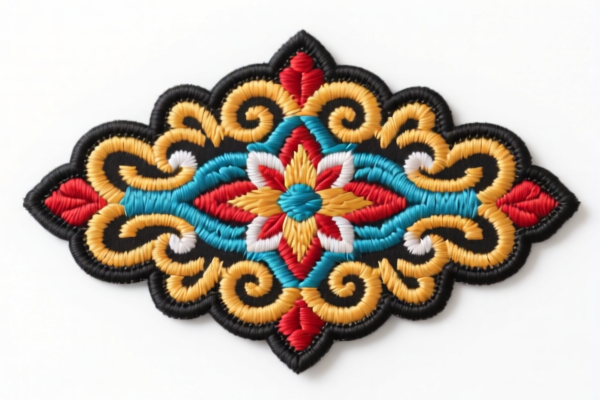
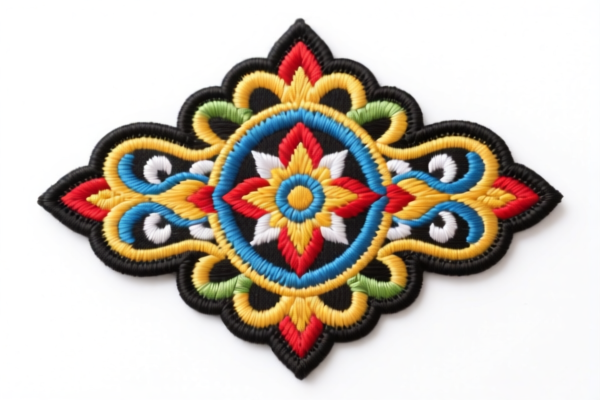
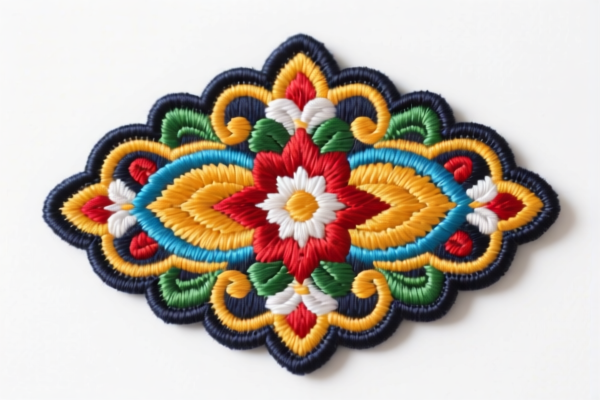
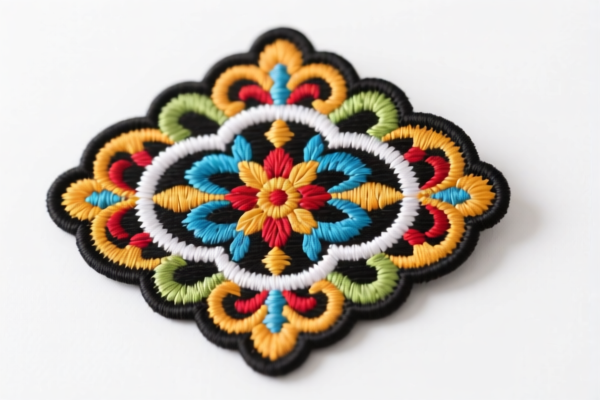
AI Analysis
🧵 Cookie Fabric Patches (Decorative Textile Appliqués)
🌐 HS Code Reference & Customs Clearance Guide | 2026 Latest Tariff Analysis | Professional Compliance Strategy
📌 1. Product Definition & Classification: What Exactly is a "Cookie Fabric Patch"?
In the world of fashion and DIY customization, a "Cookie Fabric Patch" refers to small, decorative textile pieces (often shaped like cookies, animals, or logos) used for sewing or ironing onto garments, bags, or hats. Despite the playful name, customs authorities do not classify these based on their "cute" appearance but on their material composition and function.
They are fundamentally classified under Chapter 63: Other made up textile articles. The critical distinction lies in whether they are generic "labels/accessories" or specifically made of cotton.
⚠️ Key Classification Point:
- If the patch is made of cotton: It falls under 6307.90.30.10
- If the patch is made of other materials (polyester, acrylic, mixed fibers, non-woven, etc.): It falls under 6307.90.30.20
- Note: Do not classify as "embroidery" (Chapter 61) if it is a cut-out textile shape applied as an accessory; it is an "other made up article."
📦 2. HS Code Classification Matrix (2026 Latest Tariff Authority)
| HS Code | Product Description | Material Specification | Applicable Scenarios |
|---|---|---|---|
6307.90.30.10 |
Labels Of cotton | 100% Cotton or Cotton-blend patches | Cotton cookie patches, cotton logos, linen-textile patches |
6307.90.30.20 |
Labels Other | Man-made fibers (Polyester, Nylon, Acrylic), non-woven, or mixed materials | Polyester cookie patches, felt patches, embroidered patches with non-cotton backing |
🔍 Critical Reminder:
- "Cookie" is a marketing term, not a customs term. Customs looks at the fiber content.
- If a patch has a cotton base but is heavily coated with plastic/latex (for durability), it might still be considered "cotton" if the cotton is the essential character, but 6307.90.30.10 is the safest bet for standard textile patches.
- If the patch is primarily polyester (common for machine-embroidered patches), it MUST go to 6307.90.30.20.
💰 3. 2026 Latest Tariff Rate Breakdown (Detailed Duty Analysis)
✅ Applicable Country: United States (US)
✅ Origin: China (CN)
✅ Effective Date: Current rates apply (Section 301 & IEEPA)
🎯 1. 6307.90.30.10 — Labels Of Cotton
| Item | Details |
|---|---|
| Base Tariff Rate | 0.0% (General Ad Valorem) |
| Section 301 Additional Duty | 0.0% |
| IEEPA Additional Duty | 0.0% |
| Total Tax Rate | 0.0% |
| Tax Calculation | No duty charged on CIF value |
| De Minimis Eligibility | ✅ Yes (if <$800, may enter under Section 321 without duty, but this rate applies for formal entries) |
| Legal Basis | HTSUS 6307.90.30.10; No current high-duty footnotes apply to cotton labels in this subheading |
📌 Interpretation:
- Cotton textile patches enjoy zero duty under current US trade policies.
- This is a low-risk, low-cost classification for importers.
- Ensure the cotton content is clearly stated in the commercial invoice to avoid reclassification.
🎯 2. 6307.90.30.20 — Labels Other (Non-Cotton)
| Item | Details |
|---|---|
| Base Tariff Rate | 0.0% (General Ad Valorem) |
| Section 301 Additional Duty | 0.0% |
| IEEPA Additional Duty | 25.0% |
| Total Tax Rate | 25.0% |
| Tax Calculation | CIF Value × 25% |
| De Minimis Eligibility | ❌ No (IEEPA duties often block de minimis entry for Chinese goods depending on specific enforcement) |
| Legal Basis | HTSUS 6307.90.30.20; Subject to USITC Footnote 9903.88.01 & IEEPA 9903.01.24 |
📌 Interpretation:
- 25% additional duty is a significant cost driver.
- This applies to polyester, nylon, acrylic, or blended fabric patches.
- Many "cookie patches" are made of polyester twill or felt. If you misclassify a polyester patch as cotton, you risk penalties, back duties, and delays.
🛠️ 4. Customs Clearance Practical Advice (Real-World Pitfall Avoidance)
✅ 1. Documentation Checklist (Mandatory)
| Document | Required? | Why? |
|---|---|---|
| Commercial Invoice | ✅ Yes | Must specify Material Composition (e.g., "100% Cotton Twill Patch" or "Polyester Embroidered Patch") |
| Product Photos | ✅ Yes | Show the patch clearly, including any backing (iron-on, sew-on, hook-and-loop) |
| Fiber Content Label | ✅ Yes | If patches are sold in packs, ensure each pack has a fiber label |
| HS Code Justification | ✅ Yes | Briefly explain why it’s 6307.90.30.10 vs 20 based on material |
✅ 2. Classification Strategy (Key Tips)
🔥 “Material is King, Not Shape! ‘Cookie’ is Just a Name!”
| Scenario | Correct HS Code | Wrong HS Code | Consequence |
|---|---|---|---|
| Cotton cookie patch | 6307.90.30.10 |
6307.90.30.20 |
Overpay 25% duty unnecessarily |
| Polyester cookie patch | 6307.90.30.20 |
6307.90.30.10 |
Underpay 25% duty → Seizure + Penalty + Back Taxes |
| Mixed material patch (e.g., Cotton face + Polyester backing) | 6307.90.30.20 (usually) |
6307.90.30.10 |
Customs may rule it "other" if non-cotton is essential |
| Plastic-coated fabric patch | 5903.10.20.90 (if >70% plastic) |
6307.90.30.20 |
Misclassification → Different duty structure |
✅ 3. Special Cases & Warnings
| Case | Handling Advice |
|---|---|
| "Felt Patches" | Felt is often wool or acrylic. If wool, check Chapter 63. If acrylic/polyester, use 6307.90.30.20 (25%) |
| "Iron-On Patches" | Still 6307.90.30.xx. The adhesive doesn’t change the classification unless it’s the primary feature (then it might be Chapter 59) |
| "Embroidered Patches" | If it’s a cut textile shape with embroidery, it’s still 6307.90.30.xx. If it’s a full embroidery on fabric, it may be Chapter 61, but "patches" are typically 6307 |
| Cotton Content Ambiguity | If the invoice says "Textile Patch" without specifying cotton, Customs may assume "Other" (6307.90.30.20) → Pay 25%. Always specify! |
🌍 5. Global Market Comparison (2026 Update)
| Country/Region | Recommended HS Code | Duty Rate | Certification | Notes |
|---|---|---|---|---|
| 🇺🇸 USA | 6307.90.30.10 (Cotton) |
0% | None | 6307.90.30.20 (Non-Cotton): 25% |
| 🇨🇳 China | 6307.90.30.10 |
~5-10% | None | Lower import duty, no Section 301 |
| 🇪🇺 EU | 6307.90.99 |
0-12% | CE (if functional) | No major retaliatory tariffs on textiles |
| 🇬🇧 UK | 6307.90.99 |
0-12% | UKCA | Post-Brexit rules apply |
📌 Conclusion:
- USA is the highest-risk market for non-cotton textile patches due to the 25% additional duty.
- Cotton patches are duty-free in the US, making them the most cost-effective option for importers.
📌 6. Common Errors & Pitfalls (Lessons Learned)
❌ Error 1: Calling it "Cookie Pattern" on the invoice
👉 Consequence: Customs has no idea what it is → Delay or reclassification to "Other" (25%)
❌ Error 2: Misidentifying material as Cotton when it’s Polyester
👉 Consequence: 25% duty evasion → Penalty + Back Taxes + Possible Seizure
❌ Error 3: Using "Embroidery" Chapter 61 codes
👉 Consequence: Rejected by customs → Corrected to 6307.90.30.xx → Delay in release
❌ Error 4: Ignoring "Other" classification for mixed materials
👉 Consequence: If the patch is 60% cotton + 40% polyester, Customs may still classify it as "Other" depending on essential character rules → 25% duty
✅ Correct Declaration Example:
"Decorative Fabric Patches, Shaped Like Cookies, 100% Cotton Twill, For Sewing Onto Garments, Not Embroidered on Fabric Roll, HS Code 6307.90.30.10"
🎯 7. Conclusion: Precision Saves Money!
🎯 Remember the Golden Rule:
🔹 “Cotton = 0% | Polyester/Other = 25% | ‘Cookie’ = No Meaning to Customs!”
🔹 “Declare Material, Not Shape!”
📌 Pro Tip:
- If you are importing polyester patches and the cost of 25% duty is too high, consider sourcing from Vietnam or Cambodia (if eligible for GSP or lower duty rates) or switching to cotton-based materials if design allows.
- For small shipments (<$800), check if Section 321 (De Minimis) applies, but note that IEEPA duties (25%) may still apply to Chinese goods even under de minimis, depending on current enforcement. Always consult your customs broker.
📣 Immediate Action:
📞 Contact Your Customs Broker
📸 Provide Clear Material Composition
🚀 Avoid 25% Duty Traps by Declaring Accurately!
✨ Professional Clearance Starts with Accurate Classification!
💼 Every percent saved is pure profit!
Customer Reviews
About HS Code Classification
The Harmonized System (HS) is an internationally standardized nomenclature developed by the World Customs Organization (WCO) to classify traded products. Over 200 countries use the HS system as the basis for customs tariffs, trade statistics, and import/export regulations.
Each HS code follows a hierarchical structure:
- Chapter (2 digits) — Broad category of goods (e.g., Chapter 84: Machinery and Mechanical Appliances)
- Heading (4 digits) — More specific grouping within the chapter
- Subheading (6 digits) — Internationally standardized breakdown, used by all WCO member countries
- National subdivisions (8-10 digits) — Country-specific extensions for further classification, such as US HTSUS 10-digit codes
Correct HS code classification is essential for smooth customs clearance, accurate duty payment, and compliance with trade regulations. Misclassification can lead to customs delays, overpayment of duties, or penalties.
When importing from CN to US, the applicable tariff rates may include:
- Most-Favored-Nation (MFN) rate — The standard duty rate applied to WTO members
- General rate — Applied to countries without trade agreements
- Trade remedy duties — Additional tariffs such as Section 301 (anti-dumping), Section 232 (national security), or countervailing duties
The information provided on this page is for reference purposes only. For official classification, please consult with your local customs authority or a licensed customs broker.