Cookie Mold
CN → US| HS Code | Tariff Rate | Origin | Destination | Doc |
|---|---|---|---|---|
| 4420110090 | 13.2% | CN | US | Official Doc |
| 4420110010 | 13.2% | CN | US | Official Doc |
| 8210000000 | 38.7% | CN | US | Official Doc |
Product Images
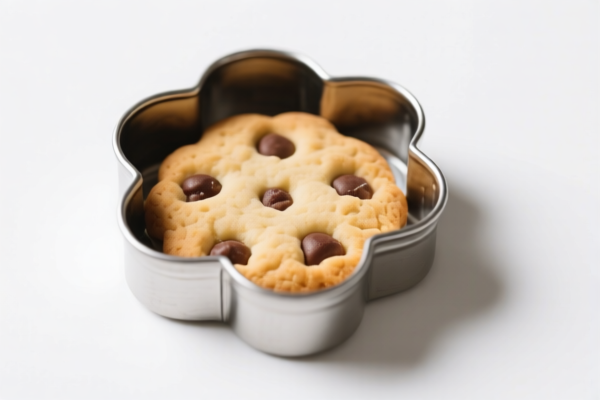
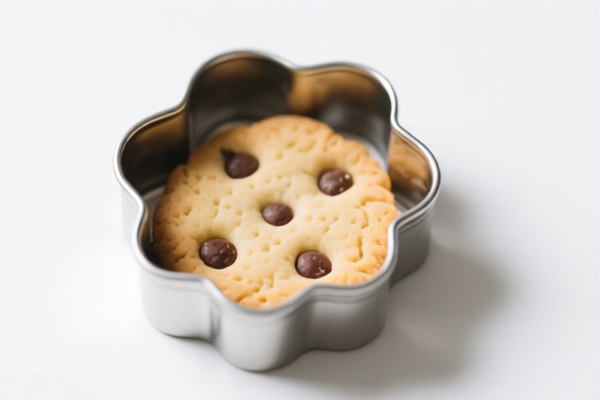
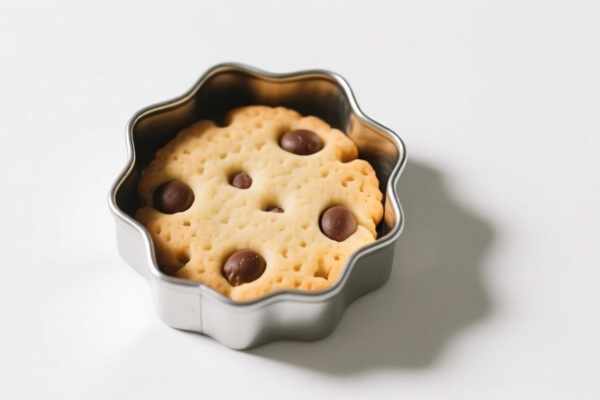
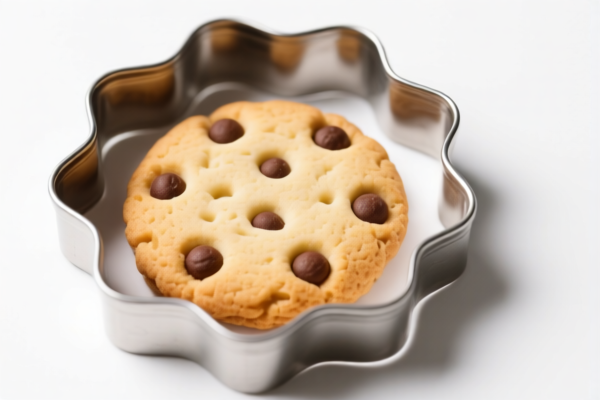
AI Analysis
🍪 Cookie Mold (Hand-Operated Mechanical Appliances for Food Preparation)
🌐 HS Code Reference & Customs Clearance Guide | 2026 Latest Tariff Breakdown | Professional Import Strategy
📌 One, Product Definition & Classification: Do You Really Know What a Cookie Mold Is?
A cookie mold is a hand-operated mechanical tool used in the preparation, conditioning, or serving of food and drink. In the context of international trade, it falls under small, manually operated kitchen appliances that are weighing 10 kg or less and are specifically designed to shape dough or batter into decorative or standard forms — commonly used in baking, confectionery, and pastry production.
⚠️ Key Classification Point:
- If it’s a simple metal or plastic mold (e.g., a stamped steel or silicone form) used to shape cookies, pastries, or dough — and has no motor, electronic components, or power source → it qualifies as a hand-operated mechanical appliance.
- If it includes electric heating elements, motors, or automated features → it may fall under a different HS Code (e.g., 8516 or 8518), which is not applicable here.
📦 Two, HS Code Classification Details (2026 Latest Tariff Authority Reference)
| HS Code | Product Description | Use Case | Mechanical Operation? | Includes Motor/Electronics? |
|---|---|---|---|---|
8210.00.00.00 |
Hand-operated mechanical appliances, ≤10 kg, used in food/drink prep/serving, and base metal parts thereof | Cookie cutters, dough press molds, pastry stampers, rolling pin molds | ✅ Yes | ❌ No (purely mechanical) |
4420.11.00.90 |
Tableware & kitchenware, of wood: of bamboo: other: other other | Bamboo kitchen tools, wooden spoons, chopsticks, non-molded wooden kitchenware | ✅ Yes | ❌ No |
4420.11.00.10 |
Tableware & kitchenware, of wood: of bamboo: other: other of mango wood (Mangifera spp.) | Mango wood kitchen tools, spoons, spatulas, decorative molds | ✅ Yes | ❌ No |
🔍 Critical Distinction:
- Metal or plastic cookie molds with no power →8210.00.00.00
- Wooden molds, especially made from mango wood, →4420.11.00.10
- Bamboo kitchenware (not molded into shapes) →4420.11.00.90
- Do not confuse a mold (which shapes food) with a spatula or spoon — they are different categories.
💰 Three, 2026 Latest Tariff Rate Breakdown (With附加 Taxes & Policy Clauses)
✅ Applicable Country: United States (US)
✅ Origin: China (CN)
✅ Effective Date: November 10, 2025 (including subsequent imports)
🎯 1. 8210.00.00.00 — Hand-Operated Mechanical Appliances (≤10 kg), for Food/Diet Use
| Item | Detail |
|---|---|
| Base Duty Rate | 3.7% (ad valorem) |
| Additional Tariff (USITC 301) | +25.0% (from Section 301 of U.S. Trade Act) |
| Total Effective Tariff | 28.7% |
| Tax Calculation | CIF Value × 28.7% |
| De Minimis Threshold | ❌ Not applicable (denied under U.S. de minimis rule) |
| Legal Basis Path | USITC:8210.00.00.00 → FOOTNOTE:9903.88.01 → SECTION 301: 301-25.0 |
📌 Explanation:
- The 3.7% base tariff applies to all hand-operated metal kitchen tools.
- The +25.0% additional tariff comes from Section 301 of the U.S. Trade Act, targeting Chinese-origin goods deemed to have unfair trade practices.
- Total: 28.7% — significant for small-batch or high-volume imports.
- No de minimis relief — even small shipments (e.g., 100 units) must pay full tariff.
🎯 2. 4420.11.00.90 — Tableware & Kitchenware, of Wood: of Bamboo: Other: Other
| Item | Detail |
|---|---|
| Base Duty Rate | 3.2% |
| Additional Tariff | 0.0% (no Section 301 or IEEPA add-on) |
| Total Effective Tariff | 3.2% |
| Tax Calculation | CIF Value × 3.2% |
| De Minimis Threshold | ✅ Yes (if value ≤ $800, duty-free) |
| Legal Basis Path | USITC:4420.11.00.90 → FOOTNOTE:9903.88.01 (but no 301 tariff applied) |
📌 Note:
- Bamboo kitchenware (e.g., bamboo spatulas, chopsticks, serving trays) without decorative molds → 3.2%
- No Section 301 or IEEPA tariffs apply to this category.
- De minimis exemption applies — ideal for small e-commerce or sample shipments.
🎯 3. 4420.11.00.10 — Tableware & Kitchenware, of Wood: of Bamboo: Other: Other of Mango Wood (Mangifera spp.)
| Item | Detail |
|---|---|
| Base Duty Rate | 3.2% |
| Additional Tariff | 0.0% |
| Total Effective Tariff | 3.2% |
| Tax Calculation | CIF Value × 3.2% |
| De Minimis Threshold | ✅ Yes |
| Legal Basis Path | USITC:4420.11.00.10 → FOOTNOTE:9903.88.01 (no 301) |
📌 Important:
- Mango wood is a specific wood type and is not treated as "other wood" in tariff classification.
- No extra tariffs — only 3.2% applies.
- Highly favorable for artisans, eco-friendly brands, or boutique kitchenware sellers.
🛠️ Four, Customs Clearance Practical Tips (Real-World Pro Tips)
✅ 1. Required Documentation (No Exceptions)
| Document | Must Provide | Why It Matters |
|---|---|---|
| ✅ Product Specifications | ✔️ | Shows material (metal/plastic/wood), weight, function |
| ✅ Product Photos (with label) | ✔️ | Proves it’s a mold, not a kitchen gadget with motor |
| ✅ Commercial Invoice | ✔️ | Must clearly state: “Hand-operated cookie mold, metal, for baking” |
| ✅ Bill of Lading / Packing List | ✔️ | Shows weight, quantity, and packaging |
| ✅ Certificate of Origin (CO) | ✔️ | Critical for tariff eligibility (e.g., China vs. Vietnam) |
| ✅ Third-Party Test Report (if needed) | ✔️ | For food-grade materials (e.g., FDA-compliant plastic) |
| ✅ HS Code Pre-Ruling Request (Recommended) | ✔️ | Avoids penalties and delays |
✅ 2.申报技巧 (Key Rules to Remember)
🔥 “Material Matters, Motor Doesn’t, Weight Counts!”
| Scenario | Correct HS Code | Wrong Approach |
|---|---|---|
| Metal cookie cutter (1.2 kg) | 8210.00.00.00 |
Misclassified as 8516.51.00.00 (electronic) → 35%+ |
| Wooden cookie mold (mango wood, 800g) | 4420.11.00.10 |
Misclassified as 8210.00.00.00 → higher tariff |
| Bamboo spatula (no mold) | 4420.11.00.90 |
Misclassified as 8210.00.00.00 → unnecessary 25% add-on |
| Mold + wooden tray (same shipment) | Declare as one unit | Splitting → each item taxed separately → higher total cost |
✅ 3. Special Cases & Solutions
| Situation | Recommended Action |
|---|---|
| Mold made from recycled metal | Still 8210.00.00.00 — no change in tariff |
| Handmade wooden mold with carvings | 4420.11.00.10 if mango wood; 4420.11.00.90 if other wood |
| Mold with non-removable plastic insert | Still 8210.00.00.00 if purely mechanical |
| Mold sold as part of a baking kit | Declare as "cookie mold" — not "baking set" (which may trigger higher tariff) |
| Export from Vietnam or Thailand | Can avoid Section 301 tariff — apply for CO with origin proof |
🌍 Five, Global Market Customs Comparison (2026 Update)
| Country/Region | Recommended HS Code | Tariff Rate | Certification Required | Notes |
|---|---|---|---|---|
| 🇺🇸 United States | 8210.00.00.00 |
28.7% (China) | FDA, CE (if plastic) | High tariff — plan ahead |
| 🇨🇳 China | 8210.00.00.00 |
5% | CCC, RoHS | No 301 tariff |
| 🇪🇺 European Union | 8210.00.00.00 |
0% (if CE compliant) | CE, REACH | No additional tariffs |
| 🇦🇺 Australia | 8210.00.00.00 |
5% | RCM | No 301 |
| 🇯🇵 Japan | 8210.00.00.00 |
0% | PSE | No extra charges |
📌 Conclusion:
- U.S. is the only major market with high Section 301 tariffs on these items.
- China-origin products face 28.7% total tariff — not negotiable.
- Vietnam, Thailand, or Mexico origin can avoid 25% add-on — consider shifting production.
📌 Six, Common Mistakes & How to Avoid Them (Pain Points)
❌ Mistake 1: Declaring a wooden mold as 8210.00.00.00
👉 Result: Incorrect classification → higher tariff + risk of audit
❌ Mistake 2: Using "baking tool" as product name instead of "cookie mold"
👉 Result: Customs may misclassify as electronic device → higher tariff
❌ Mistake 3: Not declaring material type (e.g., mango wood vs. bamboo)
👉 Result: Wrong HS Code → fines, delays, or seizure
❌ Mistake 4: Splitting a mold + tray into two shipments
👉 Result: Each item taxed separately → total cost spikes
✅ Correct Practice:
“Hand-operated metal cookie mold, 12 cm diameter, for home baking, weight: 850g, made in China, HS Code: 8210.00.00.00”
🎯 Seven, Final Takeaway: Precision in Classification = Profit Protection!
🎯 Remember the Golden Rule:
🔹 “Metal mold? →
8210.00.00.00→ 28.7% (China) → Plan for cost
🔹 Wooden mold? →4420.11.00.10→ 3.2% → Use de minimis!
🔹 Bamboo? →4420.11.00.90→ 3.2% → No 301!
🔹 Splitting? → Avoid! → Total tariff ↑↑↑
📌 Pro Tip:
If your cookie molds are made in Vietnam, Thailand, or Mexico, apply for Certificate of Origin — you can avoid the 25% Section 301 tariff entirely.
📣 Act Now!
📞 Contact a licensed customs broker + Submit product photos + Request HS Code Pre-Ruling
🚀 Ensure your molds clear fast, pay less, and scale globally!
✨ Smart Importing Starts with Accurate HS Code!
💼 Your next batch of cookies — and your profits — depend on it!
Customer Reviews
About HS Code Classification
The Harmonized System (HS) is an internationally standardized nomenclature developed by the World Customs Organization (WCO) to classify traded products. Over 200 countries use the HS system as the basis for customs tariffs, trade statistics, and import/export regulations.
Each HS code follows a hierarchical structure:
- Chapter (2 digits) — Broad category of goods (e.g., Chapter 84: Machinery and Mechanical Appliances)
- Heading (4 digits) — More specific grouping within the chapter
- Subheading (6 digits) — Internationally standardized breakdown, used by all WCO member countries
- National subdivisions (8-10 digits) — Country-specific extensions for further classification, such as US HTSUS 10-digit codes
Correct HS code classification is essential for smooth customs clearance, accurate duty payment, and compliance with trade regulations. Misclassification can lead to customs delays, overpayment of duties, or penalties.
When importing from CN to US, the applicable tariff rates may include:
- Most-Favored-Nation (MFN) rate — The standard duty rate applied to WTO members
- General rate — Applied to countries without trade agreements
- Trade remedy duties — Additional tariffs such as Section 301 (anti-dumping), Section 232 (national security), or countervailing duties
The information provided on this page is for reference purposes only. For official classification, please consult with your local customs authority or a licensed customs broker.