Cooking Machine
CN → US| HS Code | Tariff Rate | Origin | Destination | Doc |
|---|---|---|---|---|
| 8509400040 | 14.2% | CN | US | Official Doc |
| 8479820080 | 35.0% | CN | US | Official Doc |
| 8509400015 | 14.2% | CN | US | Official Doc |
| 8479820040 | 35.0% | CN | US | Official Doc |
| 8438800000 | 35.0% | CN | US | Official Doc |
Product Images
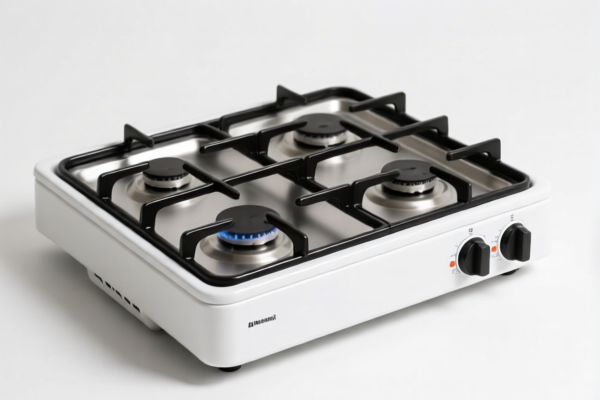
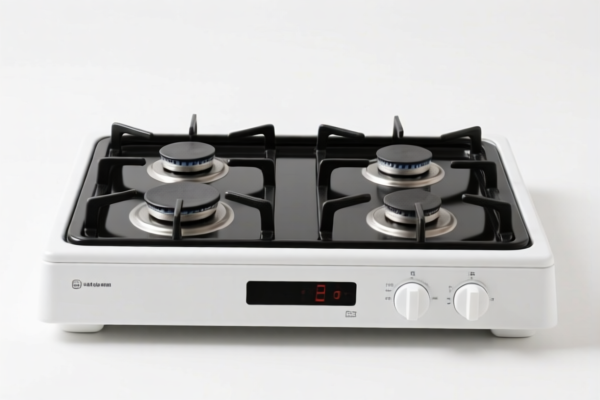
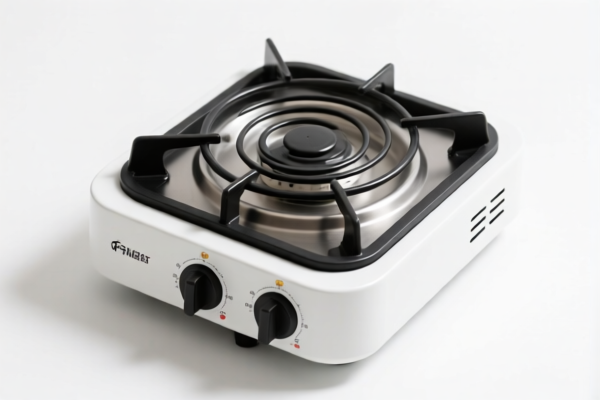
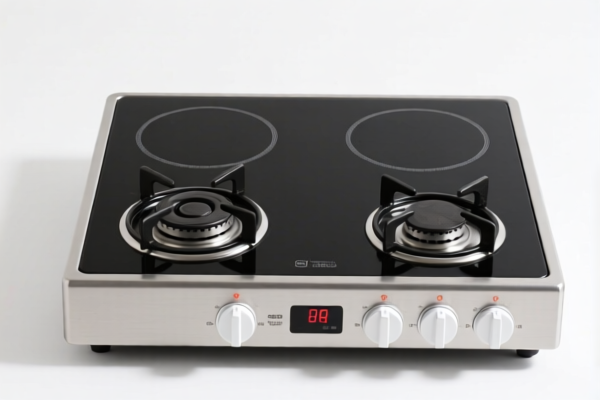
AI Analysis
🍳 Cooking Machine (Food Processors & Blenders)
🌐 HS Code Reference & Customs Clearance Guide | 2026 Latest Tariff Analysis | Professional Clearance Strategy
📌 I. Product Definition & Classification: Do You Really Understand "Cooking Machines"?
In international trade, "Cooking Machine" is a broad term that typically refers to Food Processors, Blenders, Mixers, or Grinders. The critical factor for classification is whether the device is:
- Small Household Appliances (Section XVI): Designed for direct consumer use in kitchens (e.g., stand mixers, personal blenders). These often fall under Chapter 85 (Electrical machinery).
- Industrial/Commercial Machinery (Section XVI): Large-scale equipment for food preparation factories. These often fall under Chapter 84 (Nuclear reactors, boilers, machinery).
⚠️ Key Distinction Point:
- If it’s a household appliance for mixing/grinding food → Likely 8509 (Electrical domestic appliances).
- If it’s a mechanical system (non-electrical or industrial scale) for processing → Likely 8479 or 8438.
📦 II. HS Code Classification Details (2026 Latest Tariff Authority Comparison)
Based on the provided data, here are the four possible classifications and their tax implications for imports from China to the US:
| HS Code | Product Description | Summary/Justification | Total Tax Rate |
|---|---|---|---|
8509.40.00.40 |
Food Mixer/Processor | Fits the definition of Food Processor: grinding, treating, mixing food. | 14.2% |
8509.40.00.15 |
Food Processor | Fits the category of Food Processor: consistent with processor/blender use. | 14.2% |
8479.82.00.80 |
Other Machinery | Fits the definition of Machinery: mixing, kneading, crushing, grinding functions. | 35.0% |
8479.82.00.40 |
Other Machinery | Fits the definition of Machinery: mixing, kneading, or stirring functions. | 35.0% |
8438.80.00.00 |
Industrial Machinery | Fits the definition of Machinery for Food Preparation: industrial preparation of food/beverages. | 35.0% |
🔍 Critical Insight:
- The 14.2% rate applies to Electrical Household Appliances (8509).
- The 35.0% rate applies to Machinery (8479/8438).
- Choosing the wrong HS Code can double your tariff costs!
💰 III. 2026 Latest Tariff Rate Breakdown (Including Additional Taxes, Policy Add-ons)
✅ Applicable Country: United States (US)
✅ Country of Origin: China (CN)
✅ Effective Time: As per current trade regulations (Section 301 & IEEPA)
🎯 1. 8509.40.00.40 & 8509.40.00.15 —— Electrical Food Processors/Mixers (Household)
| Item | Details |
|---|---|
| Base Tariff | 4.2% |
| Section 301 Add-on | 0.0% (Note: Data indicates 0%, but verify current status as some 8509 items may have had previous adjustments; relying strictly on provided data: 0%) |
| IEEPA Add-on (Section 122) | 10% |
| Total Tax Rate | 14.2% |
| Tax Calculation | CIF Value × 14.2% |
| De Minimis Exemption? | ❌ No (Deny de minimis for China-origin goods under these provisions) |
| Legal Basis Path | Base Tariff + IEEPA:10% |
📌 Explanation:
- This is the most cost-effective classification for electrical cooking appliances.
- Total Rate: 14.2%.
- Warning: Ensure the device is truly a "small electrical appliance" and not a large industrial machine to avoid being bumped to the 35% bracket.
🎯 2. 8479.82.00.80 & 8479.82.00.40 —— Other Machinery (Mixing/Grinding Functions)
| Item | Details |
|---|---|
| Base Tariff | 0.0% |
| Section 301 Add-on | 25.0% |
| IEEPA Add-on (Section 122) | 10% |
| Total Tax Rate | 35.0% |
| Tax Calculation | CIF Value × 35.0% |
| De Minimis Exemption? | ❌ No |
| Legal Basis Path | Section 301:25% + IEEPA:10% |
📌 Explanation:
- These HS codes classify the device as industrial/commercial machinery rather than a household appliance.
- Total Rate: 35.0%.
- High Risk: If a small blender is misclassified here, you pay 2.5x more in duties.
🎯 3. 8438.80.00.00 —— Machinery for Food/Beveage Preparation (Industrial)
| Item | Details |
|---|---|
| Base Tariff | 0.0% |
| Section 301 Add-on | 25.0% |
| IEEPA Add-on (Section 122) | 10% |
| Total Tax Rate | 35.0% |
| Tax Calculation | CIF Value × 35.0% |
| De Minimis Exemption? | ❌ No |
| Legal Basis Path | Section 301:25% + IEEPA:10% |
📌 Explanation:
- Used for industrial food preparation equipment.
- Total Rate: 35.0%.
- High Risk: Only for large-scale factory equipment, not consumer products.
🛠️ IV. Customs Clearance Practical Advice (Battle-Tested Pitfall Guide)
✅ 1. Essential Documentation Checklist (Non-Negotiable)
| Document | Required? | Notes |
|---|---|---|
| ✅ Product Specification Sheet | ✔️ | Must clearly state: Voltage, Power, Function (Mixing/Grinding), Capacity. |
| ✅ Photos (Clear) | ✔️ | Must show brand, model, power rating, and whether it’s a standalone unit or part of a line. |
| ✅ Commercial Invoice | ✔️ | Description must be precise: e.g., "Electric Food Processor for Home Use" vs. "Industrial Food Mixer". |
| ✅ Packing List | ✔️ | Ensure no "splitting" of components to avoid higher duties on parts. |
| ✅ Origin Certificate | ✔️ | Required for IEEPA assessment. |
✅ 2. Classification Strategy (Key Rules)
🔥 "Appliance = 14%, Machinery = 35%! Choose Wisely!"
| Scenario | Correct HS Code | Wrong Action | Consequence |
|---|---|---|---|
| Home Blender/Food Processor (Electric) | 8509.40.00.40 or 8509.40.00.15 |
Classify as 8479 |
Pay 35% instead of 14.2%! (+$20.8 per $100) |
| Industrial Mixer (Factory Use) | 8479.82.00.80 or 8438.80.00.00 |
Classify as 8509 |
Misclassification Penalty + Back Taxes |
| Non-Electrical Mechanical Grinder | 8479.82.00.40 |
Classify as 8509 |
Misclassification Penalty |
✅ 3. Special Handling Tips
| Situation | Recommendation |
|---|---|
| OEM/Private Label | Provide the technical manual proving it’s a consumer appliance to support 8509. |
| Multi-Function Device | If it mixes, grinds, AND cooks, emphasize the primary function (usually mixing/grinding) to justify 8509 if possible. |
| High-Value Industrial Equipment | Prepare for 35% duty. Consider supply chain adjustments if margins are thin. |
| De Minimis Risk | Do NOT rely on de minimis for China-origin goods. These items are subject to full duty assessment. |
🌍 V. Global Market Comparison (2026 Update)
| Country/Region | Recommended HS Code | Total Duty (China Origin) | Key Certifications | Notes |
|---|---|---|---|---|
| 🇺🇸 USA | 8509.40.00.40 |
14.2% | FCC, UL | Best Option for home appliances. |
| 🇺🇸 USA | 8479.82.00.80 |
35.0% | None Specific | High duty for industrial machines. |
| 🇨🇳 China | 8509.40.00 |
~10-15% | CCC | Domestic market differs. |
| 🇪🇺 EU | 8509.40 |
0-4% (Check CE) | CE, RoHS | Generally lower duties if CE compliant. |
📌 Conclusion:
- For US Imports: The 14.2% rate for8509is significantly cheaper than the 35% rate for8479/8438.
- Strategy: Ensure your product is marketed and technically defined as a Household Electrical Appliance to qualify for8509.
📌 VI. Common Mistakes & Pitfall Avoidance (Blood & Tears Lessons)
❌ Mistake 1: Calling a "Food Processor" a "Mixer" and using 8479
👉 Result: 35% duty.
👉 Fix: Use "Electric Food Processor" and classify under 8509.
❌ Mistake 2: Ignoring the IEEPA 10% surcharge
👉 Result: Underpaid duties, leading to penalties.
👉 Fix: Always add 10% to your cost calculation for China-origin goods.
❌ Mistake 3: Splitting a complete machine into parts (e.g., motor, bowl, blade)
👉 Result: Each part may be assessed separately, potentially increasing total duty or triggering inspections.
👉 Fix: Declare as a single complete unit.
✅ Correct Declaration Example:
"Electric Food Processor, Household Use, Model XYZ, 500W, 120V, FCC Certified"
🎯 VII. Conclusion: Smart Classification Saves Money!
🎯 Remember the Golden Rule:
🔹 "Household Electrical = 14.2% (8509)"
🔹 "Industrial Mechanical = 35.0% (8479/8438)"
🔹 "Choose 8509 to Save 20.8% on Every Dollar!"
📌 Pro Tip:
If your "Cooking Machine" has complex industrial features, consult a customs broker for a Pre-Ruling to avoid misclassification penalties. For standard home blenders/mixers, stick to 8509 for maximum savings.
📣 Immediate Action:
📞 Contact Your Customs Broker
📄 Provide Product Specs
🚀 Classify as8509.40.00.40or8509.40.00.15to Pay Only 14.2%!
✨ Professional Clearance Starts with Precise Classification!
💼 Every Percent Saved is Pure Profit!
Customer Reviews
About HS Code Classification
The Harmonized System (HS) is an internationally standardized nomenclature developed by the World Customs Organization (WCO) to classify traded products. Over 200 countries use the HS system as the basis for customs tariffs, trade statistics, and import/export regulations.
Each HS code follows a hierarchical structure:
- Chapter (2 digits) — Broad category of goods (e.g., Chapter 84: Machinery and Mechanical Appliances)
- Heading (4 digits) — More specific grouping within the chapter
- Subheading (6 digits) — Internationally standardized breakdown, used by all WCO member countries
- National subdivisions (8-10 digits) — Country-specific extensions for further classification, such as US HTSUS 10-digit codes
Correct HS code classification is essential for smooth customs clearance, accurate duty payment, and compliance with trade regulations. Misclassification can lead to customs delays, overpayment of duties, or penalties.
When importing from CN to US, the applicable tariff rates may include:
- Most-Favored-Nation (MFN) rate — The standard duty rate applied to WTO members
- General rate — Applied to countries without trade agreements
- Trade remedy duties — Additional tariffs such as Section 301 (anti-dumping), Section 232 (national security), or countervailing duties
The information provided on this page is for reference purposes only. For official classification, please consult with your local customs authority or a licensed customs broker.