Cookware Cutter
CN → US| HS Code | Tariff Rate | Origin | Destination | Doc |
|---|---|---|---|---|
| 3924104000 | 13.4% | CN | US | Official Doc |
| 7323999030 | 88.4% | CN | US | Official Doc |
| 3924905650 | 20.9% | CN | US | Official Doc |
| 8210000000 | 38.7% | CN | US | Official Doc |
| 8438800000 | 35.0% | CN | US | Official Doc |
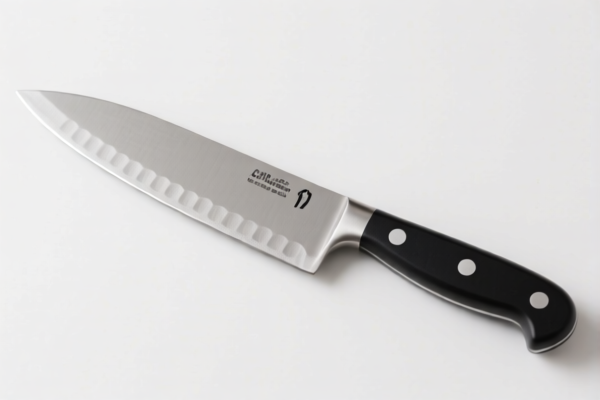
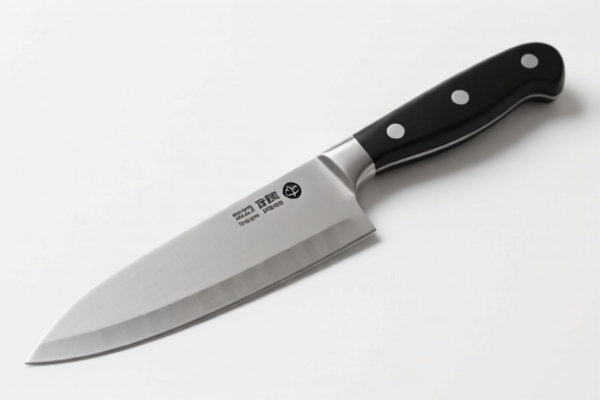
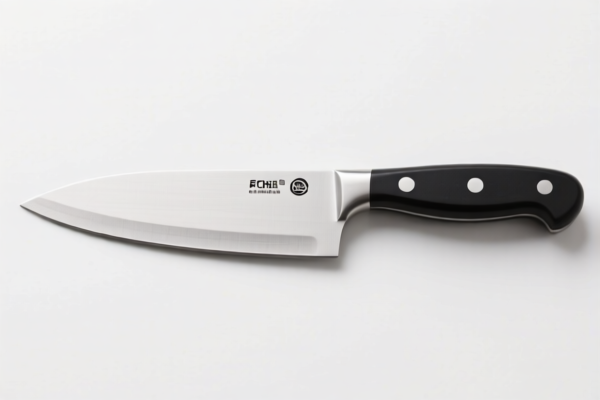
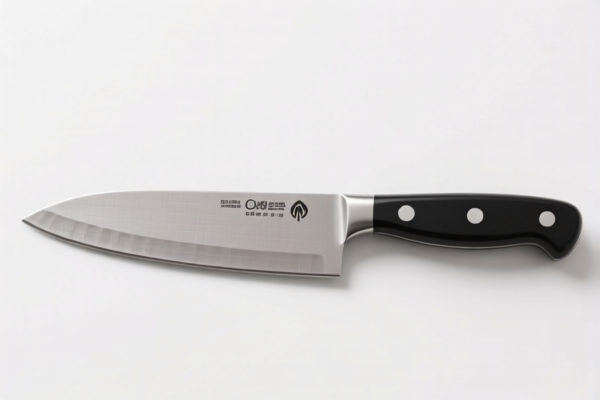
Product Images
AI Analysis
🧺 Cookware Cutter (Kitchen Utility Tools)
🌐 HS Code Reference & Customs Clearance Guide | 2026 Latest Tariff Analysis | Professional Clearance Strategy
📌 I. Product Definition & Classification: Do You Really Understand the "Cookware Cutter"?
The term "Cookware Cutter" in international trade usually refers to kitchen utensils for food preparation, such as vegetable choppers, mandolines, or protective cutting guards. These products are categorized primarily by their material composition and mechanical nature.
Key Distinction:
- Plastic/Kitchenware Items: If the item is primarily plastic (e.g., vegetable dicer, hand guard), it falls under Chapter 39.
- Metal/Steel Items: If the item is made of iron or steel (e.g., metal chopper, steel guard), it falls under Chapter 73.
- Manual Tools: Simple mechanical hand tools may fall under Chapter 82.
- Machinery: Powered or industrial-grade choppers fall under Chapter 84.
⚠️ Critical Classification Point:
- If it is a plastic vegetable chopper/guard →归类 to 3924.10.40.00 or 3924.90.56.50
- If it is a metal steel guard/chopper → 归类 to 7323.99.90.30
- If it is a manual mechanical tool (non-powered) → 归类 to 8210.00.00.00
- If it is an electric/industrial machine → 归类 to 8438.80.00.00
📦 II. HS Code Classification Details (2026 Latest Tariff Authority Comparison)
| HS Code | Product Description | Applicable Scenario | Material/Type |
|---|---|---|---|
3924.10.40.00 |
Plastic tableware/kitchenware, specifically for cutting guards or vegetable dicing tools | Plastic vegetable choppers, plastic hand guards | ✅ Plastic |
3924.90.56.50 |
Other plastic kitchenware (unspecified material type or general plastic tools) | General plastic kitchen cutting tools not specifically listed elsewhere | ✅ Plastic |
7323.99.90.30 |
Iron or steel tableware/kitchenware, specifically for metal cutting guards | Metal vegetable choppers, steel protective guards | ✅ Steel/Iron |
8210.00.00.00 |
Manual food preparation tools (manual mechanical devices like vegetable dices) | Hand-operated mechanical choppers, non-electric manual tools | ✅ Manual Mechanical |
8438.80.00.00 |
Food preparation machinery (industrial or mechanical vegetable dicers) | Electric vegetable choppers, commercial/industrial cutting machines | ✅ Machine/Electric |
🔍 Key Reminder:
- Material matters most: Plastic vs. Steel determines whether it goes to Ch 39 or Ch 73.
- Power source matters: Manual vs. Electric determines whether it goes to Ch 82 or Ch 84.
- Misclassification Risk: Declaring a steel guard as plastic will trigger a higher tariff rate.
💰 III. 2026 Latest Tariff Rate Details (Including Surtaxes & Policy Add-ons)
✅ Applicable Country: United States (US)
✅ Origin: China (CN)
✅ Effective Time: Current rates apply (including 301 Section, IEEPA 10%, and Aluminum/Steel 50% surtaxes where applicable)
🎯 1. 3924.10.40.00 —— Plastic Kitchenware (Cutting Guards/Dicers)
| Item | Content |
|---|---|
| Base Tariff | 3.4% |
| Section 301 Surtax | 7.5% |
| IEEPA Surtax (122 Clause) | 10% |
| Aluminum/Copper/Steel Surtax | 0% (Not applicable for plastic) |
| Total Tariff Rate | 20.9% |
| Tax Calculation | CIF Value × 20.9% |
| De Minimis Exemption | ❌ Not Applicable (Deny de minimis for 301/IEEPA goods) |
| Legal Basis Path | IEEPA:9903.01.24 → USITC:3924.10.40.00 → FOOTNOTE:301.01 |
📌 Explanation:
- Base 3.4%: Standard MFN rate for plastic tableware.
- 301 Surtax 7.5%: Applied to most plastic kitchenware from China.
- IEEPA 10%: Additional surtax on all Chinese-origin goods under current executive orders.
- Total: 20.9%. This is a moderate-high tariff but lower than steel goods.
🎯 2. 3924.90.56.50 —— Other Plastic Kitchenware (Unspecified/General)
| Item | Content |
|---|---|
| Base Tariff | 3.4% |
| Section 301 Surtax | 7.5% |
| IEEPA Surtax (122 Clause) | 10% |
| Total Tariff Rate | 20.9% |
| Tax Calculation | CIF Value × 20.9% |
| De Minimis Exemption | ❌ Not Applicable |
| Legal Basis Path | IEEPA:9903.01.24 → USITC:3924.90.56.50 |
📌 Note:
- Same rate as3924.10.40.00. Use this code if the product does not fit the specific "cutting guard" description of 3924.10.
- Still subject to 20.9% total tax.
🎯 3. 7323.99.90.30 —— Iron/Steel Kitchenware (Metal Cutting Guards)
| Item | Content |
|---|---|
| Base Tariff | 3.4% |
| Section 301 Surtax | 25.0% |
| IEEPA Surtax (122 Clause) | 10% |
| Aluminum/Steel/Copper Surtax | 50% (Specific to steel products) |
| Total Tariff Rate | 88.4% |
| Tax Calculation | CIF Value × 88.4% |
| De Minimis Exemption | ❌ Not Applicable |
| Legal Basis Path | IEEPA:9903.01.24 → USITC:7323.99.90.30 → FOOTNOTE:Steel50% |
📌 Warning:
- This is a CRITICAL PITFALL. Steel kitchenware is hit with:
1. Base 3.4%
2. 301 25%
3. IEEPA 10%
4. Steel Surtax 50% (Due to recent aluminum/steel trade measures)
- Total: 88.4%. This is extremely high. Consider switching to plastic or composite materials if possible.
🎯 4. 8210.00.00.00 —— Manual Food Preparation Tools
| Item | Content |
|---|---|
| Base Tariff | 3.7% |
| Section 301 Surtax | 25.0% |
| IEEPA Surtax (122 Clause) | 10% |
| Total Tariff Rate | 38.7% |
| Tax Calculation | CIF Value × 38.7% |
| De Minimis Exemption | ❌ Not Applicable |
| Legal Basis Path | IEEPA:9903.01.24 → USITC:8210.00.00.00 |
📌 Note:
- Applies to non-electric, manual mechanical tools (e.g., hand-operated slicers).
- Total: 38.7%. Higher than plastic, lower than steel.
- Ensure the product is clearly non-electric to avoid being classified as machinery.
🎯 5. 8438.80.00.00 —— Food Preparation Machinery (Industrial/Electric)
| Item | Content |
|---|---|
| Base Tariff | 0.0% |
| Section 301 Surtax | 25.0% |
| IEEPA Surtax (122 Clause) | 10% |
| Total Tariff Rate | 35.0% |
| Tax Calculation | CIF Value × 35.0% |
| De Minimis Exemption | ❌ Not Applicable |
| Legal Basis Path | IEEPA:9903.01.24 → USITC:8438.80.00.00 |
📌 Note:
- Applies to electric or industrial vegetable choppers/dicers.
- Total: 35.0%. Despite 0% base tariff, the surtaxes make it costly.
- Must be clearly identified as machinery (with motor, power cord, industrial specs).
🛠️ IV. Customs Clearance Practical Advice (Real-World Pitfall Guide)
✅ 1. Required Documentation Checklist (No Exceptions)
| Document | Required | Notes |
|---|---|---|
| ✅ Product Specifications | ✔️ | Include material (Plastic/Steel), function (Manual/Electric), dimensions |
| ✅ Material Declaration | ✔️ | Explicitly state "Plastic" or "Steel" to avoid misclassification |
| ✅ Product Photos | ✔️ | Clear images of the tool, showing no electric parts if claiming manual |
| ✅ Commercial Invoice | ✔️ | Description: "Plastic Vegetable Chopper" or "Steel Cutting Guard" |
| ✅ Packing List | ✔️ | Itemize components to avoid "kit" classification issues |
| ✅ Certifications | ✔️ | FDA (for food contact), LFGB, etc., if required by buyer |
✅ 2. Declaration Strategy (Key Mantra)
🔥 "Material Defines Code, Power Defines Chapter, Name Defines Risk!"
| Scenario | Correct HS Code | Wrong Practice | Consequence |
|---|---|---|---|
| Plastic Vegetable Chopper | 3924.10.40.00 |
Declare as "Steel Tool" | Tax jumps from 20.9% to 88.4% → Huge Loss! |
| Steel Cutting Guard | 7323.99.90.30 |
Declare as "Plastic" | Misclassification → Penalty + 88.4% tax |
| Manual Mechanical Chopper | 8210.00.00.00 |
Declare as "Machine" | Unnecessary complexity + 38.7% vs 20.9% |
| Electric Commercial Chopper | 8438.80.00.00 |
Declare as "Manual" | Customs inspection → Delay + Reclassification |
| Mixed Kit (Plastic+Steel) | Split Declaration | Declare as one item | High risk of full assessment at highest rate |
✅ 3. Special Cases Handling
| Situation | Handling Advice |
|---|---|
| Plastic with Steel Blade | If the blade is removable/sharp, may be classified as 8210 or 7323. Consult expert. Often classified by dominant material. |
| OEM Custom Guards | Provide design files to prove material composition. Avoid generic terms like "Kitchen Tool." |
| Food Contact Material | Ensure compliance with FDA 21 CFR 177.1520 (Plastic) or FDA 21 CFR 175.300 (Steel) for import into US. |
| Small Quantity Samples | Still subject to tariffs. De Minimis (Section 321) does NOT apply to goods from China under IEEPA/301. |
🌍 V. Global Market Customs Comparison (2026 Latest)
| Country/Region | Recommended HS Code | Tariff (China Origin) | Certification | Notes |
|---|---|---|---|---|
| 🇺🇸 USA | 3924.10.40.00 (Plastic) / 7323.99.90.30 (Steel) |
20.9% (Plastic) / 88.4% (Steel) | FDA | Steel tariff is prohibitive. |
| 🇨🇳 China | 3924.10.40.00 |
5% - 8% | CCC (if applicable) | Low tariff for domestic use. |
| 🇪🇺 EU | 3924.10.40.00 |
0% - 4.2% | LFGB / EU 10/2011 | No US-style surtaxes. |
| 🇬🇧 UK | 3924.10.40.00 |
0% - 4.2% | UKCA | Post-Brexit rules similar to EU. |
| 🇯🇵 Japan | 3924.10.40.00 |
0% - 3.4% | JIS / Food Sanitation Act | No major surtaxes. |
📌 Conclusion:
- USA is the only major market with punitive tariffs (20-88%).
- Steel products are heavily penalized (88.4%). Consider plastic alternatives for US exports.
- EU/UK/JP have low/zero tariffs but strict food safety certifications.
📌 VI. Common Errors & Pitfall Guide (Lessons Learned)
❌ Error 1: Declaring a steel guard as "Plastic Kitchenware" to avoid high tariffs
👉 Consequence: Customs inspection reveals metal → Reclassification to 7323.99.90.30 → Pay 88.4% + penalties.
❌ Error 2: Mixing manual and electric tools in one shipment
👉 Consequence: Customs may assess entire shipment at highest rate or delay for separate classification.
❌ Error 3: Using vague terms like "Kitchen Tool" on invoice
👉 Consequence: Customs assigns duty-free or incorrect code → Audit risk + Back taxes.
❌ Error 4: Ignoring FDA requirements for plastic/steel food contact
👉 Consequence: Product seized at port, returned or destroyed.
✅ Correct Practice:
"Plastic Vegetable Chopper, Model ABC, FDA Compliant, No Electrical Components, HS 3924.10.40.00"
🎯 VII. Conclusion: Precise Classification Saves Money!
🎯 Remember the Mantra:
🔹 "Plastic is 20%, Steel is 88%, Manual is 38%, Machine is 35%."
🔹 "Material is Key, Power is Second, Name is Proof."
🔹 "HS Code determines destiny, 67% tax difference means profit loss!"
📌 Tips:
- If exporting to the US, strongly consider plastic materials to avoid the 88.4% steel tariff.
- Do NOT rely on De Minimis for China-origin goods.
- Get Advance Rulings from CBP if unsure about mixed-material products.
- Ensure FDA compliance for all food-contact surfaces.
📣 Immediate Action:
📞 Contact your customs broker with material specs and function description.
🚀 Optimize your HS code to save up to 67% in tariffs!
✨ Professional Clearance Starts with Accurate Classification!
💼 Every dollar saved in tariffs is pure profit!
Customer Reviews
About HS Code Classification
The Harmonized System (HS) is an internationally standardized nomenclature developed by the World Customs Organization (WCO) to classify traded products. Over 200 countries use the HS system as the basis for customs tariffs, trade statistics, and import/export regulations.
Each HS code follows a hierarchical structure:
- Chapter (2 digits) — Broad category of goods (e.g., Chapter 84: Machinery and Mechanical Appliances)
- Heading (4 digits) — More specific grouping within the chapter
- Subheading (6 digits) — Internationally standardized breakdown, used by all WCO member countries
- National subdivisions (8-10 digits) — Country-specific extensions for further classification, such as US HTSUS 10-digit codes
Correct HS code classification is essential for smooth customs clearance, accurate duty payment, and compliance with trade regulations. Misclassification can lead to customs delays, overpayment of duties, or penalties.
When importing from CN to US, the applicable tariff rates may include:
- Most-Favored-Nation (MFN) rate — The standard duty rate applied to WTO members
- General rate — Applied to countries without trade agreements
- Trade remedy duties — Additional tariffs such as Section 301 (anti-dumping), Section 232 (national security), or countervailing duties
The information provided on this page is for reference purposes only. For official classification, please consult with your local customs authority or a licensed customs broker.