Cookware Set
CN → US| HS Code | Tariff Rate | Origin | Destination | Doc |
|---|---|---|---|---|
| 4419901100 | 15.3% | CN | US | Official Doc |
| 4419909100 | 20.7% | CN | US | Official Doc |
| 8215100000 | 0.0% | CN | US | Official Doc |
| 6911103510 | 43.5% | CN | US | Official Doc |
| 8215200000 | 0.0% | CN | US | Official Doc |
Product Images
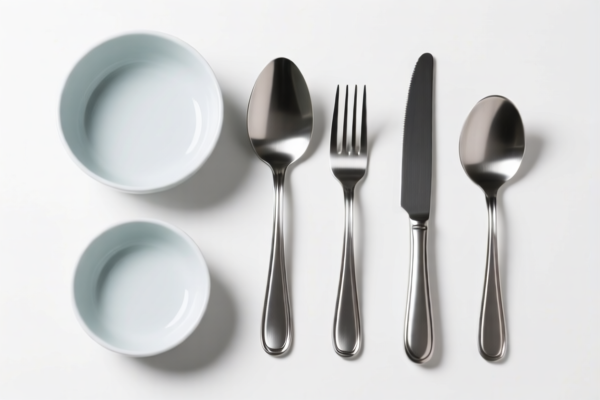
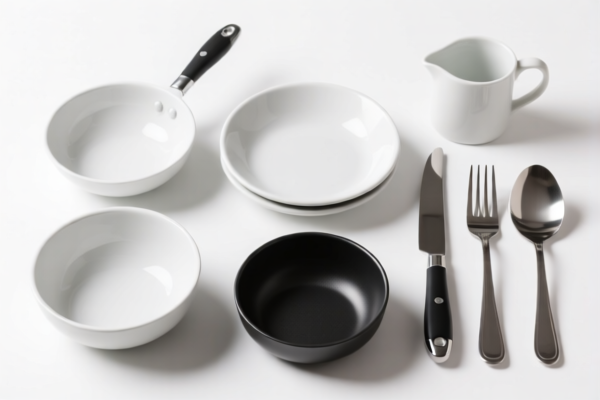
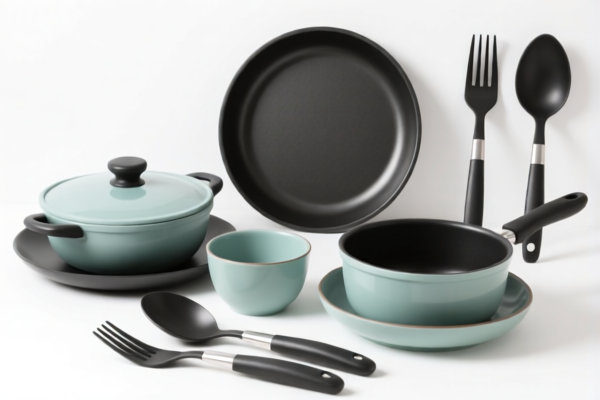
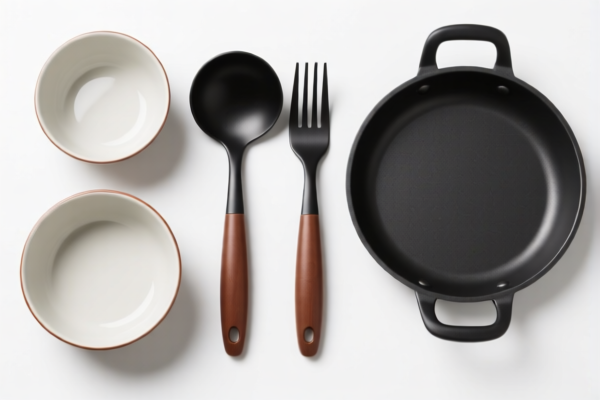
AI Analysis
🍳 Cookware Set (Cookware Sets for Kitchen Use)
🌐 HS Code Reference & Customs Clearance Guide | 2026 Latest Tariff Analysis | Professional Clearance Strategy
📌 1. Product Definition & Classification: Do You Really Understand “Cookware Sets”?
Cookware sets are essential kitchen tools used for cooking, frying, boiling, and stewing. In international trade, they are categorized by material and completeness (set vs. individual items). The Harmonized System (HS) distinguishes between:
- Wooden Cookware Sets: Includes spatulas, spoons, ladles, and other utensils made of wood.
- Metal (Stainless Steel/Iron) Cookware Sets: Includes pots, pans, lids, and other metal cooking vessels.
- Ceramic/Porcelain Cookware Sets: Includes dishes, bowls, or casserole dishes made of ceramic or porcelain.
⚠️ Key Distinction Points:
- Material matters: Wood, Metal, Ceramic, and Porcelain have different HS codes and tax rates.
- Set vs. Single Item: A "set" (multiple items packaged together for retail sale) is classified differently than individual items.
- 122 Clause Tariffs: Many of these items are subject to additional tariffs under Section 122 of the U.S. Trade Act.
📦 2. HS Code Classification Details (2026 Latest Tariff Authority Reference)
| HS Code | Product Description | Applicable Scenario | Material | Contains 122 Clause Tariff? |
|---|---|---|---|---|
4419.90.11.00 |
Wooden Table or Kitchen Ware | Wooden spatulas, spoons, cutting boards sold as a set | Wood | ✅ Yes (10%) |
4419.90.91.00 |
Other Wooden Table or Kitchen Ware | Other wooden utensils not classified in 4419.90.11 | Wood | ✅ Yes (10%) |
8215.10.00.00 |
Tableware and Kitchenware of Base Metal | Metal spoons, forks, knives, ladles sold as a set | Base Metal (e.g., Stainless Steel) | ✅ Yes (10%) |
6911.10.35.10 |
Tableware and Kitchenware of Porcelain | Ceramic or porcelain bowls, plates, serving dishes | Ceramic/Porcelain | ✅ Yes (10%) |
8215.20.00.00 |
Tableware and Kitchenware of Base Metal | Metal pots, pans, cooking sets sold as a set | Base Metal (e.g., Cast Iron, Stainless Steel) | ✅ Yes (10%) |
🔍 Key Reminders:
- Wooden items fall under Chapter 44. If it’s a set of wooden utensils, use 4419.90.11.00. If it’s other wooden kitchen ware, use 4419.90.91.00.
- Metal items fall under Chapter 82. If it’s cutlery (spoons, forks, knives), use 8215.10.00.00. If it’s cooking pots/pans, use 8215.20.00.00.
- Ceramic items fall under Chapter 69. Porcelain tableware/kitchenware is classified under 6911.10.35.10.
- All listed HS Codes above are subject to the 122 Clause Tariff (10%), which is added on top of base and additional tariffs.
💰 3. 2026 Latest Tariff Rate Breakdown (Including Base, Additional, and Section 122 Tariffs)
✅ Applicable Country: United States (US)
✅ Origin: China (CN)
✅ Effective Date: Current (as per 2026 tariff schedule)
🎯 1. 4419.90.11.00 —— Wooden Table or Kitchen Ware (Set)
| Item | Content |
|---|---|
| Base Tariff | 5.3% |
| Additional Tariff | 0.0% |
| Section 122 Tariff | 10.0% |
| Total Tariff Rate | 15.3% |
| Tax Calculation | CIF Value × 15.3% |
| De Minimis Exemption | ❌ Not Applicable (Subject to additional tariffs) |
| Legal Basis Path | Section 122: 10% → Base: 5.3% |
📌 Explanation:
- This category applies to wooden utensils sold as a set (e.g., a set of wooden spoons and spatulas).
- The total tariff is 15.3%, which is relatively moderate compared to metal and ceramic sets.
- The Section 122 Tariff (10%) is mandatory for Chinese-origin goods.
🎯 2. 4419.90.91.00 —— Other Wooden Table or Kitchen Ware
| Item | Content |
|---|---|
| Base Tariff | 3.2% |
| Additional Tariff | 7.5% |
| Section 122 Tariff | 10.0% |
| Total Tariff Rate | 20.7% |
| Tax Calculation | CIF Value × 20.7% |
| De Minimis Exemption | ❌ Not Applicable |
| Legal Basis Path | Section 122: 10% → Additional: 7.5% → Base: 3.2% |
📌 Note:
- This applies to wooden kitchen ware not classified as a utensil set (e.g., wooden cutting boards, rolling pins).
- The total tariff is 20.7%, higher than the utensil set due to the 7.5% Additional Tariff.
🎯 3. 8215.10.00.00 —— Tableware and Kitchenware of Base Metal (Cutlery Set)
| Item | Content |
|---|---|
| Base Tariff | Depends on the specific metal article in the set |
| Additional Tariff | 7.5% |
| Section 122 Tariff | 10.0% |
| Total Tariff Rate | Base Rate + 17.5% |
| Tax Calculation | CIF Value × (Base Rate + 17.5%) |
| De Minimis Exemption | ❌ Not Applicable |
| Legal Basis Path | Section 122: 10% → Additional: 7.5% → Base: Varies |
📌 Note:
- This applies to metal cutlery sets (spoons, forks, knives).
- The Base Tariff varies depending on the specific metal item in the set.
- The Additional Tariff (7.5%) and Section 122 Tariff (10%) are fixed, making the total Base Rate + 17.5%.
🎯 4. 6911.10.35.10 —— Tableware and Kitchenware of Porcelain
| Item | Content |
|---|---|
| Base Tariff | 26.0% |
| Additional Tariff | 7.5% |
| Section 122 Tariff | 10.0% |
| Total Tariff Rate | 43.5% |
| Tax Calculation | CIF Value × 43.5% |
| De Minimis Exemption | ❌ Not Applicable |
| Legal Basis Path | Section 122: 10% → Additional: 7.5% → Base: 26.0% |
📌 Note:
- This applies to porcelain or ceramic tableware/kitchenware.
- The total tariff is 43.5%, one of the highest among cookware sets due to the high Base Tariff (26.0%).
🎯 5. 8215.20.00.00 —— Tableware and Kitchenware of Base Metal (Cooking Set)
| Item | Content |
|---|---|
| Base Tariff | Depends on the specific metal article in the set |
| Additional Tariff | 25.0% |
| Section 122 Tariff | 10.0% |
| Total Tariff Rate | Base Rate + 35.0% |
| Tax Calculation | CIF Value × (Base Rate + 35.0%) |
| De Minimis Exemption | ❌ Not Applicable |
| Legal Basis Path | Section 122: 10% → Additional: 25.0% → Base: Varies |
📌 Note:
- This applies to metal cooking pots and pans sold as a set.
- The Additional Tariff (25.0%) is significantly higher than for cutlery, reflecting the higher duty on cooking vessels.
- The total tariff is Base Rate + 35.0%, which can be very high depending on the base rate.
🛠️ 4. Customs Clearance Practical Advice (Real-World Pitfall Guide)
✅ 1. Preparation Checklist (All Required)
| Document | Mandatory | Notes |
|---|---|---|
| ✅ Product Specification Sheet | ✔️ | Include material, dimensions, weight, and set composition |
| ✅ Product Photos (Including Labels) | ✔️ | Clear images showing the set and individual items |
| ✅ Commercial Invoice | ✔️ | Clearly state "Cookware Set" and material (Wood/Metal/Ceramic) |
| ✅ Packing List | ✔️ | Detail the contents of each set to avoid misclassification |
| ✅ Certificate of Origin (CO) | ✔️ | If not from China, may qualify for lower tariffs |
| ✅ Material Declaration | ✔️ | Explicitly state if the item is 100% wood, stainless steel, or ceramic |
✅ 2. Declaration Tips (Key Mnemonics)
🔥 “Material First, Set Second, 122 Clause Always Applies!”
| Scenario | Correct Declaration | Incorrect Practice |
|---|---|---|
| Wooden Spoon Set | 4419.90.11.00 |
Misclassified as 4419.90.91.00 → Higher tax |
| Metal Pot Set | 8215.20.00.00 |
Misclassified as 8215.10.00.00 → Lower tax risk, but may trigger audit |
| Ceramic Bowl Set | 6911.10.35.10 |
Misclassified as 6911.10.35.20 → Different base rate |
| Mixed Material Set | Primary Material Rules | Declare as mixed → Potential reclassification and penalties |
✅ 3. Special Cases Handling
| Scenario | Handling Advice |
|---|---|
| OEM Custom Cookware Sets | Provide design sketches and material specs to avoid misclassification |
| Set with Non-Cookware Items (e.g., Aprons) | Declare only the cookware items; exclude non-cookware to avoid higher tariffs |
| Cookware with Non-Metal Handles | If the handle is the primary feature, it may affect classification; provide detailed specs |
| Cookware for Medical/Catering Use | If for specialized use, provide documentation to potentially qualify for exemptions (rare) |
🌍 5. Global Market Comparison for Cookware Sets (2026 Latest)
| Country/Region | Recommended HS Code | Tariff Rate (China Origin) | Certification Requirements | Notes |
|---|---|---|---|---|
| 🇺🇸 USA | 4419.90.11.00 (Wood) |
15.3% | FDA (if food contact) | 122 Clause applies to all |
| 🇺🇸 USA | 8215.20.00.00 (Metal) |
Base + 35.0% | FDA | High additional tariff |
| 🇺🇸 USA | 6911.10.35.10 (Ceramic) |
43.5% | FDA | Highest base rate |
| 🇨🇳 China | 4419.90.11.00 |
5.3% | CCC | No additional tariffs |
| 🇪🇺 EU | 4419.90.11.00 |
0-2% (depending on origin) | LFGB (Food Safety) | Low tariffs if from ASEAN |
| 🇬🇧 UK | 4419.90.11.00 |
0-2% | LFGB | Post-Brexit tariffs apply |
| 🇦🇺 Australia | 4419.90.11.00 |
5% | SAA Certification | Standard import duties |
📌 Conclusion:
- The USA imposes the highest tariffs on cookware sets due to the 122 Clause and additional tariffs.
- Wooden sets (15.3%) are the most cost-effective for export to the USA.
- Ceramic sets (43.5%) are the most expensive to import into the USA.
- Metal cooking sets (Base + 35%) are also costly, especially for stainless steel or cast iron.
📌 6. Common Mistakes & Pitfall Guide (Lessons Learned)
❌ Mistake 1: Declaring a metal pot set as wooden utensils
👉 Consequence: Customs audit, penalties, and back taxes.
❌ Mistake 2: Ignoring the Section 122 Tariff
👉 Consequence: Underpayment of duties, leading to fines and delays.
❌ Mistake 3: Misclassifying ceramic sets as metal sets
👉 Consequence: Incorrect tariff application, potential reclassification and penalties.
❌ Mistake 4: Using vague descriptions like "Kitchen Tools"
👉 Consequence: Customs may reclassify under a higher tariff category.
✅ Correct Approach:
“Wooden Spatula and Spoon Set, 5-piece, Made of Bamboo, FDA Compliant, HS Code: 4419.90.11.00”
🎯 7. Conclusion: Professional Declaration, Save Time, Reduce Costs!
🎯 Remember the Mnemonic:
🔹 “Material First, Set Second, 122 Clause Always Applies!”
🔹 “HS Code Determines Tax, 10% Extra for 122, Wood is Cheapest, Ceramic is Most Expensive!”
📌 Tip:
If your cookware sets are originating from Vietnam, Thailand, or Malaysia, you may qualify for preferential tariffs under trade agreements.
It is recommended to apply for a Pre-Ruling from U.S. Customs and Border Protection (CBP) to avoid clearance risks.
📣 Take Action Now:
📞 Contact a Professional Customs Broker + Provide Product Specs + Apply for HS Code Pre-Ruling
🚀 Ensure your cookware sets clear customs smoothly, maximize profits, and expand your global market!
✨ Professional Clearance Starts with Accurate Classification!
💼 Every Dollar of Your Cost Deserves Precise Calculation!
Customer Reviews
About HS Code Classification
The Harmonized System (HS) is an internationally standardized nomenclature developed by the World Customs Organization (WCO) to classify traded products. Over 200 countries use the HS system as the basis for customs tariffs, trade statistics, and import/export regulations.
Each HS code follows a hierarchical structure:
- Chapter (2 digits) — Broad category of goods (e.g., Chapter 84: Machinery and Mechanical Appliances)
- Heading (4 digits) — More specific grouping within the chapter
- Subheading (6 digits) — Internationally standardized breakdown, used by all WCO member countries
- National subdivisions (8-10 digits) — Country-specific extensions for further classification, such as US HTSUS 10-digit codes
Correct HS code classification is essential for smooth customs clearance, accurate duty payment, and compliance with trade regulations. Misclassification can lead to customs delays, overpayment of duties, or penalties.
When importing from CN to US, the applicable tariff rates may include:
- Most-Favored-Nation (MFN) rate — The standard duty rate applied to WTO members
- General rate — Applied to countries without trade agreements
- Trade remedy duties — Additional tariffs such as Section 301 (anti-dumping), Section 232 (national security), or countervailing duties
The information provided on this page is for reference purposes only. For official classification, please consult with your local customs authority or a licensed customs broker.