Cookware and Peeler
CN → US| HS Code | Tariff Rate | Origin | Destination | Doc |
|---|---|---|---|---|
| 7615107155 | 63.1% | CN | US | Official Doc |
| 7615109100 | 70.6% | CN | US | Official Doc |
| 8210000000 | 38.7% | CN | US | Official Doc |
| 8210000000 | 38.7% | CN | US | Official Doc |
| 7323930045 | 62.0% | CN | US | Official Doc |
| 7323997000 | 65.3% | CN | US | Official Doc |
Product Images
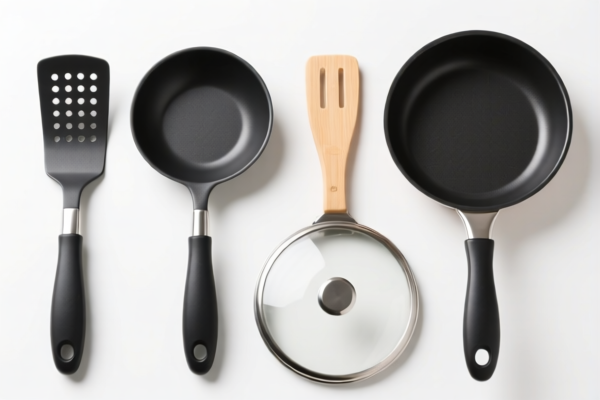
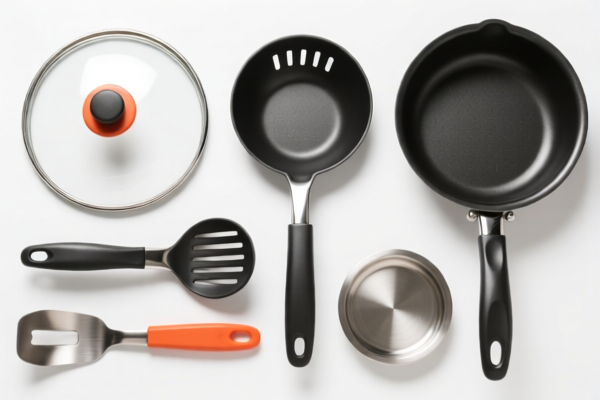
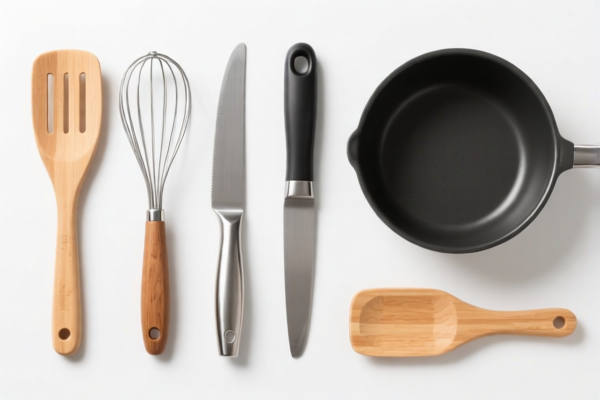
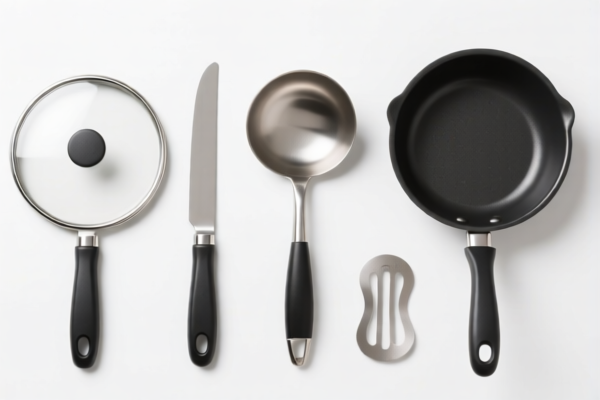
AI Analysis
🍳 Cookware & 🥒 Peeler (Hand-operated Appliances & Aluminum/Iron Articles)
🌐 HS Code Reference & Customs Clearance Guide | 2026 Latest Tariff Analysis | Professional Strategy
📌 I. Product Definition & Classification: Understanding the Distinction
In international trade, "Cookware and Peeler" is not a single uniform category. It is split based on mechanical complexity, material, and weight.
1. Hand-operated Mechanical Appliances (≤ 10kg): * Includes manual food processors, mincers, peelers, and graters. * Key criteria: Must be purely mechanical (no motor), weighing 10 kg or less, used for preparing/serving food. * Correct Classification: Generally falls under 8210.
2. Metal Household Articles (Aluminum or Iron/Steel): * Includes pots, pans, kitchenware, and scouring pads made of base metals. * These are static articles or simple metal goods, not complex mechanical appliances. * Correct Classification: Depends on material (Aluminum 7615 or Iron/Steel 7323).
⚠️ Key Distinction Point:
- If it is a manual tool (like a potato peeler, manual chopper, or hand-crank grater) → Look at 8210.
- If it is a container/cooking vessel (pot, pan, skillet) or cleaning tool (scouring pad) made of metal → Look at 7615 (Aluminum) or 7323 (Iron/Steel).
- Material Matters: Aluminum attracts specific surcharges; Stainless Steel may have different base rates but still faces surcharges.
📦 II. HS Code Classification Details (2026 Latest Tariff Authority Comparison)
Based strictly on the provided data, here are the specific codes and their descriptions:
| HS Code | Product Description | Material Type | Key Characteristics |
|---|---|---|---|
| 8210.00.00.00 | Hand-operated mechanical appliances, weighing 10 kg or less, used in food/drink prep, and parts thereof | Base Metal | Manual tools: Peelers, mincers, grinders, hand-crank processors. Weight ≤10kg. |
| 7615.10.71.55 | Table, kitchen or household articles of aluminum; cooking and kitchen ware | Aluminum | Non-enameled/glazed cookware without non-stick interior finishes. |
| 7615.10.91.00 | Table, kitchen or household articles of aluminum; other | Aluminum | Other aluminum household/kitchen items not specified in 7615.10.71.55. |
| 7323.93.00.45 | Table, kitchen articles of iron/steel; of stainless steel | Stainless Steel | Stainless steel cooking ware (non-enameled, non-stick). |
| 7323.99.70.00 | Table, kitchen articles of iron/steel; other | Iron/Steel | Cookware made of iron/steel (not stainless), not coated with precious metal. |
🔍 Critical Reminder:
- Peelers (manual) are primarily classified under 8210.00.00.00.
- Pots/Pans are classified under 7615 (if Aluminum) or 7323 (if Iron/Steel/Stainless).
- Do NOT classify a manual peeler as "aluminum cookware" just because it's made of metal. The function (mechanical appliance vs. container) dictates the code.
💰 III. 2026 Latest Tariff Rate Breakdown (Including Surcharges & Policy Add-ons)
✅ Applicable Country: United States (US)
✅ Origin: China (CN)
✅ 生效时间: 2025年11月10日起 (Nov 10, 2025 onwards)
🎯 1. 8210.00.00.00 —— Hand-operated Mechanical Appliances (e.g., Manual Peelers, Choppers)
| Item | Content |
|---|---|
| Base Tariff | 3.7% |
| Section 301 Surcharge | 0.0% (Note: No additional 25% listed in data) |
| Total Tax Rate | 3.7% |
| Tax Calculation | CIF Value × 3.7% |
| De Minimis Eligibility | ✅ Potentially Eligible (Check current $800 threshold rules) |
| Legal Path | HTSUS:8210.00.00.00 |
📌 Explanation:
- This is the most favorable code for manual kitchen tools like peelers.
- Low Total Tax: Only 3.7%.
- No Major Surcharge: Unlike aluminum/steel cookware, manual appliances do not seem to trigger the "50% surcharge" listed for base metal articles in this dataset.
🎯 2. 7615.10.71.55 —— Aluminum Cookware (Non-Enamel, Non-Stick)
| Item | Content |
|---|---|
| Base Tariff | 3.1% |
| Section 301 Surcharge | 0.0% |
| Aluminum Surcharge | 50.0% ("Steel, Aluminum, Copper Products Surcharge") |
| Total Tax Rate | 53.1% |
| Tax Calculation | CIF Value × 53.1% |
| De Minimis Eligibility | ❌ Denied (High tax rate usually excludes de minimis benefits in practice) |
| Legal Path | IEEPA:AluminumSurcharge → HTSUS:7615.10.71.55 |
📌 Explanation:
- Aluminum products face a heavy 50% surcharge on top of the base rate.
- High Cost: 53.1% is a significant barrier.
- Material Specific: Applies only to aluminum pots, pans, and kitchen articles.
🎯 3. 7615.10.91.00 —— Other Aluminum Household Articles
| Item | Content |
|---|---|
| Base Tariff | 3.1% |
| Section 301 Surcharge | 7.5% |
| Aluminum Surcharge | 50.0% |
| Total Tax Rate | 60.6% |
| Tax Calculation | CIF Value × 60.6% |
| De Minimis Eligibility | ❌ Denied |
| Legal Path | IEEPA:AluminumSurcharge → HTSUS:7615.10.91.00 |
📌 Explanation:
- Even higher than the specific cookware code due to an additional 7.5% Section 301 tariff.
- Avoid if possible: Unless the product is strictly defined as "other aluminum household items," this is the most expensive category.
🎯 4. 7323.93.00.45 —— Stainless Steel Cooking Ware
| Item | Content |
|---|---|
| Base Tariff | 0.0% |
| Section 301 Surcharge | 0.0% |
| Steel Surcharge | 50.0% ("Steel, Aluminum, Copper Products Surcharge") |
| Total Tax Rate | 50.0% |
| Tax Calculation | CIF Value × 50.0% |
| De Minimis Eligibility | ❌ Denied |
| Legal Path | IEEPA:SteelSurcharge → HTSUS:7323.93.00.45 |
📌 Explanation:
- While the base tariff is 0%, the 50% steel surcharge makes it equally expensive as aluminum.
- Stainless Steel is clearly categorized here. Do not confuse with carbon steel or other iron alloys.
🎯 5. 7323.99.70.00 —— Other Iron/Steel Cookware (Non-Stainless)
| Item | Content |
|---|---|
| Base Tariff | 5.3% |
| Section 301 Surcharge | 0.0% |
| Steel Surcharge | 50.0% |
| Total Tax Rate | 55.3% |
| Tax Calculation | CIF Value × 55.3% |
| De Minimis Eligibility | ❌ Denied |
| Legal Path | IEEPA:SteelSurcharge → HTSUS:7323.99.70.00 |
📌 Explanation:
- Carbon steel or non-stainless iron cookware falls here.
- Base Rate Higher: 5.3% base + 50% surcharge = 55.3%.
- More Expensive than Stainless Steel (which has 0% base).
🛠️ IV. Customs Clearance Practical Advice (Battle-Tested Pitfall Guide)
✅ 1. Documentation Checklist (Mandatory)
| Document | Required | Notes |
|---|---|---|
| ✅ Product Specifications | ✔️ | Clearly state: "Manual," "No Motor," "Weight ≤10kg" for HS 8210. |
| ✅ Material Declaration | ✔️ | Specify: "Aluminum," "Stainless Steel," or "Carbon Steel." Critical for surcharges. |
| ✅ Product Photos | ✔️ | Show the item in use or static. Proves it’s a peeler (8210) vs. a pot (7323/7615). |
| ✅ Commercial Invoice | ✔️ | Must match HS Code description exactly. |
| ✅ Packing List | ✔️ | Weight must be ≤10kg for HS 8210 eligibility. |
✅ 2. Declaration Tips (Key Mantra)
🔥 “Manual is Cheap, Metal is Expensive! Don’t Call a Peeler a Pot!”
| Scenario | Correct HS Code | Wrong Code | Consequence |
|---|---|---|---|
| Manual Potato Peeler | 8210.00.00.00 (3.7%) |
7615.10.91.00 (60.6%) |
Overpay by ~57%! |
| Aluminum Pot | 7615.10.71.55 (53.1%) |
8210.00.00.00 (3.7%) |
Under-declared → Fine + Back Taxes |
| Stainless Steel Pan | 7323.93.00.45 (50.0%) |
7323.99.70.00 (55.3%) |
Overpay by 5.3% |
| Electric Food Processor | Not in Data | 8210.00.00.00 |
Wrong! Electric items are not "hand-operated mechanical" |
📌 Note on "Hand-Operated":
- If the peeler/chopper has a spring, blade, or lever mechanism operated by hand → 8210.
- If it is just a metal scoop or pot → 7323/7615.
✅ 3. Special Cases
| Case | Advice |
|---|---|
| Peeler with Wooden Handle | Still 8210 if the working part is metal/mechanical. Ensure weight ≤10kg. |
| Set of Pots and Peelers | Declare Separately! Do not mix HS 8210 and HS 7615/7323 in one line item. Mixed shipments cause delays and misclassification. |
| Non-Stick Aluminum Pan | If it has a non-stick interior, it may NOT qualify for 7615.10.71.55. Check if it falls under a different subheading (not in provided data, but likely higher tax). |
| Stainless Steel vs. Iron | "Stainless Steel" is a specific material code (7323.93). "Iron/Steel" (carbon) is (7323.99). Do not use the cheaper stainless code for carbon steel. |
🌍 V. Global Market Comparison (2026 Latest)
| Country/Region | Recommended HS Code | Tariff (China Origin) | Notes |
|---|---|---|---|
| 🇺🇸 USA | 8210.00.00.00 |
3.7% | Best for manual tools. |
| 🇺🇸 USA | 7615/7323 |
50%-60.6% | Heavy surcharges on base metal cookware. |
| 🇪🇺 EU | 8210 / 7323 / 7615 |
Varies | Generally lower base rates, but VAT applies. No US-style 50% surcharge. |
| 🇨🇳 China | 8210 / 7323 / 7615 |
Varies | Import duties apply. Check for anti-dumping duties on specific steel/aluminum products. |
📌 Conclusion:
- USA is the most punitive for metal cookware due to the 50% base metal surcharge.
- Manual tools (8210) are the only low-tariff option (3.7%).
- Strategy: If you can market a product as a "manual mechanical appliance" (e.g., a lever-based peeler/chopper), aim for 8210. If it’s a pot/pan, expect 50%+ tax.
📌 VI. Common Mistakes & Pitfalls (Lessons Learned)
❌ Mistake 1: Classifying a Stainless Steel Pot as Aluminum Cookware to save tax.
👉 Result: Customs inspection reveals material → Penalty + 7.5% difference back-payment.
❌ Mistake 2: Classifying an Electric Chopper as Hand-Operated Appliance (8210).
👉 Result: Rejected by Customs. Electric appliances have different codes (e.g., 8509) and potentially higher/different tariffs.
❌ Mistake 3: Combining Manual Peelers (3.7%) and Aluminum Pots (53.1%) in one shipment line.
👉 Result: Customs may classify the entire shipment at the higher rate or demand detailed breakdown → Delay.
❌ Mistake 4: Ignoring the 10kg Weight Limit for HS 8210.
👉 Result: If the package weighs 10.1kg, it may not qualify for 8210 → Higher Tax.
✅ Correct Action:
"Manual Potato Peeler, Stainless Steel Blade, Plastic Handle, Net Weight 0.2kg" → HS 8210.00.00.00
"Aluminum Non-Stick Saucepan, 24cm Diameter" → HS 7615.10.71.55
🎯 VII. Conclusion: Professional Declaration, Save Costs!
🎯 Remember the Mantra:
🔹 "Manual Tool = 3.7% (8210)"
🔹 "Metal Pot/Pan = 50%+ (7615/7323)"
🔹 "Material Matters: Aluminum & Steel get penalized."
🔹 "Never Mix Codes in One Line!"
📌 Pro Tip:
For peelers and manual kitchen gadgets, emphasize "Hand-Operated," "Mechanical," and "≤10kg" in your documentation to secure the 3.7% rate.
For cookware, budget for the 50% surcharge regardless of whether it’s aluminum or steel.
📣 Immediate Action:
📞 Consult a Customs Broker for pre-classification of mixed shipments.
📋 Label Clearly: "Manual Tool" vs. "Cookware."
🚀 Optimize Supply Chain: Consider sourcing non-metal manual tools (plastic/wood handles) if possible, though HS 8210 covers base metal parts too.
✨ Professional Customs Clearance Starts with Precise Classification!
💼 Your Cost Margin Depends on the First 8 Digits of the HS Code!
Customer Reviews
About HS Code Classification
The Harmonized System (HS) is an internationally standardized nomenclature developed by the World Customs Organization (WCO) to classify traded products. Over 200 countries use the HS system as the basis for customs tariffs, trade statistics, and import/export regulations.
Each HS code follows a hierarchical structure:
- Chapter (2 digits) — Broad category of goods (e.g., Chapter 84: Machinery and Mechanical Appliances)
- Heading (4 digits) — More specific grouping within the chapter
- Subheading (6 digits) — Internationally standardized breakdown, used by all WCO member countries
- National subdivisions (8-10 digits) — Country-specific extensions for further classification, such as US HTSUS 10-digit codes
Correct HS code classification is essential for smooth customs clearance, accurate duty payment, and compliance with trade regulations. Misclassification can lead to customs delays, overpayment of duties, or penalties.
When importing from CN to US, the applicable tariff rates may include:
- Most-Favored-Nation (MFN) rate — The standard duty rate applied to WTO members
- General rate — Applied to countries without trade agreements
- Trade remedy duties — Additional tariffs such as Section 301 (anti-dumping), Section 232 (national security), or countervailing duties
The information provided on this page is for reference purposes only. For official classification, please consult with your local customs authority or a licensed customs broker.