Coolant Hose
CN → US| HS Code | Tariff Rate | Origin | Destination | Doc |
|---|---|---|---|---|
| 4009110000 | 37.5% | CN | US | Official Doc |
| 3917320020 | 38.1% | CN | US | Official Doc |
| 8708998105 | 37.5% | CN | US | Official Doc |
| 8708998180 | 12.5% | CN | US | Official Doc |
| 4009120050 | 20.0% | CN | US | Official Doc |
Product Images
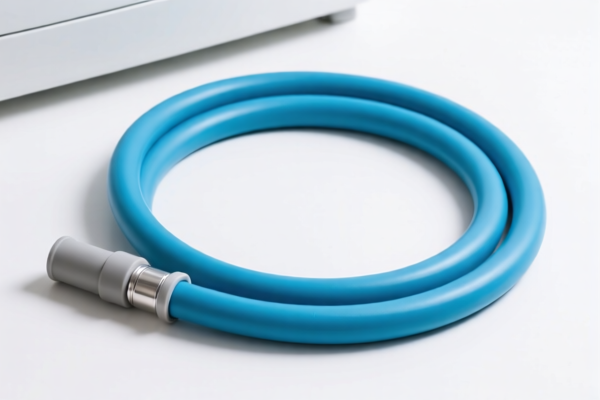
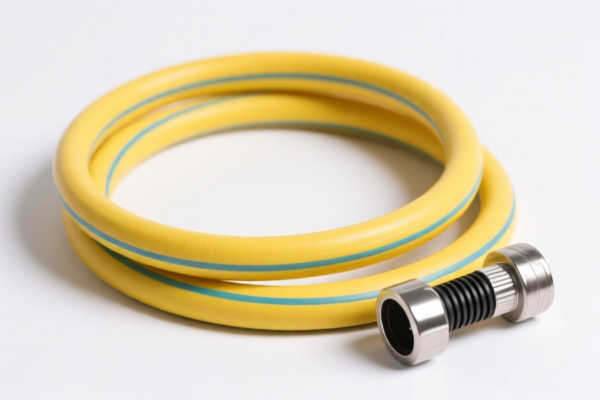
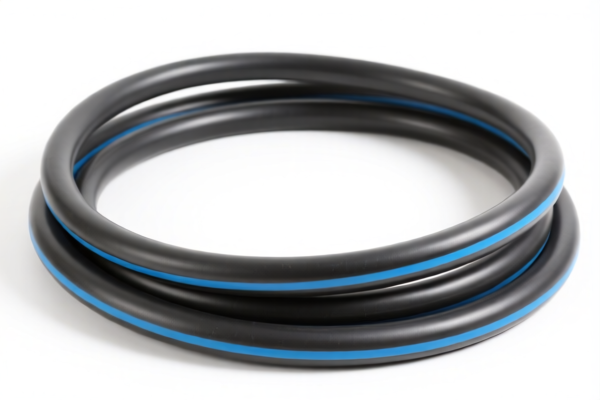
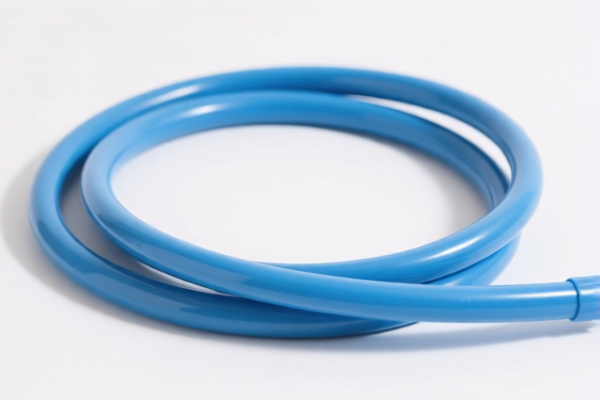
AI Analysis
🚗 Coolant Hose: The Vital Vein of Your Engine | Complete HS Code & Taxation Guide
🌐 Global Trade & Customs Clearance | 2026 Tax Regime Analysis | Professional通关 Strategy
📌 I. Product Definition & Classification: What is a "Coolant Hose"?
A Coolant Hose is a critical automotive component designed to transfer engine coolant (antifreeze/water mixture) to prevent overheating. In international trade, its classification depends heavily on material composition and specific function.
It is generally categorized into two main streams: 1. Rubber/Vulcanized Hoses: Flexible, high-pressure tubes made of synthetic rubber (often reinforced), typically for high-heat zones. 2. Plastic Polymer Hoses: Made of materials like Polyethylene (PE) or other plastics, often used for lower-pressure transmission lines. 3. Automotive Spare Parts: Generic hoses fitted to specific vehicle models.
⚠️ Key Classification Logic:
- If it is Vulcanized Rubber (with or without fittings) → Likely 4009.xx or 8708.99.
- If it is Plastic (Polyethylene/Thermoplastic) → Likely 3917.xx.
- If it is a Specific Auto Part (not general rubber/plastic pipe) → Likely 8708.99.
📦 II. HS Code Classification Details (Based on Provided Data)
| HS Code | Product Description | Material & Form | Tax Rate |
|---|---|---|---|
| 4009.11.00.00 | Vulcanized Rubber Hose (Soft, no fittings specified) | Rubber/Composite material. Classified as vulcanized rubber tubes. | 37.5% |
| 3917.32.00.20 | Plastic Coolant Hose (PE/Polymer) | Material inferred as Polyethylene (PE). Used for coolant transmission. Plastic piping. | 38.1% |
| 8708.99.81.05 | Automotive Brake/Coolant Hose | Inferred material: Rubber or Plastic. Function matches "Brake Hose" category (generic auto hose). | 37.5% |
| 8708.99.81.80 | Coolant System Part | Automotive cooling system spare part. Material: Rubber/Plastic. | 12.5% |
| 4009.12.00.50 | Vulcanized Rubber Hose with Accessories | Rubber hose with fittings/attachments. Specific subclass of vulcanized rubber. | 20.0% |
🔍 Critical Observation:
- 8708.99.81.80 offers the lowest duty (12.5%) but requires the hose to be classified strictly as a "specific automotive spare part" (often requiring proof of fitment to a specific car model). - 3917.32.00.20 is the highest tax (38.1%) for plastic hoses due to the specific plastic tariff line. - 4009.12.00.50 (20.0%) is a sweet spot if your hose has attachments/fittings that qualify for this specific sub-category.
💰 III. 2026 Tax Rate Breakdown (Detailed & Precise)
✅ Scope: Import from China (CN) to US.
✅ Base Duty: 2.5% (Standard)
✅ Additional Measures: Section 301 (25%), Section 232 (where applicable), and Section 122 (10%) (China-specific).
🎯 Scenario A: High-Pressure Rubber Hoses (HS: 4009.11.00.00 & 8708.99.81.05)
- Base Duty: 2.5%
- Section 301 (Add-on): 25.0%
- Section 122 (China Add-on): 10.0%
- Total Tax: 37.5%
- Calculation:
CIF Value × 37.5% - Status: High Risk. This applies to standard vulcanized rubber tubes without specific auto-part claims.
🎯 Scenario B: Plastic Coolant Lines (HS: 3917.32.00.20)
- Base Duty: 3.1%
- Section 301 (Add-on): 25.0%
- Section 122 (China Add-on): 10.0%
- Total Tax: 38.1%
- Calculation:
CIF Value × 38.1% - Status: Highest Risk. Plastic hoses often face the highest combined tariffs.
🎯 Scenario C: Automotive Cooling System Parts (HS: 8708.99.81.80) ⭐ Best Option
- Base Duty: 2.5%
- Section 301 (Add-on): 0.0% (No Section 301 on this specific auto part line!)
- Section 122 (China Add-on): 10.0%
- Total Tax: 12.5%
- Calculation:
CIF Value × 12.5% - Status: Lowest Risk. This is the optimal classification if you can prove the hose is a specific part of an automotive cooling system.
🎯 Scenario D: Rubber Hoses with Attachments (HS: 4009.12.00.50)
- Base Duty: 2.5%
- Section 301 (Add-on): 7.5%
- Section 122 (China Add-on): 10.0%
- Total Tax: 20.0%
- Calculation:
CIF Value × 20.0% - Status: Moderate Risk. A middle-ground option if Section 301 applies at a reduced rate (7.5%) for hoses with specific fittings.
🛠️ IV. Customs Clearance Strategy & Practical Advice
✅ 1. Material Proof is King
- Action: Provide a Material Certificate or Declaration of Composition from your manufacturer.
- Why: To distinguish between Vulcanized Rubber (4009) and Plastic (3917). Misclassifying plastic as rubber can lead to penalties if the material composition doesn't match the HS code.
✅ 2. The "Auto Part" Argument (Target 8708.99.81.80)
- Strategy: If your hoses are molded for a specific car model (e.g., "Ford F-150 Coolant Hose"), argue for 8708.99.81.80.
- Evidence Needed:
- Diagrams showing fitment to specific engine cooling circuits.
- OEM part numbers.
- Statement: "Used exclusively in automotive cooling systems."
- Benefit: Saves ~25.6% in taxes compared to generic rubber hoses!
✅ 3. Section 122 Compliance
- Note: Section 122 is a 10% surcharge specifically targeting Chinese goods in certain categories. It applies to ALL the HS Codes listed above except where exempted.
- Action: Ensure your HS Code declaration explicitly includes the 122 clause to avoid fines for "missing tariff."
✅ 4. Documentation Checklist
| Document | Requirement | Reason |
|---|---|---|
| Commercial Invoice | Must state "Coolant Hose" + Material (Rubber/Plastic) | Determines Base Duty |
| Packing List | Detail dimensions, weight, and quantity | Verifies volume calculations |
| Material Declaration | % of Rubber vs. Plastic vs. Reinforcement | Crucial for 4009 vs. 3917 split |
| Application Letter | "Used for Automotive Cooling System" | Critical for 8708.99.81.80 (12.5% rate) |
| Certificate of Origin | China CO | Triggers Section 301 & 122 |
🌍 V. Global Market Comparison (2026)
| Market | Recommended HS Code | Total Tax (China) | Key Constraint |
|---|---|---|---|
| 🇺🇸 USA | 8708.99.81.80 |
12.5% | Must prove "Auto Part" status |
| 🇺🇸 USA | 3917.32.00.20 |
38.1% | Generic Plastic Hose |
| 🇺🇸 USA | 4009.11.00.00 |
37.5% | Generic Rubber Hose |
| 🇪🇺 EU | 4009 or 3917 |
~0-5% | No Section 301/122 (usually) |
| 🇨🇦 Canada | 8708 |
~0-2.5% | CUSMA agreement benefits |
📌 Conclusion: The US market is the most expensive due to Section 301 (25%) and Section 122 (10%). The only way to survive is to strictly classify as "Automotive Cooling System Parts" (8708.99.81.80) to avoid the 25% surcharge.
📌 VI. Common Pitfalls & Avoidance
❌ Pitfall 1: Calling it a "Pipe" or "Tube" instead of "Coolant Hose".
👉 Consequence: Customs may default to generic 4009 or 3917 with 301 surcharge.
✅ Fix: Use "Coolant Hose" in the description and link it to the Auto Industry.
❌ Pitfall 2: Claiming "Plastic" when it contains significant rubber reinforcement. 👉 Consequence: Misclassification audit, potential 301 penalty. ✅ Fix: Provide a lab report on material composition.
❌ Pitfall 3: Ignoring Section 122. 👉 Consequence: Underpayment of 10% tax + Interest. ✅ Fix: Always include "Section 122: 10%" in tax calculations.
🎯 VII. Final Verdict & Action Plan
🚀 Strategy: Aim for
8708.99.81.80(12.5%) by proving the hose is a dedicated Automotive Cooling System Part.💡 Rule of Thumb: - If it's a generic tube → Expect 37.5% - 38.1%. - If it's a specific car part → Aim for 12.5%. - If it has special fittings → Consider 4009.12.00.50 (20.0%) as a backup.
📞 Next Step: Contact your supplier for a Material Composition Certificate and draft an OEM Fitment List to justify the 8708.99.81.80 classification.
✨ Smart Customs, Smart Business!
💼 Don't let a 25% tariff eat your margin. Classify right, pay less!
Customer Reviews
About HS Code Classification
The Harmonized System (HS) is an internationally standardized nomenclature developed by the World Customs Organization (WCO) to classify traded products. Over 200 countries use the HS system as the basis for customs tariffs, trade statistics, and import/export regulations.
Each HS code follows a hierarchical structure:
- Chapter (2 digits) — Broad category of goods (e.g., Chapter 84: Machinery and Mechanical Appliances)
- Heading (4 digits) — More specific grouping within the chapter
- Subheading (6 digits) — Internationally standardized breakdown, used by all WCO member countries
- National subdivisions (8-10 digits) — Country-specific extensions for further classification, such as US HTSUS 10-digit codes
Correct HS code classification is essential for smooth customs clearance, accurate duty payment, and compliance with trade regulations. Misclassification can lead to customs delays, overpayment of duties, or penalties.
When importing from CN to US, the applicable tariff rates may include:
- Most-Favored-Nation (MFN) rate — The standard duty rate applied to WTO members
- General rate — Applied to countries without trade agreements
- Trade remedy duties — Additional tariffs such as Section 301 (anti-dumping), Section 232 (national security), or countervailing duties
The information provided on this page is for reference purposes only. For official classification, please consult with your local customs authority or a licensed customs broker.