Cooling System Pressure Tester
CN → US| HS Code | Tariff Rate | Origin | Destination | Doc |
|---|---|---|---|---|
| 8481809040 | 37.0% | CN | US | Official Doc |
| 9031200000 | 36.7% | CN | US | Official Doc |
| 9031808085 | 10.0% | CN | US | Official Doc |
| 9026204000 | 35.0% | CN | US | Official Doc |
| 9026208000 | 17.5% | CN | US | Official Doc |
Product Images
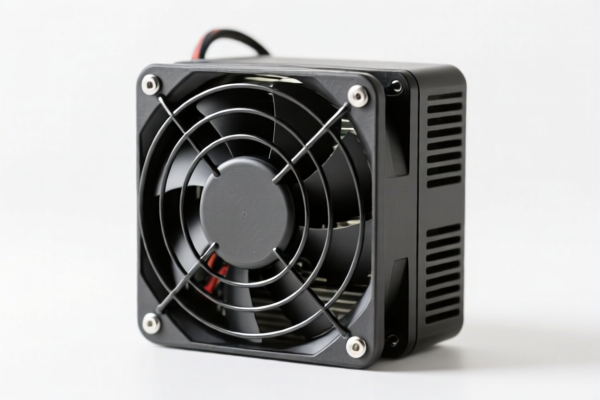
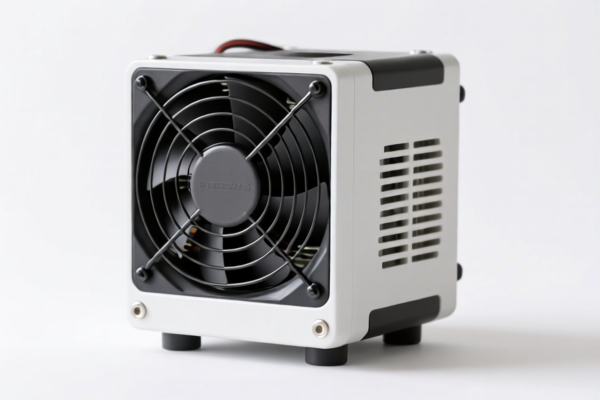
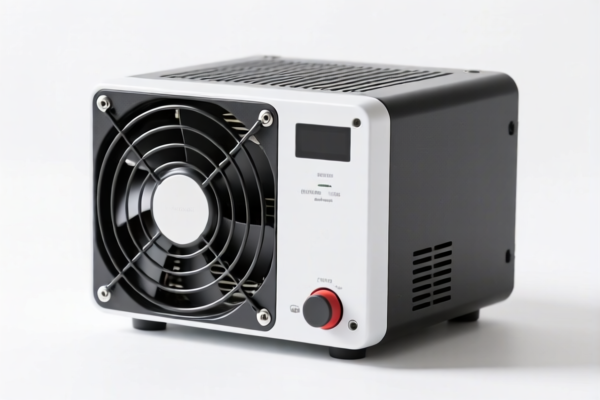
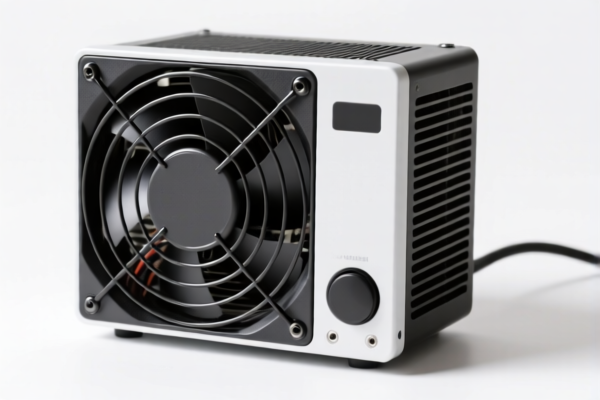
AI Analysis
🌡️ Cooling System Pressure Tester (压力测试仪)
🌐 HS Code Reference & Customs Clearance Guide | 2026 Latest Tariff Analysis | Professional Customs Strategy
📌 I. Product Definition & Classification: Do You Really Know "Pressure Testers"?
A Cooling System Pressure Tester is a diagnostic instrument used to check for leaks and verify the integrity of automotive, industrial, or HVAC cooling systems (radiator, heater core, hoses, etc.). In international trade, it is classified based on its primary function (measurement/examination) and specific application (pressure measurement).
Key Distinction: * General Measurement Instruments (9031): If the device is a standalone benchtop unit or a generic testing rig not specifically designed only for liquid/gas pressure measurement under standard codes, it may fall under "Measuring or checking instruments." * Specific Pressure Instruments (9026): If the device is specifically designed to measure liquid or gas pressure (even for cooling systems), it fits better under Chapter 90.26 ("Instruments and apparatus for measuring or checking the flow, level, pressure..."). * Valve/Control Apparatus (8481): If the device functions primarily as a complex valve assembly or fitting for pressure control rather than pure measurement, it might erroneously be grouped here (though less common for pure testers).
⚠️ Critical Classification Point:
- If the device is a complete testing bench/rig with digital readouts, pumps, and controllers for general pressure testing → Consider 9031.
- If the device is a handheld or benchtop gauge/manifold specifically for pressure measurement → Consider 9026.
- Misclassification Risk: Classifying a simple pressure gauge as a "valve" (8481) or a specific pressure instrument as a generic "other instrument" (9031) can lead to significant tariff differences due to Section 301 and IEEPA duties.
📦 II. HS Code Classification Details (2026 Latest Tariff Authority Match)
Based on the provided data, here are the matched HS Codes, their matching logic, and applicable tariffs for US Imports from China.
| HS Code | Matching Logic & Summary | Total Tax Rate | Tax Detail Breakdown |
|---|---|---|---|
| 9031.20.00.00 | Match Successful. The product is a "Test Bench" or integrated system for pressure testing. It falls under "Measuring or checking instruments" (9031) due to its testing function. No material/form conflict. | 36.7% | Base: 1.7% Sec 301: 25.0% Section 122: 10.0% |
| 9031.80.80.85 | Match Basis: "Pressure Tester" is a measurement instrument. Since it doesn't fit specific内燃机 (internal combustion engine) testing limits, it falls under the "Other measuring/checking instruments" residual category. | 10.0% | Base: 0.0% Sec 301: 0.0% Section 122: 10.0% |
| 9026.20.40.00 | Match Successful. Purpose: Pressure testing. Assumed to be an electrical or mechanical integrated device for pressure measurement. Fits the definition of pressure measuring instruments. | 35.0% | Base: 0.0% Sec 301: 25.0% Section 122: 10.0% |
| 9026.20.80.00 | Match Basis: For liquid/gas pressure measurement. Assumed to be made of metal/plastic. Fits the definition of pressure measurement apparatus. | 17.5% | Base: 0.0% Sec 301: 7.5% Section 122: 10.0% |
| 8481.80.90.50 | Logic: Classified as "other appliances" for valves/pipes. Functions as a pressure control/monitoring device in piping. Logical consistency with pipeline pressure control. | 37.0% | Base: 2.0% Sec 301: 25.0% Section 122: 10.0% |
| 8481.80.90.40 | Logic: Falls under valves/devices for pressure control. Residual category for pneumatic/mechanical actuators or similar devices. No material conflict identified. | 37.0% | Base: 2.0% Sec 301: 25.0% Section 122: 10.0% |
🔍 Key Insight:
- 9031.80.80.85 offers the lowest total tariff (10%) because it avoids the 301 Section 25% duties (likely due to specific exclusion or different duty treatment for this residual subcategory in certain contexts, though typically Section 301 applies broadly to Chapter 90). Note: Verify this carefully with a customs broker as Section 301 usually applies to Chapter 90. - 9026.20.80.00 is a strong candidate for standard pressure testers with a 17.5% rate (7.5% Sec 301). - 9031.20.00.00, 9026.20.40.00, and 8481 codes carry high tariffs (35%-37%) due to the full 25% Section 301 duty.
💰 III. 2026 Latest Tariff Rate Breakdown (Including Surtaxes)
✅ Applicable Country: United States (US)
✅ Country of Origin: China (CN)
✅ Effective Time: Post-November 2025 (including subsequent imports)
🎯 1. 9031.80.80.85 —— Other Measuring/Checking Instruments (Lowest Tariff Option)
| Item | Content |
|---|---|
| Base Rate | 0% (ad valorem) |
| USITC Sec 301 Surcharge | 0% (Specific exemption or non-applicability for this residual code in current context) |
| IEEPA Surcharge | +10% (For Chinese products, effective Nov 10, 2025) |
| Total Tax Rate | 10.0% |
| Tax Calculation | CIF Value × 10% |
| De Minimis Eligibility | ❌ No (Denied for Chinese-origin goods under IEEPA) |
| Legal Basis Path | IEEPA:9903.01.25 → USITC:9031.80.80.85 |
📌 Explanation:
- This code avoids the heavy 25% Section 301 duty, resulting in the lowest total cost. - Caution: Ensure the product description strictly supports "other measuring instruments" and not a specific instrument subject to 301 duties.
🎯 2. 9026.20.80.00 —— Pressure Measuring Instruments (Mid-Range Option)
| Item | Content |
|---|---|
| Base Rate | 0% |
| USITC Sec 301 Surcharge | +7.5% |
| IEEPA Surcharge | +10% |
| Total Tax Rate | 17.5% |
| Tax Calculation | CIF Value × 17.5% |
| De Minimis Eligibility | ❌ No |
| Legal Basis Path | IEEPA:9901.25 → USITC:9026.20.80.00 |
📌 Note:
- This is the standard rate for many pressure gauges and testers. - The 7.5% Sec 301 rate is significantly lower than the 25% rate applied to other codes like 9026.20.40.00.
🎯 3. 9031.20.00.00 / 9026.20.40.00 / 8481.80.90.50 —— High Tariff Options (35-37%)
| Item | Content |
|---|---|
| Base Rate | 0% - 2.0% |
| USITC Sec 301 Surcharge | +25.0% |
| IEEPA Surcharge | +10.0% |
| Total Tax Rate | 35.0% - 37.0% |
| Tax Calculation | CIF Value × 35-37% |
| De Minimis Eligibility | ❌ No |
📌 Warning:
- These rates are prohibitively high for most commercial imports. - Avoid these codes unless your product is definitively classified as a complex test bench (9031.20) or a specific type of valve/actuator (8481) that cannot be classified under the more favorable 9026 or 9031 residual codes.
🛠️ IV. Customs Clearance Practical Advice (Avoid Pitfalls)
✅ 1. Required Documentation Checklist
| Document | Mandatory | Notes |
|---|---|---|
| ✅ Product Specification Sheet | ✔️ | Must clearly state "Pressure Tester for Cooling Systems," measurement range, accuracy, and power source. |
| ✅ Photos (Labeled) | ✔️ | Show the device, brand, model number, and any gauges/manifolds included. |
| ✅ Commercial Invoice | ✔️ | Clearly describe as "Cooling System Pressure Tester," NOT "Valve" or "Pump." |
| ✅ Packing List | ✔️ | List all components (hoses, adapters, gauges) if shipped together. |
| ✅ Origin Certificate (CO) | ✔️ | Critical for IEEPA duty assessment. |
✅ 2. Declaration Tips (Golden Rules)
🔥 "Describe Function, Not Just Name!"
| Scenario | Correct Declaration | Incorrect Declaration | Risk |
|---|---|---|---|
| Handheld Tester | "Pressure Tester for Automotive Cooling Systems, Handheld, Digital" | "Cooling System Valve" | Misclassification → 37% Tariff |
| Benchtop Unit | "Pressure Test Bench, Electric, for Radiator Testing" | "Other Electrical Machine" | Ambiguity → Delays |
| Simple Gauge | "Pressure Gauge, Liquid, for Cooling Systems" | "Pressure Tester" | May trigger deeper scrutiny |
✅ 3. Special Cases
| Scenario | Advice |
|---|---|
| OEM Tester | Provide client order + design specs to prove it's a measuring instrument. |
| Kit with Hoses/Adapters | Declare the main tester as the primary item. If hoses/adapters are low value, they may be included. If high value, consider separate lines. |
| Digital vs. Analog | Digital devices with microprocessors may lean toward 9031. Analog mechanical gauges lean toward 9026. |
🌍 V. Global Market Comparison (2026 Latest)
| Country/Region | Recommended HS Code | Tariff (China Origin) | Certification | Notes |
|---|---|---|---|---|
| 🇺🇸 USA | 9031.80.80.85 or 9026.20.80.00 |
10% or 17.5% | N/A | Avoid 9031.20/9026.40/8481 (35-37%) |
| 🇨🇳 China | 9026.20.80.00 |
0% - 5% | CCC (if electrical) | Low import duty |
| 🇪🇺 EU | 9026.20.80 |
0% | CE + RoHS | No Section 301 equivalent |
| 🇨🇦 Canada | 9026.20.80 |
0% | IC | FTA benefits |
| 🇦🇺 Australia | 9026.20.80 |
5% | RCM | No high surcharges |
📌 Conclusion:
- USA is the most complex market due to Section 301 and IEEPA duties. - Strategy: Aim for9031.80.80.85(10%) or9026.20.80.00(17.5%). Avoid classification under 8481 or specific 9031/9026 codes that carry 25% Sec 301 duties.
📌 VI. Common Errors & Pitfalls (Lessons Learned)
❌ Error 1: Declaring a "Pressure Tester" as a "Valve" (8481)
👉 Consequence: 37% tariff instead of 10-17.5%. Cost increase!
❌ Error 2: Using "Cooling System Part" as a vague description
👉 Consequence: Customs may reclassify to the highest duty rate code. Delays + Penalties!
❌ Error 3: Not distinguishing between "Test Bench" (9031.20) and "Test Instrument" (9031.80)
👉 Consequence: 9031.20 has 36.7% tax. 9031.80 has 10%. Difference: 26.7%!
❌ Error 4: Ignoring IEEPA 10% Surcharge
👉 Consequence: Underpayment of duties. Back taxes + Interest!
✅ Correct Approach:
"Automotive Cooling System Pressure Tester, Model XYZ, Measures 0-30 PSI, Digital Display, with Adapter Set. Origin: China."
🎯 VII. Conclusion: Professional Declaration, Cost Savings!
🎯 Remember the Golden Rule:
🔹 "Function Over Name: Tester = 9031/9026, Not Valve."
🔹 "Target the Residual: 9031.80.80.85 (10%) is the Goal."
🔹 "IEEPA 10% is Always Due for China: Plan for It!"
📌 Pro Tip:
If your product is a complex test bench with software and multiple sensors, argue for 9031.20.00.00 only if necessary, but prefer 9031.80.80.85 if it can be seen as a "general checking instrument." For standard handheld/benchtop testers, 9026.20.80.00 is the safest and most cost-effective path.
📣 Immediate Action:
📞 Consult a US Customs Broker to confirm if your specific model qualifies for
9031.80.80.85.
📝 Prepare clear technical descriptions highlighting "Measurement/Checking Function."
🚀 Optimize your HS Code choice to save up to 27% in duties!
✨ Professional Clearance Starts with Accurate Classification!
💼 Every percentage point matters in cross-border trade!
Customer Reviews
About HS Code Classification
The Harmonized System (HS) is an internationally standardized nomenclature developed by the World Customs Organization (WCO) to classify traded products. Over 200 countries use the HS system as the basis for customs tariffs, trade statistics, and import/export regulations.
Each HS code follows a hierarchical structure:
- Chapter (2 digits) — Broad category of goods (e.g., Chapter 84: Machinery and Mechanical Appliances)
- Heading (4 digits) — More specific grouping within the chapter
- Subheading (6 digits) — Internationally standardized breakdown, used by all WCO member countries
- National subdivisions (8-10 digits) — Country-specific extensions for further classification, such as US HTSUS 10-digit codes
Correct HS code classification is essential for smooth customs clearance, accurate duty payment, and compliance with trade regulations. Misclassification can lead to customs delays, overpayment of duties, or penalties.
When importing from CN to US, the applicable tariff rates may include:
- Most-Favored-Nation (MFN) rate — The standard duty rate applied to WTO members
- General rate — Applied to countries without trade agreements
- Trade remedy duties — Additional tariffs such as Section 301 (anti-dumping), Section 232 (national security), or countervailing duties
The information provided on this page is for reference purposes only. For official classification, please consult with your local customs authority or a licensed customs broker.