Cooling Valve
CN → US| HS Code | Tariff Rate | Origin | Destination | Doc |
|---|---|---|---|---|
| 8481809015 | 37.0% | CN | US | Official Doc |
| 8481809045 | 37.0% | CN | US | Official Doc |
| 8419909580 | 39.0% | CN | US | Official Doc |
| 8419903000 | 35.0% | CN | US | Official Doc |
| 9032810020 | 35.0% | CN | US | Official Doc |
| 9032896060 | 36.7% | CN | US | Official Doc |
Product Images
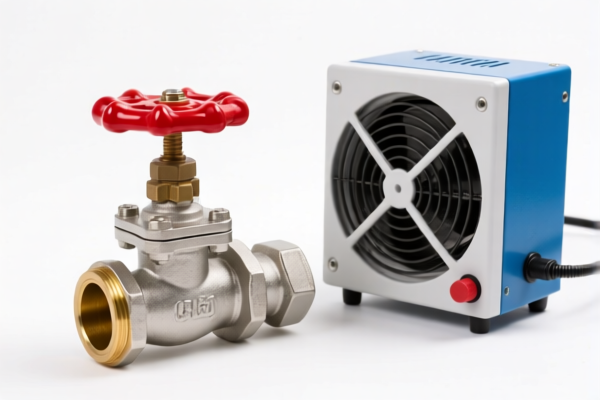
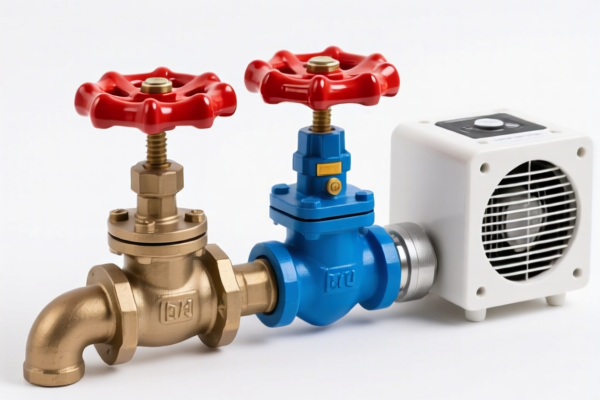
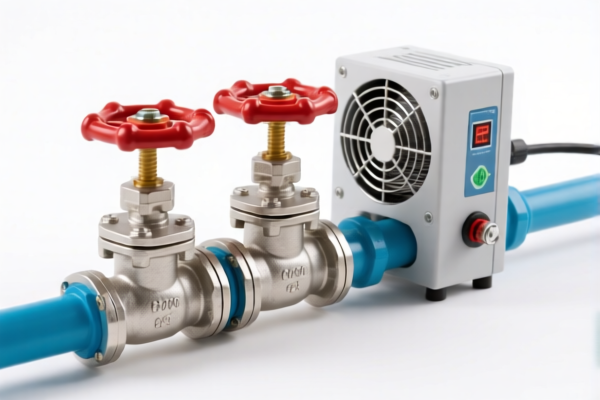
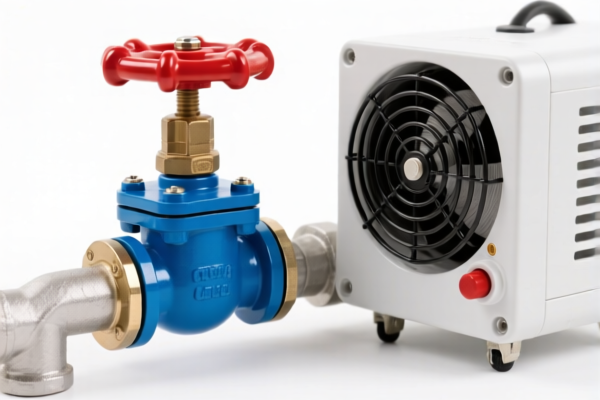
AI Analysis
❄️ Cooling Valves (Hydraulic & Thermostatic Control Valves)
🌐 HS Code Reference & Customs Clearance Guide | 2026 Latest Tariff Analysis | Professional-Level Clearance Strategy
📌 Part I: Product Definition & Classification: Do You Truly Understand "Cooling Valves"?
Cooling valves are critical components in industrial process control, HVAC systems, and fluid management. In international trade, they are not a single entity but are categorized based on their control mechanism and function. Misclassification is the most common cause of customs delays for this product.
The classification hinges on a single question: Is it an automatic instrument that regulates a variable, or is it a manual/semi-automatic appliance that controls flow/pressure?
⚠️ Key Distinction Point:
- If the valve automatically adjusts flow/pressure to maintain a set temperature, level, or variable (using hydraulic/pneumatic sensors) → It is an Instrument/Apparatus (9032or8419parts).
- If the valve is a self-operated regulator relying on direct thermal expansion or simple mechanical feedback to control variables like pressure/flow → It is a Valve/Appliance (8481).
📦 Part II: HS Code Classification Details (2026 Latest Tariff Authority Cross-Reference)
Based on the provided data, "Cooling Valves" fall into four distinct categories depending on their specific operational technology.
| HS Code | Product Description | Application Scenario | Key Feature |
|---|---|---|---|
9032.81.00.20 |
Hydraulic Industrial Process Control Instruments and Apparatus | Industrial cooling systems requiring precise automatic regulation of hydraulic variables | ✅ Automatic Control: Uses hydraulic sensors/instruments to regulate variables automatically. |
9032.89.60.60 |
Other Process Control Instruments: Flow and Liquid Level Control Instruments | General industrial process control where the variable is flow or liquid level, not specifically hydraulic | ✅ Automatic Control: Regulates flow/level, but not classified as "Hydraulic" apparatus. |
8481.80.90.15 |
Self-Operated Regulator Valves (for Temperature, Pressure, Flow, Liquid Level) | Thermostatic cooling valves that operate without external power, using internal thermal elements | ✅ Self-Operated: Mechanical/Thermal actuation, no external electronic controller. |
8481.80.90.45 |
Other Valves with Thermostatic Actuators | Valves equipped with thermostatic heads/actuators for temperature control | ✅ Thermostatic Actuator: Has a specific thermostat component attached. |
🔍 Critical Warning:
- Do not confuse9032(Instruments) with8481(Valves).
- If the valve is part of a larger machine (e.g., a chiller unit) and is merely a "part," it might be classified under8419(Parts of machinery for temperature treatment). See below.
💰 Part III: 2026 Latest Tariff Rate Breakdown (Detailed Tax Clauses)
✅ Applicable Country: United States (US)
✅ Origin: China (CN)
✅ Effective Date: 2025/2026 (Including subsequent imports)
🎯 1. 9032.81.00.20 — Hydraulic Industrial Process Control Instruments
| Item | Content |
|---|---|
| Base Tariff | 0.0% (ad valorem) |
| Additional Tariff (Section 301) | +25.0% |
| Total Tax Rate | 25.0% |
| Tax Calculation | CIF Value × 25% |
| De Minimis Exemption | ❌ Not Eligible (Subject to Section 301 duties) |
| Legal Basis | USITC Harmonized Tariff Schedule: 9032.81.00.20 + Section 301 Footnotes |
📌 Explanation:
- This code applies to high-precision hydraulic instruments that automatically control industrial processes.
- The 0% base rate is offset by a 25% punitive tariff imposed on Chinese goods under Section 301.
- Total Duty: 25%. This is a significant cost factor.
🎯 2. 9032.89.60.60 — Other Process Control Instruments (Flow/Liquid Level)
| Item | Content |
|---|---|
| Base Tariff | 0.0% |
| Additional Tariff (Section 301) | 0.0% |
| Total Tax Rate | 0.0% |
| Tax Calculation | CIF Value × 0% |
| De Minimis Exemption | ❓ Likely Eligible (Check current de minimis threshold, usually < $800 for low-duty items, but verify if Section 301 applies to this specific subheading. Note: Data shows 0% total, implying no 301 duty listed.) |
| Legal Basis | USITC Harmonized Tariff Schedule: 9032.89.60.60 |
📌 Explanation:
- This is the most favorable classification if your cooling valve is a "flow or liquid level control instrument" that does not fit the "Hydraulic" definition.
- Total Duty: 0%. This is a massive savings opportunity.
- Strategic Tip: If your valve controls flow/level and is not strictly "hydraulic apparatus," argue for this classification to save 25%.
🎯 3. 8481.80.90.15 — Self-Operated Regulator Valves
| Item | Content |
|---|---|
| Base Tariff | 2.0% |
| Additional Tariff (Section 301) | +25.0% |
| Total Tax Rate | 27.0% |
| Tax Calculation | CIF Value × 27% |
| De Minimis Exemption | ❌ Not Eligible |
| Legal Basis | USITC Harmonized Tariff Schedule: 8481.80.90.15 + Section 301 Footnotes |
📌 Explanation:
- Applies to self-operated valves (mechanical, no external power) that regulate temperature, pressure, or flow.
- Includes both the base duty (2%) and the Section 301 punitive duty (25%).
- Total Duty: 27%. Higher than the hydraulic instrument classification.
🎯 4. 8481.80.90.45 — Valves with Thermostatic Actuators
| Item | Content |
|---|---|
| Base Tariff | 0.0% |
| Additional Tariff (Section 301) | 0.0% |
| Total Tax Rate | 0.0% |
| Tax Calculation | CIF Value × 0% |
| De Minimis Exemption | ❓ Likely Eligible |
| Legal Basis | USITC Harmonized Tariff Schedule: 8481.80.90.45 |
📌 Explanation:
- Applies to valves specifically equipped with thermostatic actuators.
- Total Duty: 0%. This is another zero-duty option.
- Strategic Tip: If your "cooling valve" has a thermostatic head/actuator, this code offers the best financial advantage.
🎯 5. 8419.90.30.00 — Parts of Heat Exchange Units (Machinery)
| Item | Content |
|---|---|
| Base Tariff | 0.0% |
| Additional Tariff (Section 301) | +25.0% |
| Total Tax Rate | 25.0% |
| Tax Calculation | CIF Value × 25% |
| De Minimis Exemption | ❌ Not Eligible |
| Legal Basis | USITC Harmonized Tariff Schedule: 8419.90.30.00 + Section 301 Footnotes |
📌 Explanation:
- Only apply if the cooling valve is sold strictly as a spare part for a heat exchange unit (e.g., a chiller, boiler, or dryer) and is not an instrument in its own right.
- If the valve is the main component of a control system, do not use this code.
- Total Duty: 25%.
🎯 6. 8419.90.95.80 — Other Parts of Temperature Treatment Machinery
| Item | Content |
|---|---|
| Base Tariff | 4.0% |
| Additional Tariff (Section 301) | +25.0% |
| Total Tax Rate | 29.0% |
| Tax Calculation | CIF Value × 29% |
| De Minimis Exemption | ❌ Not Eligible |
| Legal Basis | USITC Harmonized Tariff Schedule: 8419.90.95.80 + Section 301 Footnotes |
📌 Explanation:
- A "catch-all" for other parts of machinery used for heating, cooling, drying, etc.
- Total Duty: 29%. The highest tax rate in the list.
- Avoid this code if any other classification applies.
🛠️ Part IV: Customs Clearance Practical Advice (Battle-Tested Pitfall Guide)
✅ 1. Preparation Checklist (Non-Negotiable)
| Document | Required | Explanation |
|---|---|---|
| ✅ Technical Data Sheet | ✔️ | Must specify: Control mechanism (Hydraulic? Thermal? Electronic?), Variable controlled (Temp/Flow/Level), Actuation method (Self-operated vs. External power). |
| ✅ Product Photos | ✔️ | Show connections, actuators, and any sensors. Distinguish between a "valve" and an "instrument." |
| ✅ Commercial Invoice | ✔️ | Description must match the HS Code definition precisely. Avoid generic terms like "Cooling Part." Use "Hydraulic Process Control Instrument" or "Self-Operated Thermostatic Valve." |
| ✅ Origin Certificate | ✔️ | Required for Section 301 duty assessment. |
✅ 2. Classification Strategy (The Golden Rule)
🔥 "Instruments First, Valves Second, Parts Last!"
| Scenario | Recommended HS Code | Duty Rate | Why? |
|---|---|---|---|
| Automatic Hydraulic Regulator | 9032.81.00.20 |
25% | It’s an instrument, not just a valve. |
| Automatic Flow/Level Controller | 9032.89.60.60 |
0% | Best Case: No 301 duty listed. |
| Self-Operated Thermostatic Valve | 8481.80.90.45 |
0% | Best Case: Thermostatic actuators get 0% duty. |
| Self-Operated Pressure/Flow Regulator | 8481.80.90.15 |
27% | Base duty + 301 duty. |
| Spare Part for Chiller | 8419.90.30.00 |
25% | Only if it’s a part, not a standalone control device. |
| Generic Other Part | 8419.90.95.80 |
29% | Avoid: Highest duty. |
✅ 3. Special Handling Tips
| Situation | Advice |
|---|---|
| Hydraulic vs. Pneumatic | Ensure the description specifies "Hydraulic" for 9032.81.00.20. If pneumatic, it may fall under different subheadings (not listed here, likely 0% or different duty). |
| Thermostatic Head Attached? | If the valve has a visible thermostatic head, strongly argue for 8481.80.90.45 (0% duty). |
| Is it an Instrument? | If the device has a sensor, a controller, and a feedback loop, it is an Instrument (9032). If it’s just a valve that opens/closes due to heat expansion, it’s a Valve (8481). |
| Spare Parts Declaration | Do not declare a standalone cooling control valve as a "part" of a machine if it can function independently. Customs may reclassify it as an instrument or valve, leading to penalties. |
🌍 Part V: Global Market Comparison (2026 Snapshot)
| Market | Recommended HS Code (Example) | Tariff Impact | Notes |
|---|---|---|---|
| 🇺🇸 USA | 9032.89.60.60 or 8481.80.90.45 |
0% (if classified correctly) | Avoid 9032.81 and 8481.80.90.15 due to 25-27% duty. |
| 🇨🇳 China | Varies by import | 0-10% | Generally lower duties, but verification required. |
| 🇪🇺 EU | Varies | 0-4.5% | No Section 301 equivalent, but CE marking required. |
| 🇬🇧 UK | Varies | 0-4.5% | Post-Brexit tariffs similar to EU. |
📌 Conclusion:
- The USA is the most critical market for tariff optimization.
- Zero Duty is achievable for9032.89.60.60and8481.80.90.45.
- High Duty (25-29%) applies to hydraulic instruments (9032.81) and mechanical regulators (8481.80.90.15/8419).
📌 Part VI: Common Mistakes & Pitfalls (Lessons Learned)
❌ Mistake 1: Declaring a Hydraulic Instrument as a Valve (8481).
👉 Consequence: Customs may reclassify to 9032.81.00.20 (25% duty) or reject the declaration for mismatch.
❌ Mistake 2: Declaring a Standalone Control Valve as a Part (8419).
👉 Consequence: If the valve is not integral to a specific machine at the time of entry, it may be classified as an instrument or valve, leading to underpayment of duties and penalties.
❌ Mistake 3: Ignoring the Thermostatic Actuator.
👉 Consequence: Failing to highlight the thermostatic nature may lead to classification under 8481.80.90.15 (27%) instead of 8481.80.90.45 (0%).
✅ Correct Practice:
"Thermostatically Controlled Cooling Valve, Self-Operated, with Thermal Actuator, for HVAC System" → 8481.80.90.45 (0%)
🎯 Part VII: Conclusion: Precision Classification Saves Money!
🎯 Remember the Mantra:
🔹 "Instruments first, Valves second, Parts last!"
🔹 "Thermostatic Actuator = 0% Duty (Likely)!"
🔹 "Hydraulic Control = 25% Duty (Punitive)!"
📌 Pro Tip:
If your product can fit multiple HS Codes (e.g., both 9032.89.60.60 and 8481.80.90.45), choose the one with the lowest duty rate (0%) and provide documentation that supports that specific function (e.g., emphasize "flow control" over "hydraulic regulation").
📣 Immediate Action:
📞 Contact a licensed customs broker before shipping.
📄 Provide full technical specs and photos.
🚀 Optimize your HS Code to save 25-27% in duties!
✨ Professional clearance starts with precise classification!
💼 Your profit margin depends on the first digit of your HS Code!
Customer Reviews
About HS Code Classification
The Harmonized System (HS) is an internationally standardized nomenclature developed by the World Customs Organization (WCO) to classify traded products. Over 200 countries use the HS system as the basis for customs tariffs, trade statistics, and import/export regulations.
Each HS code follows a hierarchical structure:
- Chapter (2 digits) — Broad category of goods (e.g., Chapter 84: Machinery and Mechanical Appliances)
- Heading (4 digits) — More specific grouping within the chapter
- Subheading (6 digits) — Internationally standardized breakdown, used by all WCO member countries
- National subdivisions (8-10 digits) — Country-specific extensions for further classification, such as US HTSUS 10-digit codes
Correct HS code classification is essential for smooth customs clearance, accurate duty payment, and compliance with trade regulations. Misclassification can lead to customs delays, overpayment of duties, or penalties.
When importing from CN to US, the applicable tariff rates may include:
- Most-Favored-Nation (MFN) rate — The standard duty rate applied to WTO members
- General rate — Applied to countries without trade agreements
- Trade remedy duties — Additional tariffs such as Section 301 (anti-dumping), Section 232 (national security), or countervailing duties
The information provided on this page is for reference purposes only. For official classification, please consult with your local customs authority or a licensed customs broker.