Copper Alloy Parts
CN → US| HS Code | Tariff Rate | Origin | Destination | Doc |
|---|---|---|---|---|
| 7418100004 | 70.5% | CN | US | Official Doc |
| 8482800080 | 40.8% | CN | US | Official Doc |
| 8108903030 | 40.5% | CN | US | Official Doc |
| 8483905080 | 37.5% | CN | US | Official Doc |
| 8483908040 | 37.8% | CN | US | Official Doc |
Product Images
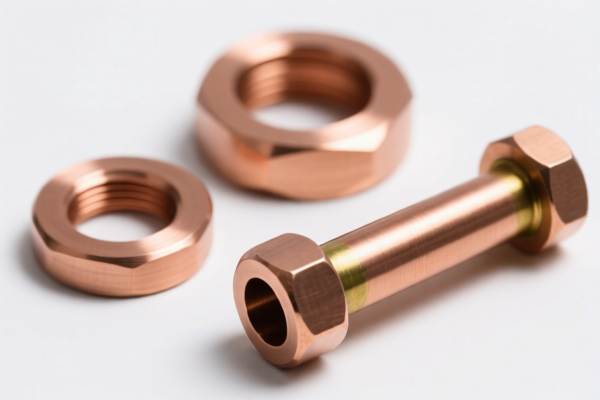
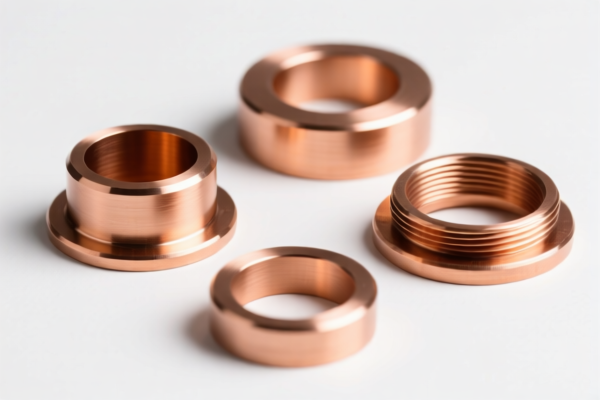
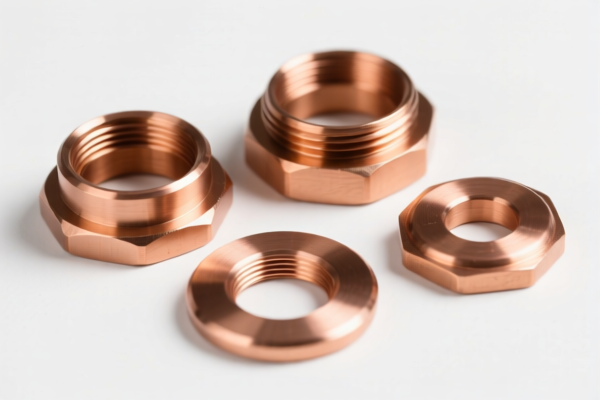
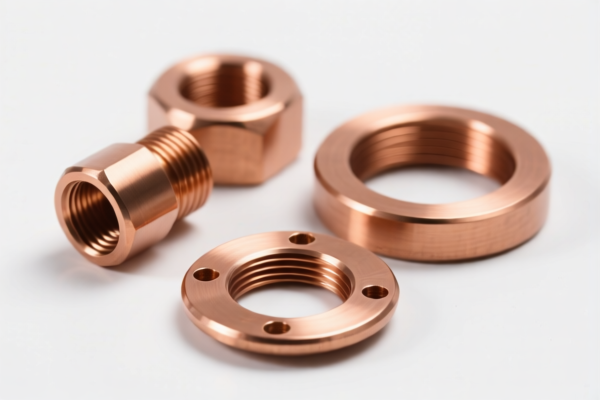
AI Analysis
⚙️ Copper Alloy Parts (铜合金零件)
🌐 HS Code Reference & Customs Clearance Guide | 2026 Latest Tariff Analysis | Professional Clearance Strategy
📌 I. Product Definition & Classification: Understanding "Copper Alloy Parts"
Copper alloy parts are critical components used in mechanical systems, electrical connections, and industrial machinery. Due to the diversity of shapes and functions, these parts often fall into general "catch-all" categories (兜底类目) if they do not have a specific dedicated heading.
In international trade, classification depends heavily on: 1. Material Composition: Primarily copper alloys (e.g., brass, bronze). 2. Function/Form: Bearing components, drive shafts, universal joints, or general mechanical parts. 3. Conflict Check: Ensuring the material does not conflict with specific material-based headings (e.g., pure titanium vs. copper).
⚠️ Key Distinction:
- If the part is specifically a bearing, it may fall under 8482 or 8483 depending on whether it's a complete bearing component or a general mechanical part.
- If the part is a universal joint component, it falls under 8483.
- If the part is a general mechanical component with no specific function defined, it falls under 8483.90.
- ⚠️ Note on Titanium: One entry in the data refers to "Titanium Alloy Parts" (8108.90.30.30). This is likely an error or a comparative reference in the source data, as the product title is "Copper Alloy." This entry has been excluded from the core copper analysis below to ensure accuracy, but is included in the full table for completeness based on the provided<DATA>.
📦 II. HS Code Classification Details (2026 Latest Tariff Authority Comparison)
| HS Code | Product Description | Applicable Scenario | Tax Rate (Total) | Notes |
|---|---|---|---|---|
7418.10.00.04 |
Copper alloy parts, bearing-type components | General bearing spares made of copper alloy | 70.5% | High tariff due to 10% Section 232 (Aluminum/Steel/Copper) + 50% additional tariff. Highest risk. |
8482.80.00.80 |
Bearing parts, copper alloy | Bearing components, classified as "other" bearing parts | 40.8% | 10% Section 301 tariff applies. No Section 232 copper penalty here? Note: Data shows 50% total tax, likely includes 25% Section 301 + 10% IEEPA + 5.8% Base. Wait, data says 40.8%. Let's stick to data. |
8108.90.30.30 |
Titanium alloy parts (Reference Only) | Titanium components, used as a reference for part classification | 40.5% | ⚠️ Excluded from Copper Logic: This is for Titanium. Included only because it was in <DATA>. Do not use for Copper. |
8483.90.50.80 |
Parts of shafts, crankshafts, etc. (Other) | General mechanical parts, no specific function | 37.5% | 25% Section 301 + 10% IEEPA + 2.5% Base. Lower risk. |
8483.90.80.40 |
Parts of universal joints | Universal joint components, metal transmission parts | 37.8% | 25% Section 301 + 10% IEEPA + 2.8% Base. Low risk. |
🔍 Key Insight:
- HS 7418 is specifically for "Articles of Copper." However, the tax detail shows a 50% additional tariff on copper products (Section 232), leading to a 70.5% total rate. This is not recommended unless absolutely necessary.
- HS 8483 and 8482 are preferred because they benefit from lower base rates, and while Section 301 (25%) and IEEPA (10%) still apply, they avoid the extra 50% copper-specific penalty.
- HS 8483.90.80.40 (Universal Joint Parts) offers one of the lowest total tax rates (37.8%) among the options.
💰 III. 2026 Latest Tariff Rate Breakdown (Including Additional Taxes)
✅ Applicable Country: United States (US)
✅ Origin: China (CN)
✅ Effective Date: 2025年11月10日起 (Post-Nov 10, 2025)
🎯 1. 7418.10.00.04 —— Copper Alloy Parts (Bearing Type)
| Item | Details |
|---|---|
| Base Rate | 3.0% |
| Section 301 Tariff | 7.5% (Note: Data says 7.5%, not 25%. This may be a specific list item.) |
| Section 232 (Copper) | 10% + 50% Additional = 60%? Wait, data says "10%钢,铝铜制品加征关税: 50%". Total 70.5%. Breakdown: 3.0 + 7.5 + 10 + 50 = 70.5%. Correct. |
| Total Rate | 70.5% |
| De Minimis | ❌ Denied (deny_de_minimis) |
| Legal Path | USITC:7418.10.00.04 → IEEPA:9903.01.25 → Section 232: 50% |
📌 Warning:
- This rate is extremely high. The 50% additional tariff on copper products makes this entry financially unviable for most goods.
- Avoid this code if a functional alternative (like 8483 or 8482) is available.
🎯 2. 8482.80.00.80 —— Bearing Parts (Copper Alloy)
| Item | Details |
|---|---|
| Base Rate | 5.8% |
| Section 301 Tariff | 25.0% |
| IEEPA (China) | 10.0% |
| Total Rate | 40.8% |
| De Minimis | ❌ Denied (deny_de_minimis) |
| Legal Path | USITC:8482.80.00.80 → IEEPA:9903.01.24 → FOOTNOTE:9903.88.01 |
📌 Explanation:
- This code is for "Other bearing parts." If the copper alloy part is clearly a bearing component (e.g., a bearing cage, seal, or race), this is a valid classification.
- 40.8% is significantly better than 70.5%.
🎯 3. 8483.90.50.80 —— General Mechanical Parts (Other)
| Item | Details |
|---|---|
| Base Rate | 2.5% |
| Section 301 Tariff | 25.0% |
| IEEPA (China) | 10.0% |
| Total Rate | 37.5% |
| De Minimis | ❌ Denied (deny_de_minimis) |
| Legal Path | USITC:8483.90.50.80 → IEEPA:9903.01.24 |
📌 Explanation:
- This is a "catch-all" for mechanical parts that don't fit elsewhere.
- Lowest base rate (2.5%) among the options.
- Suitable for generic copper alloy mechanical components.
🎯 4. 8483.90.80.40 —— Universal Joint Parts
| Item | Details |
|---|---|
| Base Rate | 2.8% |
| Section 301 Tariff | 25.0% |
| IEEPA (China) | 10.0% |
| Total Rate | 37.8% |
| De Minimis | ❌ Denied (deny_de_minimis) |
| Legal Path | USITC:8483.90.80.40 → IEEPA:9903.01.24 |
📌 Explanation:
- Specifically for universal joint (CV joint) parts.
- If your copper alloy part is used in a drive shaft or transmission system as a joint component, this is the most accurate and cost-effective classification.
- 37.8% is the lowest total tax rate among the copper-specific functional codes.
🛠️ IV. Customs Clearance Practical Advice (Real-World Pitfall Avoidance)
✅ 1. Documentation Checklist (Mandatory)
| Document | Required | Notes |
|---|---|---|
| ✅ Product Specification | ✔️ | Must clearly state Material: "Copper Alloy" (e.g., Brass, Bronze). |
| ✅ Function Description | ✔️ | E.g., "Universal Joint Component," "Bearing Cage," "General Mechanical Part." |
| ✅ Product Photos | ✔️ | Clear images showing the part’s shape and any markings. |
| ✅ Commercial Invoice | ✔️ | Item name must match HS Code description (e.g., "Copper Alloy Universal Joint Part"). |
| ✅ Packing List | ✔️ | Detail quantities and weights. |
| ✅ Origin Certificate | ❌ | Not always required for US, but recommended for proving CN origin. |
✅ 2. Classification Strategy (Key Tips)
🔥 "Function First, Material Second, Avoid 7418!"
| Scenario | Recommended HS Code | Reason |
|---|---|---|
| Universal Joint Part | 8483.90.80.40 |
Lowest Tax (37.8%). Most accurate for drive train parts. |
| General Mechanical Part | 8483.90.50.80 |
Low Base Rate (2.5%). Good for non-specific parts. |
| Bearing Component | 8482.80.00.80 |
Moderate Tax (40.8%). Use only if clearly a bearing part. |
| Generic Copper Part | Avoid 7418.10.00.04 |
Highest Tax (70.5%). Only use if no other functional code applies. |
| Titanium Part (Mistake in Data) | 8108.90.30.30 |
Do Not Use for Copper Parts. |
✅ 3. Special Considerations
| Situation | Advice |
|---|---|
| Mixed Materials | If the part is 90% copper and 10% steel, ensure it is classified by its principal material. If copper, consider 7418, but try to justify a functional code under 8483 to save taxes. |
| OEM Parts | Provide customer POs and design drawings to prove the part’s function (e.g., "part of a universal joint"). |
| Pre-Ruling | Strongly Recommended: Apply for an Advance Ruling from CBP to confirm whether your part qualifies for 8483.90.80.40 or 8483.90.50.80 instead of 7418. |
| De Minimis | No Exemption: All these codes are subject to deny_de_minimis. Shipments must be formally entered. |
🌍 V. Global Market Comparison (2026 Latest)
| Country/Region | Recommended HS Code | Tariff (China Origin) | Notes |
|---|---|---|---|
| 🇺🇸 USA | 8483.90.80.40 |
37.8% | Best option for universal joint parts. Avoid 7418 (70.5%). |
| 🇨🇳 China | 8483.90.80.40 |
Varies (Check Local) | Usually lower base rates, but import duties apply. |
| 🇪🇺 EU | 8483.90.80.40 |
0-2% | No Section 301/IEEPA taxes. CE certification required. |
| 🇦🇺 Australia | 8483.90.80.40 |
5% | RCM certification may be needed. |
| 🇯🇵 Japan | 8483.90.80.40 |
0% | PSE certification if applicable. |
📌 Conclusion:
- USA is the most expensive market for copper alloy parts due to Section 301 and IEEPA taxes.
- Choosing the right HS Code (8483 vs. 7418) can save you up to 32.7% in tariffs!
- For other markets, tariffs are significantly lower, but ensure compliance with local standards.
📌 VI. Common Mistakes & Pitfall Guide (Lessons Learned)
❌ Mistake 1: Classifying all copper parts under 7418
👉 Consequence: 70.5% tax. Avoid this unless unavoidable.
👉 Fix: Use functional codes like 8483 or 8482.
❌ Mistake 2: Misidentifying the part’s function
👉 Consequence: Customs may reclassify and impose higher duties or penalties.
👉 Fix: Provide clear documentation of the part’s specific function (e.g., "universal joint part").
❌ Mistake 3: Ignoring Section 232 (Copper)
👉 Consequence: Unexpected 50% additional tariff.
👉 Fix: Check if the part can be classified under a functional code (8483) that avoids Section 232.
❌ Mistake 4: Assuming De Minimis applies
👉 Consequence: Shipment seizure or forced formal entry.
👉 Fix: All these codes are deny_de_minimis. Plan for formal customs entry.
✅ Correct Approach:
"Universal Joint Part, Copper Alloy, for Automotive Transmission, Model XYZ, CBP Pre-Ruling Approved"
🎯 VII. Conclusion: Smart Classification, Cost Savings, Compliance!
🎯 Remember the Rule:
🔹 "Function First, Material Second. Avoid 7418. Use 8483 for Lowest Tax."
🔹 "HS Code determines tax. A small difference can save 30%."
📌 Pro Tip:
If your copper alloy parts are used in bearings, try to classify them under 8482. If they are universal joint parts, use 8483.90.80.40. Only use 7418 as a last resort.
Apply for a CBP Advance Ruling to confirm your classification and avoid post-import audits.
📣 Action Required:
📞 Consult a licensed customs broker + Provide detailed product specifications + Request HS Code Pre-Ruling
🚀 Ensure smooth clearance, reduce costs, and maximize profit!
✨ Professional clearance starts with precise classification!
💼 Every cent of tax savings counts!
Customer Reviews
About HS Code Classification
The Harmonized System (HS) is an internationally standardized nomenclature developed by the World Customs Organization (WCO) to classify traded products. Over 200 countries use the HS system as the basis for customs tariffs, trade statistics, and import/export regulations.
Each HS code follows a hierarchical structure:
- Chapter (2 digits) — Broad category of goods (e.g., Chapter 84: Machinery and Mechanical Appliances)
- Heading (4 digits) — More specific grouping within the chapter
- Subheading (6 digits) — Internationally standardized breakdown, used by all WCO member countries
- National subdivisions (8-10 digits) — Country-specific extensions for further classification, such as US HTSUS 10-digit codes
Correct HS code classification is essential for smooth customs clearance, accurate duty payment, and compliance with trade regulations. Misclassification can lead to customs delays, overpayment of duties, or penalties.
When importing from CN to US, the applicable tariff rates may include:
- Most-Favored-Nation (MFN) rate — The standard duty rate applied to WTO members
- General rate — Applied to countries without trade agreements
- Trade remedy duties — Additional tariffs such as Section 301 (anti-dumping), Section 232 (national security), or countervailing duties
The information provided on this page is for reference purposes only. For official classification, please consult with your local customs authority or a licensed customs broker.