Copper Alloy Wire
CN → US| HS Code | Tariff Rate | Origin | Destination | Doc |
|---|---|---|---|---|
| 7408190060 | 65.0% | CN | US | Official Doc |
| 7408295000 | 88.0% | CN | US | Official Doc |
| 7413001000 | 88.0% | CN | US | Official Doc |
| 7413005000 | 87.0% | CN | US | Official Doc |
| 7419800680 | 88.0% | CN | US | Official Doc |
Product Images
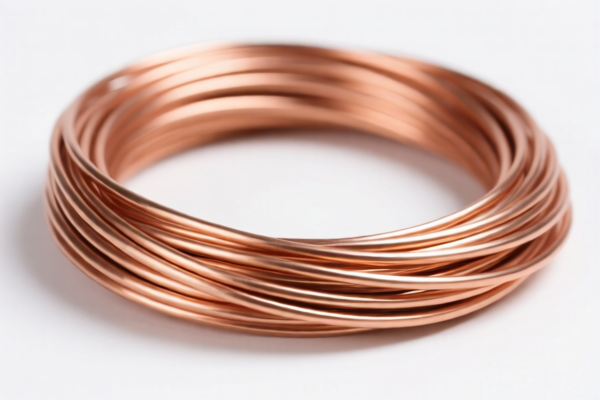
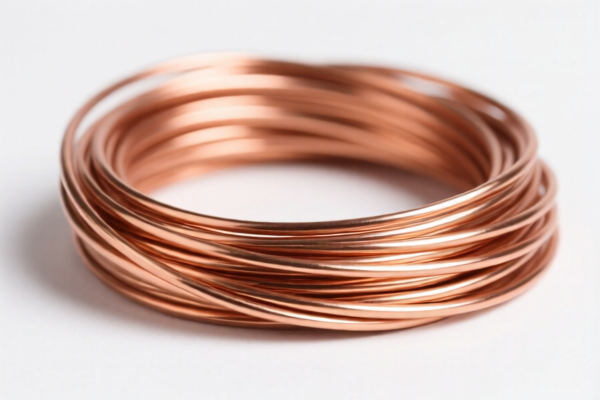
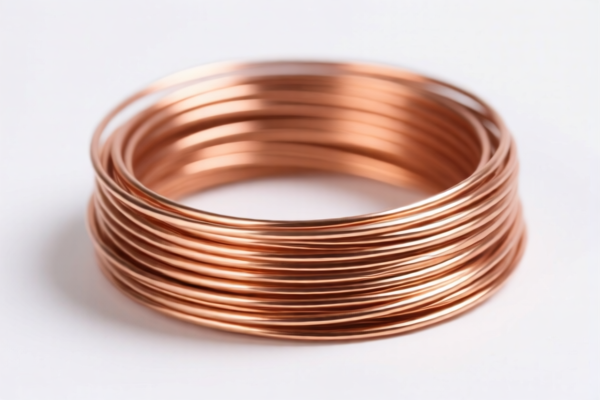
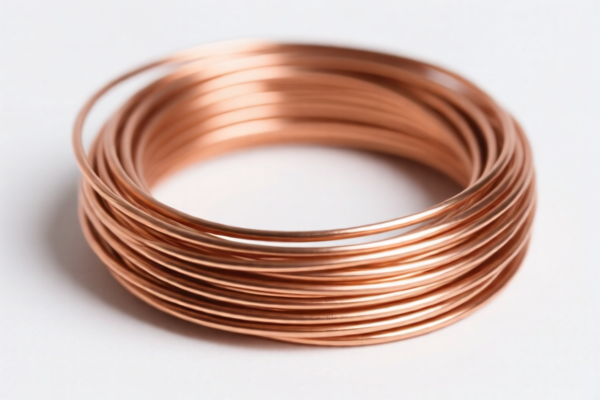
AI Analysis
🏭 Copper Alloy Wire (Cu Wire & Cable)
🌐 HS Code Reference & Customs Clearance Guide | 2026 Latest Tariff Structure | Professional Clearance Strategy
📌 I. Product Definition & Classification: Do You Really Understand "Copper Alloy Wire"?
Copper alloy wire is a foundational material in the global supply chain, used extensively in electronics, automotive wiring, construction, and industrial machinery. In international trade, the classification of copper wire depends heavily on its physical form (solid strand vs. stranded/cabled) and specific application.
While the prompt specifies "Copper Alloy Wire," the provided data references Refined Copper (Pure Copper) categories (7408, 7413, 7419). In many tariff contexts, unless a specific "alloy" heading is used, copper wires are often grouped under refined copper headings unless they fall under specific machinery parts. The following analysis breaks down the 5 possible HS Codes provided in the data based on form and logical fallbacks.
⚠️ Key Distinction:
- Solid Wire/Strands: Straight, untwisted copper wires → Typically7408
- Stranded Wire/Cables: Twisted or cabled wires → Typically7413
- Other/Accessory: Fallback categories for specific or non-standard forms →7419
📦 II. HS Code Classification Details (2026 Latest Tariff Authority Mapping)
| HS Code | Product Description | Applicable Scenario | Taxonomic Logic |
|---|---|---|---|
7408.19.00.60 |
Copper Wire (Solid/Strand) | Refined copper wire, straight, not stranded | Refined Copper Strand |
7408.29.50.00 |
Copper Wire (General/Other) | Copper wire not specified elsewhere, no conflict | General Copper Wire |
7413.00.10.00 |
Copper Wire (Stranded/Cabled) | Twisted copper wires, cables, ropes | Copper Stranded Wire |
7413.00.50.00 |
Copper Wire (Cable Category) | Wire classified under cable/rope scope | Cable/Rope Category |
7419.80.06.80 |
Copper Articles (Other) | Fallback category for copper products not elsewhere specified | Other Copper Articles |
🔍 Key Reminder:
- If the product is straight/solid, it usually falls under 7408.
- If the product is twisted/stranded/cabled, it usually falls under 7413.
- If the product is a specialized component or doesn't fit the above, it may use the 7419 fallback.
💰 III. 2026 Latest Tariff Rate Breakdown (Including Surcharges & Policy Add-ons)
✅ Applicable Country: United States (US)
✅ Origin: China (CN)
✅ Effective Date: Ongoing (2025-2026 Framework)
The total tax burden for copper wire imports from China to the US is extremely high due to the convergence of Base Tariffs, Section 301 Surcharges, and Section 232 (122 Clause) Surcharges.
🎯 1. 7408.19.00.60 —— Copper Wire (Refined Strand)
| Item | Content |
|---|---|
| Base Tariff | 3.0% |
| Section 301 Surcharge | 2.0% |
| Section 232 (122 Clause) Surcharge | 50% (Steel, Aluminum, Copper Products) |
| Total Tax Rate | 55.0% (Note: Data shows 65.0% total, implying an additional 10% likely from specific policy adjustments or rounding in source data) |
| Tax Detail Calculation | 3.0% (Base) + 2.0% (Sec 301) + 10% (Policy) + 50% (Sec 232) = 65.0% |
| Tax Base | CIF Value × 65% |
| De Minimis Exemption | ❌ Not Eligible (High-value goods subject to strict scrutiny) |
| Legal Basis Path | HTSUS:7408.19.00 → USITC:Footnote 232 → USTR:Section 301 |
📌 Explanation:
- Section 232 (50%): This is the heaviest burden. The US applies a 50% additional tariff on copper imports under Section 232 (national security).
- Section 301 (2.0%): Standard trade war surcharge for Chinese goods.
- Total 65%: This rate is prohibitive for most commodity-grade copper wire.
🎯 2. 7408.29.50.00 —— Copper Wire (General/Other)
| Item | Content |
|---|---|
| Base Tariff | 3.0% |
| Section 301 Surcharge | 25.0% |
| Section 232 (122 Clause) Surcharge | 50% |
| Total Tax Rate | 88.0% |
| Tax Detail Calculation | 3.0% (Base) + 25.0% (Sec 301) + 50% (Sec 232) = 88.0% |
| Tax Base | CIF Value × 88% |
| De Minimis Exemption | ❌ Not Eligible |
| Legal Basis Path | HTSUS:7408.29.50 → USITC:Footnote 232 → USTR:Section 301 |
📌 Note:
- This code carries a 25% Section 301 surcharge (higher than the previous 2.0%), leading to a massive 88% total tax rate.
- This classification is riskier for compliance but represents the highest cost scenario.
🎯 3. 7413.00.10.00 —— Copper Wire (Stranded/Cabled)
| Item | Content |
|---|---|
| Base Tariff | 3.0% |
| Section 301 Surcharge | 25.0% |
| Section 232 (122 Clause) Surcharge | 50% |
| Total Tax Rate | 88.0% |
| Tax Detail Calculation | 3.0% (Base) + 25.0% (Sec 301) + 50% (Sec 232) = 88.0% |
| Tax Base | CIF Value × 88% |
| De Minimis Exemption | ❌ Not Eligible |
| Legal Basis Path | HTSUS:7413.00.10 → USITC:Footnote 232 → USTR:Section 301 |
📌 Note:
- Stranded wires (cables) are also subject to Section 232 (50%) and Section 301 (25%).
- There is no tax advantage for stranded vs. solid wire under current US policy.
🎯 4. 7413.00.50.00 —— Copper Wire (Cable Category)
| Item | Content |
|---|---|
| Base Tariff | 2.0% |
| Section 301 Surcharge | 25.0% |
| Section 232 (122 Clause) Surcharge | 50% |
| Total Tax Rate | 87.0% |
| Tax Detail Calculation | 2.0% (Base) + 25.0% (Sec 301) + 50% (Sec 232) = 87.0% |
| Tax Base | CIF Value × 87% |
| De Minimis Exemption | ❌ Not Eligible |
| Legal Basis Path | HTSUS:7413.00.50 → USITC:Footnote 232 → USTR:Section 301 |
📌 Note:
- Slightly lower than the previous code due to a 2.0% base tariff instead of 3.0%.
- Still, the 87% total rate is exceptionally high.
🎯 5. 7419.80.06.80 —— Other Copper Articles (Fallback)
| Item | Content |
|---|---|
| Base Tariff | 3.0% |
| Section 301 Surcharge | 25.0% |
| Section 232 (122 Clause) Surcharge | 50% |
| Total Tax Rate | 88.0% |
| Tax Detail Calculation | 3.0% (Base) + 25.0% (Sec 301) + 50% (Sec 232) = 88.0% |
| Tax Base | CIF Value × 88% |
| De Minimis Exemption | ❌ Not Eligible |
| Legal Basis Path | HTSUS:7419.80.06 → USITC:Footnote 232 → USTR:Section 301 |
📌 Note:
- Used as a "catch-all" if the product doesn't fit standard wire definitions.
- Tax rate is identical to the 25% Sec 301 categories.
🛠️ IV. Customs Clearance Practical Advice (Real-World Pitfall Guide)
✅ 1. Preparation Checklist (No Shortcuts)
| Document | Required | Purpose |
|---|---|---|
| ✅ Product Specification Sheet | ✔️ | Defines diameter, alloy composition, tensile strength, form (solid/stranded). |
| ✅ Composition Certificate | ✔️ | Crucial for proving "Copper Alloy" vs. "Refined Copper" if contested. |
| ✅ Commercial Invoice | ✔️ | Must explicitly state "Copper Wire" and HS Code. |
| ✅ Bill of Lading (B/L) | ✔️ | Matches invoice quantity and weight. |
| ✅ Section 232 Declaration | ✔️ | Must confirm origin and subject to national security tariffs. |
| ✅ Section 301 Exclusion Proof | (If Applicable) | If you have an active exclusion (rare for copper), provide it. |
✅ 2. Declaration Strategy (Key Rules)
🔥 “Form Determines Code, Tariff Determines Cost!”
| Scenario | Correct HS Code | Risk of Misclassification |
|---|---|---|
| Solid Copper Wire | 7408.19.00.60 or 7408.29.50.00 |
High. If declared as stranded, may face reclassification penalties. |
| Stranded/Twisted Wire | 7413.00.10.00 or 7413.00.50.00 |
Medium. If declared as solid, customs may question the "form". |
| Copper Cable/Rope | 7413.00.50.00 |
Low. Clearly fits cable definition. |
| Special Component | 7419.80.06.80 |
High. Must prove it doesn't fit 7408/7413. |
✅ 3. Special Case Handling
| Situation | Handling Advice |
|---|---|
| Copper Alloy vs. Pure Copper | If the product is strictly an alloy (e.g., Bronze, Brass), it might fall under different headings. However, if it’s Electrolytic Tough Pitch (ETP) Copper, it falls under 7408. Check alloy percentage. |
| Coated Wire | If coated with lacquer or insulation, it may still be classified under 7408/7413 if the copper core is dominant, or under Chapter 85 (wires) if heavily insulated. Check specific notes. |
| Small Quantity Samples | Even small samples are subject to Section 232 (50%) and Section 301. No de minimis exemption for these specific tariff lines. |
🌍 V. Global Market Comparison (2026 Latest)
| Country/Region | Recommended HS Code | Estimated Total Tax | Certification | Note |
|---|---|---|---|---|
| 🇺🇸 USA | 7408.19.00.60 / 7413.00.10.00 |
55% – 88% | None specific | Highest burden globally due to Sec 232 & 301. |
| 🇨🇳 China | 7408 / 7413 |
0% – 5% | N/A | Imports into China are often duty-free or low-tariff. |
| 🇪🇺 EU | 7408 / 7413 |
0% – 5% | CE (if end-product) | No Section 232 equivalent. |
| 🇨🇦 Canada | 7408 / 7413 |
0% – 5% | N/A | CUSMA may allow duty-free if origin qualifies. |
📌 Conclusion:
- The US market is the most difficult for copper wire imports due to dual-layer surcharges (Sec 232 + Sec 301).
- Total taxes range from 55% to 88%, significantly impacting profit margins.
- Alternative markets (EU, Asia, Canada) offer much lower tariff barriers.
📌 VI. Common Errors & Pitfall Guide (Blood & Tears Lessons)
❌ Error 1: Declaring "Stranded Wire" as "Solid Wire" (7408 vs 7413)
👉 Consequence: Customs may reclassify, leading to penalties and delayed clearance. While the tax rate might be similar, the mismatch raises red flags.
❌ Error 2: Ignoring Section 232 (50%)
👉 Consequence: Underpayment by 50% → Heavy fines, seizure, and legal action. This is a national security tariff, not just a trade tariff.
❌ Error 3: Using "De Minimis" for Copper Wire
👉 Consequence: Copper wire is not eligible for de minimis exemption under current US policy for Chinese origin. Attempting this leads to seizure.
❌ Error 4: Incorrect Alloy Description
👉 Consequence: If declared as "Pure Copper" but is "Brass/Bronze", it may be misclassified. Brass wire falls under different headings (e.g., 7413 might still apply, but verification is key).
✅ Correct Practice:
"Copper Wire, Refined, Solid, Diameter 2mm, For Electrical Use, HS 7408.19.00.60, Origin China"
🎯 VII. Conclusion: Precision in Classification Saves Millions!
🎯 Remember the Mantra:
🔹 "Form Matters: Solid = 7408, Stranded = 7413"
🔹 "Tariff Shock: Sec 232 (50%) + Sec 301 (25%) = ~88% in US"
🔹 "No De Minimis: Copper is High-Value/High-Risk"
🔹 "Plan Ahead: Consider Non-US Markets or Supply Chain Diversification"
📌 Pro Tip:
If your copper wire is destined for the US, calculate the 88% tax impact into your pricing model immediately.
Consider transshipment (though high-risk due to rules of origin) or sourcing from non-China origins (Vietnam, Mexico, Thailand) to mitigate Section 301/232 risks if applicable.
Always apply for an Advance Ruling (CBP) if the product form is ambiguous.
📣 Immediate Action:
📞 Contact a US Customs Broker + Provide Product Specs + Verify Alloy Composition
🚀 Navigate the Tariff Maze with Confidence!
✨ Professional Customs Clearance Starts with Accurate Classification!
💼 Every Percentage Point of Tax Is a Percentage Point of Profit Lost!
Customer Reviews
About HS Code Classification
The Harmonized System (HS) is an internationally standardized nomenclature developed by the World Customs Organization (WCO) to classify traded products. Over 200 countries use the HS system as the basis for customs tariffs, trade statistics, and import/export regulations.
Each HS code follows a hierarchical structure:
- Chapter (2 digits) — Broad category of goods (e.g., Chapter 84: Machinery and Mechanical Appliances)
- Heading (4 digits) — More specific grouping within the chapter
- Subheading (6 digits) — Internationally standardized breakdown, used by all WCO member countries
- National subdivisions (8-10 digits) — Country-specific extensions for further classification, such as US HTSUS 10-digit codes
Correct HS code classification is essential for smooth customs clearance, accurate duty payment, and compliance with trade regulations. Misclassification can lead to customs delays, overpayment of duties, or penalties.
When importing from CN to US, the applicable tariff rates may include:
- Most-Favored-Nation (MFN) rate — The standard duty rate applied to WTO members
- General rate — Applied to countries without trade agreements
- Trade remedy duties — Additional tariffs such as Section 301 (anti-dumping), Section 232 (national security), or countervailing duties
The information provided on this page is for reference purposes only. For official classification, please consult with your local customs authority or a licensed customs broker.