Copper Nuts
CN → US| HS Code | Tariff Rate | Origin | Destination | Doc |
|---|---|---|---|---|
| 7415338010 | 88.0% | CN | US | Official Doc |
| 8309900085 | 37.6% | CN | US | Official Doc |
| 8309900080 | 37.6% | CN | US | Official Doc |
| 7415338050 | 88.0% | CN | US | Official Doc |
| 7415338010 | 88.0% | CN | US | Official Doc |
Product Images
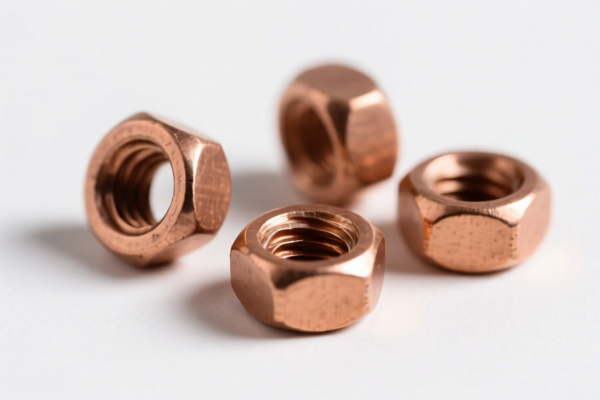
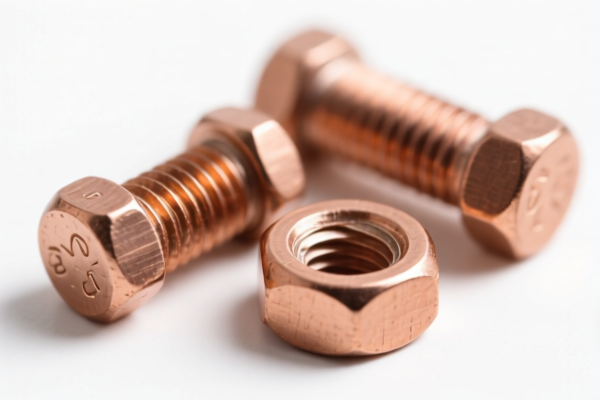
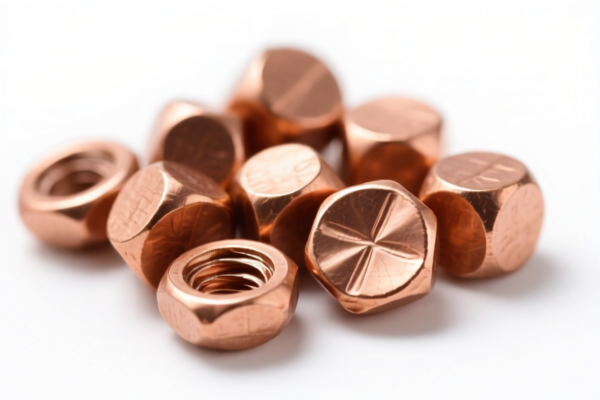
AI Analysis
🔩 Copper Nuts (Copper Hardware for Fastening)
🌐 HS Code Reference & Customs Clearance Guide | 2026 Latest Tariff Analysis | Professional Compliance Strategy 📌 I. Product Definition & Classification: Do You Really Understand "Copper Nuts"?
Copper Nuts are metallic fastening components made primarily of copper or copper alloys. In international trade, the classification depends heavily on whether they are viewed specifically as "nuts" (a specific type of fastener) or generally as "metal articles for closure/sealing." This distinction drastically affects the tariff burden, especially for imports into the United States from China.
Key Distinction: * Specific Fasteners (Heading 7415): Nuts explicitly classified under "Other articles of copper" specifically designed as nuts/washers. * General Metal Articles (Heading 8309): Nuts classified under "Stoppers, caps, and closing accessories" or other general metal hardware.
⚠️ Critical Warning:
- If classified under 7415.33.80, the tariff rate is extremely high (88.0%) due to specific 122-section duties on steel/aluminum/copper products.
- If classified under 8309.90.00, the tariff rate is significantly lower (37.6%), avoiding the specific 50% copper surcharge.
📦 II. HS Code Classification Details (2026 Latest Tariff Authority对照)
| HS Code | Product Description | Classification Logic | Total Tax Rate |
|---|---|---|---|
7415.33.80.10 |
Copper Nuts - Specifically defined as "nuts" made of copper | ✅ Specific Classification: Fits "Nuts" definition perfectly under Chapter 74 (Copper) | 88.0% |
7415.33.80.50 |
Copper Nuts - Fully compliant with "Nut" classification requirements | ✅ Specific Classification: Matches classification explanation exactly for copper nuts | 88.0% |
8309.90.00.85 |
Copper Nuts - Classified as metal articles, similar to stoppers/caps/sealing accessories | ✅ General Classification: Treated as general metal closure配件 (accessories) | 37.6% |
8309.90.00.80 |
Copper Nuts - Classified as metal fastening/sealing accessories (base metal articles) | ✅ General Classification: Fits "Base metal articles and accessories" attribute | 37.6% |
🔍 Key Insight:
- The HS Code choice determines the tax rate.
- Codes starting with 7415 trigger the 50% additional duty under Section 122 for copper products.
- Codes starting with 8309 are classified under general metal accessories and do not trigger the specific 50% copper surcharge.
💰 III. 2026 Latest Tariff Rate Breakdown (Including Surtaxes)
✅ Applicable Country: United States (US)
✅ Origin: China (CN)
✅ Effective Date: From November 10, 2025 onwards
🎯 1. 7415.33.80.10 & 7415.33.80.50 —— Copper Nuts (Specific Fastener Classification)
| Item | Detail |
|---|---|
| Base Duty Rate | 3.0% (ad valorem) |
| Section 301 Surtax | +25.0% |
| Section 122 Copper Surtax | +50.0% (Specific surtax for steel, aluminum, copper products) |
| Total Tax Rate | 88.0% |
| Tax Calculation | CIF Value × 88.0% |
| De Minimis Exemption | ❌ Not Eligible (High tax rate usually disqualifies from 8U/Section 321 de minimis) |
| Legal Basis Path | Section 122: 50% → Section 301: 25% → Base: 3.0% |
📌 Explanation:
- The 88.0% rate is punitive. It combines the standard 301 tariffs with a specific 50% additional duty imposed on copper articles under Section 122.
- This makes importing copper nuts under this code prohibitively expensive for most commercial shipments.
🎯 2. 8309.90.00.85 & 8309.90.00.80 —— Copper Nuts (General Metal Accessory Classification)
| Item | Detail |
|---|---|
| Base Duty Rate | 2.6% (ad valorem) |
| Section 301 Surtax | +25.0% |
| Section 122 Copper Surtax | ❌ None (Not classified under specific copper fastener heading) |
| Total Tax Rate | 37.6% |
| Tax Calculation | CIF Value × 37.6% |
| De Minimis Exemption | ❌ Not Eligible (Still exceeds typical thresholds, but lower than 88%) |
| Legal Basis Path | Section 301: 25% → Base: 2.6% |
📌 Explanation:
- By classifying as 8309 (general metal articles for closure/sealing), you avoid the 50% copper-specific surcharge.
- The total tax drops from 88.0% to 37.6%, a 50.4 percentage point savings.
- This classification views the nut as a "metal accessory" rather than a specific "copper fastener."
🛠️ IV. Customs Clearance Practical Advice (Avoiding Pitfalls)
✅ 1. Documentation Checklist (Essential for Smooth Clearance)
| Document | Required? | Note |
|---|---|---|
| ✅ Product Specification Sheet | ✔️ | Must detail material (Cu content), dimensions, thread type. |
| ✅ Commercial Invoice | ✔️ | Must clearly state "Copper Nuts" and HS Code. Avoid vague terms like "Hardware." |
| ✅ Certificate of Origin (CO) | ✔️ | Prove Chinese origin to apply correct tariffs. |
| ✅ Customs Ruling Letter (Optional) | ✔️ | If possible, obtain an Advance Ruling for 8309 classification to mitigate risk. |
| ✅ Packaging List | ✔️ | Ensure no mixed shipments with steel/aluminum parts that could complicate origin verification. |
✅ 2. Classification Strategy (Key to Cost Reduction)
🔥 "Don't Call It a Nut if It Can Be an Accessory!"
| Scenario | Recommended HS Code | Tax Rate | Risk Level |
|---|---|---|---|
| Standard Copper Nuts | 8309.90.00.85 / 8309.90.00.80 |
37.6% | ✅ Low Risk (Valid general classification) |
| Specifically Labeled "Copper Nuts" in Heading 74 | 7415.33.80.10 |
88.0% | ⚠️ High Cost (Avoid unless legally required) |
| Mixed Material Nuts | Check Material % | Varies | ⚠️ Complex |
📌 Strategic Advice:
- Do not explicitly declare as "Nuts of Copper" under Chapter 74 if a general metal article classification (Chapter 83) is defensible.
- Use descriptions like "Copper Metal Closing Accessories" or "Metal Sealing Fittings" in commercial invoices to support the 8309 classification.
- Avoid using the term "Nut" prominently if you are aiming for 8309; use "Fastener" or "Accessory" instead.
✅ 3. Special Considerations
| Situation | Recommendation |
|---|---|
| US Imports from China | Strongly prefer 8309. The 50.4% tax difference is significant. |
| Origin Verification | Ensure copper content is verified. If it's brass (copper-zinc), it may still fall under Chapter 74. Pure copper or high-copper alloys are key. |
| Small Shipments (< $800) | Even with 37.6%, de minimis may not apply due to high base rates. Consult a customs broker. |
| Large Commercial Shipments | Budget for 37.6% tax. Do not budget for 88%. |
🌍 V. Global Market Comparison (2026 Latest)
| Country/Region | Recommended HS Code | Est. Total Tax | Notes |
|---|---|---|---|
| 🇺🇸 USA | 8309.90.00.85 |
37.6% | Best Option: Avoids 50% copper surcharge. |
| 🇺🇸 USA | 7415.33.80.10 |
88.0% | Avoid: Highest tax burden. |
| 🇨🇳 China (Export) | Varies | See Export Tariff | N/A for importers. |
| 🇪🇺 EU | 7415.33.90 |
~0-6% | No 301/122 surcharges. |
| 🇨🇦 Canada | 7415.33.90 |
~0-5% | No 301/122 surcharges. |
📌 Conclusion:
- USA is the only major market with the 50% copper surcharge (Section 122).
- Classification strategy is critical for US imports.
- Target HS Code: 8309.90.00.85/80 for maximum tax efficiency.
📌 VI. Common Errors & Pitfalls (Lessons Learned)
❌ Error 1: Declaring as "Copper Nuts" under 7415 without justification.
👉 Consequence: Pay 88.0% tax instead of 37.6%. Loss of 50.4% in profit.
❌ Error 2: Using "Nut" in the product name for 8309 classification.
👉 Consequence: Customs may challenge the classification and reclassify to 7415, leading to back taxes and penalties.
❌ Error 3: Assuming all copper hardware is treated equally.
👉 Consequence: Ignoring the Section 122 distinction between specific fasteners (7415) and general accessories (8309).
✅ Correct Approach:
Declare as "Copper Metal Closing Accessories, Model XYZ, Material: Copper Alloy, for Use in Sealing Systems".
Use HS Code: 8309.90.00.85.
Tax Rate: 37.6%.
🎯 VII. Conclusion: Smart Classification, Significant Savings!
🎯 Remember:
🔹 "8309 vs 7415: The 50% Difference!"
🔹 "Don't pay 88% if you can pay 37.6%!"
🔹 "Classification is not just technical; it's financial."
📌 Pro Tip:
For US imports, always consult a customs broker to confirm if your specific copper nut design qualifies for 8309. A small change in product description can save 50.4% in taxes.
📣 Action Required:
📞 Contact your customs broker with your product specs.
📄 Request a Binding Ruling if importing large volumes.
🚀 Optimize your supply chain by choosing the correct HS Code from day one.
✨ Professional Customs Clearance Starts with Accurate Classification!
💼 Save 50% in Taxes by Choosing the Right HS Code!
Customer Reviews
About HS Code Classification
The Harmonized System (HS) is an internationally standardized nomenclature developed by the World Customs Organization (WCO) to classify traded products. Over 200 countries use the HS system as the basis for customs tariffs, trade statistics, and import/export regulations.
Each HS code follows a hierarchical structure:
- Chapter (2 digits) — Broad category of goods (e.g., Chapter 84: Machinery and Mechanical Appliances)
- Heading (4 digits) — More specific grouping within the chapter
- Subheading (6 digits) — Internationally standardized breakdown, used by all WCO member countries
- National subdivisions (8-10 digits) — Country-specific extensions for further classification, such as US HTSUS 10-digit codes
Correct HS code classification is essential for smooth customs clearance, accurate duty payment, and compliance with trade regulations. Misclassification can lead to customs delays, overpayment of duties, or penalties.
When importing from CN to US, the applicable tariff rates may include:
- Most-Favored-Nation (MFN) rate — The standard duty rate applied to WTO members
- General rate — Applied to countries without trade agreements
- Trade remedy duties — Additional tariffs such as Section 301 (anti-dumping), Section 232 (national security), or countervailing duties
The information provided on this page is for reference purposes only. For official classification, please consult with your local customs authority or a licensed customs broker.