Copper Plate
CN → US| HS Code | Tariff Rate | Origin | Destination | Doc |
|---|---|---|---|---|
| 7403110000 | 36.0% | CN | US | Official Doc |
| 7403130000 | 36.0% | CN | US | Official Doc |
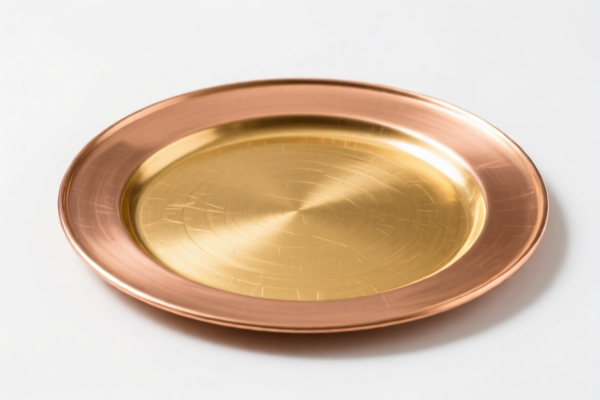
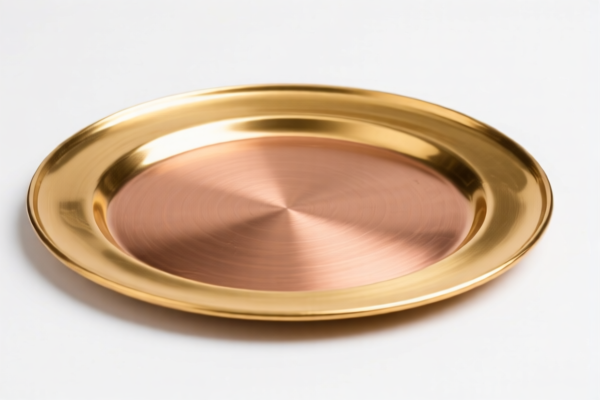
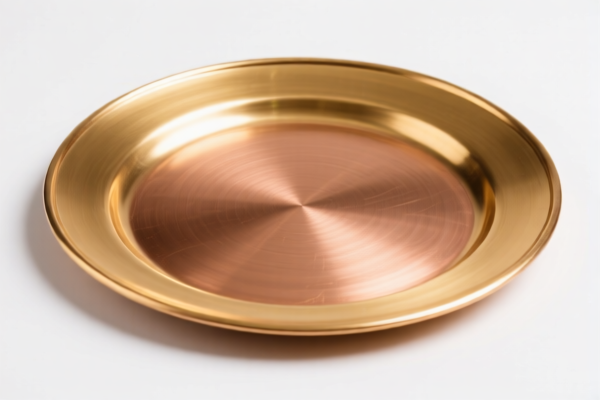
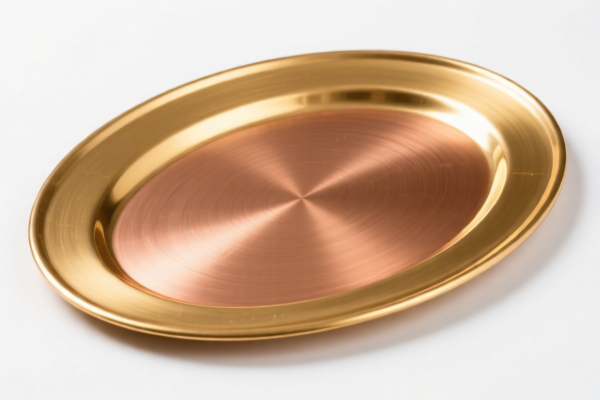
Product Images
AI Analysis
🔶 Copper Plate (Refined Copper & Unwrought Forms)
🌐 HS Code Reference & Customs Clearance Guide | 2026 Latest Tariff Analysis | Professional Customs Strategy
📌 I. Product Definition & Classification: Do You Really Understand "Copper Plate"?
"Copper Plate" in international trade is a broad term. To ensure accurate classification and avoid customs delays or penalties, it is crucial to distinguish between finished products and unwrought raw materials. The provided specifically covers unwrought refined copper, which are intermediate goods used for further processing (forging, extrusion, rolling) into pipes, wires, or plates.
Refined Copper (Unwrought): 1. Cathodes & Sections of Cathodes: The primary form of refined copper produced by electrolytic refining, typically large plates or blocks. 2. Billets: Cylindrical or square solid sections intended for direct forging or extrusion.
⚠️ Key Distinction Point:
- If the item is a finished copper plate/strip (already rolled to specific dimensions for immediate use in electronics/construction), it usually falls under Heading 7409 (e.g., 7409.11, 7409.19).
- However, based strictly on the provided , we are classifying unwrought forms: Cathodes and Billets. These are raw materials, not final plates.
- If your "Copper Plate" is actually a Cathode (electrolytic plate), use 7403.11. If it is a Billet (ingot/bloom), use 7403.13.
📦 II. HS Code Classification Details (Based on Provided DATA)
| HS Code | Product Description | Application Scenario | Form Factor |
|---|---|---|---|
7403.11.00.00 |
Cathodes and sections of cathodes | Electrolytic refining products, raw material for smelting/recycling | Large flat plates or blocks |
7403.13.00.00 |
Billets | Solid sections for direct forging, extrusion, or rolling | Cylindrical/Square solid bars |
🔍 Critical Note:
- These codes apply only to unwrought refined copper.
- Do not use these codes for rolled copper plates (Heading 7409) or copper wire (Heading 7413). Misclassification can lead to significant tariff discrepancies and customs audits.
- "Master alloys" (Heading 7405) are excluded from this data.
💰 III. 2026 Latest Tariff Rate Details
✅ Applicable Country: Import into the United States (US)
✅ Origin: Likely China (CN) or General World Trade Organization (WTO) rates
✅ Effective Time: Current 2026 Tariff Schedule
🎯 1. 7403.11.00.00 —— Cathodes and Sections of Cathodes
| Item | Content |
|---|---|
| Base Tariff | 0.0% (Ad Valorem) |
| Additional Tariffs | 0.0% |
| Total Tax Rate | 0.0% |
| Tax Calculation | CIF Value × 0% = $0 |
| De Minimis Exemption | ✅ Eligible (If applicable under current rules for low-value shipments) |
| Legal Basis | HTSUS 2026 Section 74; No Section 301 or IEEPA surcharges explicitly listed for this subheading in the provided data. |
📌 Explanation:
- Refined copper cathodes are considered essential raw materials. The base tariff is 0%.
- According to the provided , there are no additional tariffs (such as 25% Section 301 or 10% IEEPA) applied to this specific HS code.
- Cost Advantage: This is a zero-tariff entry point for raw copper materials, making it highly competitive for importers.
🎯 2. 7403.13.00.00 —— Billets
| Item | Content |
|---|---|
| Base Tariff | 0.0% (Ad Valorem) |
| Additional Tariffs | 0.0% |
| Total Tax Rate | 0.0% |
| Tax Calculation | CIF Value × 0% = $0 |
| De Minimis Exemption | ✅ Eligible (If applicable under current rules for low-value shipments) |
| Legal Basis | HTSUS 2026 Section 74; No Section 301 or IEEPA surcharges explicitly listed for this subheading in the provided data. |
📌 Explanation:
- Copper billets, like cathodes, are unwrought forms. The base tariff is 0%.
- No Additional Surcharges: The provided data confirms 0.0% total tax. This is a significant cost saving compared to other metal imports that may face anti-dumping duties.
- Strategic Implication: Importers can leverage this zero-rate status to secure raw materials efficiently, provided the goods are truly "unwrought" and not processed plates.
🛠️ IV. Customs Clearance Practical Advice (Battle-Tested Pitfall Guide)
✅ 1. Required Documentation Checklist (Non-Negotiable)
| Document | Must Provide | Description |
|---|---|---|
| ✅ Commercial Invoice | ✔️ | Must clearly state "Copper Cathode" or "Copper Billet," not just "Copper Plate." |
| ✅ Packing List | ✔️ | Detail net weight, gross weight, and number of packages. |
| ✅ Bill of Lading (B/L) | ✔️ | Match invoice and packing list details exactly. |
| ✅ Certificate of Origin | ✔️ | Crucial for verifying non-privileged origin if any future surcharges apply. |
| ✅ Product Specification Sheet | ✔️ | Confirm purity (e.g., Cu ≥ 99.90% for cathodes) and physical form. |
| ✅ Customs Declaration Form | ✔️ | Accurately declare HS Code 7403.11.00.00 or 7403.13.00.00. |
✅ 2. Declaration Tips (Key Mantras)
🔥 "Name Accurate, Form Clear, Tax Zero, No Fear!"
| Situation | Correct Declaration | Wrong Practice |
|---|---|---|
| Electrolytic Copper Sheets | 7403.11.00.00 (Cathodes) |
Misdeclare as "Copper Plate" → Risk of reclassification to 7409 (different duty). |
| Cylindrical/Square Ingots | 7403.13.00.00 (Billets) |
Misdeclare as "Copper Rod" or "Plate" → Incorrect HS Code. |
| Rolled Copper Sheets (Finished) | 7409.11.00.00 / 7409.19.00.00 |
DO NOT USE 7403.1x → This is unwrought, not rolled. |
| Copper Wires | 7413.00.00.00 |
DO NOT USE 7403.1x → Wrong category entirely. |
✅ 3. Special Circumstances Handling
| Situation | Handling Advice |
|---|---|
| Mixed Shipment (Cathodes + Billets) | Separate declarations for 7403.11.00.00 and 7403.13.00.00 to ensure accurate inventory and customs compliance. |
| High-Purity Copper | Ensure the invoice specifies copper purity (e.g., C11000 for cathodes) to justify the "Refined Copper" classification. |
| Anti-Dumping Duties (ADD) | While the provided data shows 0% total tax, always verify if anti-dumping duties apply to copper products from specific origins (e.g., China). The provided does not list ADD, but real-world customs may require additional verification. |
| Warehousing | Copper is a high-value commodity. Consider using bonded warehouses to defer import duties until sale, though here the duty is 0%, so storage costs may outweigh benefits. |
🌍 V. Global Main Market Comparison (2026 Latest)
| Country/Region | Recommended HS Code | Tariff | Certification Requirements | Notes |
|---|---|---|---|---|
| 🇺🇸 USA | 7403.11.00.00 / 7403.13.00.00 |
0% | None specific for raw copper | Zero tariff for unwrought copper; verify origin rules. |
| 🇨🇳 China | 7403.11.00.00 / 7403.13.00.00 |
Varies (Export Duty) | N/A | China may impose export duties on copper cathodes/billets. |
| 🇪🇺 EU | 7403.11 / 7403.13 |
0% | CE/RoHS not applicable for raw material | Zero import duty for raw copper in EU. |
| 🇯🇵 Japan | 7403.11 / 7403.13 |
0% | None | Zero tariff for refined copper. |
📌 Conclusion:
- USA, EU, and Japan all offer 0% import duty for unwrought refined copper.
- China may impose export duties, so exporters from China should check the latest MOFCOM announcements.
- The key risk is misclassification, not tariff rate.
📌 VI. Common Errors & Pitfall Guide (Blood & Tears Lessons)
❌ Error 1: Declaring Rolled Copper Plates as 7403.11.00.00 (Cathodes)
👉 Consequence: Customs will reclassify to Heading 7409. While duty may still be low, it triggers an audit for incorrect declaration, potential fines, and delays.
❌ Error 2: Not specifying Physical Form (Cathode vs. Billet) in the invoice
👉 Consequence: Customs officers may question the declaration. Clear description ("Electrolytic Copper Cathode") prevents delays.
❌ Error 3: Ignoring Copper Purity specifications
👉 Consequence: If purity is below 99.90%, it may not qualify as "Refined Copper" under HTSUS 7403, leading to reclassification.
❌ Error 4: Assuming Zero Tariff means No Documentation
👉 Consequence: Even with 0% duty, customs require full documentation. Lack of proper paperwork leads to detention and storage fees.
✅ Correct Practice:
"Electrolytic Copper Cathode, Purity ≥ 99.90%, Unwrought, for Smelting"
OR
"Copper Billet, Square Section, Unwrought, for Extrusion"
🎯 VII. Conclusion: Professional Declaration, Save Time, Reduce Costs!
🎯 Remember the Mantra:
🔹 "Unwrought is Key, 7403 is the Way, Zero Tariff Awaits, If You Declare Right!"
🔹 "Cathode vs. Billet, Choose Wisely, Don't Confuse with Plates, Or You'll Pay the Price!"
📌 Pro Tip:
If your "Copper Plate" is actually a finished product (rolled), do NOT use the HS codes in the . Instead, consult headings 7409 (Copper Plates/Sheets) or 7412 (Copper Tubes). The provided data is strictly for unwrought forms.
📣 Immediate Action:
📞 Contact your customs broker + Provide Product Photos + Verify Physical Form (Cathode/Billet)
🚀 Ensure your "Copper Plate" is correctly classified as unwrought to benefit from the 0% tariff!
✨ Professional Customs Clearance Starts with Accurate Classification!
💼 Every Percent of Tax Saved is Pure Profit!
Customer Reviews
About HS Code Classification
The Harmonized System (HS) is an internationally standardized nomenclature developed by the World Customs Organization (WCO) to classify traded products. Over 200 countries use the HS system as the basis for customs tariffs, trade statistics, and import/export regulations.
Each HS code follows a hierarchical structure:
- Chapter (2 digits) — Broad category of goods (e.g., Chapter 84: Machinery and Mechanical Appliances)
- Heading (4 digits) — More specific grouping within the chapter
- Subheading (6 digits) — Internationally standardized breakdown, used by all WCO member countries
- National subdivisions (8-10 digits) — Country-specific extensions for further classification, such as US HTSUS 10-digit codes
Correct HS code classification is essential for smooth customs clearance, accurate duty payment, and compliance with trade regulations. Misclassification can lead to customs delays, overpayment of duties, or penalties.
When importing from CN to US, the applicable tariff rates may include:
- Most-Favored-Nation (MFN) rate — The standard duty rate applied to WTO members
- General rate — Applied to countries without trade agreements
- Trade remedy duties — Additional tariffs such as Section 301 (anti-dumping), Section 232 (national security), or countervailing duties
The information provided on this page is for reference purposes only. For official classification, please consult with your local customs authority or a licensed customs broker.