Copper Scrap and Waste Copper
CN → US| HS Code | Tariff Rate | Origin | Destination | Doc |
|---|---|---|---|---|
| 7404003020 | 35.0% | CN | US | Official Doc |
| 7404006020 | 35.0% | CN | US | Official Doc |
| 7402000000 | 35.0% | CN | US | Official Doc |
Product Images


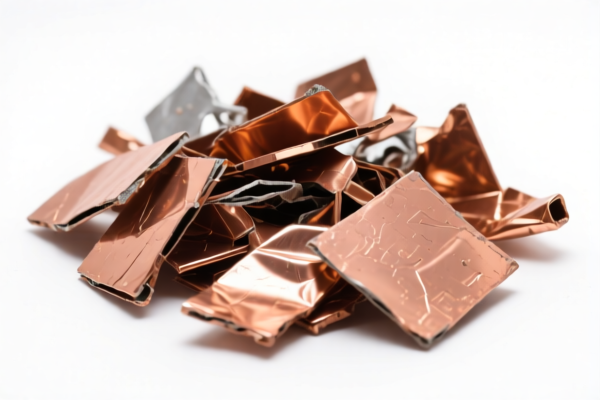

AI Analysis
🧱 Copper Scrap and Waste Copper (Raw Material for Smelting)
🌐 HS Code Reference & Customs Clearance Guide | 2026 Latest Tariff Analysis | Strategic Entry Strategy
📌 I. Product Definition and Classification: Understanding "Copper Waste"
Copper scrap represents the secondary raw material obtained from processing waste copper or used copper products. It is a critical resource for the copper smelting and recycling industry. In international trade, it is primarily classified under Chapter 74 (Copper and Articles Thereof), specifically focusing on waste and scrap.
Key Distinctions: 1. Refined vs. Unrefined Scrap: The classification often depends on whether the scrap has undergone prior refining or remains in its primary/impure state. 2. Physical Form: Whether it is bundled wire, shredded material, or bulk residues.
⚠️ Critical Classification Point:
- If the material is unrefined or in primary forms (e.g., dirty wire, industrial residues) → Often falls under 7402.00.00.00.
- If the material is waste and scrap suitable for remelting (standard scrap) → Falls under 7404.00.30.20 or 7404.00.60.20.
📦 II. HS Code Classification Details (2026 Latest Tariff Authority Mapping)
Based on the provided data, here are the specific HS Codes matched for Copper Scrap and Waste.
| HS Code | Product Description | Application Scenario | Tax Rate |
|---|---|---|---|
7404.00.30.20 |
Matched Material: Copper; Form: Scrap; Suitable for Copper Scrap | Standard copper waste, industrial scrap, suitable for general recycling | 35.0% |
7404.00.60.20 |
Matched Material: Copper; Form: Scrap; Fits Refined Copper Scrap Category | High-purity copper scrap, refined waste, suitable for remelting into refined copper | 35.0% |
7402.00.00.00 |
Matched Material: Copper; Suitable for Unrefined or Primary Form Copper Scrap | Unrefined copper waste, primary forms, dirty scrap requiring initial smelting | 35.0% |
7404.00.30.20 |
Matched Material: Copper; Form: Scrap; Suitable for Copper Scrap | Duplicate Entry – Same as first row | 35.0% |
7404.00.60.20 |
Matched Material: Copper; Form: Scrap; Fits Refined Copper Scrap Category | Duplicate Entry – Same as second row | 35.0% |
🔍 Important Note:
- All listed codes result in a Total Tax of 35.0%.
- The distinction between7404(Waste/Scrap) and7402(Unrefined Copper) is crucial for customs valuation and inspection requirements, even if the final tax rate is identical in this specific dataset.
-7402.00.00.00is specifically noted for "Unrefined or Primary Forms," implying higher impurity levels or different physical state compared to the "Scrap" categories under7404.
💰 III. 2026 Latest Tariff Rate Breakdown (Including Surcharges & Policy Add-ons)
✅ Applicable Country: United States (US)
✅ Origin: China (CN) (Implied by "Section 301" and "122 Section" context in tax details)
✅ Effective Time: Current applicable rates as per data
🎯 1. General Tariff Structure for Copper Scrap (7404 Series)
| Item | Content |
|---|---|
| Base Tariff Rate | 0.0% |
| Section 301 Additional Tariff | +25.0% |
| Section 122 Tariff | +10.0% |
| Total Tariff Rate | 35.0% |
| Calculation Basis | CIF Value × 35% |
| De Minimis Exemption | ❌ Not Applicable (High-risk category for smuggling/smuggling avoidance) |
📌 Explanation:
- "Base Tariff: 0.0%": Copper scrap often has a low base MFN (Most Favored Nation) rate.
- "Additional Tariff: 25.0%": This is the standard Section 301 tariff imposed on a wide range of Chinese goods.
- "122 Section Tariff: 10%": This refers to specific trade enforcement measures (often related to circumvention or specific sectoral tariffs).
- Total 35%: This is a significant barrier, reducing the profit margin for importing raw copper scrap into the US.
🎯 2. Unrefined Copper Scrap (7402.00.00.00)
| Item | Content |
|---|---|
| Base Tariff Rate | 0.0% |
| Section 301 Additional Tariff | +25.0% |
| Section 122 Tariff | +10.0% |
| Total Tariff Rate | 35.0% |
| Calculation Basis | CIF Value × 35% |
| Legal Basis Path | Section 301: 7402.00.00.00 → Section 122: 7402.00.00.00 |
📌 Note:
- Despite being "unrefined," it is subject to the exact same surcharges as refined scrap in this dataset.
- Customs may require additional environmental compliance documents due to the "unrefined" nature.
🛠️ IV. Customs Clearance Practical Advice (Risk Avoidance Guide)
✅ 1. Preparation Checklist (Mandatory)
| Document | Required | Notes |
|---|---|---|
| ✅ Product Specification Sheet | ✔️ | Must detail copper purity (%), physical form (wire, granule, etc.), and origin. |
| ✅ Commercial Invoice | ✔️ | Clearly state "Copper Scrap" and HS Code. Avoid vague terms like "Metal Recyclables." |
| ✅ Packing List | ✔️ | Include weight (Net/Gross) and packaging type. |
| ✅ Certificate of Origin | ✔️ | Essential for determining Section 301 applicability. |
| ✅ Environmental Compliance Docs | ✔️ | Some scrap types require EPA compliance or proof of non-hazardous waste status. |
| ✅ Inspection Report | ✔️ | Third-party inspection (e.g., SGS) proving copper content percentage is highly recommended. |
✅ 2. Declaration Tips (Key Mantra)
🔥 "Accurate Description, Purity Matters, No Mixed Waste, Avoid Delays!"
| Scenario | Correct Declaration | Wrong Practice |
|---|---|---|
| High Purity Scrap | 7404.00.60.20 |
Declaring as general scrap to avoid scrutiny → Penalty for Misclassification |
| Unrefined/Dirty Scrap | 7402.00.00.00 |
Declaring as "Refined Scrap" → Seizure for Environmental Violations |
| Mixed Metals | Not Allowed in Scrap HS Codes | Declaring copper scrap containing iron/aluminum without separation → Customs Rejection |
✅ 3. Special Considerations
| Situation | Handling Advice |
|---|---|
| Mixed Content | If scrap contains >5% non-copper metals, it may be reclassified as "Mixed Metal Waste" with different tariffs. Ensure homogeneity. |
| Environmental Risks | Scrap with insulation (cables), oil, or chemical residues may be classified as Hazardous Waste, leading to complete ban or return. |
| Section 122 Target | Since Section 122 applies, ensure that the shipment does not fall under any recent trade remedy orders for copper products. |
🌍 V. Global Market Comparison (2026 Latest)
| Country/Region | Recommended HS Code | Total Tariff | Certification Requirements | Notes |
|---|---|---|---|---|
| 🇺🇸 USA | 7404.00.30.20 / 7404.00.60.20 |
35.0% | EPA Compliance, COO | High tariff due to Sec 301 & 122 |
| 🇨🇳 China | 7404.10.00.00 (Typical) |
0-5% | CCC (if applicable) | Major importer of scrap |
| 🇪🇺 EU | 7404.00.00 |
0% (Recycling Friendly) | WEEE Directive | Strict on hazardous content |
| 🇮🇳 India | 7404.00.00 |
~5-7% | BIS Certification | Imports significant scrap |
📌 Conclusion:
- The US market is the most expensive for importing copper scrap from China due to the 35% combined tariff.
- Profit Margins: Importers must factor in the 35% cost to maintain viability.
- Alternative: Consider exporting to markets with 0% or low tariffs (e.g., EU, if compliant with environmental standards) to reduce costs.
📌 VI. Common Errors & Pitfalls (Lessons Learned)
❌ Error 1: Declaring "Copper Scrap" without specifying purity
👉 Consequence: Customs may estimate lower purity, leading to higher valuation or classification errors.
❌ Error 2: Mixing non-copper metals (iron, plastic) without declaration
👉 Consequence: Shipment held for environmental inspection, potential deportation.
❌ Error 3: Ignoring Section 122 Tariff
👉 Consequence: Underpayment of duties → Fines and Back Taxes.
❌ Error 4: Using "Recycled Copper" instead of "Scrap"
👉 Consequence: Classification dispute → Delays at Border.
✅ Correct Practice:
"Copper Scrap, 99% Purity, Clean Wire, Baled, No Insulation, HS Code: 7404.00.60.20, Origin: China"
🎯 VII. Conclusion: Strategic Cost Management for Copper Scrap Importers
🎯 Remember:
🔹 "35% is the Floor, Not the Ceiling!" (Due to potential penalties for errors)
🔹 "Purity Determines Classification, Classification Determines Cost."
🔹 "Section 122 is Active: Stay Compliant or Pay Double."
📌 Pro Tip:
If your copper scrap is originating from Vietnam, Malaysia, or Mexico, it may qualify for reduced Section 301 tariffs, potentially lowering the total cost to <10%.
Recommendation: Conduct a Country of Origin Review and consider transshipment strategies (if legal) or supply chain diversification to mitigate the 35% US tariff burden.
📣 Immediate Action:
📞 Consult a Licensed Customs Broker
📄 Prepare Third-Party Purity Certificates
🚀 Optimize Supply Chain to Avoid the 35% US Tariff Hit!
✨ Precise Classification, Maximum Profit, Zero Customs Traps!
💼 Every ton of copper scrap counts – don’t let tariffs eat your margin!
Customer Reviews
About HS Code Classification
The Harmonized System (HS) is an internationally standardized nomenclature developed by the World Customs Organization (WCO) to classify traded products. Over 200 countries use the HS system as the basis for customs tariffs, trade statistics, and import/export regulations.
Each HS code follows a hierarchical structure:
- Chapter (2 digits) — Broad category of goods (e.g., Chapter 84: Machinery and Mechanical Appliances)
- Heading (4 digits) — More specific grouping within the chapter
- Subheading (6 digits) — Internationally standardized breakdown, used by all WCO member countries
- National subdivisions (8-10 digits) — Country-specific extensions for further classification, such as US HTSUS 10-digit codes
Correct HS code classification is essential for smooth customs clearance, accurate duty payment, and compliance with trade regulations. Misclassification can lead to customs delays, overpayment of duties, or penalties.
When importing from CN to US, the applicable tariff rates may include:
- Most-Favored-Nation (MFN) rate — The standard duty rate applied to WTO members
- General rate — Applied to countries without trade agreements
- Trade remedy duties — Additional tariffs such as Section 301 (anti-dumping), Section 232 (national security), or countervailing duties
The information provided on this page is for reference purposes only. For official classification, please consult with your local customs authority or a licensed customs broker.