Copper Smelting Slag
CN → US| HS Code | Tariff Rate | Origin | Destination | Doc |
|---|---|---|---|---|
| 7404003090 | 35.0% | CN | US | Official Doc |
| 7404006090 | 35.0% | CN | US | Official Doc |
| 2620300010 | 35.0% | CN | US | Official Doc |
| 2620300030 | 35.0% | CN | US | Official Doc |
Product Images
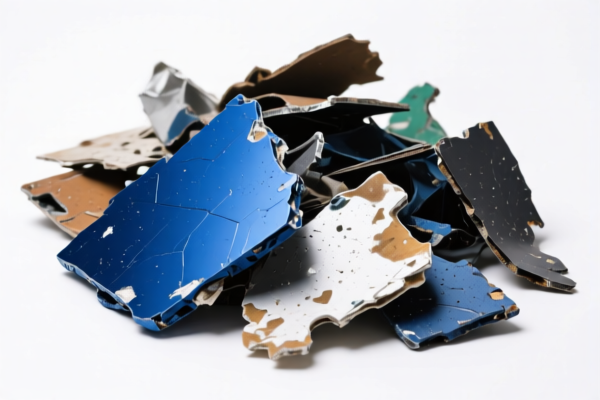
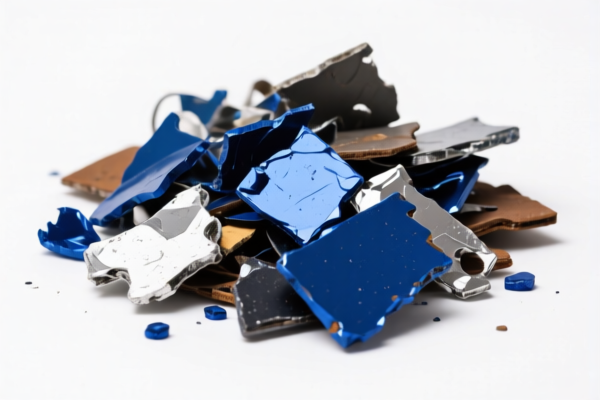
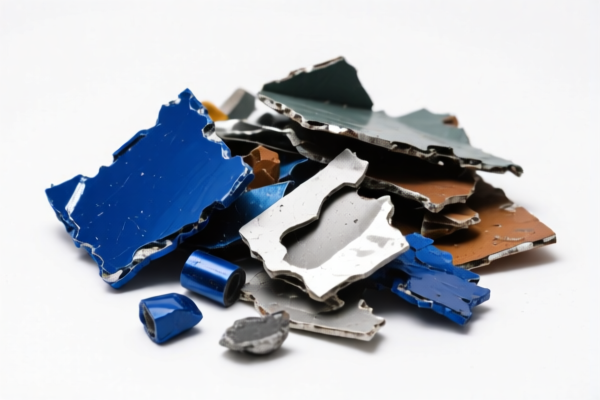
AI Analysis
⛏️ Copper Smelting Slag (Copper-Containing Residues)
🌐 HS Code Reference & Customs Clearance Guide | 2026 Latest Tariff Analysis | Professional Clearance Strategy
📌 I. Product Definition & Classification: Do You Really Understand "Copper Slag"?
Copper smelting slag is a byproduct of copper extraction and refining processes. It contains residual metals, arsenic, and other compounds. In international trade, it is not classified as "scrap copper" but as "slag, ash, and residues."
Key Distinction in Customs Classification: 1. Based on Principal Metal: * If the slag contains mainly Copper, it falls under HS 2620.30. * If the slag contains mainly Zinc (with some copper), it falls under a different sub-category (not in current data). 2. Based on Form (Waste vs. Residue): * Slag/Residues: Classified under Chapter 26 (Mineral Products). * Pure Waste/Scrap (e.g., spent anodes): Classified under Chapter 74 (Copper and Articles Thereof).
⚠️ Critical Warning:
- Do NOT confuse "Smelting Slag" (Chapter 26) with "Copper Waste/Scrap" (Chapter 74).
- Slag (2620) generally has lower or zero base tariffs (depending on origin/trade relations) but is subject to Section 301/IEEPA additional duties.
- Scrap/Anodes (7404) are strictly regulated and often face high additional tariffs (25%+) due to trade restrictions on waste imports.
📦 II. HS Code Classification Details (2026 Latest Tariff Authority)
| HS Code | Product Description | Application Scenario | Key Identifier |
|---|---|---|---|
2620.30.00.10 |
Slag, ash and residues... containing mainly copper Specifically: Copper content |
Copper smelting slag, anode slime residues, copper-rich industrial waste (non-scrap form) | ✅ Mainly Copper |
2620.30.00.30 |
Slag, ash and residues... containing mainly copper Specifically: Zinc content |
Copper slag with high zinc byproduct (less common in pure copper smelting) | ✅ Mainly Zinc |
7404.00.30.90 |
Copper waste and scrap: Of copper alloys Specifically: Other (less than 94% Cu) |
Spent anodes, copper alloy scrap, pure copper waste (NOT slag) | ❌ Not Slag (It's Scrap) |
7404.00.60.90 |
Copper waste and scrap: Of copper alloys Specifically: Other |
Other copper alloy waste and scrap | ❌ Not Slag (It's Scrap) |
🔍 Key Clarification:
- "Slag" (2620) is a mineral residue from smelting.
- "Waste/Scrap" (7404) is discarded manufactured copper or alloy products (e.g., spent anodes from electrolytic refining).
- Misclassification Risk: Declaring "Slag" as "Scrap" (or vice versa) can lead to severe penalties, as the regulatory frameworks for waste imports differ significantly.
💰 III. 2026 Latest Tariff Rate Breakdown (Including Additional Duties & Policy Surcharges)
✅ Applicable Country: USA (US)
✅ Origin: China (CN)
✅ Effective Time: 2025–2026 (Current Trade Policy Era)
🎯 1. 2620.30.00.10 —— Copper-Smelting Slag (Mainly Copper Content)
| Item | Content |
|---|---|
| Base Tariff | 0.0% (Ad valorem) |
| Section 301 / Additional Duty | +25.0% |
| Total Tariff | 25.0% |
| Tax Calculation | CIF Value × 25% |
| De Minimis Exemption | ❌ Not Available (Valued goods are subject to duty) |
| Legal Basis Path | HTSUS:2620.30.00.10 → USITC:Footnote 9903.88.01 (Section 301 List 4) |
📌 Explanation:
- Base Rate is 0%, but the 25% additional duty (Section 301) applies to all Chinese-origin copper residues/slages.
- This is a high-cost category for Chinese exporters.
- Note: If the origin is Vietnam, Malaysia, or Thailand, these duties may be avoided via rules of origin (需严格证明非中国原产)。
🎯 2. 2620.30.00.30 —— Copper Slag (Mainly Zinc Content)
| Item | Content |
|---|---|
| Base Tariff | 0.0% (Ad valorem) |
| Section 301 / Additional Duty | 0.0% (As per provided data) |
| Total Tariff | 0.0% |
| Tax Calculation | CIF Value × 0% |
| De Minimis Exemption | ❌ Not Available |
| Legal Basis Path | HTSUS:2620.30.00.30 → USITC:Footnote 9903.88.01 (Note: Data shows 0% additional duty for this specific subcode in this dataset) |
📌 Note:
- According to the provided data, this specific sub-code has 0% total tax.
- However, verify with current USITC lists, as zinc/copper complex slag duties can change based on trade agreements.
- This category is highly favorable if the zinc content is dominant and verified.
🎯 3. 7404.00.30.90 —— Spent Anodes & Copper Alloy Scrap (<94% Cu)
| Item | Content |
|---|---|
| Base Tariff | 0.0% (Ad valorem) |
| Section 301 / Additional Duty | +25.0% |
| Total Tariff | 25.0% |
| Tax Calculation | CIF Value × 25% |
| De Minimis Exemption | ❌ Not Available |
| Legal Basis Path | HTSUS:7404.00.30.90 → USITC:Footnote 9903.88.01 |
📌 Explanation:
- Spent anodes are considered "copper waste" and fall under Chapter 74.
- They are subject to the 25% additional duty under Section 301.
- Strict Documentation Required: Must prove it is "waste/scrap" and not "slag/mineral residue."
🎯 4. 7404.00.60.90 —— Other Copper Alloy Waste/Scrap
| Item | Content |
|---|---|
| Base Tariff | 0.0% (Ad valorem) |
| Section 301 / Additional Duty | +25.0% |
| Total Tariff | 25.0% |
| Tax Calculation | CIF Value × 25% |
| De Minimis Exemption | ❌ Not Available |
| Legal Basis Path | HTSUS:7404.00.60.90 → USITC:Footnote 9903.88.01 |
📌 Explanation:
- Any other copper alloy waste/scrap not specified elsewhere.
- Same 25% total tax as other copper scrap.
- High Risk of Inspection: Copper scrap is frequently targeted for anti-dumping and environmental compliance checks.
🛠️ IV. Customs Clearance Practical Advice (Battle-Tested Pitfall Avoidance)
✅ 1. Required Documentation Checklist (Non-Negotiable)
| Document | Must Provide | Explanation |
|---|---|---|
| ✅ Product Specification Sheet | ✔️ | Must clearly state: "Slag," "Residue," or "Waste/Scrap," and chemical composition (Cu%, Zn%, Arsenic%, etc.). |
| ✅ MSDS (Material Safety Data Sheet) | ✔️ | Crucial for hazardous materials (Arsenic content). |
| ✅ Certificate of Analysis (COA) | ✔️ | Lab report proving metal content (e.g., 60% Cu, 30% SiO₂). |
| ✅ Commercial Invoice | ✔️ | Must explicitly use the term "Copper Slag" or "Copper Waste" as per HS definition. |
| ✅ Bill of Lading | ✔️ | Clean bill of lading; no "dirty cargo" complaints. |
| ✅ Proof of Origin | ✔️ | To determine if Section 301 duties apply. |
✅ 2. Declaration Tips (Key Mantras)
🔥 "Slag is Mineral, Scrap is Metal; Name It Right, Avoid the Hit!"
| Scenario | Correct Declaration | Wrong Practice |
|---|---|---|
| Copper Smelting Slag | 2620.30.00.10 "Copper Smelting Slag" |
❌ Declare as "Copper Scrap" → 25% Tax (same, but wrong classification can lead to fines) |
| Spent Anodes | 7404.00.30.90 "Spent Anodes, Copper Alloy Scrap" |
❌ Declare as "Slag" → Misclassification |
| Zinc-Rich Copper Slag | 2620.30.00.30 "Slag containing mainly Zinc" |
❌ Declare as "Copper Slag" → Potential Tax Discrepancy |
| Mixed Waste | Separate Declaration | ❌ Mix slag and scrap in one container without clear separation |
✅ 3. Special Case Handling
| Situation | Handling Advice |
|---|---|
| High Arsenic Content | ⚠️ Environmental Alert: If arsenic exceeds certain thresholds, it may be classified as hazardous waste. Requires EPA compliance. |
| Origin: Vietnam/Thailand | 🇻🇳 Avoid 25% Duty: If smelted/refined in non-China countries, provide Certificate of Origin to claim 0% Additional Duty. |
| OEM Custom Slag | 📝 Provide Process Flow: Show smelting process to prove it's a "residue" (Chapter 26) not a "manufactured waste" (Chapter 74). |
| Packaging | 📦 Dust Control: Use sealed containers/bags to prevent spillage. Dust violations can lead to fines + detention. |
🌍 V. Global Market Comparison (2026 Latest)
| Country/Region | Recommended HS Code | Tariff (CN Origin) | Certification Requirements | Notes |
|---|---|---|---|---|
| 🇺🇸 USA | 2620.30.00.10 |
25% (Section 301) | EPA (if hazardous) | High duty; strict origin rules |
| 🇨🇳 China | 2620.30.00.10 |
0% (Import Duty) | No special certs | Domestic trade is tax-free for residues |
| 🇪🇺 EU | 2620.30 |
5.5% (Standard) | REACH + Waste Shipment Reg. | Strict waste import limits |
| 🇦🇺 Australia | 2620.30 |
5% | APVMA (if chemical) | Moderate duty |
| 🇯🇵 Japan | 2620.30 |
0% | JIS | Favorable for raw residues |
📌 Conclusion:
- USA is the most expensive market due to Section 301 tariffs.
- China is tax-free for imports (encourages recycling).
- EU/Japan require strict environmental compliance but lower tariffs.
📌 VI. Common Mistakes & Pitfall Avoidance (Lessons Learned)
❌ Mistake 1: Declaring "Slag" as "Raw Copper Ore"
👉 Consequence: HS Code 2603 has different duties and no Section 301 duty. Misclassification leads to underpayment of duties + penalties.
❌ Mistake 2: Not disclosing Arsenic Content
👉 Consequence: Classifies as hazardous waste. Goods detained or returned. Fines up to $10,000+ per day.
❌ Mistake 3: Mixing "Slag" (2620) and "Scrap" (7404) in one shipment without separate invoices
👉 Consequence: Customs may audit the entire shipment and apply the highest tax rate to all items.
❌ Mistake 4: Assuming "Copper Content" alone determines HS Code
👉 Consequence: Must also determine if it's Slag (Chapter 26) or Scrap (Chapter 74). Form matters!
✅ Correct Approach:
"Copper Smelting Slag, 60% Cu, 20% SiO₂, Arsenic <0.5%, Non-Hazardous, Origin: China, HTS: 2620.30.00.10"
🎯 VII. Conclusion: Precise Classification Saves Money!
🎯 Remember the Mantra:
🔹 "Slag is 2620, Scrap is 7404; Name It Right, Avoid the Drama!"
🔹 "25% Duty Hits Both, But Misclassification Hits Harder!"
📌 Pro Tip:
If your slag is originally from Vietnam, Mexico, or Malaysia, ensure you have legitimate proof of smelting in those countries. This can avoid the 25% US Section 301 duty.
Apply for Advance Ruling if unsure about "Slag vs. Scrap" classification.
📣 Immediate Action:
📞 Contact a Licensed Customs Broker + Provide Lab Report + Verify Origin
🚀 Clear Your Copper Slag Smoothly, Reduce Costs, Boost Profits!
✨ Professional Clearance Starts with Accurate Classification!
💼 Every Dollar Saved is a Dollar Earned!
Customer Reviews
About HS Code Classification
The Harmonized System (HS) is an internationally standardized nomenclature developed by the World Customs Organization (WCO) to classify traded products. Over 200 countries use the HS system as the basis for customs tariffs, trade statistics, and import/export regulations.
Each HS code follows a hierarchical structure:
- Chapter (2 digits) — Broad category of goods (e.g., Chapter 84: Machinery and Mechanical Appliances)
- Heading (4 digits) — More specific grouping within the chapter
- Subheading (6 digits) — Internationally standardized breakdown, used by all WCO member countries
- National subdivisions (8-10 digits) — Country-specific extensions for further classification, such as US HTSUS 10-digit codes
Correct HS code classification is essential for smooth customs clearance, accurate duty payment, and compliance with trade regulations. Misclassification can lead to customs delays, overpayment of duties, or penalties.
When importing from CN to US, the applicable tariff rates may include:
- Most-Favored-Nation (MFN) rate — The standard duty rate applied to WTO members
- General rate — Applied to countries without trade agreements
- Trade remedy duties — Additional tariffs such as Section 301 (anti-dumping), Section 232 (national security), or countervailing duties
The information provided on this page is for reference purposes only. For official classification, please consult with your local customs authority or a licensed customs broker.