Copper Tableware, Kitchenware, and Washroom Articles
CN → US| HS Code | Tariff Rate | Origin | Destination | Doc |
|---|---|---|---|---|
| 7418100004 | 70.5% | CN | US | Official Doc |
| 7418100053 | 70.5% | CN | US | Official Doc |
| 7419801500 | 88.0% | CN | US | Official Doc |
| 7419805050 | 85.0% | CN | US | Official Doc |
| 8215919000 | 20.2% | CN | US | Official Doc |
Product Images
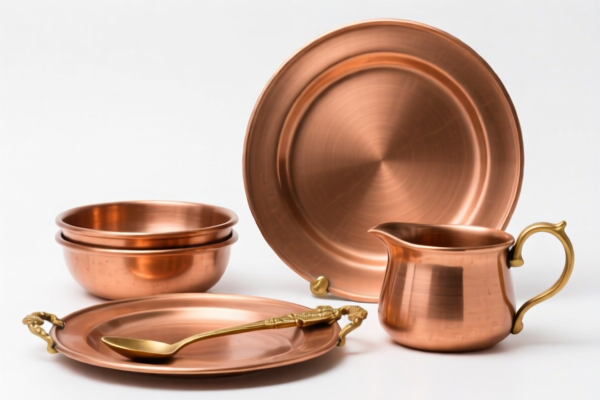
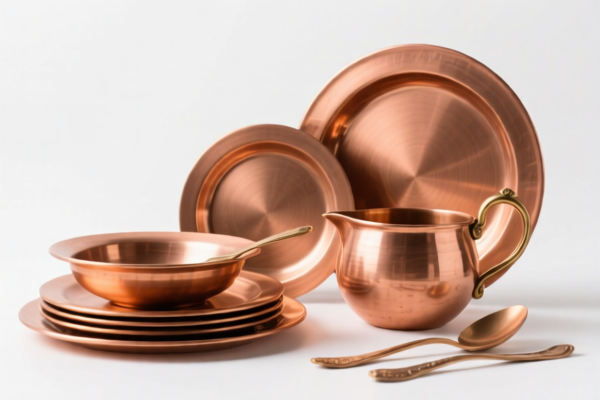
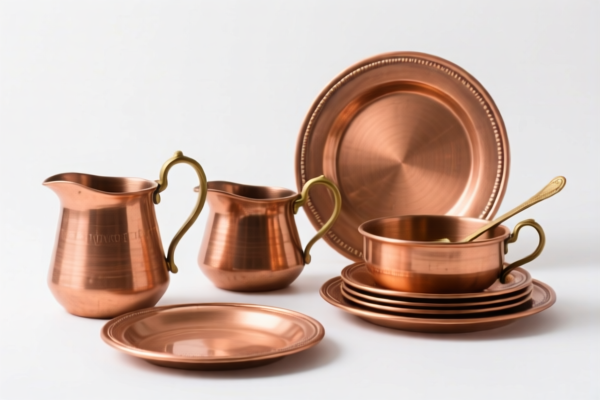
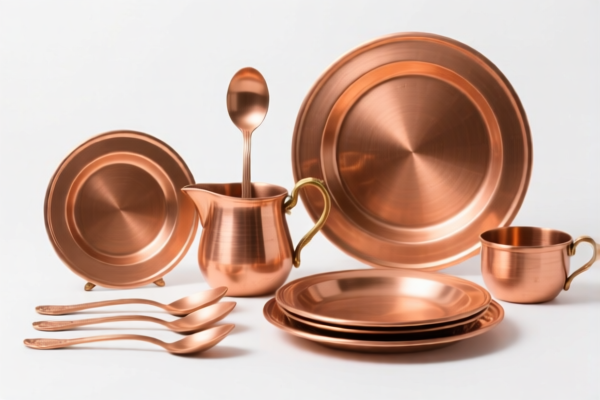
AI Analysis
🥄 Copper Tableware, Kitchenware, and Washroom Articles (铜制餐具、厨具及浴室用品)
🌐 HS Code Reference & Customs Clearance Guide | 2026 Latest Tariff Analysis | Professional Clearance Strategy
📌 I. Product Definition & Classification: Understanding "Copper Goods"
Copper articles span from luxury dining sets to industrial kitchen equipment and decorative bathroom fixtures. In international trade, they are strictly categorized based on function and completeness. Misclassification here is risky because copper products often carry high punitive tariffs under Section 232 and Section 301.
Two Main Categories: * Household/Kitchenware (Chapter 73/74 - Finished Goods): Items like pots, pans, cutlery, and table settings intended for direct use. * General Use/Other Articles (Chapter 74/82 - Miscellaneous): Items like containers, decorative pieces, or unfinished components that do not fit standard kitchen/table definitions.
⚠️ Critical Distinction Point:
- If it is a pot, pan, or plate designed for cooking/eating → Look at 7418.10 or 8215.91.
- If it is a container, bowl, or decorative item not primarily for cooking → Look at 7419.80.
- Note on "Washroom Articles": Pure copper bathroom fixtures (faucets, showerheads) often fall under 7419.80 (Other articles of copper) unless specifically defined as plumbing fitting parts in other chapters. However, our data focuses on general copper articles.
📦 II. HS Code Classification Details (2026 Latest Tariff Data)
| HS Code | Product Description | Application Scenario | Key Characteristics |
|---|---|---|---|
7418.10.00.04 |
Copper Tableware, Kitchenware, and Other Household Articles | Dining sets, copper trays, decorative kitchen accessories | ✅ Total Tax: 70.5% |
7418.10.00.53 |
Copper Cooking and Kitchen Utensils | Copper pots, pans, colanders, ladles | ✅ Total Tax: 70.5% |
7419.80.15.00 |
Copper Containers, Suitable for Food Storage | Copper buckets, large serving bowls, decorative food containers | ✅ Total Tax: 88.0% |
7419.80.50.50 |
Copper Articles, Not Elsewhere Specified (Other Finished Goods) | Decorative copper vases, non-food containers, general copper items | ✅ Total Tax: 85.0% |
8215.91.90.00 |
Non-Precious Metal Cutlery (Tableware) | Wait! Often confused. If "copper-plated" but base is non-precious metal, it might go here. Pure copper cutlery usually goes to 7418. This code covers "other" cutlery. | ✅ Total Tax: 20.2% |
🔍 Key Insight:
- Pots/Pans (7418.10.00.53) and Tableware (7418.10.00.04) share the same 70.5% rate.
- Containers (7419.80.15.00) are penalized higher at 88.0% due to "Steel/Aluminum/Copper" surcharges.
- General/Decorative (7419.80.50.50) are at 85.0%.
- Non-Precious Metal Cutlery (8215.91.90.00) is significantly lower at 20.2%. Caution: This applies if the item is not pure copper but plated or made of base metals. Pure copper cutlery must use 7418 codes.
💰 III. 2026 Latest Tariff Rate Breakdown (Detailed Policy Analysis)
✅ Applicable Country: United States (US)
✅ Origin: China (CN)
✅ Effective Date: Current trade war tariffs apply.
🎯 1. 7418.10.00.04 & 7418.10.00.53 — Copper Tableware & Kitchen Utensils
📌 Total Tax Rate: 70.5%
| Component | Rate | Legal Basis |
|---|---|---|
| Base MFN Rate | 3.0% | US Harmonized Tariff Schedule (HTS) |
| Section 301 (25%) | +25.0% | USITC Footnote (Trade War Tariffs) |
| Section 122/IEEPA | +10.0% | Executive Order on China Trade Practices |
| Section 232 (Steel/Alu/Copper Surcharge) | +50.0% | Critical: Applies to "Steel, Aluminum, Copper Articles" under Section 232 |
| Total | 70.5% | Sum of above |
📌 Explanation:
- The 50% surcharge is the heaviest component. It applies specifically to copper articles under Section 232.
- Even though copper is not steel or aluminum, recent enforcement includes copper products in this broad surcharge category for certain trade contexts.
- 70.5% is a very high effective duty. Profit margins must account for this.
🎯 2. 7419.80.15.00 — Copper Containers (Food Storage)
📌 Total Tax Rate: 88.0%
| Component | Rate | Legal Basis |
|---|---|---|
| Base MFN Rate | 3.0% | HTS |
| Section 301 | +25.0% | USITC Footnote |
| Section 122/IEEPA | +10.0% | E.O. on China Trade |
| Section 232 Surcharge | +50.0% | Applied to "Steel, Aluminum, Copper Articles" |
| Base Rate Difference | Adjustment | Some "Other" categories have 0% base, but here it's 3% + 25% + 10% + 50% = 88% |
📌 Explanation:
- This category has a higher total rate (88%) because it falls under "Other Articles" which may attract stricter scrutiny on "general merchandise" vs. "specific kitchenware."
- High Risk: Misdeclaring a "Container" as "Tableware" to get 70.5% is illegal and risky.
🎯 3. 7419.80.50.50 — Other Copper Articles
📌 Total Tax Rate: 85.0%
| Component | Rate | Legal Basis |
|---|---|---|
| Base MFN Rate | 0.0% | HTS (Some "Other" items have 0% base) |
| Section 301 | +25.0% | USITC Footnote |
| Section 122/IEEPA | +10.0% | E.O. on China Trade |
| Section 232 Surcharge | +50.0% | Applied to "Steel, Aluminum, Copper Articles" |
| Total | 85.0% | 0% + 25% + 10% + 50% |
📌 Explanation:
- Even with a 0% base rate, the 50% Section 232 and 35% combined surcharges push the rate to 85%.
- This is typical for "miscellaneous" copper goods.
🎯 4. 8215.91.90.00 — Non-Precious Metal Cutlery
📌 Total Tax Rate: 20.2%
| Component | Rate | Legal Basis |
|---|---|---|
| Base MFN Rate | 2.7% | HTS |
| Section 301 | +7.5% | USITC Footnote (Lower for some cutlery) |
| Section 122/IEEPA | +10.0% | E.O. on China Trade |
| Section 232 | 0% | Not Applied (Not classified under 232 steel/aluminum/copper surcharge in this specific code context) |
| Total | 20.2% | 2.7% + 7.5% + 10% |
📌 Explanation:
- Lowest Rate! But CRITICAL: This code is for Non-Precious Metal Cutlery (e.g., stainless steel, silver-plated base).
- Do NOT use this for PURE COPPER items. If you declare pure copper as "non-precious metal cutlery," you risk customs seizure, fines, and back-duties.
- Use this ONLY if the item is copper-plated over a base of stainless steel or other non-precious metal, and the copper is not the primary structural material.
🛠️ IV. Customs Clearance Practical Advice (Pitfall Avoidance Guide)
✅ 1. Documentation Checklist (Mandatory)
| Document | Required? | Explanation |
|---|---|---|
| ✅ Material Composition Certificate | ✔️ | Must specify "100% Pure Copper" or "Copper Alloy %. Crucial to avoid 8215 misclassification. |
| ✅ Product Photos (Usage Context) | ✔️ | Show the item in use (e.g., on a dining table, in a kitchen). Proves it is "Tableware/Kitchenware" (7418) vs. "Container" (7419). |
| ✅ Commercial Invoice | ✔️ | Clear description: "Pure Copper Cookware," "Copper Serving Bowl." Avoid vague terms like "Copper Item." |
| ✅ Packing List | ✔️ | Item by item. If mixing codes, separate lines. |
| ✅ HTS Classification Support Letter | ✔️ | From a licensed customs broker, justifying the code choice. |
✅ 2. Classification Strategy (Key Rules)
| Scenario | Correct HS Code | Why? | Tax Rate |
|---|---|---|---|
| Pure Copper Pot/Pan | 7418.10.00.53 |
Designed for cooking. | 70.5% |
| Pure Copper Plate/Bowl (Dining) | 7418.10.00.04 |
Designed for dining. | 70.5% |
| Pure Copper Bucket/Large Container | 7419.80.15.00 |
Container, not for direct cooking/eating. | 88.0% |
| Decorative Copper Vase | 7419.80.50.50 |
General article, not household/kitchen specific. | 85.0% |
| Stainless Steel with Copper Plating | 8215.91.90.00 |
Base metal is non-precious; copper is plating. | 20.2% |
🔥 "Don't Split, Don't Guess!"
- If you ship a set (e.g., pot + lid + handle), declare the entire set under the highest applicable code.
- If you ship pure copper, do not try to declare it as8215to save 50%. The customs officer will check the material. If it's pure copper, they will reclassify and fine you.
✅ 3. Special Case Handling
| Situation | Advice |
|---|---|
| OEM Custom Copper Sets | Provide design files. Ensure the description matches the visual function (kitchen vs. table). |
| Copper-Plated Items | If the base is steel/stainless, use 8215.91.90.00 for cutlery. Must prove base material in specs. |
| Import for Retail vs. Personal Use | Commercial import is subject to full duties. No de minimis exemption for these high-value items. |
| Origin: China vs. Vietnam | If assembled in Vietnam, ensure substantial transformation. Direct China origin triggers these high tariffs. |
🌍 V. Global Market Comparison (2026)
| Country/Region | Recommended HS Code | Tariff Rate (CN Origin) | Notes |
|---|---|---|---|
| 🇺🇸 USA | 7418.10.00.53 |
70.5% | High due to Section 232/301. |
| 🇪🇺 EU | 7323.94.00 |
~5-10% | No Section 232. Lower tariffs for copper kitchenware. |
| 🇨🇳 China | 7323.94.00 |
~5-10% | Domestic import tariffs are low. |
| 🇬🇧 UK | 7323.94.00 |
~5-10% | Post-Brexit, lower than US. |
📌 Conclusion:
- USA is the most expensive market for copper goods due to Section 232 and 301 tariffs.
- EU/UK/Asia offer much lower duty rates.
- Strategy: Consider supply chain diversification (e.g., assemble in Vietnam/Mexico) if exporting to the US, but ensure compliance with Rules of Origin.
📌 VI. Common Errors & Pitfalls (Blood Lessons)
❌ Error 1: Declaring Pure Copper Pots as "Stainless Steel"
👉 Consequence: Customs inspection reveals copper. Seizure, fines, and blacklisting.
❌ Error 2: Using 8215.91.90.00 for Pure Copper Cutlery
👉 Consequence: Tax paid at 20.2%, then reassessed at 70.5% + penalties. Back-taxes + interest.
❌ Error 3: Mixing "Kitchenware" and "Containers" in one shipment without separation
👉 Consequence: Customs may apply the highest rate (88%) to the entire shipment if not clearly separated.
❌ Error 4: Ignoring Section 232 Surcharge
👉 Consequence: Even if base tariff is low, the 50% surcharge applies to copper articles. Do not assume low base = low total.
✅ Correct Practice:
"Pure Copper Cooking Pot, 20cm, Model XYZ, 100% Copper, Origin China"
HS Code:7418.10.00.53
Tax: 70.5%
🎯 VII. Conclusion: Professional Declaration, Cost Control
🎯 Key Takeaway:
🔹 Pure Copper = High Tax (70.5% - 88%) in the US.
🔹 Copper-Plated Base Metal = Lower Tax (20.2%) in the US (if declared correctly).
🔹 Always Prove Material Composition.
📌 Tips:
- If you are exporting pure copper to the US, factor in the 70%+ duty into your pricing.
- Consider shifting production to countries with favorable trade agreements (e.g., Vietnam, Mexico) for US-bound goods.
- Use Advance Rulings from CBP if unsure about classification.
📣 Act Now:
📞 Consult a licensed customs broker.
📄 Provide material certificates.
🚀 Ensure accurate HS code declaration to avoid costly penalties.
✨ Accurate Classification is the First Step to Profitable Trade!
💼 Every Dollar Saved on Duty is a Dollar Added to Your Bottom Line!
Customer Reviews
About HS Code Classification
The Harmonized System (HS) is an internationally standardized nomenclature developed by the World Customs Organization (WCO) to classify traded products. Over 200 countries use the HS system as the basis for customs tariffs, trade statistics, and import/export regulations.
Each HS code follows a hierarchical structure:
- Chapter (2 digits) — Broad category of goods (e.g., Chapter 84: Machinery and Mechanical Appliances)
- Heading (4 digits) — More specific grouping within the chapter
- Subheading (6 digits) — Internationally standardized breakdown, used by all WCO member countries
- National subdivisions (8-10 digits) — Country-specific extensions for further classification, such as US HTSUS 10-digit codes
Correct HS code classification is essential for smooth customs clearance, accurate duty payment, and compliance with trade regulations. Misclassification can lead to customs delays, overpayment of duties, or penalties.
When importing from CN to US, the applicable tariff rates may include:
- Most-Favored-Nation (MFN) rate — The standard duty rate applied to WTO members
- General rate — Applied to countries without trade agreements
- Trade remedy duties — Additional tariffs such as Section 301 (anti-dumping), Section 232 (national security), or countervailing duties
The information provided on this page is for reference purposes only. For official classification, please consult with your local customs authority or a licensed customs broker.