Copper Wire Lamp
CN → US| HS Code | Tariff Rate | Origin | Destination | Doc |
|---|---|---|---|---|
| 8513104000 | 13.5% | CN | US | Official Doc |
| 8544493080 | 40.3% | CN | US | Official Doc |
| 9405310040 | 43.0% | CN | US | Official Doc |
| 9405390040 | 43.0% | CN | US | Official Doc |
| 8513102000 | 22.5% | CN | US | Official Doc |
Product Images
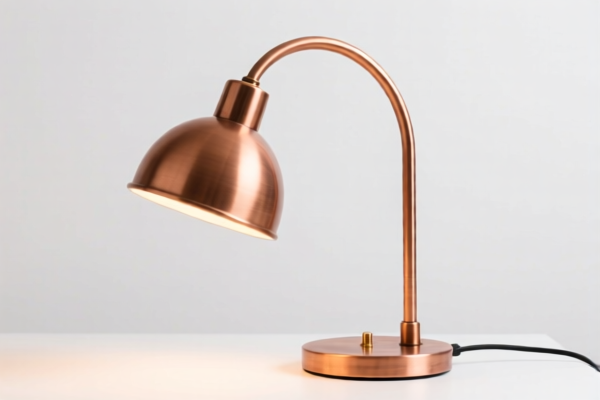


AI Analysis
✨ Copper Wire Lamp (Twinkle Lights / Fairy Lights)
🌐 HS Code Reference & Customs Clearance Guide | 2026 Tariff Breakdown | Professional Strategy for Global Shipping
📌 I. Product Definition & Classification: Is It a "Lamp" or a "Wire"?
The Copper Wire Lamp (often called Copper Wire Lights, Twinkle Lights, or Fairy Lights) is a flexible, low-voltage lighting product made of thin copper wire with embedded LED bulbs. It is widely used for decoration, landscaping, party settings, and holiday lighting.
In international trade, the classification depends on how it is powered and its physical structure:
- Portable Battery-Operated: If it runs on a battery and is designed for hand-held or temporary use → Portable Electric Lamp.
- Wired LED String: If it plugs into an outlet or has a long cord for continuous decoration → Electric Light Fixture / Lamp String.
- Component vs. Assembly: If sold as just the copper wire with integrated electronics vs. a complete packaged set.
⚠️ Key Distinction:
- Is it a self-contained portable light (like a flashlight)? →8513
- Is it a wired LED string for decoration? →9405
- Does it fall under insulated conductors? →8544(Rare for finished lamps, but possible for bare wire)
📦 II. HS Code Classification Breakdown (2026 Authoritative Reference)
Based on the product data, here are the 5 potential HS Codes for Copper Wire Lamps, ranging from portable lamps to LED strings.
| HS Code | Product Description | Classification Logic | Typical Use Case |
|---|---|---|---|
| 8513.10.40.00 | Portable Electric Lamp (Battery Operated) | Self-powered, portable, contains metallic conductive elements. | Handheld copper wire lamps, battery-powered string lights. |
| 8544.49.30.80 | Insulated Electric Conductor (Copper Wire) | Defined as copper-based insulated conductors; filament structure treated as conductor. | Risk Category: Often used for the wire component itself, but rarely for the finished lamp. |
| 9405.31.00.40 | LED String Lights (General Category) | Inferred LED elements; fits "Other" LED string category. | Standard copper wire string lights with LEDs. |
| 9405.39.00.40 | Other Electric Lamps (Non-Micro Series) | Metal wire shape + illumination purpose; non-micro wired string. | Heavy-duty or large-scale copper wire decoration lights. |
| 8513.10.20.00 | Portable Electric Lamp (Higher Duty) | Material: Copper; Form: Lamp; Purpose: Lighting. | Specific portable variants with higher base tariff. |
🔍 Critical Insight:
-9405Series is the most common for decorative copper wire strings (LED based).
-8513Series applies only if the lamp is battery-operated and portable (like a flashlight).
-8544is risky; unless the product is sold as just the wire without functional lighting parts, this is usually incorrect for finished lamps.
💰 III. 2026 Tariff Rate Breakdown (Detailed Analysis)
✅ Applicable Market: United States (US)
✅ Origin: China (CN)
✅ 生效时间: Current & Projected 2026 Schedules
🎯 1. 8513.10.40.00 – Portable Electric Lamp (Battery)
The "Low Duty" Option (If Portable)
| Item | Detail |
|---|---|
| Base Tariff | 3.5% (Standard Most Favored Nation) |
| Section 301 (Add-on) | 0.0% |
| Section 122 Tariff | +10.0% |
| Total Rate | 13.5% |
| Calculation | CIF Value × 13.5% |
| Legal Basis | Section 122 (China-specific add-on) |
📌 Explanation:
- If your copper wire lamp is battery-powered and portable, this is the best rate (13.5%).
- No Section 301 tax applies here, which saves significant cost compared to other categories.
🎯 2. 8544.49.30.80 – Insulated Copper Conductor
The "High Risk" Option (Often Misclassified)
| Item | Detail |
|---|---|
| Base Tariff | 5.3% |
| Section 301 (Add-on) | +25.0% |
| Section 122 Tariff | +10.0% |
| Total Rate | 40.3% |
| Calculation | CIF Value × 40.3% |
| Legal Basis | High Section 301 rate for electrical conductors. |
📌 Warning:
- Do not use this code unless you are shipping bare copper wire components.
- Using this for a finished lamp results in a massive 40.3% tax.
- This is a high-risk misclassification for finished lighting products.
🎯 3. 9405.31.00.40 & 9405.39.00.40 – LED String / Other Lamps
The "Standard Decoration" Option (Most Likely)
| Item | Detail |
|---|---|
| Base Tariff | 8.0% |
| Section 301 (Add-on) | +25.0% |
| Section 122 Tariff | +10.0% |
| Total Rate | 43.0% |
| Calculation | CIF Value × 43.0% |
| Legal Basis | 9405 + Section 301 + Section 122 |
📌 Critical Note:
- Most standard copper wire fairy lights (plugged in, not portable) fall here.
- Total Tax = 43% is very high.
- The Section 301 (25%) + Section 122 (10%) combined with the base rate make this expensive.
- Strategy: Verify if your product can be reclassified as8513(Portable/Battery) to save ~30% in taxes.
🎯 4. 8513.10.20.00 – Portable Electric Lamp (Specific Variant)
The "Medium Duty" Option
| Item | Detail |
|---|---|
| Base Tariff | 12.5% |
| Section 301 (Add-on) | 0.0% |
| Section 122 Tariff | +10.0% |
| Total Rate | 22.5% |
| Calculation | CIF Value × 22.5% |
📌 Explanation:
- A middle-ground option for portable lamps that don't fit the8513.10.40specific description.
- Tax = 22.5% is better than9405(43%) but worse than8513.10.40(13.5%).
🛠️ IV. Customs Clearance & Shipping Strategy (Action Plan)
✅ 1. Critical Decision: Portable vs. Wired
The Golden Rule:
Can it run on batteries?
- YES → Aim for8513.10.40.00(13.5% Total Tax). Save 29.5% vs. wired!
- NO (Must plug in) → Must use9405.31.00.40or9405.39.00.40(43% Total Tax).
✅ 2. Documentation Checklist
To ensure smooth clearance and avoid audits:
| Document | Requirement | Why? |
|---|---|---|
| Product Photos | Show battery compartment (if portable) OR plug/cord (if wired) | Proves classification logic. |
| Specification Sheet | List Voltage (e.g., 3V Battery vs. 110V Mains) | Confirms "Portable" status for 8513. |
| Circuit Diagram | Show internal wiring | Prevents misclassification as 8544 (Wire). |
| Bill of Materials | Detail Copper Wire + LED + Battery/Plug | Justifies material composition. |
| Declaration Statement | Explicitly state "Battery Operated" or "Plug-in" | Matches HS Code description. |
✅ 3. Tax Optimization Tactics
| Scenario | Strategy |
|---|---|
| High Cost Risk | If selling wired copper lights (43% tax), consider bundling with lower-tax accessories or using Bonded Warehousing to defer payment. |
| Misclassification | NEVER declare a wired lamp as 8544 (Wire) just to save tax. CBP audits frequently check this. If caught, penalties + back taxes. |
| Battery Claim | If the lamp has a battery, explicitly state "Battery Powered" in the commercial invoice to claim 8513. If it has a plug, do not claim battery power. |
🌍 V. Market Comparison (2026 Outlook)
| Market | Recommended HS Code | Estimated Total Tax (China Origin) | Notes |
|---|---|---|---|
| 🇺🇸 USA | 9405 (Wired) / 8513 (Portable) |
43.0% (Wired) / 13.5% (Portable) | Section 122 & 301 apply. |
| 🇨🇳 China | 9405 / 8513 |
5% - 12% | No Section 301/122 add-ons. |
| 🇪🇺 EU | 9405 / 8513 |
2.0% - 4.5% | CE Mark required; No Section 301. |
| 🇯🇵 Japan | 9405 / 8513 |
6.0% | PSE Certification required. |
📌 Conclusion:
The USA market is the most expensive for Copper Wire Lamps due to the 301 (25%) + 122 (10%)叠加.
Portable versions (8513) are the only way to reduce the tax burden significantly (from 43% down to 13.5%).
📌 VI. Common Pitfalls & "Red Flags"
❌ Pitfall 1: Declaring Wired Lights as 8513 (Portable).
👉 Result: CBP audit, classification correction, +29.5% tax + penalties.
✅ Fix: Only use 8513 if the product has a battery and no permanent cord.
❌ Pitfall 2: Declaring Finished Lamps as 8544 (Copper Wire).
👉 Result: Misclassification. Finished goods with lighting function must be 9405 or 8513.
✅ Fix: Use 9405 for LED strings, even if the wire is copper.
❌ Pitfall 3: Ignoring Section 122.
👉 Result: Underpaying 10% tax.
✅ Fix: All China-origin 8513 and 9405 lamps are subject to the 10% Section 122 tariff.
🎯 VII. Final Verdict & Recommendation
🚀 Action Plan:
1. Design Check: Can your Copper Wire Lamp be sold with a battery pack?
- YES → Ship as8513.10.40.00(Tax: 13.5%). High Profit Margin!
- NO → Must ship as9405.31.00.40(Tax: 43.0%). Low Margin Risk.
- Documentation: Ensure your invoice clearly states "Battery Operated" or "Plug-in" to match the HS Code.
- Supplier Check: If using US suppliers, they may avoid Section 122 (if not China origin), but check rules carefully.
💡 Pro Tip:
If your product is decorative but plug-in, the 43% tax is unavoidable under current US policy. Consider relocating final assembly to a non-China country (e.g., Vietnam, Mexico) to potentially qualify for Section 301 exemptions (subject to current trade agreements).
✨ Professional Customs Clearance Starts with Accurate Classification!
💼 Don't let a 29.5% tax difference eat your profit!
Customer Reviews
About HS Code Classification
The Harmonized System (HS) is an internationally standardized nomenclature developed by the World Customs Organization (WCO) to classify traded products. Over 200 countries use the HS system as the basis for customs tariffs, trade statistics, and import/export regulations.
Each HS code follows a hierarchical structure:
- Chapter (2 digits) — Broad category of goods (e.g., Chapter 84: Machinery and Mechanical Appliances)
- Heading (4 digits) — More specific grouping within the chapter
- Subheading (6 digits) — Internationally standardized breakdown, used by all WCO member countries
- National subdivisions (8-10 digits) — Country-specific extensions for further classification, such as US HTSUS 10-digit codes
Correct HS code classification is essential for smooth customs clearance, accurate duty payment, and compliance with trade regulations. Misclassification can lead to customs delays, overpayment of duties, or penalties.
When importing from CN to US, the applicable tariff rates may include:
- Most-Favored-Nation (MFN) rate — The standard duty rate applied to WTO members
- General rate — Applied to countries without trade agreements
- Trade remedy duties — Additional tariffs such as Section 301 (anti-dumping), Section 232 (national security), or countervailing duties
The information provided on this page is for reference purposes only. For official classification, please consult with your local customs authority or a licensed customs broker.