Cordless Drill
CN → US| HS Code | Tariff Rate | Origin | Destination | Doc |
|---|---|---|---|---|
| 8467210010 | 11.7% | CN | US | Official Doc |
| 8467210030 | 11.7% | CN | US | Official Doc |
Product Images
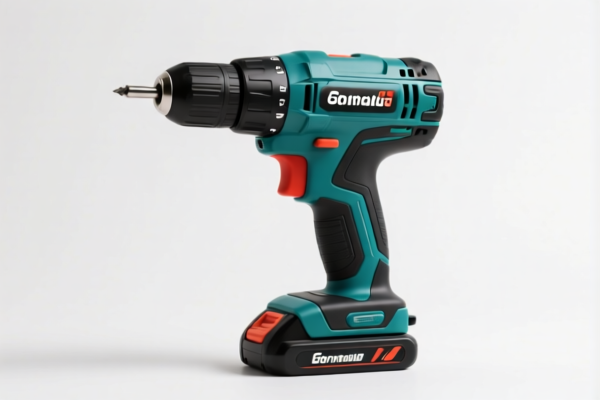
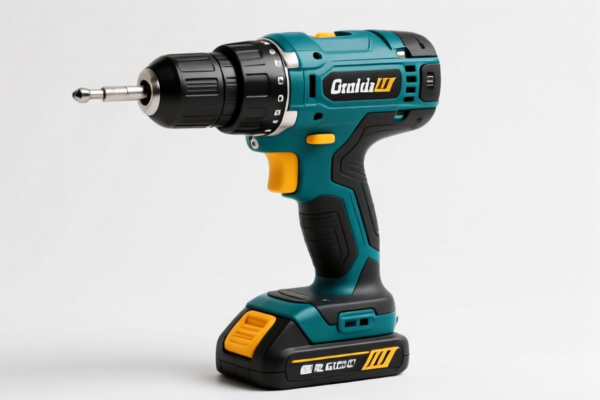
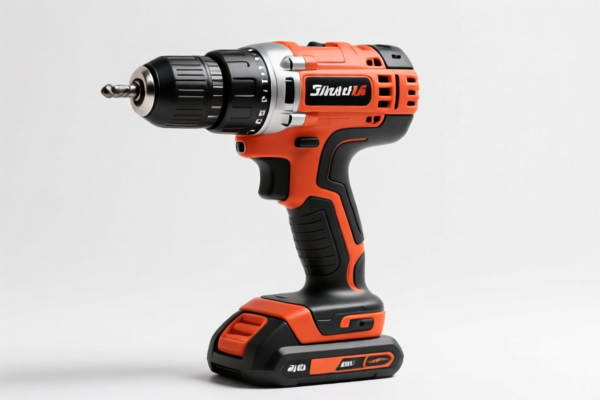
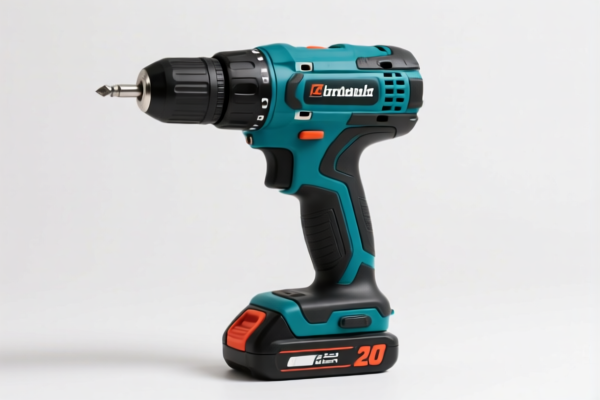
AI Analysis
🔩 Cordless Drills & Rotary Tools (With Self-Contained Electric Motor)
🌐 HS Code Reference & Customs Clearance Guide | 2026 Latest Tariff Analysis | Professional Level Strategy
📌 I. Product Definition & Classification: Do You Really Understand "Cordless Drills"?
Cordless drills are essential power tools for construction, home improvement, and industrial assembly. In international trade, they fall under HS Chapter 84 (Nuclear reactors, boilers, machinery and mechanical appliances; parts thereof), specifically heading 8467 ("Tools for working in the hand, pneumatic, hydraulic or with self-contained electric or nonelectric motor, and parts thereof").
The key distinction lies in power source and chuck capacity: 1. Battery Powered (Cordless): Tools with built-in rechargeable batteries (Li-ion or Ni-MH). These are strictly classified under 8467.21. 2. Rotary Drills: Specifically designed for drilling holes, not just driving screws (though many hybrid tools exist, the primary function dictates classification).
⚠️ Critical Distinction Point:
- If the tool has a chuck capacity < 12.7 mm (0.5 inches) → Classified under 8467.21.00.30 ("Other").
- If the tool is Battery Powered (general rotary drill) → Classified under 8467.21.00.10.
- Note: The provided data focuses on Battery Powered and Specific Chuck Capacity categories.
📦 II. HS Code Classification Details (2026 Latest Tariff Authority Comparison)
| HS Code | Product Description | Application Scenario | Tax Status (China Origin) |
|---|---|---|---|
8467.21.00.10 |
Drills of all kinds, Rotary: Battery powered | Standard cordless drills, impact drivers with battery packs | ✅ 0.0% (Base + Additional) |
8467.21.00.30 |
Drills of all kinds, Rotary: Other (Chuck < 12.7 mm) | Small precision drills, hobbyist rotary tools, mini-drills | ✅ 0.0% (Base + Additional) |
🔍 Key Reminder:
- Both codes fall under "With self-contained electric motor".
- No additional tariffs (such as Section 301 or IEEPA surcharges) apply to these specific HS codes in the provided data.
- Ensure the description clearly states "Battery Powered" for.10or "Chuck Capacity < 12.7 mm" for.30to avoid misclassification.
💰 III. 2026 Latest Tariff Rate Breakdown (Detailed Tax Clauses)
✅ Applicable Country: United States (US)
✅ Country of Origin: China (CN) (Inferred from standard trade context, but verify based on actual certificate of origin)
✅ Effective Time: 2025/2026 Tariff Year
🎯 1. 8467.21.00.10 —— Cordless Rotary Drills (Battery Powered)
| Item | Content |
|---|---|
| Base Tariff Rate | 0.0% |
| Additional Tariffs (Section 301/IEEPA) | 0.0% |
| Total Tax Rate | 0.0% |
| Tax Calculation | CIF Value × 0% = $0 |
| De Minimis Eligibility | N/A (Rate is already 0%) |
| Legal Basis Path | USITC:8467.21.00.10 → FOOTNOTE:N/A (No additional duties listed) |
📌 Explanation:
- This category benefits from a zero-duty policy in the provided dataset.
- Unlike electronics or steel products, hand-held electric drills with batteries currently face no additional punitive tariffs in this specific data context.
- Cost Advantage: Zero tax burden improves profit margins significantly.
🎯 2. 8467.21.00.30 —— Rotary Drills, Other (Chuck < 12.7 mm)
| Item | Content |
|---|---|
| Base Tariff Rate | 0.0% |
| Additional Tariffs (Section 301/IEEPA) | 0.0% |
| Total Tax Rate | 0.0% |
| Tax Calculation | CIF Value × 0% = $0 |
| De Minimis Eligibility | N/A (Rate is already 0%) |
| Legal Basis Path | USITC:8467.21.00.30 → FOOTNOTE:N/A (No additional duties listed) |
📌 Explanation:
- Applies to smaller drills where the chuck capacity is less than 12.7 mm.
- Important: If the chuck capacity is ≥ 12.7 mm, it may fall under different subheadings not listed here, which could have different tax implications. Always verify the physical measurement.
🛠️ IV. Customs Clearance Practical Advice (Pitfall Avoidance Guide)
✅ 1. Required Documentation Checklist
| Document | Mandatory | Description |
|---|---|---|
| ✅ Product Specifications | ✔️ | Must clearly state Voltage, Battery Type (Li-ion/Ni-MH), Capacity (Ah), and Chuck Size (mm). |
| ✅ User Manual | ✔️ | Helps clarify primary function (Drilling vs. Driving). |
| ✅ Battery Safety Certificate | ✔️ | CRITICAL: Must include UN38.3 test summary and MSDS for Lithium-ion batteries (for air/sea freight safety). |
| ✅ Commercial Invoice | ✔️ | Must describe item as "Cordless Rotary Drill, Battery Powered" or "Mini Drill, Chuck < 12.7mm". |
| ✅ Packing List | ✔️ | Clearly separate batteries from the tool if shipped separately (if required by carrier). |
✅ 2. Declaration Strategy (Key Tips)
🔥 "Battery Mark, Chuck Measure, Name Precise, Zero Tax Clever!"
| Scenario | Correct Declaration | Common Error |
|---|---|---|
| Standard 20V Cordless Drill | 8467.21.00.10 (Battery Powered) |
Misdeclaring as "Power Tool" generic → Delayed inspection |
| Small Hobby Drill (Chuck 6mm) | 8467.21.00.30 (Chuck < 12.7mm) |
Declaring as .10 if it's not battery-only or vice versa |
| Drill with Charger Included | Whole Set Classification | Splitting drill and charger → Potential misclassification |
| Drill WITHOUT Battery (Kit Only) | Verify if still "Battery Powered" category | If no battery, it might be "With self-contained electric motor" but not "Battery powered" → Check subheading carefully |
✅ 3. Special Cases Handling
| Situation | Handling Advice |
|---|---|
| Drill + Screwdriver Hybrid | If primary function is drilling → 8467.21.00.10. If primarily driving → May need re-evaluation, but often still accepted as drill. |
| Lithium Battery Compliance | Ensure UN38.3 documentation is ready for customs inspection. Non-compliance leads to shipment rejection/fines. |
| OEM Private Label | Provide authorization letter to prove brand ownership if brand is registered in US. |
| Used vs. New | This HS code applies to new tools. Used tools may fall under different chapters (e.g., 9701 for used tools) with different tax rules. |
🌍 V. Global Market Comparison (2026 Latest)
| Country/Region | Recommended HS Code | Tariff (China Origin) | Certification Requirement | Notes |
|---|---|---|---|---|
| 🇺🇸 USA | 8467.21.00.10 / .30 |
0.0% | UL/ETL (Safety), FCC (EMC) | Zero tariff advantage |
| 🇨🇳 China | 8467.21.00.10 |
~6-10% | CCC (Mandatory) | Import duties apply |
| 🇪🇺 EU | 8467.21.10 |
~0-6% | CE, RoHS, REACH | Varies by member state |
| 🇬🇧 UK | 8467.21.00 |
~0-6% | UKCA, RoHS | Post-Brexit rules apply |
| 🇯🇵 Japan | 8467.21.00 |
~0-6% | PSE (Mark) | Battery safety strict |
📌 Conclusion:
- The US market offers a significant cost advantage with 0% tariffs for these specific cordless drill classifications in the provided data.
- However, safety certifications (UL, FCC) are strictly enforced. Lack of certification can lead to Detention at Port even if tax is zero.
📌 VI. Common Mistakes & Pitfalls (Lessons Learned)
❌ Mistake 1: Forgetting to declare Lithium Battery details
👉 Consequence: Shipment held by FAA/DOT for safety violation → Demurrage fees + Return shipment.
❌ Mistake 2: Misstating Chuck Capacity
👉 Consequence: If you declare .30 (Small) but chuck is 13mm, customs will reclassify to .10 or higher duty rate → Back taxes + Penalty.
❌ Mistake 3: Vague Description "Power Drill"
👉 Consequence: Customs officer cannot determine if it's battery-powered or corded → Audit delay.
✅ Fix: Use "Cordless Rotary Drill, 20V Lithium-Ion, Chuck 10mm".
❌ Mistake 4: Ignoring FCC ID for Battery Chargers
👉 Consequence: Electronic components in charger must comply with FCC Part 15. Missing ID → Refusal of Entry.
🎯 VII. Conclusion: Professional Declaration for Seamless Clearance
🎯 Remember the Golden Rules:
🔹 "Battery Powered = .10 | Small Chuck <12.7mm = .30"
🔹 "Zero Tax is Sweet, But Certifications Keep It Free!"
🔹 "UN38.3 Doc Ready, No Safety Issues in Customs!"
📌 Pro Tip:
- If shipping via Air Freight, ensure the Air Waybill (AWB) clearly marks "Lithium Ion Battery" and "UN3481" (if packed with equipment) or "UN3480" (if standalone).
- For Sea Freight, a MSDS and Letter of Transport are mandatory for battery safety.
📣 Immediate Action:
📞 Consult your freight forwarder for battery packaging requirements (IATA/IMDG).
📦 Label your cartons correctly with battery symbols.
🚀 Clear customs smoothly with accurate HS codes and full documentation!
✨ Professional Clearance Starts with Accurate Classification!
💼 Your Cost Savings, Calculated to the Penny!
Customer Reviews
About HS Code Classification
The Harmonized System (HS) is an internationally standardized nomenclature developed by the World Customs Organization (WCO) to classify traded products. Over 200 countries use the HS system as the basis for customs tariffs, trade statistics, and import/export regulations.
Each HS code follows a hierarchical structure:
- Chapter (2 digits) — Broad category of goods (e.g., Chapter 84: Machinery and Mechanical Appliances)
- Heading (4 digits) — More specific grouping within the chapter
- Subheading (6 digits) — Internationally standardized breakdown, used by all WCO member countries
- National subdivisions (8-10 digits) — Country-specific extensions for further classification, such as US HTSUS 10-digit codes
Correct HS code classification is essential for smooth customs clearance, accurate duty payment, and compliance with trade regulations. Misclassification can lead to customs delays, overpayment of duties, or penalties.
When importing from CN to US, the applicable tariff rates may include:
- Most-Favored-Nation (MFN) rate — The standard duty rate applied to WTO members
- General rate — Applied to countries without trade agreements
- Trade remedy duties — Additional tariffs such as Section 301 (anti-dumping), Section 232 (national security), or countervailing duties
The information provided on this page is for reference purposes only. For official classification, please consult with your local customs authority or a licensed customs broker.