Cordless Pressure Washer
CN → US| HS Code | Tariff Rate | Origin | Destination | Doc |
|---|---|---|---|---|
| 8509805095 | 14.2% | CN | US | Official Doc |
| 8509801000 | 10.0% | CN | US | Official Doc |
| 8424899000 | 36.8% | CN | US | Official Doc |
| 8424820090 | 37.4% | CN | US | Official Doc |
Product Images
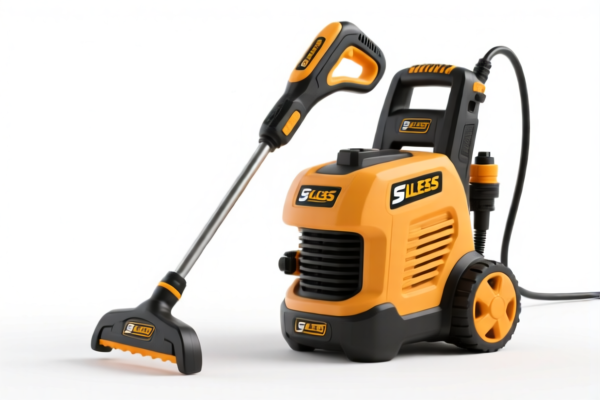
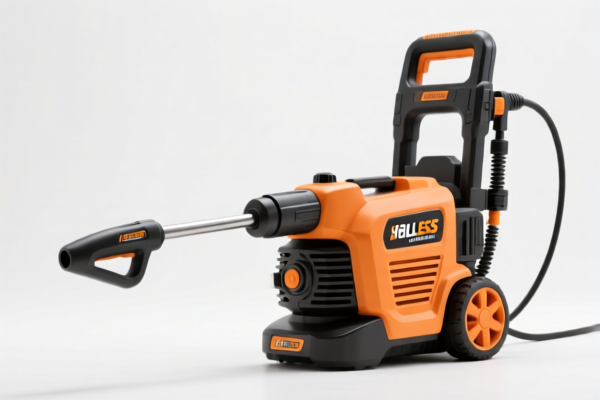
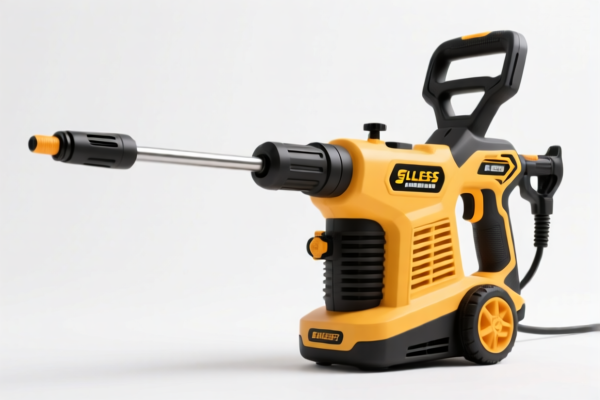
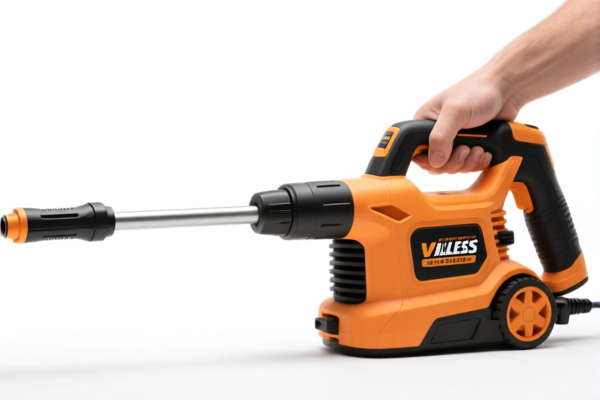
AI Analysis
🚿 Cordless Pressure Washer (Portable High-Pressure Cleaner)
🌐 HS Code Reference & Customs Clearance Guide | 2026 Latest Tariff Analysis | Professional Strategy
📌 I. Product Definition & Classification: What is a "Cordless Pressure Washer"?
A cordless pressure washer is a portable cleaning device powered by an integrated battery or electric motor, designed to generate high-pressure water jets for removing dirt, grime, and debris from surfaces. In international trade, classification depends heavily on whether it is viewed as a "domestic appliance with its own motor" (Chapter 85) or a "mechanical appliance for spraying liquids" (Chapter 84).
Key Distinction: * Classification A (Ch 85): Viewed as a "Small Household Electrical Appliance" similar to a vacuum cleaner or blender. Focuses on the electric motor driving the pump. * Classification B (Ch 84): Viewed as a "Machinery for projecting, dispersing or spraying liquids." Focuses on the functional output (high-pressure spray) rather than the power source or domestic use.
⚠️ Critical Warning:
- If declared as Ch 85, tariffs may be lower (depending on specific sub-headings), but customs may challenge this if the device is too large or industrial for "household" use.
- If declared as Ch 84, it is subject to Section 301 (25%) + Section 122/IEEPA (10%) duties, resulting in significantly higher total taxes.
- Misclassification Risk: Declaring a high-power, industrial-grade cordless washer as a "home appliance" to avoid Section 301 duties is a common customs audit trigger.
📦 II. HS Code Classification Details (Based on Provided Data)
| HS Code | Product Description | Total Tax Rate | Tax Composition Breakdown |
|---|---|---|---|
| 8509.80.50.95 | Portable Pressure Washer, household appliance type, with electric motor, metal/plastic composition. | 14.2% | Base: 4.2% ADD: 0.0% Sec 122/IEEPA: 10% |
| 8509.80.10.00 | Portable Pressure Washer, for cleaning purposes, portable form, electric motor driven. | 10.0% | Base: 0.0% ADD: 0.0% Sec 122/IEEPA: 10% |
| 8424.89.90.00 | Portable Pressure Washer, for high-pressure cleaning, mechanical appliance for spraying liquids. | 36.8% | Base: 1.8% ADD (Sec 301): 25.0% Sec 122/IEEPA: 10% |
| 8424.82.00.90 | Portable Pressure Washer, mechanical appliance for spraying liquids, fits 8424.82 functional description. | 37.4% | Base: 2.4% ADD (Sec 301): 25.0% Sec 122/IEEPA: 10% |
🔍 Analysis of Tax Discrepancy:
- The Ch 85 codes (8509.80.xxxx) carry a 10% IEEPA/Sec 122 tariff but NO Section 301 (25%) tariff. Total tax: 10%–14.2%.
- The Ch 84 codes (8424.8x.xx) carry BOTH Section 301 (25%) AND IEEPA/Sec 122 (10%) tariffs. Total tax: 36.8%–37.4%.
- Savings Potential: Correct classification under Ch 85 can save ~25% in duties compared to Ch 84.
💰 III. 2026 Latest Tariff Rate Details (With Additional Taxes & Policy Add-ons)
✅ Applicable Country: United States (US)
✅ Origin: China (CN)
✅ Effective Date: 2025/2026 (Current Trade Rules)
🎯 1. 8509.80.10.00 & 8509.80.50.95 —— Classified as Household Electrical Appliances
| Item | Content |
|---|---|
| Base Tariff | 0% (for 8509.80.10.00) / 4.2% (for 8509.80.50.95) |
| USITC Sec 301 Surcharge | 0% (Exempt when classified under Ch 85 as small household appliances) |
| IEEPA / Sec 122 Surcharge | +10% (Targeted at China-origin goods under specific executive orders) |
| Total Effective Rate | 10.0% (for .10.00) 14.2% (for .50.95) |
| De Minimis Eligibility | ❌ No (Most high-powered cleaning devices exceed $800 threshold or are excluded from de minimis for China) |
| Legal Basis Path | IEEPA:9903.01.25 → HTSUS:8509.80 |
📌 Explanation:
- Why no 25%? HS Chapter 85 (Electrical Machinery) often falls outside the specific Section 301 lists that target industrial machinery (Chapter 84) or steel/aluminum.
- Why 10%? The IEEPA/Sec 122 tariff applies broadly to many Chinese imports regardless of chapter, unless specifically exempted.
- Strategy: Arguing for "Household Appliance" status is key to avoiding the 25% penalty.
🎯 2. 8424.89.90.00 & 8424.82.00.90 —— Classified as Spraying Machinery
| Item | Content |
|---|---|
| Base Tariff | 1.8% (for .89.90) / 2.4% (for .82.00.90) |
| USITC Sec 301 Surcharge | +25% (Section 301 Tariff List 3/4 items targeting machinery) |
| IEEPA / Sec 122 Surcharge | +10% |
| Total Effective Rate | 36.8% (for .89.90) 37.4% (for .82.00.90) |
| De Minimis Eligibility | ❌ No |
| Legal Basis Path | USITC:8424.82/89 → IEEPA:9903.01.25 |
📌 Explanation:
- Why so high? Chapter 84 machinery is heavily targeted by Section 301.
- Cumulative Tax: The 25% is additive to the base and the 10% IEEPA.
- Risk: If Customs disagrees with your Ch 85 classification, they will reassess under Ch 84, resulting in back taxes + penalties.
🛠️ IV. Customs Clearance Practical Advice (Avoiding Pitfalls)
✅ 1. Documentation Checklist (Essential)
| Document | Required | Explanation |
|---|---|---|
| ✅ Product Specification Sheet | ✔️ | Must highlight "Portable," "Cordless," "Battery/Electric Motor," and "Household/Personal Use" keywords. |
| ✅ Power Source Details | ✔️ | Explicitly state voltage, wattage, and battery capacity. Low-wattage devices favor Ch 85. |
| ✅ Product Photos | ✔️ | Show the entire unit, including handle, nozzle, and battery pack. Avoid images that look like industrial construction equipment. |
| ✅ Commercial Invoice | ✔️ | Description must match HS Code rationale. E.g., "Cordless Electric Pressure Washer, Household Cleaning Tool" rather than "High-Pressure Industrial Cleaner." |
| ✅ User Manual | ✔️ | Proves intended use is for home/garden/patio cleaning, not industrial concrete cutting. |
| ✅ Battery MSDS | ✔️ | Required for air/sea freight due to lithium-ion content. |
✅ 2. Declaration Strategy (Key Mantras)
🔥 "Small & Portable is Ch85, Big & Industrial is Ch84. Name it right, save 25%!"
| Scenario | Correct Declaration | Wrong Declaration | Consequence |
|---|---|---|---|
| Handheld/Home Garden Washer | 8509.80.10.00 (10%) |
8424.89.90.00 (36.8%) |
Overpay ~26.8% |
| Heavy-Duty Commercial Unit | 8424.82.00.90 (37.4%) |
8509.80.10.00 (10%) |
Customs Audit, Back Taxes, Penalties |
| Split Shipment (Parts) | Not Recommended | Ship motor as Ch85, pump as Ch84 | "Gross Misclassification" risk |
✅ 3. Special Case Handling
| Situation | Handling Advice |
|---|---|
| High Pressure (>2000 PSI) | Customs may view this as "Industrial." Keep description focused on portability and electric motor to support Ch 85. |
| Bundle with Accessories | If selling with a hose kit, brush, and nozzle, declare as a single unit. Do not split. |
| OEM/White Label | Ensure the marketing materials and user manual clearly state "For Home Use" to support the Ch 85 argument. |
🌍 V. Global Market Comparison (2026 Latest)
| Country/Region | Recommended HS Code | Tariff (China Origin) | Certification | Notes |
|---|---|---|---|---|
| 🇺🇸 USA | 8509.80.10.00 |
10% (vs 37.4% if Ch84) | FCC + UL (Recommended) | Critical to argue Ch 85 to avoid 25% Sec 301. |
| 🇨🇳 China | 8424.89.90.00 |
8-10% | CCC (if applicable) | No anti-dumping for this item. |
| 🇪🇺 EU | 8424.89.90 |
0-4.5% | CE + RoHS | VAT applies separately. |
| 🇬🇧 UK | 8424.89.90 |
0-4.5% | UKCA + CE | Post-Brexit rules apply. |
| 🇦🇺 Australia | 8424.89.90 |
5% | RCMA | No special US-style tariffs. |
📌 Conclusion:
- USA is the only market with extreme tariff disparity (10% vs 37.4%).
- Strategy: For the US market, aggressively support the Ch 85 classification with product documentation emphasizing portability and household use.
📌 VI. Common Errors & Pitfalls (Blood Lessons)
❌ Error 1: Describing the product as "Industrial Pressure Washer" in the invoice while claiming Ch 85.
👉 Result: Customs rejects Ch 85, reassesses under Ch 84, charges 25% Sec 301 + 10% IEEPA.
❌ Error 2: Failing to disclose Lithium Battery content.
👉 Result: Shipment held at port, fined, or returned due to hazardous material violations.
❌ Error 3: Claiming "De Minimis" (Section 321) for shipments under $800.
👉 Result: Most pressure washers are excluded from de minimis if they are from China or exceed certain value/power thresholds. Expect full duty payment.
✅ Correct Approach:
"Portable Cordless Electric Pressure Washer, 20V, 1500 PSI, for Home Garden Use, Model XYZ, FCC Certified"
🎯 VII. Conclusion: Smart Classification, Lower Costs
🎯 Remember the Mantra:
🔹 "Household = Ch 85 = 10% Duty."
🔹 "Industrial = Ch 84 = 37% Duty."
🔹 "Keywords Matter: 'Portable,' 'Home,' 'Electric' vs 'Industrial,' 'Commercial.'"
📌 Pro Tip:
If your product is borderline (e.g., high-pressure but marketed for homes), apply for an Advance Ruling from US Customs and Border Protection (CBP) before shipping large volumes. This provides legal certainty and protects against retroactive penalties.
📣 Immediate Action:
📞 Work with your customs broker to draft the product description carefully.
📦 Ensure your packaging and manual reinforce the "Household/Portable" narrative.
🚀 Save 25% in duties by getting the HS Code right from day one!
✨ Professional Clearance Starts with Accurate Classification!
💼 Your Margin Depends on Your HS Code!
Customer Reviews
About HS Code Classification
The Harmonized System (HS) is an internationally standardized nomenclature developed by the World Customs Organization (WCO) to classify traded products. Over 200 countries use the HS system as the basis for customs tariffs, trade statistics, and import/export regulations.
Each HS code follows a hierarchical structure:
- Chapter (2 digits) — Broad category of goods (e.g., Chapter 84: Machinery and Mechanical Appliances)
- Heading (4 digits) — More specific grouping within the chapter
- Subheading (6 digits) — Internationally standardized breakdown, used by all WCO member countries
- National subdivisions (8-10 digits) — Country-specific extensions for further classification, such as US HTSUS 10-digit codes
Correct HS code classification is essential for smooth customs clearance, accurate duty payment, and compliance with trade regulations. Misclassification can lead to customs delays, overpayment of duties, or penalties.
When importing from CN to US, the applicable tariff rates may include:
- Most-Favored-Nation (MFN) rate — The standard duty rate applied to WTO members
- General rate — Applied to countries without trade agreements
- Trade remedy duties — Additional tariffs such as Section 301 (anti-dumping), Section 232 (national security), or countervailing duties
The information provided on this page is for reference purposes only. For official classification, please consult with your local customs authority or a licensed customs broker.