Cork Additive for Paint
CN → US| HS Code | Tariff Rate | Origin | Destination | Doc |
|---|---|---|---|---|
| 1404909090 | 35.0% | CN | US | Official Doc |
| 1404909020 | 35.0% | CN | US | Official Doc |
| 3824405000 | 40.0% | CN | US | Official Doc |
| 3824991100 | 35.0% | CN | US | Official Doc |
Product Images
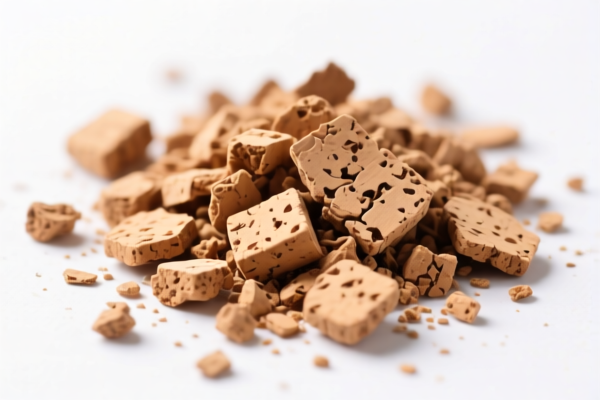
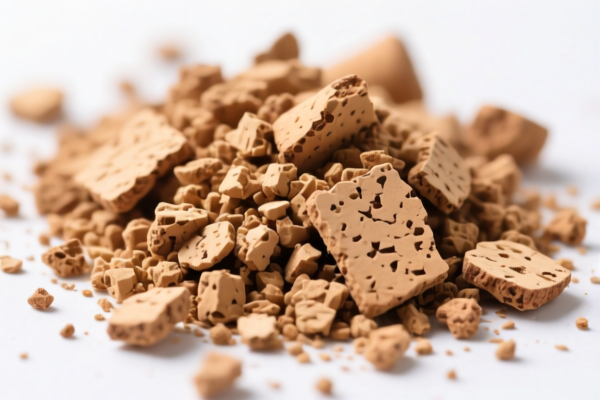
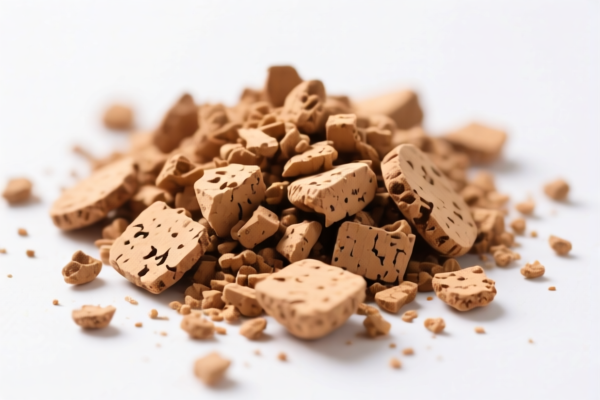
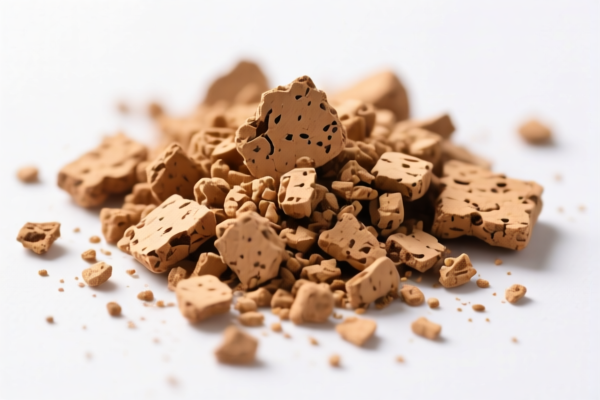
AI Analysis
🍷 Cork Additive for Paint: The "Plant-Based" Chemical Dilemma
🌐 HS Code Reference & Customs Clearance Guide | 2026 Latest Tariff Analysis | Professional Entry Strategy
📌 I. Product Definition: What is "Cork Additive"?
Cork Additive for Paint is a specialized ingredient used in coating formulations. In international trade, its classification depends heavily on whether customs authorities view it primarily as a natural botanical residue or a processed chemical preparation. This distinction dictates the HS Code and the resulting tariff burden.
⚠️ Key Classification Divergence:
- If viewed as a processed chemical binder or filler →归入 3824 (Chemical Products).
- If viewed as a processed natural plant material → 归入 1404 (Other Vegetable Products).
📦 II. HS Code Classification Details (2026 Latest Tariff Authority Comparison)
Based on the specific nature of the additive, two distinct chapters apply. The choice determines whether you face a 40% or 35% total duty rate.
| HS Code | Product Description | Classification Logic | Total Duty Rate (China to US) |
|---|---|---|---|
3824.40.50.00 |
Preparations for cements, mortars, or concretes; "Other" chemical preparations | Chemical/Industrial View: Inferred as a chemical制剂 (preparation) used as an additive. Falls under "Other" chemical products. | 40.0% |
3824.99.11.00 |
Chemical products and preparations (not elsewhere specified or included) | General Chemical View: A generic chemical industrial additive that doesn't fit specific chemical sub-categories. | 35.0% |
1404.90.90.90 |
Other vegetable products (including cork products) | Natural Botanical View: Softwood/cork is a plant raw material; additives are auxiliary, unclassified plant derivatives. | 35.0% |
1404.90.90.20 |
Other derived plant products (for dyeing/tanning or similar processing) | Derived Plant View: Inferred to contain cork components used for treatment/dyeing/tanning-like processes. | 35.0% |
🔍 Critical Distinction:
-3824.40.50.00carries the highest burden (40%) because it is explicitly categorized under "Preparations for cements/mortars/concretes" or similar industrial chemical preparations.
-1404codes (35%) treat the item as a vegetable product, benefiting from a lower base tariff structure, though still heavily impacted by Section 301/IEEPA duties.
-3824.99.11.00(35%) is the "catch-all" for chemical additives, avoiding the higher concrete-related classification.
💰 III. 2026 Latest Tariff Rate Breakdown (Including Surcharges)
✅ Applicable Country: United States (US)
✅ Origin: China (CN)
✅ Effective Date: From November 10, 2025 (including subsequent imports)
🎯 1. 3824.40.50.00 — Chemical Preparation for Concretes/Mortars (Highest Burden)
| Item | Content |
|---|---|
| Base Duty Rate | 5.0% (Standard MFN rate for Chapter 38) |
| Section 301 Surcharge | +25.0% (USITC Footnote: China-origin goods) |
| IEEPA Surcharge | +10.0% (Against China/HK products, effective Nov 10, 2025) |
| Total Effective Rate | 40.0% |
| Tax Calculation | CIF Value × 40% |
| De Minimis Exemption? | ❌ NO (deny_de_minimis applies) |
| Legal Basis Path | USITC:3824.40.50.00 → FOOTNOTE:301-3824 → IEEPA:9903.01.25 |
📌 Explanation:
- The 5% base reflects the standard chemical import duty.
- The +25% is the standard Section 301 tariff on Chinese chemical goods.
- The +10% is the additional IEEPA tariff enacted in late 2025.
- Total 40% is significantly higher than the botanical alternatives.
🎯 2. 3824.99.11.00 — Other Chemical Preparations
| Item | Content |
|---|---|
| Base Duty Rate | 0.0% (Standard MFN rate for "Other" chemical products) |
| Section 301 Surcharge | +25.0% |
| IEEPA Surcharge | +10.0% |
| Total Effective Rate | 35.0% |
| Tax Calculation | CIF Value × 35% |
| De Minimis Exemption? | ❌ NO |
| Legal Basis Path | USITC:3824.99.11.00 → FOOTNOTE:301-3824 → IEEPA:9903.01.24 |
📌 Note:
- Although classified as a chemical, the 0% base rate saves 5% compared to3824.40.50.00.
- Total duty is 35%, making it 5 percentage points cheaper than the concrete-preparation classification.
🎯 3. 1404.90.90.90 — Other Vegetable Products (Cork)
| Item | Content |
|---|---|
| Base Duty Rate | 0.0% (Standard MFN rate for Vegetable Products) |
| Section 301 Surcharge | +25.0% |
| IEEPA Surcharge | +10.0% |
| Total Effective Rate | 35.0% |
| Tax Calculation | CIF Value × 35% |
| De Minimis Exemption? | ❌ NO |
| Legal Basis Path | USITC:1404.90.90.90 → FOOTNOTE:301-1404 → IEEPA:9903.01.24 |
📌 Explanation:
- Customs may classify cork additives as processed plant materials.
- The 0% base rate applies.
- Total duty is 35%.
🎯 4. 1404.90.90.20 — Derived Plant Products (Dyeing/Tanning Context)
| Item | Content |
|---|---|
| Base Duty Rate | 0.0% |
| Section 301 Surcharge | +25.0% |
| IEEPA Surcharge | +10.0% |
| Total Effective Rate | 35.0% |
| Tax Calculation | CIF Value × 35% |
| De Minimis Exemption? | ❌ NO |
| Legal Basis Path | USITC:1404.90.90.20 → FOOTNOTE:301-1404 → IEEPA:9903.01.24 |
📌 Note:
- If the cork is inferred to be used for tanning/dyeing-like processes (even in paint formulation as a stabilizer), it may fall here.
- Same 35% total rate as other botanical/chemical "non-concrete" categories.
🛠️ IV. Customs Clearance Practical Advice (Pitfall Avoidance Guide)
✅ 1. Documentation Checklist (Missing items = Delays)
| Document | Mandatory? | Explanation |
|---|---|---|
| ✅ Certificate of Origin (CO) | ✔️ | Essential for proving China origin and applying correct 301/IEEPA rates. |
| ✅ Technical Data Sheet (TDS) | ✔️ | Crucial: Must specify if the product is a "Chemical Preparation" or "Processed Vegetable Material." |
| ✅ Formula/Ingredient List | ✔️ | To prove % of cork vs. chemical binders. High cork % supports 1404; high chemical % supports 3824. |
| ✅ Commercial Invoice | ✔️ | Must accurately describe the product as "Cork Additive for Paint" and state HS Code. |
| ✅ Packaging List | ✔️ | To verify volume and weight for CIF calculation. |
✅ 2. Classification Strategy (Key Mantra)
🔥 "Avoid Concrete Labeling, Lean Botanical Base!"
| Scenario | Correct HS Code Strategy | Incorrect Approach |
|---|---|---|
| Product is primarily chemical binder with cork filler | 3824.99.11.00 (35%) |
3824.40.50.00 (40%) → Higher Tax |
| Product is ground cork or plant-extract based | 1404.90.90.90 or .20 (35%) |
N/A (Botanicals are cheaper) |
| Product is mixed (50% cork, 50% resin) | Argue for 3824.99.11.00 or 1404 based on principal use |
Use 3824.40.50.00 → Risk of Penalty |
📌 Key Insight:
- Avoid3824.40.50.00at all costs. It triggers the highest total duty (40%).
-1404(35%) is the most favorable if the product can be justified as a plant derivative.
-3824.99.11.00(35%) is the safe fallback for chemical additives that are not for concrete.
✅ 3. Special Considerations
| Situation | Handling Advice |
|---|---|
| High Cork Content (>50%) | Provide botanical analysis to support 1404 classification. |
| High Chemical Resin Content | Use 3824.99.11.00 but ensure description does NOT mention "concrete" or "mortar." |
| OEM Custom Formulation | Provide client contract showing intended use (paint vs. construction). |
| Small Sample Shipments | Note: De Minimis ($800) does NOT apply. All shipments are subject to full duties. |
🌍 V. Global Market Comparison (2026)
| Country/Region | Recommended HS Code | Total Duty Rate | Notes |
|---|---|---|---|
| 🇺🇸 USA | 3824.99.11.00 or 1404.90.90.90 |
35.0% | Avoid 3824.40.50.00 (40%). |
| 🇨🇳 China | 3824.99.11.00 |
Varies | Generally lower import duties for raw materials. |
| 🇪🇺 EU | 3824.99 |
~6.5% | No Section 301/IEEPA surcharges. |
| 🇬🇧 UK | 3824.99 |
~6.5% | Post-Brexit tariff rates apply. |
| 🇯🇵 Japan | 3824.99 |
~7.5% | No additional trade war tariffs. |
📌 Conclusion:
- USA is the most expensive market due to 35-40% combined duties.
- Europe/Asia are significantly cheaper for similar products.
- Strategy: If shipping to the US, optimize product description to avoid the 40% bracket.
📌 VI. Common Errors & Pitfalls (Blood-Lessons)
❌ Mistake 1: Classifying as 3824.40.50.00
👉 Consequence: 40% duty instead of 35%. Wasted 5% profit margin.
❌ Mistake 2: Using "Concrete Additive" in the description
👉 Consequence: Customs forces 3824.40.50.00 classification. Do not mention concrete if used in paint.
❌ Mistake 3: Assuming De Minimis applies
👉 Consequence: Shipments under $800 are still taxed due to China origin restrictions. Unexpected costs.
❌ Mistake 4: Vague Description "Paint Additive"
👉 Consequence: Customs examination delay for classification. Risk of 180-day hold.
✅ Correct Practice:
"Processed Cork-Based Additive for Paint Formulation, Chemical Preparation for Coatings, HS 3824.99.11.00"
🎯 VII. Conclusion: Professional Declaration, Cost Optimization
🎯 Remember the Mantra:
🔹 "No Concrete Label, 40% is Gone!"
🔹 "Botanical or Chemical 'Other', 35% is the Target!"
🔹 "US Market is Hard, 35% is the Floor!"
📌 Pro Tip:
If your product is originating from Vietnam, Mexico, or Thailand, you may exempt from IEEPA/301 surcharges, reducing total duty to 0-5%.
Consider supply chain relocation or third-country processing for large volumes.
📣 Immediate Action:
📞 Consult a licensed US Customs Broker
📄 Prepare Technical Data Sheet highlighting plant/chemical ratio
🚀 Declare Accurately, Save 5%, Sleep Well!
✨ Professional Customs Clearance Starts with Precise Classification!
💼 Every 1% Duty Saved is 1% Profit Gained!
Customer Reviews
About HS Code Classification
The Harmonized System (HS) is an internationally standardized nomenclature developed by the World Customs Organization (WCO) to classify traded products. Over 200 countries use the HS system as the basis for customs tariffs, trade statistics, and import/export regulations.
Each HS code follows a hierarchical structure:
- Chapter (2 digits) — Broad category of goods (e.g., Chapter 84: Machinery and Mechanical Appliances)
- Heading (4 digits) — More specific grouping within the chapter
- Subheading (6 digits) — Internationally standardized breakdown, used by all WCO member countries
- National subdivisions (8-10 digits) — Country-specific extensions for further classification, such as US HTSUS 10-digit codes
Correct HS code classification is essential for smooth customs clearance, accurate duty payment, and compliance with trade regulations. Misclassification can lead to customs delays, overpayment of duties, or penalties.
When importing from CN to US, the applicable tariff rates may include:
- Most-Favored-Nation (MFN) rate — The standard duty rate applied to WTO members
- General rate — Applied to countries without trade agreements
- Trade remedy duties — Additional tariffs such as Section 301 (anti-dumping), Section 232 (national security), or countervailing duties
The information provided on this page is for reference purposes only. For official classification, please consult with your local customs authority or a licensed customs broker.