Cork Buffer Material
CN → US| HS Code | Tariff Rate | Origin | Destination | Doc |
|---|---|---|---|---|
| 6808000000 | 35.0% | CN | US | Official Doc |
| 4504105000 | 35.0% | CN | US | Official Doc |
| 4504102000 | 35.0% | CN | US | Official Doc |
Product Images
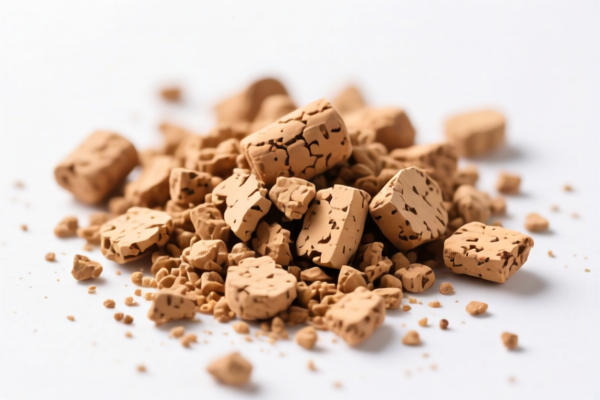
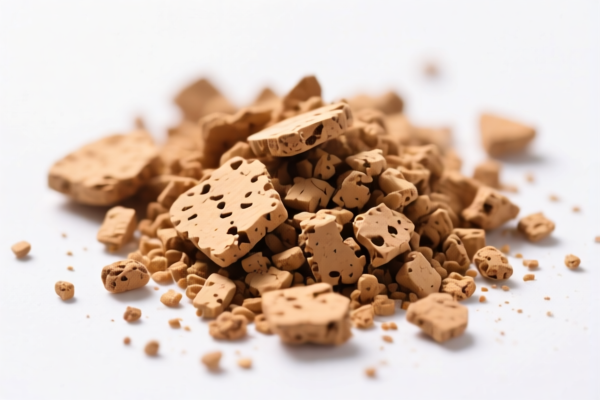
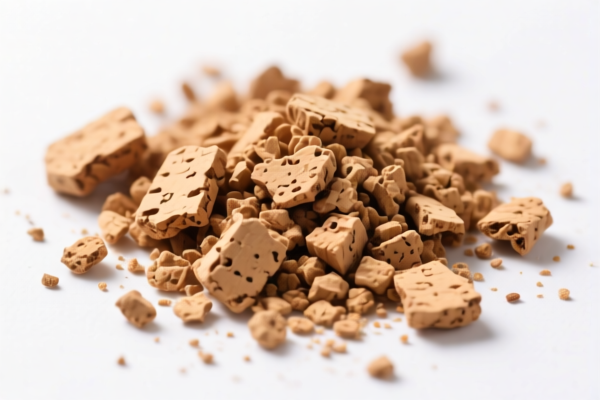
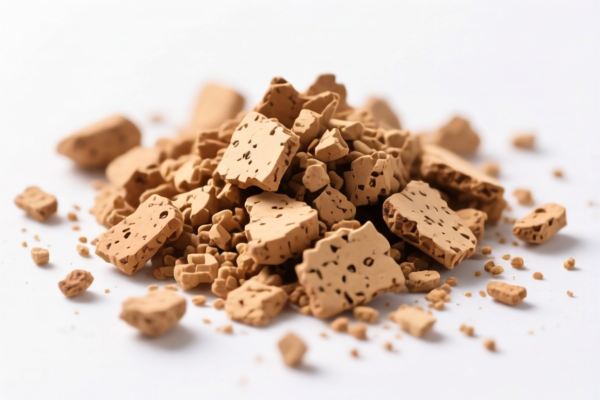
AI Analysis
🌲 Cork Buffer Material (Softwood Insulation Products)
🌐 HS Code Reference & Customs Clearance Guide | 2026 Latest Tariff Analysis | Professional Clearance Strategy
📌 I. Product Definition and Classification: Do You Really Understand "Cork Buffer"?
Cork buffer material, primarily used for thermal insulation, vibration damping, and sealing in industrial and construction applications, is classified based on its raw material source and physical form in international trade. It is generally divided into two main categories:
Wood Fiber/Residue Based (H.S. 6808.00): Materials made from plant fibers or wood waste (non-cork specific), typically in board, block, or similar forms. This category is often broader and may include composite insulation boards.
Pure Cork Based (H.S. 4504.10): Materials made specifically from the bark of the cork oak tree (Quercus suber). This includes compressed cork boards, sheets, strips, and specialized insulation products. These are considered "other" cork products unless specified otherwise.
⚠️ Key Distinction Point:
- If the material is made from wood waste/plant fibers (not pure cork bark) and shaped into boards/blocks →归入 6808.00.00.00
- If the material is made from natural cork (compressed or expanded) in sheets, strips, or insulation forms →归入 4504.10.xxxx.00
📦 II. HS Code Classification Details (2026 Latest Tariff Authority Comparison)
| HS Code | Product Description | Application Scenario | Material Source |
|---|---|---|---|
6808.00.00.00 |
Softwood insulation materials, made of plant fiber/wood waste, in board/block forms | Composite insulation boards, generic wood-fiber insulation, non-pure cork | ❌ Not pure cork |
4504.10.20.00 |
Cork insulation materials, made of cork, used for insulation (falls under "compressed cork insulators") | High-grade thermal insulation, acoustic damping, pure cork boards | ✅ Pure cork |
4504.10.50.00 |
Other cork products, made of cork, in sheets/strips/boards (other categories) | General cork sheets, decorative cork, non-specialized cork buffers | ✅ Pure cork |
🔍 Key Reminder:
- All pure cork insulation products should ideally be classified under 4504.10.xxxx.00 for better accuracy; - If the material is a composite containing significant wood fiber/resin and not pure cork bark, it may fall under 6808.00.00.00; - Customs may require material composition reports to distinguish between "cork" and "wood fiber."
💰 III. 2026 Latest Tariff Rate Breakdown (Including Surtaxes, Policy Add-ons)
✅ Applicable Country: United States (US)
✅ Country of Origin: China (CN)
✅ Effective Date: From November 10, 2025 (and subsequent imports)
🎯 1. 6808.00.00.00 —— Softwood Insulation Materials (Plant Fiber/Wood Waste)
| Item | Content |
|---|---|
| Base Tariff Rate | 0.0% (ad valorem) |
| USITC Surtax (Section 301) | +25% |
| IEEPA Surtax (Section 122) | +10% (against China/HK products, from Nov 10, 2025) |
| Total Tariff Rate | 35.0% |
| Tax Calculation | CIF Value × 35.0% |
| De Minimis Exemption Applicable? | ❌ No (deny_de_minimis) |
| Legal Basis Path | IEEPA:9903.01.25 → IEEPA:9903.01.24 → USITC:6808.00.00.00 → FOOTNOTE:9903.88.01 |
📌 Explanation:
- The 25% USITC surtax is imposed under Section 301 of the U.S. Trade Act; - The 10% IEEPA surtax (referred to as "Section 122 tariff" in the data) is an additional levy on Chinese imports; - Total 35.0%, which is a high tariff rate, requiring proactive cost assessment!
🎯 2. 4504.10.20.00 —— Cork Insulation Materials (Compressed Cork Insulators)
| Item | Content |
|---|---|
| Base Tariff Rate | 0.0% |
| USITC Surtax (Section 301) | +25% |
| IEEPA Surtax (Section 122) | +10% |
| Total Tariff Rate | 35.0% |
| Tax Calculation | CIF × 35.0% |
| De Minimis Exemption Applicable? | ❌ No |
| Legal Basis Path | IEEPA:9903.01.25 → IEEPA:9903.01.24 → USITC:4504.10.20.00 → FOOTNOTE:9903.88.01 |
📌 Note:
- Same as above, this category is also subject to 35.0% total tariff; - Even if it is "compressed cork," "cork granules," or "cork mats," as long as it is Cork Origin, it applies this tariff.
🎯 3. 4504.10.50.00 —— Other Cork Products (Sheets, Strips, Boards)
| Item | Content |
|---|---|
| Base Tariff Rate | 0.0% |
| USITC Surtax (Section 301) | +25% |
| IEEPA Surtax (Section 122) | +10% |
| Total Tariff Rate | 35.0% |
| Tax Calculation | CIF × 35.0% |
| De Minimis Exemption Applicable? | ❌ No |
| Legal Basis Path | IEEPA:9903.01.25 → IEEPA:9903.01.24 → USITC:4504.10.50.00 → FOOTNOTE:9903.88.01 |
📌 Note:
- All pure cork products, regardless of specific form (sheet, strip, block), are subject to the same 35.0% total tariff when originating from China; - No differentiation in tax rate based on sub-category within 4504.10 for Chinese origin.
🛠️ IV. Customs Clearance Practical Advice (Combat Pitfall Avoidance Guide)
✅ 1. Required Document Checklist (All Mandatory)
| Document | Required | Description |
|---|---|---|
| ✅ Product Specification Sheet | ✔️ | Must include material composition (e.g., "100% Natural Cork" or "Wood Fiber Composite"), density, dimensions, thermal conductivity |
| ✅ Material Composition Report | ✔️ | Critical for distinguishing between 6808.00 and 4504.10; may require lab test results |
| ✅ Product Photos (with Label) | ✔️ | Clear view of packaging, brand, model, and any "Made in China" markings |
| ✅ Commercial Invoice | ✔️ | Must clearly state "Cork Buffer Material" or "Softwood Insulation Board" and CIF value |
| ✅ Packing List | ✔️ | Detail weight, volume, and package count to avoid discrepancies |
| ✅ Certificate of Origin (CO) | ✔️ | If applicable, to verify origin; note: No preferential tariff for China under current rules |
✅ 2. Declaration Tips (Key Mnemonics)
🔥 “Material Matters, Form Follows, Name Precise, Tariff Avoids!”
| Scenario | Correct Declaration | Wrong Approach |
|---|---|---|
| Pure Cork Boards/Shields | 4504.10.20.00 or 4504.10.50.00 |
Misdeclare as "Wood Fiber" → 35% (same, but risk of penalty) |
| Wood Fiber/Residue Boards | 6808.00.00.00 |
Misdeclare as "Cork" → 35% (same, but risk of penalty) |
| Composite Insulation (Mixed) | 6808.00.00.00 (if plant fiber dominant) |
Vague name "Insulation Material" → 35% + Delay |
| Pure Cork Granules/Sheets | 4504.10.50.00 |
Misdeclare as "Wood Waste" → 35% (same, but risk of penalty) |
✅ 3. Special Case Handling
| Situation | Handling Advice |
|---|---|
| OEM Custom Cork Products | Provide customer order + design drawings; avoid generic terms |
| Cork with Adhesive/Resin | If >50% cork by weight, still likely 4504.10; if wood fiber dominant, 6808.00 |
| Cork Used in Medical Devices | If specialized, may require FDA documentation, but HS remains same |
| Cork Used in Automotive | No special exemption; still 35% total tariff |
🌍 V. Global Main Market Clearance Comparison (2026 Latest)
| Country/Region | Recommended HS Code | Tariff | Certification Requirement | Notes |
|---|---|---|---|---|
| 🇺🇸 USA | 4504.10.xxxx.00 or 6808.00.00.00 |
35% (China Origin) | No special certs | High tariff due to Section 301 + IEEPA |
| 🇨🇳 China | 4504.10 or 6808.00 |
0%-5% | N/A | Low tax, but not relevant for export |
| 🇪🇺 EU | 4504.10 or 6808.00 |
0% (if FSC Certified) | CE, FSC | No additional surtaxes |
| 🇬🇧 UK | 4504.10 or 6808.00 |
0%-5% | UKCA | Post-Brexit rules apply |
| 🇦🇺 Australia | 4504.10 or 6808.00 |
5% | RCM | No additional surtaxes |
📌 Conclusion:
- USA is the only major market with 35% additional tariffs on cork/wood fiber insulation from China; - EU, UK, and Australia offer lower or zero tariffs, making them more attractive for cost-sensitive shipments; - FSC Certification (Forest Stewardship Council) can help with EU/UK market entry and brand value.
📌 VI. Common Errors & Pitfall Avoidance (Lessons Learned)
❌ Error 1: Declaring "Cork Buffer" as "General Insulation" without specifying material
👉 Consequence: Customs may reclassify, leading to 35% tariff + penalties + delays!
❌ Error 2: Using "Wood Fiber" for pure cork products
👉 Consequence: Even if tariff is same (35%), it triggers additional scrutiny and possible fine for misdeclaration.
❌ Error 3: Not providing material composition proof
👉 Consequence: Customs cannot determine if it's 4504.10 or 6808.00 → Held for inspection (2-4 weeks delay).
❌ Error 4: Ignoring IEEPA/Section 301 surtaxes
👉 Consequence: Underpaying 35% vs. expecting 0% → Back taxes + Interest + Seizure Risk.
✅ Correct Practice:
“100% Natural Cork Insulation Board, Compressed, 5mm Thickness, Thermal Conductivity 0.04 W/mK, Model XYZ, FSC Certified”
🎯 VII. Conclusion: Professional Declaration, Save Time, Reduce Costs!
🎯 Remember the Mantra:
🔹 “Material First, Tariff Second, Name Precise, Penalties Avoided!”
🔹 “HS Code Defines Cost, 35% is the China Price, Declaration Error Means Trouble!”
📌 Pro Tip:
If your cork products originate from Vietnam, Portugal, Spain, or Morocco, you may apply for IEEPA Exemption or 0% Base Tariff without surtaxes;
Recommend Advance Ruling (Pre-classification) for complex composite materials to avoid clearance risks.
📣 Take Action Now:
📞 Contact Professional Customs Broker + Provide Material Specs + Apply for HS Code Pre-classification
🚀 Let your Cork Buffer Material Clear Customs Smoothly, Export Efficiently, Maximize Profit!
✨ Professional Clearance Starts with Accurate Classification!
💼 Every Penny of Your Cost Deserves Precision!
Customer Reviews
About HS Code Classification
The Harmonized System (HS) is an internationally standardized nomenclature developed by the World Customs Organization (WCO) to classify traded products. Over 200 countries use the HS system as the basis for customs tariffs, trade statistics, and import/export regulations.
Each HS code follows a hierarchical structure:
- Chapter (2 digits) — Broad category of goods (e.g., Chapter 84: Machinery and Mechanical Appliances)
- Heading (4 digits) — More specific grouping within the chapter
- Subheading (6 digits) — Internationally standardized breakdown, used by all WCO member countries
- National subdivisions (8-10 digits) — Country-specific extensions for further classification, such as US HTSUS 10-digit codes
Correct HS code classification is essential for smooth customs clearance, accurate duty payment, and compliance with trade regulations. Misclassification can lead to customs delays, overpayment of duties, or penalties.
When importing from CN to US, the applicable tariff rates may include:
- Most-Favored-Nation (MFN) rate — The standard duty rate applied to WTO members
- General rate — Applied to countries without trade agreements
- Trade remedy duties — Additional tariffs such as Section 301 (anti-dumping), Section 232 (national security), or countervailing duties
The information provided on this page is for reference purposes only. For official classification, please consult with your local customs authority or a licensed customs broker.