Cork Coaster Set
CN → US| HS Code | Tariff Rate | Origin | Destination | Doc |
|---|---|---|---|---|
| 4503906000 | 49.0% | CN | US | Official Doc |
| 4504105000 | 35.0% | CN | US | Official Doc |
| 4504900000 | 35.0% | CN | US | Official Doc |
| 4503904000 | 35.0% | CN | US | Official Doc |
| 4420110010 | 13.2% | CN | US | Official Doc |
Product Images
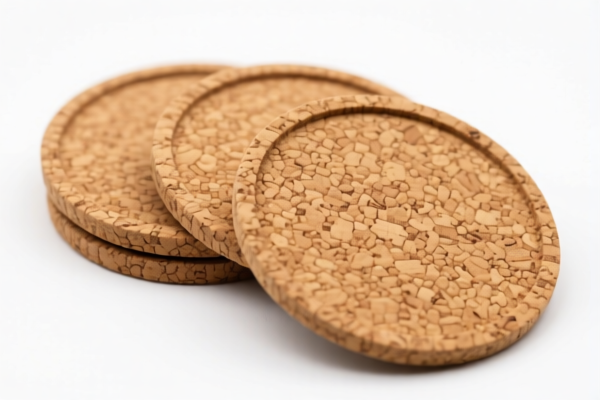
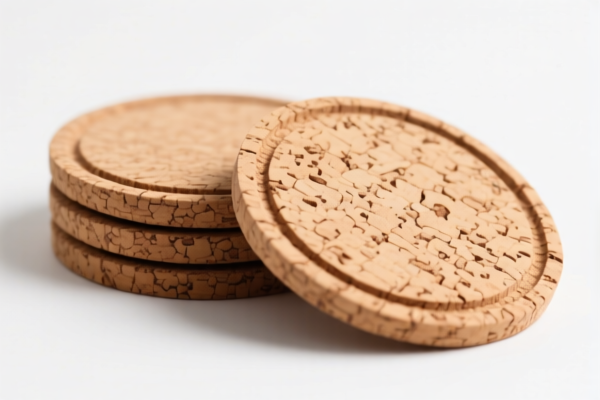
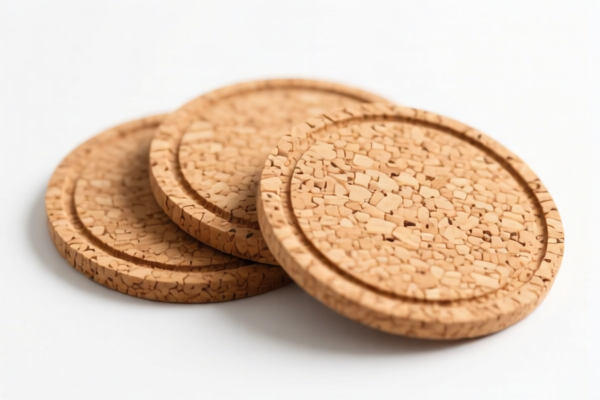
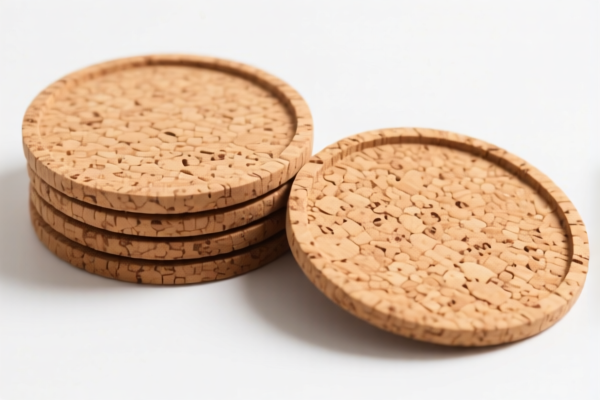
AI Analysis
🍷 Cork Coaster Set (天然软木/结合软木/木质替代品)
🌐 HS Code Reference & Customs Clearance Guide | 2026 Latest Tariff Analysis | Professional Entry Strategy
📌 I. Product Definition & Classification: Are You Classifying Your "Coasters" Correctly?
A Cork Coaster Set is a common promotional item, tableware accessory, or home decor product. In international trade, the HS Code classification depends heavily on two factors:
1. Material Composition: Is it 100% Natural Cork or Agglomerated/Combined Cork?
2. Shape/Manufacturing Process: Are they simple cut shapes (like pads/placemats) or combined/compressed articles?
⚠️ Critical Distinction:
- Natural Cork (Uncut or Simplely Cut) → Falls under Chapter 45.03 (Natural cork, unworked, simplified, or squared off).
- Combined/Agglomerated Cork (Pressed, Glued, or Shaped) → Falls under Chapter 45.04 (Cork waste, granules, chips, and articles of agglomerated cork).
- Wood Substitutes: If the product is technically wood-based but marketed as "cork," it may fall under Chapter 44.
📦 II. HS Code Classification Matrix (Based on Provided Data)
| HS Code | Product Description | Material/Shape Profile | Total Tax Rate |
|---|---|---|---|
| 4503.90.60.00 | Natural Cork Products (e.g., natural cork coasters/pads) | 100% Natural Cork; Simple cut/pad shape | 49.0% |
| 4504.10.50.00 | Combined Cork Articles (Boards/Slices/Strips) | Agglomerated/Combined Cork; Board-like shape (e.g., pressed cork coaster) | 35.0% |
| 4504.90.00.00 | Other Combined Cork Articles | Any other form of agglomerated cork not covered above | 35.0% |
| 4503.90.40.00 | Natural Cork Products (Wallpaper/Pads Extension) | Natural cork; Pad-like extension (broadly "pad" category) | 35.0% |
| 4420.11.00.10 | Wood Products (Other) | Wood material (if misidentified or wooden base) | 13.2% |
🔍 Key Insight:
- Natural Cork (4503.90.60.00) suffers the highest tax burden (49%) due to higher base duties.
- Combined Cork (4504 series) benefits from 0% Base Duty, resulting in a significantly lower total rate (35%).
- Wood Products (4420) are the lowest tax option (13.2%) but only if the material is actually wood, not cork. Misdeclaring cork as wood leads to severe penalties.
💰 III. Detailed Tariff Breakdown (2026 US Import Rules)
✅ Applicable Country: United States (US)
✅ Origin: China (CN)
✅ Effective Date: Post-2025 Policies (Section 301 & IEEPA)
🎯 1. 4503.90.60.00 — Natural Cork Pads/Cork Products
| Item | Details |
|---|---|
| Base Duty | 14.0% (Ad valorem) |
| Section 301 Add-on | +25.0% (China-specific) |
| IEEPA Add-on (122) | +10.0% (Targeted China imports) |
| Total Effective Rate | 49.0% |
| De Minimis Exemption | ❌ Deny (High duty rates usually disqualify or trigger scrutiny) |
| Legal Basis | USITC:4503.90.60.00 + FOOTNOTE:301-China + IEEPA:122 |
📌 Explanation:
- Natural cork is classified as a higher-value raw material product, attracting a 14% base duty.
- When combined with the 25% Section 301 tariff and 10% IEEPA penalty, the total cost impact is nearly 50%.
- Strategy: Avoid this code if possible unless the product is verifiably 100% natural, unprocessed cork.
🎯 2. 4504.10.50.00 / 4504.90.00.00 — Combined/Agglomerated Cork
| Item | Details |
|---|---|
| Base Duty | 0.0% |
| Section 301 Add-on | +25.0% |
| IEEPA Add-on (122) | +10.0% |
| Total Effective Rate | 35.0% |
| De Minimis Exemption | ❌ Deny |
| Legal Basis | USITC:4504.xxxx + FOOTNOTE:301-China + IEEPA:122 |
📌 Explanation:
- Agglomerated cork (waste cork pressed together) is considered a manufactured composite.
- 0% Base Duty makes it significantly more competitive than natural cork.
- Note:4504.10.50.00is for "boards, sheets, strips," while4504.90.00.00is a residual category. Ensure your product's physical form (e.g., a solid pressed block vs. a granular glued pad) matches the description.
🎯 3. 4503.90.40.00 — Natural Cork (Pad Extension)
| Item | Details |
|---|---|
| Base Duty | 0.0% |
| Section 301 Add-on | +25.0% |
| IEEPA Add-on (122) | +10.0% |
| Total Effective Rate | 35.0% |
| Legal Basis | USITC:4503.90.40.00 + FOOTNOTE:301-China + IEEPA:122 |
📌 Explanation:
- This code appears to be a specific sub-category for natural cork pads/wallpapers with 0% base duty.
- Caution: Ensure the product is truly "natural cork" and not agglomerated. If it is agglomerated,4504is safer. If it is natural but shaped, verify with customs if4503.90.60(14% base) or4503.90.40(0% base) applies.
🎯 4. 4420.11.00.10 — Wood Products (Cork Substitute)
| Item | Details |
|---|---|
| Base Duty | 3.2% |
| Section 301 Add-on | 0.0% |
| IEEPA Add-on (122) | +10.0% |
| Total Effective Rate | 13.2% |
| Legal Basis | USITC:4420.11.00.10 + IEEPA:122 |
📌 Explanation:
- ONLY if the product is made of wood (or a wood composite) and not cork.
- Many "cork-like" promotional items are actually wood veneers. If you misdeclare wood as cork, you pay 35-49%. If you misdeclare cork as wood, you face fraud penalties.
- Strategy: Use only if the material is genuinely wood.
🛠️ IV. Customs Clearance Recommendations (Practical Guide)
✅ 1. Documentation Checklist (Mandatory)
| Document | Requirement | Why? |
|---|---|---|
| Commercial Invoice | Must specify "Cork Coasters" and Material Composition (Natural vs. Agglomerated) | Determines HS Code (4503 vs 4504) |
| Material Declaration | Explicitly state: "100% Natural Cork" OR "Agglomerated Cork (Granules + Binder)" | Prevents misclassification penalties |
| Product Photos | Show texture (natural pores vs. pressed granules) | Helps customs verify material |
| HS Code Justification | Provide legal basis for selected code | Reduces audit risk |
| Packing List | Detail weight, dimensions, and quantity | Verifies CIF value for tax calculation |
✅ 2. Classification Strategy (How to Save Money Legally)
| Scenario | Recommended HS Code | Reasoning |
|---|---|---|
| Natural Cork, Simply Cut | 4503.90.40.00 |
If eligible for 0% base duty, saves 14% vs 4503.90.60.00. Verify with broker. |
| Agglomerated/Pressed Cork | 4504.10.50.00 |
Standard for glued/compressed cork. 0% base duty. |
| Cork Waste/Granules Shaped | 4504.90.00.00 |
Residual category for agglomerated cork. 0% base duty. |
| Wooden Coasters | 4420.11.00.10 |
Lowest tax (13.2%), but must be wood. |
🚫 WARNING: Do not classify agglomerated cork as
4503.90.60.00(Natural Cork). While both result in high taxes,4503.90.60has a 14% base duty, whereas4504has 0%. However, misclassifying agglomerated as natural is fraud. Misclassifying natural as agglomerated is also fraud. Accuracy is key.
✅ 3. Special Notes on "Section 301" & "IEEPA"
- Section 301 (25%): Applies to almost all Chinese-made cork and wood products. No exemption for small quantities.
- IEEPA (10%): Applies to specific Chinese goods. Check if your HS Code is on the 122 List. In the provided data, all codes include the 10% IEEPA tariff.
- Total Burden: Expect 35-49% total duty. Factor this into your pricing strategy.
🌍 V. Global Market Comparison (2026)
| Market | Recommended HS | Base Duty | Add-on Duties | Total Est. | Notes |
|---|---|---|---|---|---|
| 🇺🇸 USA | 4504.10.50.00 |
0% | 25% (301) + 10% (IEEPA) | 35% | High compliance risk |
| 🇪🇺 EU | 4504.10.00 |
~1.7% | None | ~1.7% | No 301/IEEPA. Lowest cost! |
| 🇨🇳 China | 4504.10.00 |
0% | None | 0% | Import into China is cheap |
| 🇬🇧 UK | 4504.10.00 |
~1.7% | None | ~1.7% | Post-Brexit tariff applies |
💡 Opportunity:
If you are importing from China to the US, consider sourcing from Vietnam or Portugal (major cork producers) to avoid Section 301 and IEEPA tariffs. Portugal cork enters the US duty-free or at very low rates under normal trade relations.
📌 VI. Common Mistakes & Pitfalls (Learn from Others!)
❌ Mistake 1: Declaring Agglomerated Cork as Natural Cork.
👉 Result: Customs may reject the 0% base duty claim or audit for fraud. If caught, back taxes + penalties.
❌ Mistake 2: Assuming Small Packages are exempt.
👉 Result: The De Minimis threshold ($800) does not apply to Section 301 goods in many cases, or triggers higher scrutiny. Always declare properly.
❌ Mistake 3: Using "Coaster" as the only description.
👉 Result: Ambiguity leads to random classification. Use "Cork Coaster, Agglomerated" or "Cork Coaster, Natural".
✅ Best Practice:
"Cork Coaster Set, Agglomerated Cork, 100% Natural Granules Bonded, 10mm Thickness, For Table Use"
HS Code:4504.10.50.00
Duty: 35%
🎯 VII. Conclusion: Smart Classification, Lower Costs
🎯 Key Takeaway:
🔹 Agglomerated Cork (4504) is cheaper than Natural Cork (4503) in the US due to 0% base duty.
🔹 Always verify material composition.
🔹 Budget for 35-49% total duties for China-origin cork products.
🔹 Consider alternative sourcing (Portugal/Vietnam) to mitigate Section 301 risks.
📌 Action Item:
📞 Consult a Licensed Customs Broker to pre-classify your specific product design.
📄 Prepare Material Test Reports to prove "Agglomerated" vs. "Natural" status.
💰 Factor 35-49% duty into your landed cost calculation.
✨ Professional Clearance Starts with Accurate Classification!
💼 Don't let tariff mistakes eat your margins!
Customer Reviews
About HS Code Classification
The Harmonized System (HS) is an internationally standardized nomenclature developed by the World Customs Organization (WCO) to classify traded products. Over 200 countries use the HS system as the basis for customs tariffs, trade statistics, and import/export regulations.
Each HS code follows a hierarchical structure:
- Chapter (2 digits) — Broad category of goods (e.g., Chapter 84: Machinery and Mechanical Appliances)
- Heading (4 digits) — More specific grouping within the chapter
- Subheading (6 digits) — Internationally standardized breakdown, used by all WCO member countries
- National subdivisions (8-10 digits) — Country-specific extensions for further classification, such as US HTSUS 10-digit codes
Correct HS code classification is essential for smooth customs clearance, accurate duty payment, and compliance with trade regulations. Misclassification can lead to customs delays, overpayment of duties, or penalties.
When importing from CN to US, the applicable tariff rates may include:
- Most-Favored-Nation (MFN) rate — The standard duty rate applied to WTO members
- General rate — Applied to countries without trade agreements
- Trade remedy duties — Additional tariffs such as Section 301 (anti-dumping), Section 232 (national security), or countervailing duties
The information provided on this page is for reference purposes only. For official classification, please consult with your local customs authority or a licensed customs broker.