Cork Composite Floor Tile
CN → US| HS Code | Tariff Rate | Origin | Destination | Doc |
|---|---|---|---|---|
| 4504103000 | 35.0% | CN | US | Official Doc |
| 4504101000 | 35.0% | CN | US | Official Doc |
| 4504104000 | 35.0% | CN | US | Official Doc |
| 6808000000 | 35.0% | CN | US | Official Doc |
| 4504103000 | 35.0% | CN | US | Official Doc |
Product Images
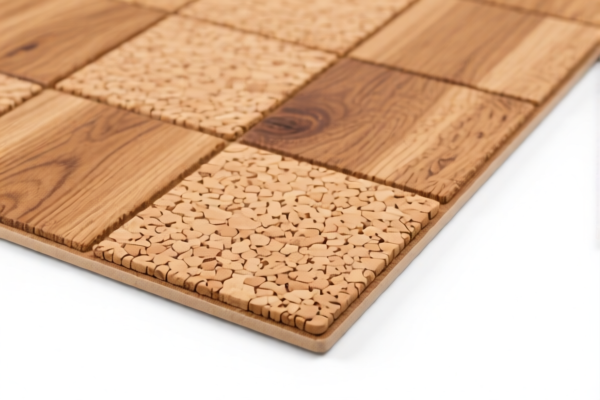
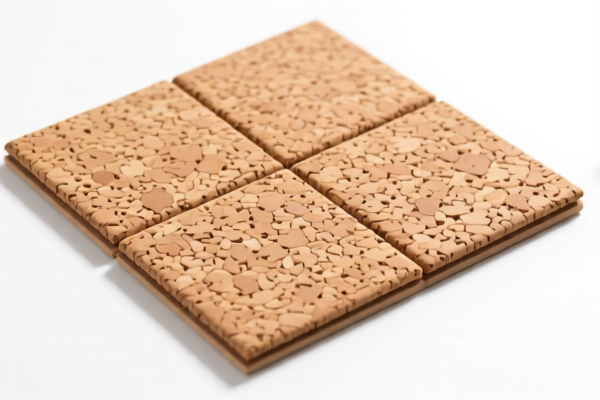
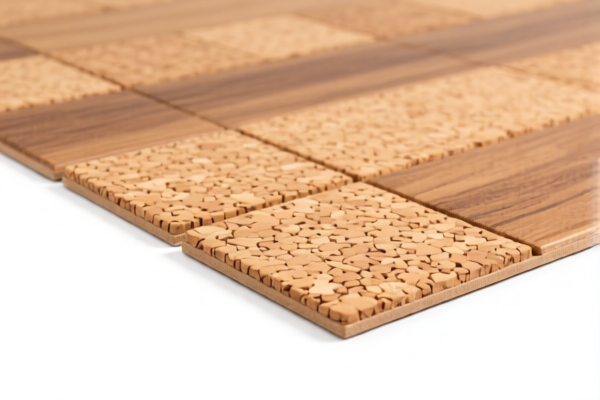
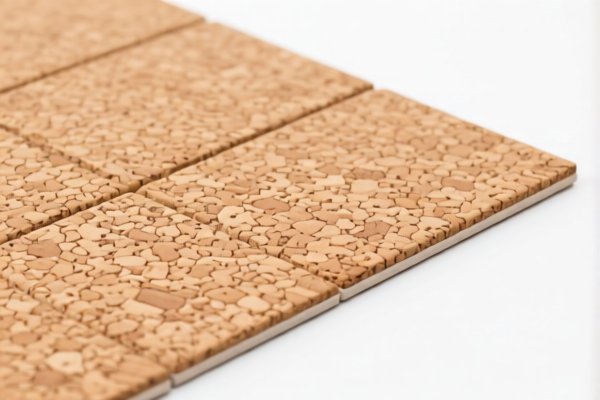
AI Analysis
🌳 Cork Composite Floor Tile (Architectural Flooring)
🌐 HS Code Reference & Customs Clearance Guide | 2026 Latest Tariff Analysis | Professional Strategy for Softwood Flooring
📌 I. Product Definition & Classification: What Exactly is "Cork Composite Flooring"?
Cork Composite Floor Tiles are engineered building materials primarily used for ground covering. They consist of cork particles bound together with adhesives (glues) to form a stable, durable surface. In international trade, the classification hinges on two critical factors: 1. Material Composition: Must be primarily cork (Agarwood/Suberin) bound with adhesives. 2. Form: Must be in the shape of tiles, blocks, or boards suitable for flooring.
⚠️ Key Distinction Point:
- If the product is pure cork bound with glue → Falls under Chapter 45 (Cork and Articles of Cork).
- If the product is heavily mixed with wood fibers, plastics, or minerals where cork is secondary → It may fall under Chapter 68 (Mineral Products) or other engineering material chapters.
- Crucial: For "Cork Composite" tiles, the binding agent (adhesive) is essential. The description "bonded cork" is the primary trigger for HS 4504.
📦 II. HS Code Classification Details (2026 Latest Tariff Authority Mapping)
Based on the provided data, the following HS Codes are relevant for Cork Composite Floor Tiles. The system highlights the ambiguity between "Cork" specific codes and "Composite/Building Material" codes.
| HS Code | Product Description (Summary) | Application Scenario | Key Classification Logic |
|---|---|---|---|
4504.10.30.00 |
Cork Tiles, Bonded | Ground covering, interior flooring | Primary Match: Explicitly mentions "Cork" + "Tile" + "Bonded". Matches the definition of cork articles with binder. |
4504.10.10.00 |
Cork Bricks/Blocks, Bonded | Any shape of tile/brick made of cork | Strong Match: "Brick" covers any shaped tile. Emphasizes the "Bonded/Composite" nature of the cork. |
4504.10.40.00 |
Cork Products (Other) | Building materials based on cork attributes | Alternative: Broader category for cork products used in construction, fitting if the tile doesn't fit strictly "brick" or "other" but is clearly cork-based. |
6808.00.00.00 |
Wood/Plant Fiber Boards, Cemented | Building plates, composite boards | Risk/Alternative: If the composite is heavily mixed with non-cork plant fibers or minerals, customs might view it as a "cemented board" rather than pure cork. |
🔍 Important Note:
- Codes4504.10.xx.xxare the most accurate for Cork-specific tiles.
- Code6808.00.00.00is a fallback if the product is deemed a general "composite board" rather than a cork article.
- Do Not Split: Floor tiles should be declared as a single unit. Do not split into "cork" and "glue" for separate HS codes.
💰 III. 2026 Latest Tariff Rate Breakdown (Including Surtaxes & Policy Add-ons)
✅ Applicable Country: United States (US)
✅ Origin: China (CN)
✅ Effective Date: November 10, 2025 (and subsequent imports)
All listed HS Codes share the same tariff structure in the provided data.
🎯 1. 4504.10.30.00 & 4504.10.10.00 & 4504.10.40.00 — Cork Tiles/Blocks (Bonded)
| Item | Content |
|---|---|
| Base Tariff Rate | 0% (ad valorem) |
| Section 301 Surtax | +25% (USITC Footnote 9903.88.01 equivalent logic) |
| IEEPA Surcharge | +10% (Targeting China/Hong Kong products, effective Nov 10, 2025) |
| Total Tariff Rate | 35.0% |
| Tax Calculation | CIF Value × 35% |
| De Minimis Exemption | ❌ Not Eligible (deny_de_minimis) |
| Legal Basis Path | IEEPA:9903.01.25 → IEEPA:9903.01.24 → USITC:4504.10.xx.00 → FOOTNOTE:9903.88.01 |
📌 Explanation:
- "Base Tariff 0%": Standard MFN rate for cork products is low.
- "301 Surtax 25%": Added due to US-China trade tensions; applies to almost all Chinese-origin manufactured goods.
- "IEEPA 10%": A specific surcharge on Chinese goods effective from late 2025.
- Total 35%: This is a high cost factor. You must price this into your landed cost immediately.
🎯 2. 6808.00.00.00 — Cemented Wood/Plant Fiber Boards (Alternative Classification)
| Item | Content |
|---|---|
| Base Tariff Rate | 0% |
| Section 301 Surtax | +25% |
| IEEPA Surcharge | +10% |
| Total Tariff Rate | 35.0% |
| Tax Calculation | CIF Value × 35% |
| De Minimis Exemption | ❌ Not Eligible |
📌 Note: Even if misclassified as a generic board (
6808), the surtaxes are identical. The risk is not in the rate difference but in the customs inspection severity and potential penalty for incorrect description.
🛠️ IV. Customs Clearance Practical Advice (Battle-Tested Pitfall Avoidance)
✅ 1. Required Documentation Checklist (Non-Negotiable)
| Document | Mandatory? | Explanation |
|---|---|---|
| ✅ Product Specification Sheet | ✔️ | Must specify: % Cork content, type of adhesive, density, tile dimensions, and fire rating (if any). |
| ✅ Material Safety Data Sheet (MSDS) | ✔️ | Proves the composition of the glue/binder. Crucial for distinguishing from 6808 (cement/mineral) vs 4504 (cork). |
| ✅ Commercial Invoice | ✔️ | Must clearly state "Cork Composite Floor Tile" and HS Code 4504.10.30.00. Avoid vague terms like "Flooring Material." |
| ✅ Certificate of Origin (CO) | ✔️ | Required to prove CN origin (triggering the 35% tax) and for any potential preferential claims if shipped via third countries. |
| ✅ Packing List | ✔️ | Detailed breakdown of boxes, pallets, and total weight. |
✅ 2. Declaration Tips (Key Mantra)
🔥 “Declare Cork, Not Board; Bonded, Not Solid; Avoid 6808 Trap!”
| Situation | Correct Declaration | Incorrect Practice |
|---|---|---|
| Pure Cork Composite Tile | 4504.10.30.00 "Cork Tiles, Bonded" |
Calling it "Wood Floor" → Wrong Chapter |
| Cork + Wood Fiber Mix | 4504.10.40.00 or 6808.00.00.00 |
Vague "Composite Tile" → High Audit Risk |
| Sample for Testing | Same HS Code | Declaring as "Gift" → De Minimis fraud risk |
| Packaging with Glue | Declare as one unit | Splitting tile and glue → Double taxation risk |
✅ 3. Special Cases Handling
| Scenario | Handling Advice |
|---|---|
| OEM Custom Cork Tiles | Provide design files + material specs. Ensure the adhesive is clearly listed as "cork-binder compatible." |
| Cork Tiles with Rubber Backing | If rubber backing is primary, it may fall under Chapter 40 (Rubber). Check the 35/70 rule. If cork is >70% by value, stick to 4504. |
| Mixed Container (Cork + Non-Cork) | Declare separately. Do not combine with electronics or furniture in one HS line item to avoid customs flagging. |
🌍 V. Global Market Clearance Comparison (2026 Latest)
| Country/Region | Recommended HS Code | Tariff (China Origin) | Certification | Notes |
|---|---|---|---|---|
| 🇺🇸 USA | 4504.10.30.00 |
35% (0% Base + 25% + 10%) | None specific | High tariff impact; consider Vietnam/Mexico sourcing if possible. |
| 🇨🇳 China | 4504.10.30.00 |
5-10% | CCC (if applicable) | Low import duty; good for re-export processing. |
| 🇪🇺 EU | 4504.10.10.00 |
0-3% | CE (if relevant) | No major surtaxes; easier clearance than US. |
| 🇬🇧 UK | 4504.10.10.00 |
0-5% | UKCA | Post-Brexit rules apply; generally favorable. |
📌 Conclusion:
- The US market is the most expensive for Chinese-origin cork tiles due to the 35% total tariff.
- EU/UK are far more cost-effective.
- Sourcing Strategy: Consider sourcing cork tiles from Portugal or Morocco to avoid Chinese surtaxes if shipping to the US.
📌 VI. Common Mistakes & Pitfall Guide (Lessons Learned)
❌ Mistake 1: Declaring "Cork Tiles" as "Wood Flooring" (4409)
👉 Consequence: Customs will reclassify to 4504 and charge the correct rate, but you may face penalties for false declaration and delays.
❌ Mistake 2: Ignoring the Adhesive Composition
👉 Consequence: If the adhesive is mineral-based (cement), it falls under 6808 or 6815. Misdeclaring as "Cork" can lead to seizure if samples show high mineral content.
❌ Mistake 3: Using "De Minimis" for Large Shipments
👉 Consequence: Since 4504.10.30.00 is not eligible for de minimis exemption, sending multiple small packages to avoid tariff will be flagged and seized by US CBP.
✅ Correct Approach:
“Cork Composite Floor Tile, Bonded with Adhesive, 6mm Thickness, Square Shape, Model CTK-100, Suitable for Residential/Commercial Flooring”
🎯 VII. Conclusion: Professional Declaration, Cost Optimization!
🎯 Remember the Mantra:
🔹 “Cork + Bonded = 4504; Base 0%, Surtax 35%, Total 35%.”
🔹 “No De Minimis Exemption for Cork Tiles – Plan Logistics Accordingly.”
📌 Pro Tip:
If your Cork Tiles are sourced from Vietnam, Portugal, or Morocco, you may avoid the 25% + 10% surcharges, reducing the total tariff to near 0-5%.
👉 Recommendation: Apply for Advance Ruling (Ruling Letter) with US CBP before shipping to confirm the 4504.10.30.00 classification and avoid post-import audits.
📣 Immediate Action:
📞 Contact a licensed Customs Broker + Provide Product Specs + Verify Origin for Tariff Optimization
🚀 Let Your Cork Tiles Pass Smoothly, Reduce Landed Costs, and Maximize Profit Margins!
✨ Professional Clearance Starts with Precise Classification!
💼 Every Percentage Point of Tariff Matters!
Customer Reviews
About HS Code Classification
The Harmonized System (HS) is an internationally standardized nomenclature developed by the World Customs Organization (WCO) to classify traded products. Over 200 countries use the HS system as the basis for customs tariffs, trade statistics, and import/export regulations.
Each HS code follows a hierarchical structure:
- Chapter (2 digits) — Broad category of goods (e.g., Chapter 84: Machinery and Mechanical Appliances)
- Heading (4 digits) — More specific grouping within the chapter
- Subheading (6 digits) — Internationally standardized breakdown, used by all WCO member countries
- National subdivisions (8-10 digits) — Country-specific extensions for further classification, such as US HTSUS 10-digit codes
Correct HS code classification is essential for smooth customs clearance, accurate duty payment, and compliance with trade regulations. Misclassification can lead to customs delays, overpayment of duties, or penalties.
When importing from CN to US, the applicable tariff rates may include:
- Most-Favored-Nation (MFN) rate — The standard duty rate applied to WTO members
- General rate — Applied to countries without trade agreements
- Trade remedy duties — Additional tariffs such as Section 301 (anti-dumping), Section 232 (national security), or countervailing duties
The information provided on this page is for reference purposes only. For official classification, please consult with your local customs authority or a licensed customs broker.