Cork Crumbs Building Insulation
CN → US| HS Code | Tariff Rate | Origin | Destination | Doc |
|---|---|---|---|---|
| 4504104000 | 35.0% | CN | US | Official Doc |
| 6808000000 | 35.0% | CN | US | Official Doc |
| 4504103000 | 35.0% | CN | US | Official Doc |
| 4504105000 | 35.0% | CN | US | Official Doc |
| 6808000000 | 35.0% | CN | US | Official Doc |
Product Images
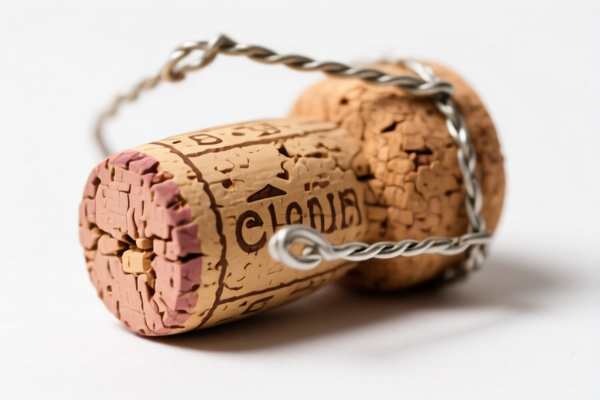
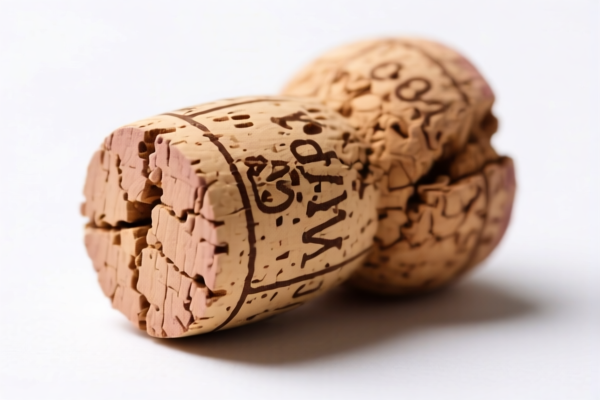

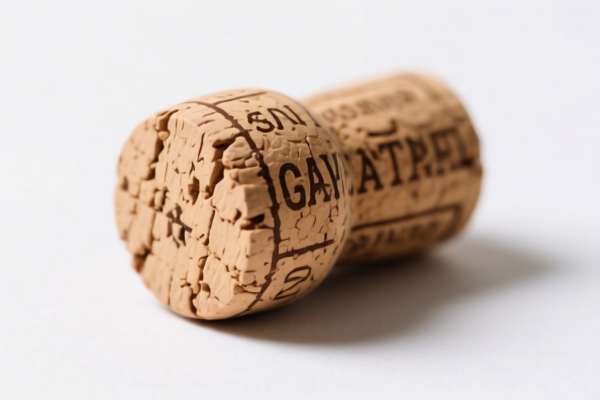
AI Analysis
🧱 Cork Crumbs Building Insulation (Natural Cork Granules)
🌐 HS Code Reference & Customs Clearance Guide | 2026 Latest Tariff Analysis | Specialized Clearance Strategy for Natural Building Materials
📌 I. Product Definition & Classification: What Exactly is "Cork Crumbs"?
Cork Crumbs (also known as Cork Granules or Expanded Cork), are derived from the bark of the Quercus suber (Cork Oak) tree. They are a lightweight, porous, and highly resilient natural material used primarily in construction for thermal and acoustic insulation.
In international trade, the classification hinges on two critical factors: 1. Material Origin: Must be Cork (Natural Vegetable Product), specifically Chapter 45. If mixed with bitumen, cement, or synthetic binders in large quantities, it may migrate to Chapter 68. 2. Form: Crushed, ground, or granulated forms (not slabs or blocks with specific shapes like tiles).
⚠️ Key Distinction:
- If the product is pure cork crumbs/granules used for loose-fill insulation or mixed with binders but retaining cork identity → Chapter 45.
- If the product is processed into specific structural boards/panels with added inorganic binders (cement/asphalt) making it resemble "stone wool" or "insulating board" → Chapter 68.
📦 II. HS Code Classification Details (2026 Latest Tariff Mapping)
Based on your product description "cork crumbs building insulation," the most accurate classifications fall under Cork Articles (45) or Insulating Boards (68), depending on the exact processing and binder content.
| HS Code | Product Description | Application Scenario | Binder Content? |
|---|---|---|---|
4504.10.40.00 |
Cork articles; cork crumbs, granules, chips | Loose-fill insulation, acoustic underlayment, lightweight fill | ❌ Pure Cork / Low Binder |
4504.10.30.00 |
Cork articles; cork slabs, boards, tiles | Pre-formed cork boards for wall/floor insulation | ⚠️ May include binding agents |
4504.10.50.00 |
Other cork articles | Cork strips, rods, or mixed-insulation forms | ✅ Varies by form |
6808.00.00.00 |
Insulating boards of vegetable fiber | Cork boards mixed with asphalt/cement, or other plant-fiber insulating panels | ✅ High Binder (Cement/Asphalt) |
🔍 Critical Clarification:
-4504.10.40.00is the primary match for "cork crumbs" (granules).
-6808.00.00.00applies if the cork is bound with bitumen or cement to form rigid boards, effectively becoming a "mineral/vegetable fiber insulating board."
-4504.10.30.00and4504.10.50.00cover other shapes (slabs, strips) derived from cork.
💰 III. 2026 Latest Tariff Rate Breakdown (Including Additional Taxes & Policy Surcharges)
✅ Applicable Country: United States (US)
✅ Country of Origin: China (CN)
✅ Effective Date: November 10, 2025 (and onwards)
🎯 1. 4504.10.40.00 – Cork Crumbs, Granules, Chips (Loose-Fill Insulation)
| Item | Content |
|---|---|
| Basic Tariff Rate | 0% (ad valorem) |
| USITC Additional Duty | +25% (Under Section 301, Footnote 9903.88.01) |
| IEEPA Additional Duty | +10% (China/HK products, under IEEPA) |
| Total Tax Rate | 35.0% |
| Tax Calculation | CIF Value × 35% |
| De Minimis Eligibility | ❌ Not Eligible (deny_de_minimis) |
| Legal Basis Path | IEEPA:9903.01.25 → IEEPA:9903.01.24 → USITC:4504.10.40.00 → FOOTNOTE:9903.88.01 |
📌 Explanation:
- 0% Basic: Natural cork products have low base tariffs.
- 25% USITC: Section 301 tariffs apply to cork articles.
- 10% IEEPA: Additional China-specific tariff under the International Emergency Economic Powers Act.
- Total 35%: This is a significant cost for bulk loose-fill insulation. Importers must calculate this into landed costs.
🎯 2. 6808.00.00.00 – Insulating Boards of Vegetable Fiber (Cork Boards with Binders)
| Item | Content |
|---|---|
| Basic Tariff Rate | 0% (ad valorem) |
| USITC Additional Duty | +25% (Under Section 301) |
| IEEPA Additional Duty | +10% (China/HK products) |
| Total Tax Rate | 35.0% |
| Tax Calculation | CIF Value × 35% |
| De Minimis Eligibility | ❌ Not Eligible (deny_de_minimis) |
| Legal Basis Path | IEEPA:9903.01.25 → IEEPA:9903.01.24 → USITC:6808.00.00.00 → FOOTNOTE:9903.88.01 |
📌 Note:
- If your "cork crumbs" are pressed into rigid boards with cement/asphalt, this code may apply.
- The tax rate is identical (35%), but the legal description differs.
- Misclassification Risk: If you declare rigid cork-asphalt boards as "cork crumbs" (4504.10.40.00), customs may reject it for mismatched form.
🎯 3. 4504.10.30.00 & 4504.10.50.00 – Other Cork Articles (Slabs/Strips)
| Item | Content |
|---|---|
| Basic Tariff Rate | 0% |
| USITC Additional Duty | +25% |
| IEEPA Additional Duty | +10% |
| Total Tax Rate | 35.0% |
| Tax Calculation | CIF Value × 35% |
| De Minimis Eligibility | ❌ Not Eligible |
| Legal Basis Path | Same as above |
📌 Note:
- These codes apply if the product is pre-formed into slabs, tiles, or strips rather than loose crumbs.
- Tax rate remains 35% due to Section 301 and IEEPA surcharges.
🛠️ IV. Customs Clearance Practical Advice (Real-World Pitfall Guide)
✅ 1. Required Documentation Checklist (Non-Negotiable)
| Document | Required? | Description |
|---|---|---|
| ✅ Product Specification Sheet | ✔️ | Must detail: Particle size, density, binder type (if any), thermal conductivity (R-value). |
| ✅ Certificate of Origin (CO) | ✔️ | Proof of Chinese origin triggers the 35% tariff. |
| ✅ Commercial Invoice | ✔️ | Must clearly state: "Cork Crumbs/Granules for Building Insulation." Avoid vague terms like "Natural Material." |
| ✅ Packing List | ✔️ | Specify if packed in bulk bags, boxes, or pallets. |
| ✅ Third-Party Test Report | ✔️ | Fire resistance rating (Class A/B), formaldehyde emissions, density test. |
| ✅ Photos of Product & Labeling | ✔️ | Show granule size and packaging markings. |
✅ 2. Declaration Tips (Key Mantras)
🔥 “Be Specific, No Ambiguity! ‘Cork’ is Key, ‘Insulation’ is Purpose.”
| Scenario | Correct Declaration | Wrong Declaration |
|---|---|---|
| Loose Cork Granules | 4504.10.40.00 – "Cork Crumbs, Natural, for Insulation" |
"Building Material" or "Noise Proofing" → Ambiguous! |
| Cork Boards (with binder) | 6808.00.00.00 – "Insulating Boards, Vegetable Fiber, Cork-based" |
"Cork Slabs" → If it contains cement, it’s misclassified. |
| Mixed Insulation | 4504.10.50.00 – "Other Cork Articles, Mixed Insulation" |
"Composite Insulation" → Too vague. |
| Pure Cork Pellets | 4504.10.40.00 |
"Granules" → Specify "Cork Granules." |
📌 Critical Reminder:
- Do not use generic terms like "Eco-Friendly Insulation" without specifying material.
- If the product is compressed cork, clarify if it’s pure cork (4504) or cork-binder composite (6808).
✅ 3. Special Case Handling
| Situation | Handling Advice |
|---|---|
| Cork + Cement/Asphalt Boards | Declare under 6808.00.00.00. Provide lab test showing mineral content. |
| Pure Cork Granules (Loose Fill) | Declare under 4504.10.40.00. Provide particle size analysis. |
| Cork Tiles/Slabs | Declare under 4504.10.30.00. Ensure no heavy binders. |
| Origin: Vietnam/Mexico | Check for IEEPA Exemptions. If non-China origin, tariff may drop to 0-5%. |
🌍 V. Global Market Comparison (2026 Latest)
| Country/Region | Recommended HS Code | Tariff (China Origin) | Certification Requirements | Notes |
|---|---|---|---|---|
| 🇺🇸 USA | 4504.10.40.00 or 6808.00.00.00 |
35% (0% Base + 25% + 10%) | FDA (if contact), Fire Rating Cert | High tariff; no de minimis. |
| 🇨🇳 China | 4504.10.40.00 |
0% - 5% | CCC (if applicable) | No additional surcharges. |
| 🇪🇺 EU | 4504.10.40.00 |
0% | CE, EPD (Environmental Product Declaration) | No Section 301 tariffs. |
| 🇬🇧 UK | 4504.10.40.00 |
0% - 5% | UKCA | Post-Brexit rules apply. |
| 🇦🇺 Australia | 4504.10.40.00 |
5% | CBAS (Construction Building Accreditation Scheme) | Moderate tariff. |
📌 Conclusion:
- USA is the only major market imposing a 35% effective tariff due to Section 301 and IEEPA.
- EU/UK/Australia offer significantly lower tax burdens.
- Consider supply chain diversification if targeting the US market heavily.
📌 VI. Common Errors & Pitfall Guide (Lessons Learned)
❌ Error 1: Declaring cork boards as "Wood Panels"
👉 Consequence: Wrong HS code, delayed clearance, potential fines.
✅ Fix: Always specify "Cork" in the description.
❌ Error 2: Ignoring the binder content
👉 Consequence: If cork is bound with cement, 4504 is incorrect. Must use 6808.
✅ Fix: Provide lab reports on composition.
❌ Error 3: Assuming "Natural" means 0% Tariff
👉 Consequence: Section 301 and IEEPA add 35% regardless of "natural" status.
✅ Fix: Budget for 35% total duty on China-origin cork.
❌ Error 4: Using "Insulation" as the primary name
👉 Consequence: Too vague. Customs may request additional info.
✅ Fix: Use "Cork Crumbs/Granules for Insulation."
🎯 VII. Conclusion: Precise Classification Saves Money!
🎯 Key Takeaways:
🔹 "Cork Crumbs = 4504.10.40.00" (Loose/Granules)
🔹 "Cork Boards = 6808.00.00.00" (If binded with cement/asphalt)
🔹 "Total US Tariff = 35%" (0% Base + 25% Section 301 + 10% IEEPA)
🔹 "No De Minimis Exemption" – Every shipment is taxed.
📌 Pro Tip:
If you are shipping small samples (< $800), check if de minimis applies. However, for insulation materials, customs often scrutinize "natural" claims. For bulk shipments, apply for an Advance Ruling to confirm HS code and avoid detention.
📣 Immediate Action:
📞 Contact a licensed customs broker.
📤 Provide Product Specs + Photos + Origin Certificate.
🚀 Optimize Landed Cost: Factor in the 35% tariff. Consider tariff engineering (e.g., sourcing from Vietnam if possible).
✨ Professional Clearance, Start with Accurate Classification!
💼 Your Profit Margin Depends on Precision!
Customer Reviews
About HS Code Classification
The Harmonized System (HS) is an internationally standardized nomenclature developed by the World Customs Organization (WCO) to classify traded products. Over 200 countries use the HS system as the basis for customs tariffs, trade statistics, and import/export regulations.
Each HS code follows a hierarchical structure:
- Chapter (2 digits) — Broad category of goods (e.g., Chapter 84: Machinery and Mechanical Appliances)
- Heading (4 digits) — More specific grouping within the chapter
- Subheading (6 digits) — Internationally standardized breakdown, used by all WCO member countries
- National subdivisions (8-10 digits) — Country-specific extensions for further classification, such as US HTSUS 10-digit codes
Correct HS code classification is essential for smooth customs clearance, accurate duty payment, and compliance with trade regulations. Misclassification can lead to customs delays, overpayment of duties, or penalties.
When importing from CN to US, the applicable tariff rates may include:
- Most-Favored-Nation (MFN) rate — The standard duty rate applied to WTO members
- General rate — Applied to countries without trade agreements
- Trade remedy duties — Additional tariffs such as Section 301 (anti-dumping), Section 232 (national security), or countervailing duties
The information provided on this page is for reference purposes only. For official classification, please consult with your local customs authority or a licensed customs broker.