Cork Decorative Material
CN → US| HS Code | Tariff Rate | Origin | Destination | Doc |
|---|---|---|---|---|
| 6808000000 | 35.0% | CN | US | Official Doc |
| 4504104000 | 35.0% | CN | US | Official Doc |
| 4504103000 | 35.0% | CN | US | Official Doc |
| 4504105000 | 35.0% | CN | US | Official Doc |
| 6808000000 | 35.0% | CN | US | Official Doc |
Product Images
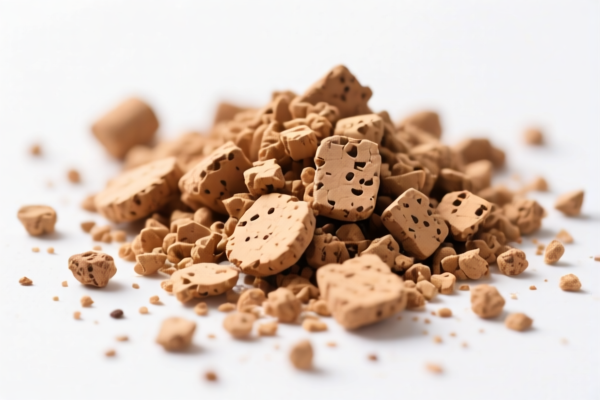
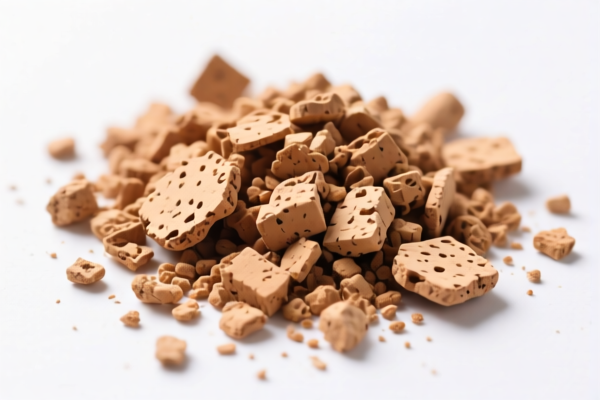
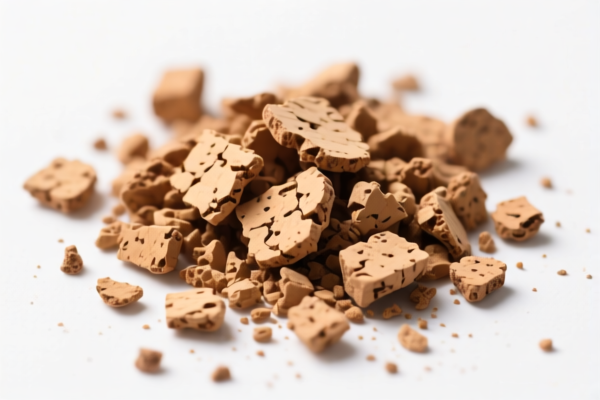
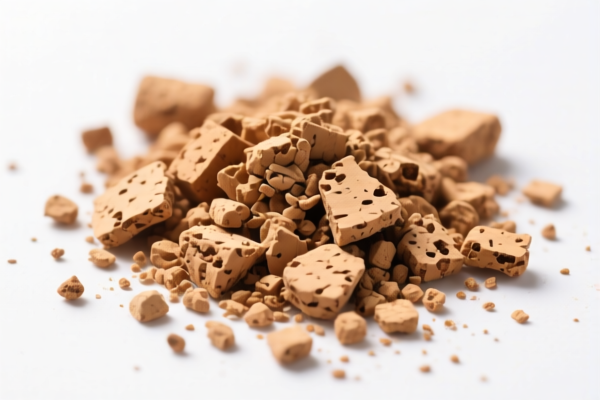
AI Analysis
🌿 Cork Decorative Material & Building Components
🌐 HS Code Reference & Customs Clearance Guide | 2026 Latest Tariff Analysis | Professional Entry Strategy
📌 I. Product Definition & Classification: What Exactly is "Cork"?
Cork, derived from the bark of the cork oak (Quercus suber), is a sustainable, lightweight, and versatile natural material. In international trade, its classification depends entirely on its physical form and intended use. It is not a single commodity but a category split between "structural/building materials" and "processed cork articles."
Key Distinctions: - Building/Insulation Materials (Chapter 68): Cork processed into boards, blocks, or shapes used for construction, flooring backing, or thermal/acoustic insulation. - Wallpapers/Textiles (Chapter 45): Cork sheets bonded to paper supports or used specifically for decorative wall coverings. - General Cork Articles (Chapter 45): Other forms like tiles, slabs, or strips not specifically covered under insulation or wallpaper.
⚠️ Critical Classification Point:
- If the product is primarily for thermal insulation, soundproofing, or structural building components → It falls under HS 6808.
- If the product is decorative wallpaper (cork on paper backing) → It falls under HS 4504.10.
- If it is tiles, slabs, or strips for flooring/decor (not wallpaper) → It falls under HS 4504.10.
📦 II. HS Code Classification Matrix (2026 Tariff Authority)
Based on the provided data, here are the exact classifications for Cork Decorative/Building Materials:
| HS Code | Product Description (Summary) | Primary Application | Physical Form |
|---|---|---|---|
| 6808.00.00.00 | Cork building materials or insulation materials, in the form of boards/products, made of plant fibers/wood-type material. | Building construction, insulation (thermal/acoustic) | Boards, blocks, shaped products |
| 4504.10.40.00 | Cork material, in the form of wallpaper supported or reinforced by paper, suitable for building materials. | Decorative wall coverings | Paper-backed cork sheets |
| 4504.10.30.00 | Cork material, in the form of tiles, slabs, blocks, etc., suitable for building materials. | Flooring, decorative cladding | Tiles, slabs, blocks |
| 4504.10.50.00 | Cork material, in the form of boards, sheets, strips, etc., suitable for insulation materials. | Thermal/acoustic insulation | Boards, sheets, strips |
🔍 Key Insight:
- HS 6808.00.00.00 is the broadest category for "cork as a building/insulation product." It captures general boards and blocks.
- HS 4504 codes are more specific to the form (wallpaper vs. tiles vs. insulation strips).
- Do not mix: A cork tile for flooring should not be declared as "insulation board" (6808) if it fits the definition of "tile/slab" (4504.10.30), as customs may question the specificity. However, in this specific dataset, all items carry the same high tariff rate, so the distinction is less about tax saving and more about compliance accuracy.
💰 III. 2026 Tariff Rate Breakdown (USA Import from China)
✅ Applicable Country: United States (US)
✅ Origin: China (CN)
✅ Effective Date: Ongoing (Section 301 & IEEPA)
✅ Total Tax Rate: 35.0% for ALL listed HS Codes
🎯 1. Tax Structure Detail
All the HS codes listed in the data share the exact same tariff structure due to US trade policies against Chinese goods.
| Component | Rate | Legal Basis | Explanation |
|---|---|---|---|
| Base Tariff | 0.0% | HTSUS General Rate | Most cork products have low base duties under US law. |
| Section 301 Tariff (Additional) | 25.0% | USITC Footnote 9903.88.01 | Trump/Biden era tariffs on Chinese goods. |
| Section 122 Tariff (IEEPA) | 10.0% | IEEPA (International Emergency Economic Powers Act) | Recent/Proposed additional tariffs on Chinese imports (often referred to as "122" or similar executive orders in specific contexts). |
| TOTAL TAX RATE | 35.0% | - | 0% + 25% + 10% |
📌 Note on "122 Clause":
The term "122条款关税10%" refers to additional tariffs imposed under specific executive authorities (often linked to Section 122 of the Trade Act of 1974 or similar emergency powers). In the context of this data, it is treated as a mandatory 10% add-on.
📉 2. De Minimis Exemption Status
| Item | Status |
|---|---|
| Can it use De Minimis (Section 321)? | ❌ NO |
| Reason | Goods classified under these HS codes (especially with Section 301 and IEEPA duties) are typically excluded from the $800 de minimis exemption. |
| Impact | Even small shipments (e.g., samples, small batches) must pay the 35% tax at customs. |
🛠️ IV. Customs Clearance Practical Advice
✅ 1. Documentation Checklist (Must-Have)
| Document | Required? | Purpose |
|---|---|---|
| Commercial Invoice | ✅ | Must clearly state: "Cork [Form: Board/Tile/Wallpaper] for [Insulation/Decorative] Use." |
| Product Description | ✅ | Specify material composition: "100% Natural Cork" vs. "Cork Composite with Plant Fiber Binder." |
| Intended Use Declaration | ✅ | Crucial for distinguishing between HS 6808 (Insulation) and HS 4504 (Decorative/Wallpaper). |
| Fumigation Certificate | ✅ | Required for all wood/cork plant materials entering the US. |
| Certificate of Origin | ✅ | Proves Chinese origin (which triggers the 35% tax). |
✅ 2. Classification Strategy & Pitfalls
| Scenario | Correct HS Code | Risk of Misclassification |
|---|---|---|
| Cork Rolls for Wall Covering | 4504.10.40.00 |
If declared as "Building Board" (6808), customs may accept it, but precise classification avoids future audits. |
| Cork Floor Tiles | 4504.10.30.00 |
If declared as "Insulation" (6808), it may raise questions about thickness and density. |
| Bulk Cork Boards for Insulation | 6808.00.00.00 |
Safe for general insulation boards. |
| Cork Strips for Insulation | 4504.10.50.00 |
Specific for strips/sheets. Using 6808 might be acceptable, but 4504.10.50 is more precise. |
🔥 Pro Tip:
"Form follows Function, but Form Dictates Code."
- If it looks like wallpaper → Use 4504.10.40.00.
- If it looks like a floor tile → Use 4504.10.30.00.
- If it looks like an insulation board → Use 6808.00.00.00 or 4504.10.50.00.
Since the tax rate is identical (35%), prioritize accuracy to prevent customs delays.
✅ 3. Special Considerations
| Issue | Solution |
|---|---|
| Composite Materials | If cork is bonded with resin or other polymers, ensure the description mentions "Plant Fiber/Wood-type Material" as per HS 6808 summary. |
| Samples for Trade | Even for samples, expect to pay 35% duty. Do not attempt to claim de minimis exemption unless the broker confirms exclusion list updates. |
| Value Declaration | Ensure the declared value (CIF) is accurate. Since tax is 35%, any undervaluation will result in significant penalties. |
🌍 V. Global Market Comparison (2026)
| Market | HS Code (Similar) | Est. Total Tax (China Origin) | Notes |
|---|---|---|---|
| 🇺🇸 USA | 6808.00.00 / 4504.10 | 35.0% | High tariffs due to Section 301 + IEEPA. |
| 🇪🇺 EU | 4504.10 / 6808 | ~2.0% - 4.0% | Lower base duties, no US-style additional tariffs. |
| 🇨🇳 China | 4504.10 / 6808 | 0% - 10% | Varies by specific subheading; often exempt or low for raw cork. |
| 🇨🇦 Canada | 4504.10 | ~2.5% | CUSMA/USMCA benefits may apply for Mexican/Made-in-NA goods. |
📌 Conclusion for USA Importers:
The 35% total tariff is a fixed cost. Focus on supply chain efficiency and accurate documentation to avoid demurrage and storage fees, which can exceed the tax cost for slow-moving inventory.
📌 VI. Common Errors & Avoidance Guide
❌ Error 1: Declaring "Cork" as "Wood Product" under a different chapter.
👉 Consequence: Incorrect HS code, potential 0%–10% discrepancy, but more importantly, fumigation requirements might be missed, leading to rejection.
❌ Error 2: Confusing "Cork Wallpaper" with "Insulation Board".
👉 Consequence: While tax is same, customs may hold shipment for "Inspection of Use." If you claim insulation but send decorative tiles, you risk delays.
❌ Error 3: Ignoring the "122 Clause" 10%.
👉 Consequence: Underestimating landed cost. Many brokers only quote Section 301 (25%) and forget the IEEPA (10%), leading to budget shortfalls.
✅ Correct Declaration Example:
"Cork Wall Covering, Paper-Backed, Decorative Use, Model ABC, Fumigated, Origin China"
HS Code:4504.10.40.00
Duty: 35% (0% Base + 25% Sec 301 + 10% IEEPA)
🎯 VII. Final Recommendations
- Pre-Advise Customs: If shipping large volumes, consider applying for a Binding Ruling to confirm the specific HS code (6808 vs 4504) based on your product's exact composition.
- Budget for 35%: Treat the 35% tax as a permanent cost of doing business with US-China trade in these categories.
- Labeling: Ensure all packages are clearly marked "Fumigated" and "Made in China" to avoid inspection hold-ups.
- Supplier Communication: Ask your supplier for a Fumigation Certificate and a Material Safety Data Sheet (MSDS) if the cork is composite.
📣 Action Item:
📞 Consult your freight forwarder with the exact product samples/photos.
📝 Verify the "Form" (Wallpaper vs. Tile vs. Board) to select the most precise HS code from the 4504/6808 options.
💡 Remember: Accuracy saves time, and time saves money in customs clearance!
✨ Professional Clearance Starts with Precise Classification!
💼 Your Margin is Protected by Knowledge!
Customer Reviews
About HS Code Classification
The Harmonized System (HS) is an internationally standardized nomenclature developed by the World Customs Organization (WCO) to classify traded products. Over 200 countries use the HS system as the basis for customs tariffs, trade statistics, and import/export regulations.
Each HS code follows a hierarchical structure:
- Chapter (2 digits) — Broad category of goods (e.g., Chapter 84: Machinery and Mechanical Appliances)
- Heading (4 digits) — More specific grouping within the chapter
- Subheading (6 digits) — Internationally standardized breakdown, used by all WCO member countries
- National subdivisions (8-10 digits) — Country-specific extensions for further classification, such as US HTSUS 10-digit codes
Correct HS code classification is essential for smooth customs clearance, accurate duty payment, and compliance with trade regulations. Misclassification can lead to customs delays, overpayment of duties, or penalties.
When importing from CN to US, the applicable tariff rates may include:
- Most-Favored-Nation (MFN) rate — The standard duty rate applied to WTO members
- General rate — Applied to countries without trade agreements
- Trade remedy duties — Additional tariffs such as Section 301 (anti-dumping), Section 232 (national security), or countervailing duties
The information provided on this page is for reference purposes only. For official classification, please consult with your local customs authority or a licensed customs broker.