Cork Flooring Tiles
CN → US| HS Code | Tariff Rate | Origin | Destination | Doc |
|---|---|---|---|---|
| 4504103000 | 35.0% | CN | US | Official Doc |
| 4504101000 | 35.0% | CN | US | Official Doc |
| 4504104000 | 35.0% | CN | US | Official Doc |
| 6808000000 | 35.0% | CN | US | Official Doc |
| 4504103000 | 35.0% | CN | US | Official Doc |
Product Images
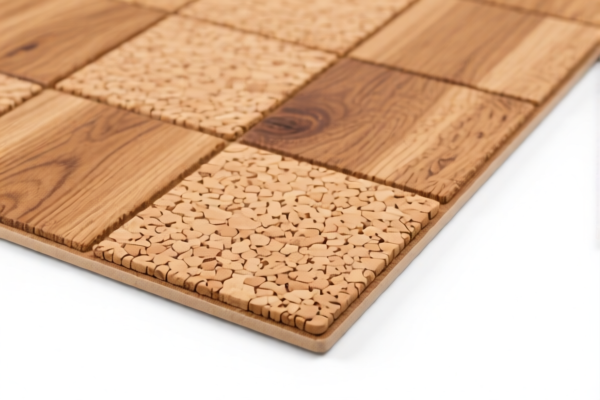
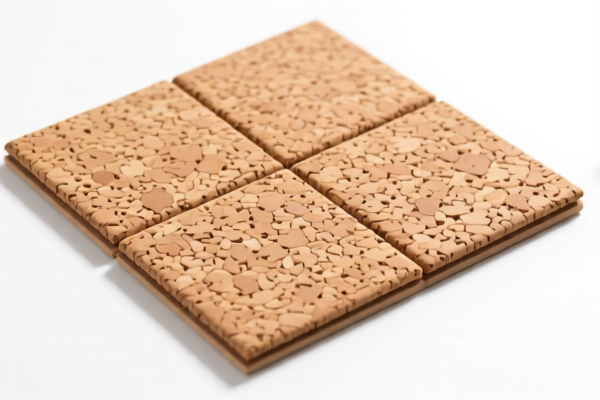
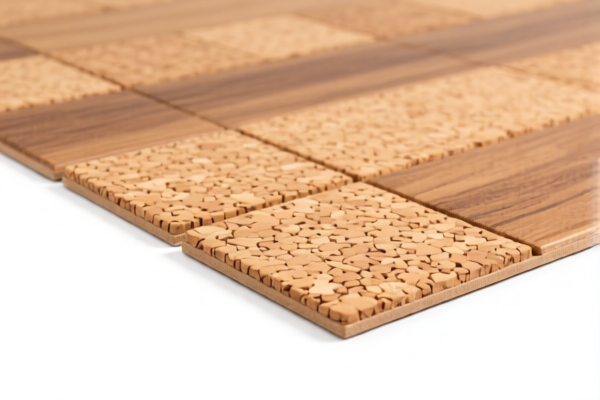
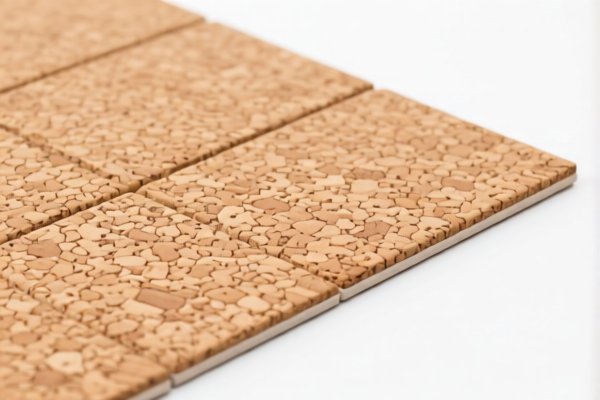
AI Analysis
🛍️ Cork Flooring Tiles (Adhesive Cork Floor Tiles)
🌐 HS Code Reference & Customs Clearance Guide | 2026 Latest Tariff Analysis | Professional Clearance Strategy
📌 I. Product Definition & Classification: Do You Really Understand "Cork Tiles"?
Cork flooring tiles are a popular eco-friendly building material made from the bark of the cork oak tree. In international trade, they are primarily classified under Chapter 45 (Cork and manufactures of cork) or potentially Chapter 68 if mixed with mineral binders. The key differentiator is the material composition and form:
- Pure Cork Tiles: Made primarily of compressed cork granules with natural or synthetic binders, retaining the biological characteristics of cork. These fall under HS 4504.
- Cork Composite/Mineral Tiles: If the cork is heavily mixed with mineral binders or processed into a rigid board-like structure resembling stone/ceramic, it might be classified under HS 6808.
⚠️ Key Distinction:
- If the product is clearly "Cork" (flexible, porous, distinct cork smell/texture) → HS 4504
- If it is a "Board/Slab" mixed with mineral binders (harder, stone-like) → HS 6808
- Most standard adhesive cork tiles (even those with glue backing) are classified under HS 4504.
📦 II. HS Code Classification Details (2026 Latest Tariff Authority Comparison)
| HS Code | Product Description | Application Scenario | Material Characteristic |
|---|---|---|---|
4504.10.30.00 |
Adhesive cork flooring tiles; material is cork, form is floor tiles, use is floor covering. | Standard home/office cork flooring with self-adhesive backing. | ✅ Pure Cork + Adhesive |
4504.10.10.00 |
Cork blocks/bricks; material is cork, form is brick/block, contains binder, fits any tile shape. | Non-adhesive cork blocks or rigid cork tiles with binder. | ✅ Cork + Binder |
4504.10.40.00 |
Cork building materials; material is cork, use is building material, form fits boards/blocks. | Cork insulation boards, large cork sheets for construction. | ✅ Cork Construction Material |
6808.00.00.00 |
Cork building materials; form is building material board/article, material is vegetable fiber/wood, bonded with mineral binder. | Cork mixed with mineral binders, stone-like rigid panels. | ⚠️ Cork + Mineral Binder |
4504.10.30.00 |
Cork building materials; material is cork, use covers tiles/boards/blocks, fits code requirements. | General cork tiles for flooring/walls. | ✅ Pure Cork |
🔍 Key Reminder:
- Most "Adhesive Cork Flooring Tiles" sold in retail or B2B construction markets fall under4504.10.30.00. - If the product is described as "Cork Composite with Mineral Binder," it may shift to6808.00.00.00, but this is less common for standard flooring tiles.
💰 III. 2026 Latest Tariff Rate Breakdown (Including Additional Taxes, Policy Add-ons)
✅ Applicable Country: United States (US)
✅ Origin: China (CN)
✅ Effective Date: November 10, 2025 onwards (for subsequent imports)
🎯 1. 4504.10.30.00 — Adhesive Cork Flooring Tiles
| Item | Content |
|---|---|
| Base Tariff | 0% (ad valorem) |
| USITC Additional Tariff | +25% (Section 301) |
| Section 122 Tariff | +10% (Specific U.S. Trade Law Provision) |
| Total Tariff Rate | 35% |
| Tax Calculation | CIF Value × 35% |
| De Minimis Exemption? | ❌ No (deny_de_minimis) |
| Legal Authority Path | USITC:4504.10.30.00 → Section 301: 25% → Section 122: 10% |
📌 Explanation:
- "USITC Additional Tariff 25%": Derived from U.S. Trade Law Section 301, targeting Chinese goods. - "Section 122 Tariff 10%": A specific additional duty applied under U.S. international trade regulations. - Combined Total: 35%. This is a high tariff for cork products and must be factored into cost projections.
🎯 2. 4504.10.10.00 — Cork Blocks/Bricks
| Item | Content |
|---|---|
| Base Tariff | 0% |
| USITC Additional Tariff | +25% |
| Section 122 Tariff | +10% |
| Total Tariff Rate | 35% |
| Tax Calculation | CIF × 35% |
| De Minimis Exemption? | ❌ No |
| Legal Authority Path | USITC:4504.10.10.00 → Section 301: 25% → Section 122: 10% |
📌 Note:
- Same tariff structure as adhesive tiles. Even if non-adhesive, if it's cork-based, it falls here.
🎯 3. 6808.00.00.00 — Cork Building Materials (Mineral Binder)
| Item | Content |
|---|---|
| Base Tariff | 0% |
| USITC Additional Tariff | +25% |
| Section 122 Tariff | +10% |
| Total Tariff Rate | 35% |
| Tax Calculation | CIF × 35% |
| De Minimis Exemption? | ❌ No |
| Legal Authority Path | USITC:6808.00.00.00 → Section 301: 25% → Section 122: 10% |
📌 Note:
- Even if classified under Chapter 68, the same 35% total tariff applies due to Chinese origin. Misclassification does not reduce tariff liability.
🛠️ IV. Customs Clearance Practical Advice (Battle-Tested Pitfall Avoidance Guide)
✅ 1. Required Documentation Checklist (All are Mandatory)
| Document | Must Provide | Explanation |
|---|---|---|
| ✅ Product Specification Sheet | ✔️ | Include material composition (100% cork vs. composite), dimensions, adhesive type. |
| ✅ Product Photos | ✔️ | Clear images of the tile surface, backing (if adhesive), and packaging. |
| ✅ Commercial Invoice | ✔️ | Must clearly state "Cork Flooring Tiles" or "Cork Building Material." Avoid vague terms like "Natural Material Tiles." |
| ✅ Packing List | ✔️ | Detail weight, quantity, and carton dimensions. |
| ✅ Certificate of Origin (CO) | ✔️ | To confirm Chinese origin and apply correct tariff rates. |
| ✅ Material Safety Data Sheet (MSDS) | ✔️ | If adhesives or binders contain hazardous substances. |
✅ 2. Declaration Tips (Key Mnemonics)
🔥 "Declare Cork, Not 'Wood' or 'Stone'; Specify Adhesive if Present!"
| Scenario | Correct Declaration | Wrong Practice |
|---|---|---|
| Standard Adhesive Cork Tile | 4504.10.30.00 - "Adhesive Cork Flooring Tile" |
Misdeclare as "Wood Tile" (Chapter 44) → Different tariff rules |
| Non-Adhesive Cork Block | 4504.10.10.00 - "Cork Block/Brick with Binder" |
Declare as "Flooring" without specifying form → Potential reclassification |
| Cork-Composite Mineral Board | 6808.00.00.00 - "Cork-Mineral Composite Building Board" |
Declare as "Cork Tile" → Risk of penalty for misclassification |
| Mixed Shipment (Cork + Wood) | Separate HS Codes for each | Combine into one line item → Customs seizure risk |
✅ 3. Special Case Handling
| Scenario | Handling Advice |
|---|---|
| Self-Adhesive Backing | Clearly state "Self-Adhesive" in description. Do not separate the adhesive as a "chemical product" (Chapter 35). The primary character is cork. |
| Cork Mixed with Rubber | If rubber > cork, may fall under Chapter 40. If cork > rubber, still Chapter 45. Provide material ratio. |
| Pre-Cut vs. Raw Sheets | Pre-cut tiles are still 4504.10.30.00. Raw sheets may be 4504.10.40.00. Differentiate in invoice. |
| Samples for Evaluation | Even samples are subject to 35% tariff if declared as commercial goods. Use "No Commercial Value" only if truly for free sampling (but still declare). |
🌍 V. Global Market Customs Comparison (2026 Latest)
| Country/Region | Recommended HS Code | Tariff (China Origin) | Certification Requirements | Notes |
|---|---|---|---|---|
| 🇺🇸 USA | 4504.10.30.00 |
35% (25% Sec 301 + 10% Sec 122) | FCC (if electronic), but mostly none for cork | High tariff due to trade tensions |
| 🇨🇳 China | 4504.10.30.00 |
0-5% (depending on type) | None for export | Low import duty for domestic sale |
| 🇪🇺 EU | 4504.10.30.00 |
0% (Most Favored Nation) | REACH, FSC (sustainability) | No additional tariffs, but strict eco-standards |
| 🇬🇧 UK | 4504.10.30.00 |
0% | UKCA | Post-Brexit alignment with EU standards |
| 🇦🇺 Australia | 4504.10.30.00 |
5% | None | Moderate tariff |
📌 Conclusion:
- USA is the only major market imposing high additional tariffs (35%) on Chinese cork products. - EU/UK/Australia have 0-5% tariffs, making them more cost-effective for Chinese exporters. - Cost Advantage: Consider sourcing or final assembly in non-China countries (e.g., Vietnam, Portugal) to avoid Section 301/122 tariffs if targeting the US market.
📌 VI. Common Mistakes & Pitfall Avoidance (Lessons Learned)
❌ Mistake 1: Declaring "Cork Tile" as "Wood Tile" (HS 4418)
👉 Consequence: Incorrect classification → Penalty + Back Taxes. Cork is Chapter 45, not Chapter 44.
❌ Mistake 2: Ignoring the Adhesive Backing
👉 Consequence: If not declared, customs may reclassify as "Chemical Product" or "Building Material," leading to delays.
❌ Mistake 3: Under-declaring Value
👉 Consequence: 35% tariff on undervalued goods → Seizure + Fines. Always declare true CIF value.
❌ Mistake 4: Using "Cork" for Cork-Composite Mineral Boards
👉 Consequence: If it's 6808, it should be declared as such. Misclassification can lead to audits.
✅ Correct Practice:
"Cork Flooring Tile, Self-Adhesive, 12"x12", 100% Cork Granules with Polyurethane Backing, Model CTK-123, FSC Certified"
🎯 VII. Conclusion: Professional Declaration, Save Time, Reduce Costs!
🎯 Remember the Mnemonics:
🔹 "Cork is Ch.45, Not Wood or Stone; 35% in USA, 0% in EU."
🔹 "HS Code determines fate, tariff difference is huge; declare accurately, avoid penalties."
📌 Pro Tip:
If your cork tiles are sourced from Portugal, Spain, or Morocco, you may qualify for lower or zero tariffs in the US under specific trade agreements or if they are not subject to Section 301.
For Chinese-sourced goods, consider Advance Ruling (Pre-Decision) to confirm HS Code and avoid clearance delays.
📣 Immediate Action:
📞 Contact a professional customs broker + Provide product specs + Apply for HS Code Advance Ruling
🚀 Ensure your cork tiles clear customs smoothly, reduce costs, and maximize profits!
✨ Professional Customs Clearance Starts with Accurate Classification!
💼 Every cent of your cost deserves precise calculation!
Customer Reviews
About HS Code Classification
The Harmonized System (HS) is an internationally standardized nomenclature developed by the World Customs Organization (WCO) to classify traded products. Over 200 countries use the HS system as the basis for customs tariffs, trade statistics, and import/export regulations.
Each HS code follows a hierarchical structure:
- Chapter (2 digits) — Broad category of goods (e.g., Chapter 84: Machinery and Mechanical Appliances)
- Heading (4 digits) — More specific grouping within the chapter
- Subheading (6 digits) — Internationally standardized breakdown, used by all WCO member countries
- National subdivisions (8-10 digits) — Country-specific extensions for further classification, such as US HTSUS 10-digit codes
Correct HS code classification is essential for smooth customs clearance, accurate duty payment, and compliance with trade regulations. Misclassification can lead to customs delays, overpayment of duties, or penalties.
When importing from CN to US, the applicable tariff rates may include:
- Most-Favored-Nation (MFN) rate — The standard duty rate applied to WTO members
- General rate — Applied to countries without trade agreements
- Trade remedy duties — Additional tariffs such as Section 301 (anti-dumping), Section 232 (national security), or countervailing duties
The information provided on this page is for reference purposes only. For official classification, please consult with your local customs authority or a licensed customs broker.