Cork Gasket for Automotive Engine
CN → US| HS Code | Tariff Rate | Origin | Destination | Doc |
|---|---|---|---|---|
| 4504105000 | 35.0% | CN | US | Official Doc |
| 4504900000 | 35.0% | CN | US | Official Doc |
| 8484100000 | 37.5% | CN | US | Official Doc |
| 8484900000 | 37.5% | CN | US | Official Doc |
| 4016931010 | 37.5% | CN | US | Official Doc |
Product Images


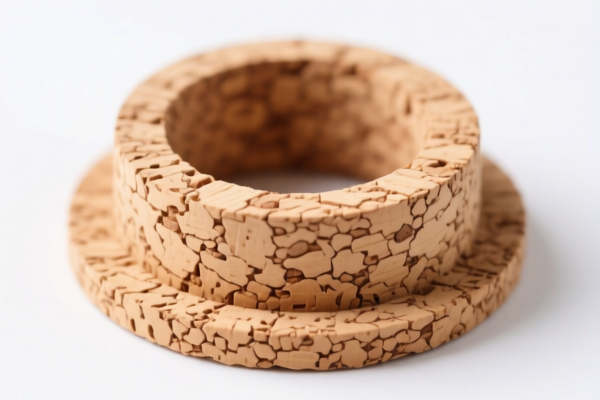

AI Analysis
🚗 Cork Gasket for Automotive Engine (软木汽车发动机垫片)
🌐 HS Code Reference & Customs Clearance Guide | 2026 Latest Tariff Breakdown | Professional Entry Strategy
📌 I. Product Definition & Classification: What Exactly is a "Cork Gasket"?
Cork engine gaskets are critical sealing components used in automotive manufacturing and aftermarket repair. They prevent the leakage of engine oil, coolant, and combustion gases. In international trade, their classification depends heavily on material composition, form, and specific use.
Key Distinction:
- Cork-based products: Often classified under Chapter 45 (Cork and articles of cork) if they meet specific criteria for cork articles.
- Gasket-specific products: If deemed primarily as mechanical seals/gaskets regardless of material, they may fall under Chapter 84 (Machinery) or Chapter 40 (Rubber, if mixed).
⚠️ Critical Classification Point:
- If the product is identified as a "cork article" (e.g., sheets, simple shapes) → Chapter 45.
- If identified as a "gasket" for machinery (regardless of material) → Chapter 84 or Chapter 40.
- Misclassification Risk: Declaring a specialized gasket as generic cork can lead to disputes; declaring a generic cork sheet as a gasket may also be challenged if it lacks specific engineering features.
📦 II. HS Code Classification Matrix (2026 Latest Tariff Rules)
| HS Code | Product Description | Applicable Scenario | Material/Form |
|---|---|---|---|
4504.10.50.00 |
Cork engine gaskets, material: cork, form: sheet-like products | Generic cork sheets used as gaskets, basic sealing | ✅ Pure Cork, Sheet |
4504.90.00.00 |
Cork engine gaskets, combined cork articles (other than 4504.10) | Composite cork gaskets (cork + rubber/fiber bonding) | ✅ Composite Cork |
8484.10.00.00 |
Cork engine gaskets, form: gaskets, use: engine sealing | Specific mechanical gaskets classified by function | ✅ Functional Gasket |
8484.90.00.00 |
Cork engine gaskets, residual category for gaskets | Gaskets not specifically named elsewhere | ✅ Generic Mechanical Part |
4016.93.10.10 |
Rubber engine gaskets, material: rubber, use: auto parts | Note: Included in data for comparison if material is misidentified | ❌ Rubber (Different Material) |
🔍 Key Insight:
- Chapter 45 (4504): Focuses on the material (cork). If the gasket is predominantly cork and simple in form, it goes here.
- Chapter 84 (8484): Focuses on the function (gasket for machinery). If customs prioritizes the mechanical function over the material, it may be classified here.
- Chapter 40 (4016): If the product is actually rubber-based or high-rubber content, it falls here. Double-check material!
💰 III. 2026 Latest Tariff Rate Breakdown (Including Surtaxes & Policy Add-ons)
✅ Applicable Country: United States (US)
✅ Origin: China (CN)
✅ Effective Time: 2025 November 10 onwards (includes subsequent imports)
🎯 1. 4504.10.50.00 — Cork Engine Gaskets (Sheet-like, Pure Cork)
| Item | Details |
|---|---|
| Base Tariff | 0% (ad valorem) |
| USITC Surtax (Section 301) | +25% |
| IEEPA Surtax | +10% (Targeting China/HK products, effective 2025-11-10) |
| Total Rate | 35.0% |
| Tax Calculation | CIF Value × 35% |
| De Minimis Eligibility | ❌ Not Eligible (deny_de_minimis) |
| Legal Pathway | IEEPA:9903.01.25 → IEEPA:9903.01.24 → USITC:4504.10.50.00 → FOOTNOTE:9903.88.01 |
📌 Explanation:
- Base 0%: Cork articles often have low base duties.
- 301 Clause 25%: Standard additional tariff on Chinese goods.
- IEEPA 10%: Additional surcharge for Chinese origin under emergency powers.
- Total 35%: Significant cost impact. Must be factored into pricing.
🎯 2. 4504.90.00.00 — Other Combined Cork Articles (Composite Gaskets)
| Item | Details |
|---|---|
| Base Tariff | 0% |
| USITC Surtax (Section 301) | +25% |
| IEEPA Surtax | +10% |
| Total Rate | 35.0% |
| Tax Calculation | CIF × 35% |
| De Minimis Eligibility | ❌ Not Eligible |
| Legal Pathway | IEEPA:9901.25 → IEEPA:9903.01.24 → USITC:4504.90.00.00 → FOOTNOTE:9903.88.01 |
📌 Note:
- Same tax structure as pure cork sheets.
- Applies to cork composites (e.g., cork bonded with rubber or phenolic resin).
- Key: Must clearly declare "Cork Composite" to avoid misclassification.
🎯 3. 8484.10.00.00 — Gaskets Made of Metal or Other Materials (Including Cork)
| Item | Details |
|---|---|
| Base Tariff | 2.5% |
| USITC Surtax (Section 301) | +25% |
| IEEPA Surtax | +10% |
| Total Rate | 37.5% |
| Tax Calculation | CIF × 37.5% |
| De Minimis Eligibility | ❌ Not Eligible |
| Legal Pathway | IEEPA:9903.01.25 → IEEPA:9903.01.24 → USITC:8484.10.00.00 → FOOTNOTE:9903.88.01 |
📌 Explanation:
- Base 2.5%: Machinery parts/gaskets have a small base duty.
- Total 37.5%: Higher than Chapter 45 due to the base rate.
- Risk: If customs classifies your cork gasket as a "mechanical gasket" (Chapter 84), you pay 2.5% more base duty.
🎯 4. 8484.90.00.00 — Residual Gasket Category
| Item | Details |
|---|---|
| Base Tariff | 2.5% |
| USITC Surtax (Section 301) | +25% |
| IEEPA Surtax | +10% |
| Total Rate | 37.5% |
| Tax Calculation | CIF × 37.5% |
| De Minimis Eligibility | ❌ Not Eligible |
| Legal Pathway | IEEPA:9901.25 → IEEPA:9903.01.24 → USITC:8484.90.00.00 → FOOTNOTE:9903.88.01 |
📌 Note:
- Used when no specific gasket description fits Chapter 84.
- Same total rate as8484.10.
- Recommendation: Prefer Chapter 45 if possible, as it may allow for better argumentation on "cork article" status.
🎯 5. 4016.93.10.10 — Rubber Gaskets (For Comparison/Misclassification Warning)
| Item | Details |
|---|---|
| Base Tariff | 2.5% |
| USITC Surtax (Section 301) | +25% |
| IEEPA Surtax | +10% |
| Total Rate | 37.5% |
| Tax Calculation | CIF × 37.5% |
| De Minimis Eligibility | ❌ Not Eligible |
| Legal Pathway | IEEPA:9903.01.25 → IEEPA:9903.01.24 → USITC:4016.93.10.10 → FOOTNOTE:9903.88.01 |
📌 Warning:
- If your product is actually rubber but declared as cork, you risk customs penalties.
- If it is cork but classified as rubber, you may face undervaluation issues.
- Ensure Material Accuracy!
🛠️ IV. Customs Clearance Practical Advice (Real-World Pitfall Guide)
✅ 1. Required Documentation Checklist (Mandatory)
| Document | Must Provide | Notes |
|---|---|---|
| ✅ Product Specification Sheet | ✔️ | Must detail material composition (e.g., "100% Natural Cork" vs. "Cork-Rubber Composite"). |
| ✅ Product Photos (Clear Label) | ✔️ | Show texture, cross-section, and any markings. |
| ✅ Commercial Invoice | ✔️ | Must accurately describe as "Cork Gasket for Engine" and specify HS Code. |
| ✅ Packing List | ✔️ | Itemize quantities and weights clearly. |
| ✅ Material Safety Data Sheet (MSDS) | ✔️ | If applicable, to prove non-hazardous natural cork. |
| ✅ Proof of Origin (CO) | ✔️ | Required for tariff determination. |
✅ 2. Declaration Tips (Key Mantra)
🔥 "Declare Material, Not Just Function! 'Cork' vs. 'Gasket' Matters!"
| Scenario | Correct Declaration | Wrong Declaration |
|---|---|---|
| Pure Cork Sheet Gasket | 4504.10.50.00 - "Cork Sheet, Engine Gasket" |
"Gasket, Rubber" → 37.5% + Penalties |
| Composite Cork Gasket | 4504.90.00.00 - "Cork Composite Gasket" |
"Mechanical Seal" → 37.5% |
| Engine Gasket (Function Focus) | 8484.10.00.00 - "Cork Gasket, Engine Use" |
"Cork Sheet" → 35% (if rejected) |
| Rubber Gasket (Misidentified) | 4016.93.10.10 - "Rubber Gasket" |
"Cork Gasket" → Severe Penalty |
✅ 3. Special Case Handling
| Situation | Handling Advice |
|---|---|
| Cork-Rubber Composite | Clearly state "Cork-Rubber Composite" in description. Aim for 4504.90.00.00. Avoid 4016 unless rubber >50%. |
| Pre-Cut vs. Blank Sheets | Pre-cut gaskets may be seen as "articles" (Chapter 45). Blank sheets are "material" (Chapter 45). Both likely Chapter 45. |
| OEM Custom Gaskets | Provide OEM drawings showing cork content. Helps justify Chapter 45 classification. |
| Samples vs. Bulk | Both subject to same tariffs. No de minimis exemption for small shipments from China to US. |
🌍 V. Global Market Comparison (2026 Latest)
| Country/Region | Recommended HS Code | Tariff (CN Origin) | Certification | Notes |
|---|---|---|---|---|
| 🇺🇸 USA | 4504.10.50.00 |
35% (Cork) / 37.5% (Gasket) | None | High tariffs due to 301 & IEEPA. |
| 🇨🇳 China | 4504.10.50.00 |
0-5% | CCC (if applicable) | Low duties. |
| 🇪🇺 EU | 4504.10.50.00 |
0% (if GSP) | CE (if applicable) | Check EPA/GSP eligibility. |
| 🇬🇧 UK | 4504.10.50.00 |
0% | UKCA | Post-Brexit rules apply. |
| 🇦🇺 Australia | 4504.10.50.00 |
5% | SAA | Free Trade Agreement may apply. |
📌 Conclusion:
- USA is the most challenging market due to high surcharges.
- EU/UK/China offer significantly lower duties, making them more cost-effective for export.
📌 VI. Common Mistakes & Pitfalls (Lessons Learned)
❌ Mistake 1: Declaring "Gasket" instead of "Cork Article"
👉 Result: Customs may classify under Chapter 84 (8484), increasing base duty from 0% to 2.5%.
💡 Fix: Emphasize "Cork" in product name and description.
❌ Mistake 2: Misidentifying Material as Rubber
👉 Result: If actually cork, but declared as rubber (4016), customs may audit material content.
💡 Fix: Provide material test reports if challenged.
❌ Mistake 3: Ignoring IEEPA 10% Surcharge
👉 Result: Underestimating total landed cost.
💡 Fix: Always add 10% IEEPA + 25% 301 to base duty.
❌ Mistake 4: Assuming De Minimis Exemption Applies
👉 Result: Shipments under $800 from China to US are NOT exempt.
💡 Fix: Plan for full tariff payment on all shipments.
🎯 VII. Conclusion: Professional Declaration, Cost Efficiency!
🎯 Remember the Mantra:
🔹 "Cork First, Gasket Second! Chapter 45 is King for Cost!"
🔹 "Base 0%, Add 35%, No De Minimis, Pay Up!"
📌 Pro Tip:
If your product is not made in China, you may avoid IEEPA/301 tariffs.
For US-bound shipments, consider Advance Ruling to lock in favorable classification.
📣 Immediate Action:
📞 Contact Customs Broker + Provide Material Specs + Apply for HS Code Advance Ruling
🚀 Ensure Smooth Clearance, Avoid Penalties, Maximize Profit!
✨ Professional Clearance Starts with Accurate Classification!
💼 Every Percent of Tariff Saves You Money!
Customer Reviews
About HS Code Classification
The Harmonized System (HS) is an internationally standardized nomenclature developed by the World Customs Organization (WCO) to classify traded products. Over 200 countries use the HS system as the basis for customs tariffs, trade statistics, and import/export regulations.
Each HS code follows a hierarchical structure:
- Chapter (2 digits) — Broad category of goods (e.g., Chapter 84: Machinery and Mechanical Appliances)
- Heading (4 digits) — More specific grouping within the chapter
- Subheading (6 digits) — Internationally standardized breakdown, used by all WCO member countries
- National subdivisions (8-10 digits) — Country-specific extensions for further classification, such as US HTSUS 10-digit codes
Correct HS code classification is essential for smooth customs clearance, accurate duty payment, and compliance with trade regulations. Misclassification can lead to customs delays, overpayment of duties, or penalties.
When importing from CN to US, the applicable tariff rates may include:
- Most-Favored-Nation (MFN) rate — The standard duty rate applied to WTO members
- General rate — Applied to countries without trade agreements
- Trade remedy duties — Additional tariffs such as Section 301 (anti-dumping), Section 232 (national security), or countervailing duties
The information provided on this page is for reference purposes only. For official classification, please consult with your local customs authority or a licensed customs broker.