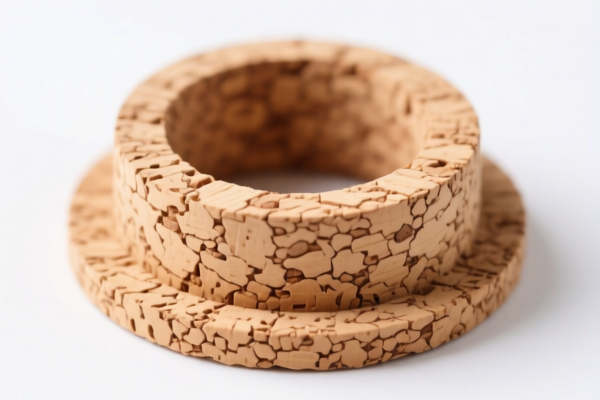
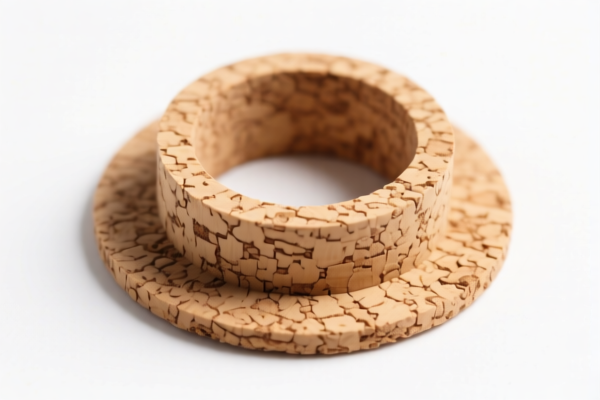
Cork Gasket for Glass Bottle
CN → USProduct Images


AI Analysis
🍷 Cork Gasket for Glass Bottle (Bottle Closure/Cap Liner)
🌐 HS Code Reference & Clearance Guide | 2026 Latest Tariff Analysis | Professional Customs Strategy
📌 I. Product Definition & Classification: Do You Really Know "Cork Gaskets"?
Cork gaskets, commonly known as bottle caps, crown corks, or liner inserts, are critical components in the packaging industry, specifically for glass bottles used in beverages (beer, wine, spirits, juice) and food products. In international trade, they are classified based on their material composition and function.
Key Classification Logic: 1. Material-Based (Primary): Most cork gaskets are made of cork, agglomerated cork, or plastic/rubber composites with a cork layer. 2. Component Status: They are generally considered parts of containers or packaging materials, not standalone machinery.
⚠️ Critical Distinction Point:
- If the gasket is solely made of natural cork or agglomerated cork → Usually classified under Chapter 46 (Cork) or Chapter 21 (if mixed).
- If it is a composite gasket (e.g., plastic crown cap with a cork liner) → The material that gives it its essential character or the outer layer often dictates classification, but typically, packaging accessories fall under Chapter 39 (Plastics) or Chapter 40 (Rubber) if plastic/rubber dominant, or Chapter 46 if cork dominant.
- However, the most common HS Code for cork stoppers/gaskets for bottles globally is 4601.91 or 4602.19, but for packaging materials like composite caps, 3923.29 or 4016.93 may apply.
- US Specific: For cork stoppers (including gaskets), the primary HS Code is 4601.91. For plastic caps with cork liners, it may be 3923.29 or 4016.93.
- Crucial Check: If the product is a complete closure system (cap + cork liner), customs may classify it as a packaging accessory.
📦 II. HS Code Classification Details (2026 Latest Tariff Authority Match)
| HS Code | Product Description | Applicable Scenario | Material Dominance |
|---|---|---|---|
4601.91.00.00 |
Woven matting of cork, whether or not assembled with other materials | Natural cork sheets/rolls used to cut gaskets | ✅ 100% Cork |
4602.19.00.00 |
Woven goods and other articles of cork (e.g., stoppers, gaskets) | Finished cork gaskets/stoppers for bottles | ✅ 100% Cork |
3923.29.00.00 |
Other articles of plastics for the conveyance or packing of goods | Plastic caps with cork liners (plastic dominant) | ✅ Plastic Outer |
4016.93.00.00 |
Other articles of cellular rubber | Rubber gaskets or cellular rubber liners | ✅ Rubber |
2106.90.98.00 |
Other food preparations | Composite gaskets with food-grade adhesives/resins | ✅ Mixed/Food-grade |
🔍 Key Reminder:
- Pure Cork Gaskets (cut from cork sheets) → 4602.19.00.00 (Most common for natural cork liners).
- Composite Caps (plastic crown cap with cork insert) → Often 3923.29.00.00 (Plastic) or 4016.93.00.00 (Rubber) depending on the primary material.
- Do NOT classify as "Parts of Bottles" (Chapter 70) as cork is not glass.
- Do NOT classify as "Packaging Machinery Parts" (Chapter 84) as these are consumables, not machine parts.
💰 III. 2026 Latest Tariff Rate Details (Including Surtaxes & Policy Add-ons)
✅ Applicable Country: United States (US)
✅ Origin: China (CN)
✅ Effective Date: From November 10, 2025 (including subsequent imports)
🎯 1. 4602.19.00.00 —— Cork Gaskets/Stoppers (Natural Cork)
| Item | Content |
|---|---|
| Base Duty Rate | 3.5% (General) / 0% (If under GSP, but GSP expired for many CN goods; check latest) |
| USITC Surcharge | +25% (Under USITC Footnote 9903.88.01 for specific cork products) |
| IEEPA Surcharge | +10% (China/HK products, from Nov 10, 2025) |
| Total Duty Rate | ~38.5% (Base + USITC + IEEPA) |
| Tax Calculation | CIF Value × 38.5% |
| De Minimis Eligibility | ❌ No (deny_de_minimis) |
| Legal Basis Path | IEEPA:9903.01.25 → IEEPA:9903.01.24 → USITC:4602.19.00.00 → FOOTNOTE:9903.88.01 |
📌 Explanation:
- The 25% USITC surcharge applies to many cork products under Section 301.
- The 10% IEEPA surcharge is the new baseline for Chinese goods.
- Total ~38.5% is a high duty for low-value packaging items. Cost control is critical.
🎯 2. 3923.29.00.00 —— Plastic Caps with Cork Liners (Composite)
| Item | Content |
|---|---|
| Base Duty Rate | 2.9% (General) |
| USITC Surcharge | +25% (Under USITC Footnote 9903.88.01 for plastic packaging) |
| IEEPA Surcharge | +10% |
| Total Duty Rate | ~37.9% |
| Tax Calculation | CIF Value × 37.9% |
| De Minimis Eligibility | ❌ No (deny_de_minimis) |
| Legal Basis Path | IEEPA:9903.01.25 → IEEPA:9903.01.24 → USITC:3923.29.00.00 → FOOTNOTE:9903.88.01 |
📌 Note:
- Even if it's "plastic," if it's a packaging cap, it faces similar surcharges.
- Classification Risk: If customs determines the cork is the essential character, it may revert to 4602.19.00.00.
🛠️ IV. Clearance Practical Advice (Battle-Tested Pitfall Avoidance)
✅ 1. Required Documentation Checklist (Non-negotiable)
| Document | Must Provide | Description |
|---|---|---|
| ✅ Product Specification Sheet | ✔️ | Material composition (e.g., "80% Natural Cork, 20% Food-Grade Glue") |
| ✅ Material Safety Data Sheet (MSDS) | ✔️ | If any chemical adhesives are used |
| ✅ FDA Compliance Certificate | ✔️ | Mandatory for food-contact materials (cork gaskets touch beverages) |
| ✅ Commercial Invoice | ✔️ | Clearly state "Cork Gaskets for Glass Bottles" or "Composite Bottle Caps" |
| ✅ Packing List | ✔️ | Weight and dimensions per carton |
| ✅ Origin Certificate | ✔️ | If sourcing from Vietnam/Malaysia, may qualify for lower duties |
✅ 2. Declaration Tips (Key Mantra)
🔥 "Material Defines HS, FDA is King, No GSP for China!"
| Scenario | Correct Declaration | Wrong Approach |
|---|---|---|
| Pure Natural Cork Liner | HS 4602.19.00.00 |
Declare as "Plastic Cap" → 3923 → Penalty for misclassification |
| Plastic Crown Cap + Cork Insert | HS 3923.29.00.00 (if plastic dominant) |
Declare as "Cork Stuffer" → 4602 → Potential audit |
| Rubber Gasket | HS 4016.93.00.00 |
Declare as "Plastic" → Misclassification |
| Small Orders (<$800) | Not Eligible for De Minimis | Assume $800 exemption → Cargo held at customs |
✅ 3. Special Circumstances Handling
| Situation | Handling Advice |
|---|---|
| FDA Audit | Provide FDA Registration Number of the manufacturer. Gaskets are food-contact items. |
| OEM/Private Label | Provide letter of authorization from brand owner to avoid IP issues. |
| Mixed Materials | Clearly declare the percentage of cork vs. plastic/rubber. Customs may inspect to verify. |
| Source Country | If from Vietnam or Malaysia, check for De Minimis ($800) eligibility and lower IEEPA rates. |
🌍 V. Global Market Clearance Comparison (2026 Latest)
| Country/Region | Recommended HS Code | Duty Rate | Certification Required | Notes |
|---|---|---|---|---|
| 🇺🇸 USA | 4602.19.00.00 / 3923.29.00.00 |
~38% (China) | FDA + IEEPA | High duty, strict FDA |
| 🇨🇳 China | 4602.19.00.00 |
3.5% | None | Low duty, easy clearance |
| 🇪🇺 EU | 4602.19.00.00 |
0% (Most Cork) | CE/Food-Grade | No IEEPA surcharge |
| 🇬🇧 UK | 4602.19.00.00 |
3.5% | UKCA/Food-Grade | Post-Brexit rules apply |
| 🇨🇦 Canada | 4602.19.00.00 |
0% (Under CUSMA) | Health Canada | Preferential if from US/Mexico |
📌 Conclusion:
- EU and Canada offer significant duty advantages for cork products.
- USA imposes high duties + FDA scrutiny.
- China has low duties but is a major sourcing hub, so exports to China are cheap, but exports from China face US tariffs.
📌 VI. Common Mistakes & Pitfall Guide (Blood Lessons)
❌ Mistake 1: Declaring "Cork Gaskets" as "Packaging Bags" (4202)
👉 Consequence: HS Code mismatch → Cargo detention + Fines
❌ Mistake 2: Ignoring FDA Food-Contact Requirements
👉 Consequence: Refusal of Entry for non-compliant food-contact materials. Cork must be food-grade.
❌ Mistake 3: Assuming $800 De Minimis applies
👉 Consequence: All shipments seized if from China, as IEEPA suspends de minimis for Chinese goods.
❌ Mistake 4: Misclassifying Composite Caps as "Pure Cork"
👉 Consequence: Customs Audit for duty evasion if plastic content is significant.
✅ Correct Approach:
"Natural Cork Gaskets for Glass Bottles, FDA Compliant, 100% Natural Cork, HS Code 4602.19.00.00"
🎯 VII. Conclusion: Precise Classification Saves Money!
🎯 Remember the Mantra:
🔹 "Cork is 4602, Plastic is 3923, FDA is Mandatory, De Minimis is Dead for China!"
🔹 "HS Code Determines Cost, Duty is ~38%, Don't Risk FDA Compliance!"
📌 Pro Tip:
If your gaskets are sourced from Vietnam or Malaysia, you may qualify for 0% IEEPA surcharge and potentially De Minimis ($800) eligibility. Consider supply chain diversification to reduce costs.
📣 Immediate Action:
📞 Contact a licensed customs broker + Provide FDA Certificate + Apply for HS Code Advance Ruling if unsure
🚀 Ensure Smooth Clearance, Comply with FDA, and Maximize Profit Margins!
✨ Professional Clearance Starts with Accurate Classification!
💼 Every Percent of Duty Counts!
Customer Reviews
About HS Code Classification
The Harmonized System (HS) is an internationally standardized nomenclature developed by the World Customs Organization (WCO) to classify traded products. Over 200 countries use the HS system as the basis for customs tariffs, trade statistics, and import/export regulations.
Each HS code follows a hierarchical structure:
- Chapter (2 digits) — Broad category of goods (e.g., Chapter 84: Machinery and Mechanical Appliances)
- Heading (4 digits) — More specific grouping within the chapter
- Subheading (6 digits) — Internationally standardized breakdown, used by all WCO member countries
- National subdivisions (8-10 digits) — Country-specific extensions for further classification, such as US HTSUS 10-digit codes
Correct HS code classification is essential for smooth customs clearance, accurate duty payment, and compliance with trade regulations. Misclassification can lead to customs delays, overpayment of duties, or penalties.
When importing from CN to US, the applicable tariff rates may include:
- Most-Favored-Nation (MFN) rate — The standard duty rate applied to WTO members
- General rate — Applied to countries without trade agreements
- Trade remedy duties — Additional tariffs such as Section 301 (anti-dumping), Section 232 (national security), or countervailing duties
The information provided on this page is for reference purposes only. For official classification, please consult with your local customs authority or a licensed customs broker.